07 April 2009

Ney Award

Slightly late, but ZUI this article from The Dolphin, the weekly newspaper for the Groton (CT) submarine base:
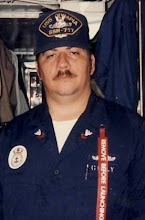
With a pinch of persistence and a dash of determination, culinary specialists on board USS Providence have cooked up award-winning food service that was recognized by the Secretary of the Navy.
Providence was named the submarine recipient of the 2009 Captain Edward F. Ney Award for Food Service Excellence in a message released by the Secretary of the Navy, Donald C. Winter.
This is the first time Providence and most of the Culinary Specialists on board have won the award, which was established in 1958 by the Secretary of the Navy and the International Food Service Executives Association (IFSEA) to improve and recognize the quality of food service in the Navy.

*******

What makes this more remarkable, according to [Providence Supply Officer Ensign Allan] Hamby, the competition occurred while Providence was on a deployment.
"Other boats are competing with us while they were at the pier with all the support that brings, while our guys were getting random stuff from supplies in foreign ports."
Culinary Specialist Chief Petty Officer Gerald Davis, leading Chef Petty Officer, believes pride and focus were the recipe that put Providence on top of the competition.

*******

The Ney award was named in honor of Captain Edward F. Ney, a United States Navy Supply Corps Officer who served as head of the Subsistence Division of the Bureau of Supplies and Accounts between 1940 and 1945.

ZUI also this article from the New London (CT) Day:
[T]he rest of the Providence crew did not need an award to tell them that their food is the best. They eat well every day, from the tacos to the lasagna to the crowd-pleasing “Wicked Chicken.”

”I don't miss many meals,” Chief Randy Gallogly, the corpsman, says, laughing.

*******

Many credited Culinary Specialist Chief Dwayne Davis, the leading culinary specialist, with making the division the top in the Submarine Force.

”We have the best job on the ship,” Davis says.

Good food is the key to high morale, making their job on the ship essential to a mission's success, Davis adds.

”The guys coming down the line are operating millions of dollars' worth of equipment,” he says. “A good meal helps them stand the watch just a little bit better.”

Davis is the creator of Wicked Chicken, a dish inspired by boneless Buffalo wings that he serves with macaroni and cheese and vegetables.

Runner-up for the submarine award was USS Louisiana (Gold) (SSBN 743), while USS Rhode Island (Gold) (SSBN 740) received an honourable mention. Other winners include USS Abraham Lincoln (CVN 72), USS Cole (DDG 67) and Naval Station Guantanamo Bay.

BZ, Providence!

H/T to my friend Michele.

RIP: Tom Braden

Thomas Wardell Braden
22 Feb 1917 – 3 Apr 2009


ZUI this article from the Los Angeles Times:
Tom Braden, a former CIA operative who became a syndicated newspaper columnist, liberal co-host of the CNN talk show "Crossfire" and author of "Eight Is Enough," a 1975 memoir that spawned the popular television series, died of natural causes Friday at his Denver home, his family said. He was 92.

Braden was the father of eight children whose misadventures provided amusing grist for many of his newspaper columns and led to the ABC comedy-drama "Eight Is Enough," which aired from 1977 to 1981 and starred Dick Van Patten as Tom Bradford, a Sacramento columnist with a brood of children ages 8 to 23.

But Braden was also prominent as one of the original co-hosts of "Crossfire," the topical show that made its debut in 1982 and pitted him against former Nixon aide and political commentator Pat Buchanan.

*******

Braden was born in Greene, Iowa, on Feb. 22, 1917. His father worked a variety of jobs, including at a tie store and a bank. His mother was a writer for American Mercury, the magazine founded by H.L. Mencken and drama critic George Jean Nathan.

*******

In 1941, he went to England and was among a small group of Americans who enlisted in the King's Royal Rifle Corps in the British Army to fight in World War II. He later joined the U.S. Army and shifted to intelligence work for the Office of Strategic Services, the predecessor of the CIA.

With Stewart Alsop, the columnist and political analyst who had also fought with the British Army and joined the OSS, Braden wrote the book "Sub Rosa: The OSS and American Espionage" (1946).

After the war, he taught for a few years at Dartmouth, where he met poet Robert Frost, who encouraged him to pursue journalism. But in 1950 he joined the CIA and worked for Allen Dulles, who became CIA director in 1953.

*******

["Eight Is Enough"] didn't sell well at first, despite the many entertaining tales Braden told, such as when one son was arrested on marijuana charges and when a daughter's pet boa constrictor went missing. He also told of the time the family's lamb nuzzled up against a famous dinner guest, Supreme Court Justice William O. Douglas.

Braden's wife died in 1999. His son Tommy, the seventh of his eight children, died in 1994. His surviving children are David Braden of Taipei, Taiwan; Mary Poole of Alexandria, Va.; Susan Braden of Takoma Park, Md.; Joannie Braden, Nancy Basta and Elizabeth Braden, all of Denver; and Nicholas Braden of Washington, D.C. He also leaves 12 grandchildren.

Can't remember if I actually read Eight Is Enough, but I did enjoy the TV series - which had little to do with Braden's book beyond the number and names of the children.

RIP: Russell Dunham


Russell E Dunham
23 Feb 1920 - 6 Apr 2009


ZUI this article from the St Louis (MO) Post-Dispatch:
Russell Dunham, a World War II veteran who won the Medal of Honor, died of heart failure in his home in Godfrey on Monday (April 6, 2009). He was 89.

Mr. Dunham won the nation's highest military honor for his bravery during a battle near Kayserberg, France, on Jan. 8, 1945.

*******

In a 1999 interview, Mr. Dunham told the Post-Dispatch he wasn't aware of being in great danger at the time, or in other battles. "Once you get into battle, you forget your fears," Mr. Dunham said.

A member of the 30th Infantry, 3rd Infantry Division, Mr. Dunham fought in North Africa, Sicily, Italy and France, earning a Silver Star, a Bronze Star and almost every other combat medal available.

*******

Mr. Dunham was born in East Carondelet [Illinois] in 1920 and spent his youth around Fosterburg in Madison County. When he was about 16, he went to live with his older brother Ralph in St. Louis for several years. They sold soup, hot tamales and other items on the streets.

After his military service, Mr. Dunham went on to work as a benefits counselor with the VA in St. Louis for about 30 years. He got veterans signed up for benefits before they arrived home, said his stepdaughter, Annette Wilson of Godfrey.

*******

In addition to his stepdaughter and granddaughter, among the survivors are a daughter, Mary Neal of Cobden, Ill., a stepson, David Bazzell of Louisiana; three brothers; three sisters; and several other grandchildren. He was preceded in death by his wife, Wilda Long-Bazzell.

******* *** *******

RUSSELL E DUNHAM

Technical Sergeant, US Army; Company I, 30th Infantry, 3d Infantry Division

Born: 23 February 1920, East Carondelet, Illinois
Died: 6 April 2009, Godfrey, Illinois

Citation: For conspicuous gallantry and intrepidity at risk of life above and beyond the call of duty. At about 1430 hours on 8 January 1945, during an attack on Hill 616, near Kayserberg, France, T/Sgt. Dunham single-handedly assaulted 3 enemy machineguns. Wearing a white robe made of a mattress cover, carrying 12 carbine magazines and with a dozen hand grenades snagged in his belt, suspenders, and buttonholes, T/Sgt. Dunham advanced in the attack up a snow-covered hill under fire from 2 machineguns and supporting riflemen. His platoon 35 yards behind him, T/Sgt. Dunham crawled 75 yards under heavy direct fire toward the timbered emplacement shielding the left machinegun. As he jumped to his feet 10 yards from the gun and charged forward, machinegun fire tore through his camouflage robe and a rifle bullet seared a 10-inch gash across his back sending him spinning 15 yards down hill into the snow. When the indomitable sergeant sprang to his feet to renew his 1-man assault, a German egg grenade landed beside him. He kicked it aside, and as it exploded 5 yards away, shot and killed the German machinegunner and assistant gunner. His carbine empty, he jumped into the emplacement and hauled out the third member of the gun crew by the collar. Although his back wound was causing him excruciating pain and blood was seeping through his white coat, T/Sgt. Dunham proceeded 50 yards through a storm of automatic and rifle fire to attack the second machinegun. Twenty-five yards from the emplacement he hurled 2 grenades, destroying the gun and its crew; then fired down into the supporting foxholes with his carbine dispatching and dispersing the enemy riflemen. Although his coat was so thoroughly blood-soaked that he was a conspicuous target against the white landscape, T/Sgt. Dunham again advanced ahead of his platoon in an assault on enemy positions farther up the hill. Coming under machinegun fire from 65 yards to his front, while rifle grenades exploded 10 yards from his position, he hit the ground and crawled forward. At 15 yards range, he jumped to his feet, staggered a few paces toward the timbered machinegun emplacement and killed the crew with hand grenades. An enemy rifleman fired at pointblank range, but missed him. After killing the rifleman, T/Sgt. Dunham drove others from their foxholes with grenades and carbine fire. Killing 9 Germans - wounding 7 and capturing 2 - firing about 175 rounds of carbine ammunition, and expending 11 grenades, T/Sgt. Dunham, despite a painful wound, spearheaded a spectacular and successful diversionary attack.

05 April 2009

Victoria Cross: Buckley, Burgoyne, Roberts and Cooper

CECIL WILLIAM BUCKLEY

Commander (then Lieutenant), Royal Navy; HMS Miranda

Born: 7 October 1828, Patricroft, Lancashire
Died: 7 December 1872, Funchal, Madeira

Citation: Lord Lyons reports that—"Whilst serving as junior Lieutenant of the 'Miranda,'this Officer landed in presence of a superior force, and set fire to the Russian stores at Genitchi," and "he also performed a similar desperate service at Taganrog."
The first service referred to occurred after the shelling of the town of Genitchi [in the Crimea], on the 29th May, 1855. After mentioning that the stores were in a very favourable position for supplying the Russian Army, and that, therefore, their destruction was of the utmost importance, Captain Lyons writes: "Lieutenant Cecil W. Buckley, Lieutenant Hugh T. Burgoyne, and Mr. John Roberts, gunner, volunteered to land alone, and fire the stores, which offer I accepted, knowing the imminent risk there would be in landing a party in presence of such a superior force, and out of gun-shot of the ships. This very dangerous service they most gallantly performed, narrowly escaping the Cossacks, who all but cut them off from their boat."
(Despatch from Admiral Lord Lyons, 2nd June, 1855, No. 419.)
The second volunteer service was performed while the town of Taganrog [Russia] was being bombarded by the boats of the Fleet, and is thus recorded by Captain Lyons:—"Lieutenant Cecil Buckley, in a four-oared gig, accompanied by Mr. Henry Cooper, Boatswain, and manned by volunteers, repeatedly landed and fired the different stores and Government buildings. This dangerous, not to say desperate service (carried out in a town containing upwards of 3,000 troops, constantly endeavouring to prevent it, and only checked by the fire of the boats' guns), was most effectually performed."
(Despatch from Admiral Lord Lyons, 6th June, 1855, No. 429.)

(London Gazette issue 21971 dated 24 Feb 1857, published 24 Feb 1857.)


JOHN TALBOT BURGOYNE

Commander (then Lieutenant), Royal Navy; HMS Swallow

Born: 17 July 1833, Dublin, Ireland
Died: 7 September 1870, off Cape Finisterre, Spain

Citation: Lord Lyons writes:—"As Senior Lieutenant of the 'Swallow,' this Officer landed with Lieutenant Buckley, and Mr. J. Roberts, Gunner, in presence of a superior force, and set fire to the stores at Genitchi, a service of imminent risk."
(Despatch from Admiral Lord Lyons, 2nd June, 1855, No. 419.)
N.B.—This service has been previously described in the preceding notice of Lieutenant Buckley's services.

(London Gazette issue 21971 dated 24 Feb 1857, published 24 Feb 1857.)

Note: Captain J T Burgoyne VC was the commanding officer of HMS Captain when that ship capsized in a gale off Cape Finisterre.


JOHN ROBERTS (or ROBARTS)

Gunner, Royal Navy; HMS Ardent

Born: 1818, Chacewater, Cornwall
Died: 17 October 1888, Southsea, Hampshire

Citation: This Warrant Officer landed with Lieutenants Buckley and Burgoyne at Genitchi, in presence of a superior force, and set fire to the Stores, a service of imminent risk.
(Despatch from Admiral Lord Lyons, 2nd June, 1855, No. 419.)

(London Gazette issue 21971 dated 24 Feb 1857, published 24 Feb 1857.)


HENRY COOPER

Boatswain, Royal Navy; HMS Miranda

Born: 1825, Plymouth, Devon
Died: 15 July 1893, Torpoint, Cornwall

Citation: Performed the desperate service of landing at Taganrog in presence of a large force, to set fire to the Government Stores. See preceding Memoir of Commander Buckley.
(Despatch from Admiral Lord Lyons, 6th June, 1855, No. 429.)

(London Gazette issue 21971 dated 24 Feb 1857, published 24 Feb 1857.)


Note: These were the first four Victoria Crosses posted in the London Gazette ("gazetted"). At the first investiture of the Victoria Cross, on 26 June 1857 at Hyde Park, Burgoyne was the third, Robarts the sixth, and Cooper the eighth man to actually be presented with the medal. (Commander Buckley was not present on that occasion.)

Medal of Honor: R. H. Von Schlick

ROBERT H VON SCHLICK

Private, Company C, 9th US Infantry

Born: Germany
Died: 1 July 1941

Citation: Although previously wounded while carrying a wounded comrade to a place of safety, rejoined his command, which partly occupied an exposed position upon a dike [at Tientsin, China, on 13 July 1900], remaining there after his command had been withdrawn, singly keeping up the fire, and obliviously presenting himself as a conspicuous target until he was literally shot off his position by the enemy.

01 April 2009

Book list - Mar 09

Shadows in the Jungle: The Alamo Scouts Behind Japanese Lines in World War II - World War II, by Larry Alexander
Winnie's War - children's historical fiction, by Jenny Moss
Cold Comfort Farm - humour, by Stella Gibbons
The Disreputable History of Frankie Landau-Banks: A Novel - YA, by E Lockhart
The First to Land - historical fiction, by Douglas Reeman
The Serial Garden: The Complete Armitage Family Stories - children's fantasy (short stories), by Joan Aiken
Moon of Three Rings - SF, by Andre Norton *
The Boxer Rebellion - history, by Diana Preston
Roxie and the Hooligans - children's, by Phyllis Reynolds Naylor
The Slave Dancer - children's historical fiction, by Paula Fox (Newbery Medal, 1974)
Gay Neck: the Story of a Pigeon - children's, by Dhan Gopal Mukerji (Newbery Medal, 1928)
Exiles of the Stars - SF, by Andre Norton *
The Zero Stone - SF, by Andre Norton *


13 books this month, with three rereads. To reach my goal of 209 books this year, I'll have to average 17.417 per month, so I'm currently still behind track. No fear....

The two Newbery Medal winners bring my total thus far up to 75 of 88.

Carnegie Medal books

In addition to reading the Newbery Medal winners, I've started on the books which have been awarded the Andrew Carnegie Medal - the British equivalent of the Newbery Medal, now awarded by the Chartered Institute of Library and Information Professionals (CILIP).

The medal was first awarded in 1937, for the best children's book of 1936, but there have been three years when no book was considered suitable, so there are only 70 winners thus far. In addition to the gold medal, the winner receives £500 worth of books to donate to a library of his/her/their choice.

Here's the list. (Dates marked in red indicate the six books I had already read before last year; dates in purple indicate the ones I've read since.)

1936: Pigeon Post, by Arthur Ransome
1937: The Family from One End Street, by Eve Garnett
1938: The Circus is Coming, by Noel Streatfield
1939: Radium Woman, by Eleanor Doorly
1940: Visitors from London, by Kitty Barne
1941: We Couldn't Leave Dinah, by Mary Treadgold
1942: The Little Grey Men, by 'BB' (D J Watkins-Pitchford)
1943: Prize withheld as no book considered suitable
1944: The Wind on the Moon, by Eric Linklater
1945: Prize withheld as no book considered suitable
1946: The Little White Horse, by Elizabeth Goudge
1947: Collected Stories for Children, Walter De La Mare
1948: Sea Change, by Richard Armstrong
1949: The Story of Your Home, by Agnes Allen
1950: The Lark on the Wing, by Elfrida Vipont Foulds
1951: The Woolpack, by Cynthia Harnett
1952: The Borrowers, by Mary Norton
1953: A Valley Grows Up, by Edward Osmond
1954: Knight Crusader, by Ronald Welch (Felton Ronald Oliver)
1955: The Little Bookroom, by Eleanor Farjeon
1956: The Last Battle, by C S Lewis
1957: A Grass Rope, by William Mayne
1958: Tom's Midnight Garden, by Philipa Pearce
1959: The Lantern Bearers, by Rosemary Sutcliff
1960: The Making of Man, by Dr I W Cornwall
1961: A Stranger at Green Knowe, by Lucy M Boston
1962: The Twelve and the Genii, by Pauline Clarke
1963: Time of Trial, by Hester Burton
1964: Nordy Bank, by Sheena Porter
1965: The Grange at High Force, by Philip Turner
1966: Prize withheld as no book considered suitable
1967: The Owl Service, by Alan Garner
1968: The Moon in the Cloud, by Rosemary Harris
1969: The Edge of the Cloud, by Kathleen Peyton
1970: The God Beneath the Sea, by Leon Garfield and Edward Blishen
1971: Josh, by Ivan Southall
1972: Watership Down, by Richard Adams
1973: The Ghost of Thomas Kempe, by Penelope Lively
1974: The Stronghold, by Mollie Hunter
1975: The Machine Gunners, by Robert Westall
1976: Thunder and Lightnings, by Jan Mark
1977: The Turbulent Term of Tyke Tiler, by Gene Kemp
1978: The Exeter Blitz, by David Rees
1979: Tulku, by Peter Dickinson
1980: City of Gold, by Peter Dickinson
1981: The Scarecrows, by Robert Westall
1982: The Haunting, by Margaret Mahy
1983: Handles, by Jan Mark
1984: The Changeover, by Margaret Mahy
1985: Storm, by Kevin Crossley-Holland
1986: Granny was a Buffer Girl, by Berlie Doherty
1987: The Ghost Drum, by Susan Price
1988: A Pack of Lies, by Geraldine McCaughrean
1989: Goggle-eyes, by Anne Fine
1990: Wolf, by Gillian Cross
1991: Dear Nobody, by Berlie Doherty
1992: Flour Babies, by Anne Fine
1993: Stone Cold, by Robert Swindells
1994: Whispers in the Graveyard, by Theresa Breslin
1995: Northern Lights, by Philip Pullman*
1996: Junk, by Melvin Burgess
1997: River Boy, by Tim Bowler
1998: Skellig, by David Almond
1999: Postcards From No Man's Land, by Aidan Chambers
2000: The Other Side of Truth, by Beverley Naidoo
2001: The Amazing Maurice and his Educated Rodents, by Terry Pratchett
2002: Ruby Holler, by Sharon Creech
2003: A Gathering Light, by Jennifer Donnelly
2004: Millions, by Frank Cottrell Boyce
2005: Tamar, by Mal Peet
2006: **
2007: Just in Case, by Meg Rosoff
2008: Here Lies Arthur, by Philip Reeve
2009: To be announced....

So the count now is 14 down, 56 to go. Unfortunately, our local library system (Groton, Waterford and Mystic/Noank) only has a dozen or so of the ones I haven't read yet, so I'm going to have to make a lot of ILL requests....

I only read one book (The Amazing Maurice and his Educated Rodents) this last quarter, so obviously I liked it the most.

* His Dark Materials, Book 1. Published in the US as The Golden Compass.

** Up through the award for 2005, the winners were referred to by the year of publication. Beginning in 2007, the winners were referred to by the year the award was given, as with the American Newbery Medal. Thus there is no "2006 winner" of the Carnegie Medal. Tamar, the 2005 winner, was published in '05, and received the medal in '06. Just in Case, the 2007 winner, was published in '06 and received the award in '07.

Newbery Medal books

In March of '07, I took a look at a list of the 86 winners (now 88) of the John Newbery Medal, which is presented annually to the author of "the most distinguished contribution to American literature for children." I was somewhat shocked to discover that I had only read seven of the books (the newest of which was forty years old). So I've been reading my way through the list, and here's the current status. (Dates in red are the ones I had read before I started my current programme; dates in purple are the ones I've read since I started.)

1922: The Story of Mankind, by Hendrik Willem van Loon
1923: The Voyages of Doctor Dolittle, by Hugh Lofting
1924: The Dark Frigate, by Charles Hawes
1925: Tales from Silver Lands, by Charles J Finger
1926: Shen of the Sea, by Arthur Bowie Chrisman
1927: Smoky, the Cowhorse, by Will James
1928: Gay Neck, the Story of a Pigeon, by Dhan Gopal Mukerji
1929: The Trumpeter of Krakow, by Eric P. Kelly
1930: Hitty, Her First Hundred Years, by Rachel Field
1931: The Cat Who Went to Heaven, by Elizabeth Coatsworth
1932: Waterless Mountain, by Laura Adams Armer
1933: Young Fu of the Upper Yangtze, by Elizabeth Lewis
1934: Invincible Louisa: The Story of the Author of Little Women, by Cornelia Meigs
1935: Dobry, by Monica Shannon
1936: Caddie Woodlawn, by Carol Ryrie Brink
1937: Roller Skates, by Ruth Sawyer
1938: The White Stag, by Kate Seredy
1939: Thimble Summer, by Elizabeth Enright
1940: Daniel Boone, by James Daugherty
1941: Call It Courage, by Armstrong Sperry
1942: The Matchlock Gun, by Walter Edmonds
1943: Adam of the Road, by Elizabeth Janet Gray
1944: Johnny Tremain, by Esther Forbes
1945: Rabbit Hill, by Robert Lawson
1946: Strawberry Girl, by Lois Lenski
1947: Miss Hickory, by Carolyn Sherwin Bailey
1948: The Twenty-One Balloons, by William Pène du Bois
1949: King of the Wind, by Marguerite Henry
1950: The Door in the Wall, by Marguerite de Angeli
1951: Amos Fortune, Free Man, by Elizabeth Yates
1952: Ginger Pye, by Eleanor Estes
1953: Secret of the Andes, by Ann Nolan Clark
1954: ...And Now Miguel, by Joseph Krumgold
1955: The Wheel on the School, by Meindert DeJong
1956: Carry On, Mr Bowditch, by Jean Lee Latham
1957: Miracles on Maple Hill, by Virginia Sorensen
1958: Rifles for Watie, by Harold Keith
1959: The Witch of Blackbird Pond, by Elizabeth George Speare
1960: Onion John, by Joseph Krumgold
1961: Island of the Blue Dolphins, by Scott O'Dell
1962: The Bronze Bow, by Elizabeth George Speare
1963: A Wrinkle in Time, by Madeleine L'Engle
1964: It's Like This, Cat, by Emily Neville
1965: Shadow of a Bull, by Maia Wojciechowska
1966: I, Juan de Pareja, by Elizabeth Borton de Trevino
1967: Up a Road Slowly, by Irene Hunt
1968: From the Mixed-Up Files of Mrs Basil E Frankweiler, by E L Konigsburg
1969: The High King, by Lloyd Alexander
1970: Sounder, by William H Armstrong
1971: The Summer of the Swans, by Betsy Byars
1972: Mrs Frisby and the Rats of NIMH, by Robert C O'Brien
1973: Julie of the Wolves, by Jean Craighead George
1974: The Slave Dancer, by Paula Fox
1975: M C Higgins, the Great, by Virginia Hamilton
1976: The Grey King, by Susan Cooper
1977: Roll of Thunder, Hear My Cry, by Mildred D Taylor
1978: Bridge to Terabithia, by Katherine Paterson
1979: The Westing Game, by Ellen Raskin
1980: A Gathering of Days: A New England Girl's Journal, 1830-1832, by Joan W Blos
1981: Jacob Have I Loved, by Katherine Paterson
1982: A Visit to William Blake's Inn: Poems for Innocent and Experienced Travelers, by Nancy Willard
1983: Dicey's Song, by Cynthia Voigt
1984: Dear Mr Henshaw, by Beverly Cleary
1985: The Hero and the Crown, by Robin McKinley
1986: Sarah, Plain and Tall, by Patricia MacLachlan
1987: The Whipping Boy, by Sid Fleischman
1988: Lincoln: A Photobiography, by Russell Freedman
1989: Joyful Noise: Poems for Two Voices, by Paul Fleischman
1990: Number the Stars, by Lois Lowry
1991: Maniac Magee, by Jerry Spinelli
1992: Shiloh, by Phyllis Reynolds Naylor
1993: Missing May, by Cynthia Rylant
1994: The Giver, by Lois Lowry
1995: Walk Two Moons, by Sharon Creech
1996: The Midwife's Apprentice, by Karen Cushman
1997: The View from Saturday, by E L Konigsburg
1998: Out of the Dust, by Karen Hesse
1999: Holes, by Louis Sachar
2000: Bud, Not Buddy, by Christopher Paul Curtis
2001: A Year Down Yonder, by Richard Peck
2002: A Single Shard, by Linda Sue Park
2003: Crispin: The Cross of Lead, by Avi
2004: The Tale of Despereaux: Being the Story of a Mouse, a Princess, Some Soup, and a Spool of Thread, by Kate DiCamillo
2005: Kira-Kira, by Cynthia Kadohata
2006: Criss Cross, by Lynne Rae Perkins
2007: The Higher Power of Lucky, by Susan Patron, illustrated by Matt Phelan
2008: Good Masters! Sweet Ladies!: Voices from a Medieval Village, by Laura Amy Schlitz
2009: The Graveyard Book, by Neil Gaiman


So the count is now 75 down, 13 to go. Fortunately, the Groton library has most of the remaining books, and the other two libraries (Waterford and Mystic/Noank) in our library system have three of the others; Daniel Boone is the only one I'll have to ILL.

Of the five I read this quarter, I definitely enjoyed The Graveyard Book the most.

29 March 2009

Victoria Cross: G. Campbell

GORDON CAMPBELL, DSO

Commander, Royal Navy; commanding HMS Q5 (aka HMS Farnborough)

Born: 6 January 1886, Croydon, Surrey
Died: 3 July 1953, Isleworth, Middlesex

Citation: The KING has been graciously pleased to approve of the grant of the Victoria Cross to
Commander Gordon Campbell, D.S.O., R.N.
In recognition of his conspicuous gallantry, consummate coolness, and skill in command of one of H.M. ships in action.

(London Gazette Issue 30029 dated 21 Apr 1917, published 20 Apr 1917.)


On the 17th February, 1917, H.M.S. "Q5," under the command of Commander Campbell, D.S.O., R.N., was struck by a torpedo abreast of No. 3 hold. Action stations were sounded and the "panic party" abandoned ship. The engineer officer reported that the engine-room was flooding, and was ordered to remain at his post as long as possible, which he and his staff, several of whom were severely wounded, most gallantly did. The submarine was observed on the starboard quarter 200 yards distant, watching the proceedings through his periscope. He ran past the ship on the starboard side so closely that the whole hull was visible beneath the surface, finally emerging about 300 yards on the port bow. The enemy came down the port side of the ship, and fire was withheld until all guns could bear at point blank range. The first shot beheaded the captain of the submarine as he was climbing out of the conning tower, and the submarine finally sank with conning tower open and crew pouring out. One officer and one man were rescued on the surface and taken prisoner, after which the boats were recalled and all hands proceeded to do their utmost to keep the ship afloat. A wireless signal for assistance had been sent out when (but not until) the fate of the submarine was assured, and a destroyer and sloop arrived a couple of hours later and took "Q.5" in tow. She was finally beached in safety the following evening.
The action may be regarded as the supreme test of naval discipline. The chief engineer and engine-room watch remained at their posts to keep the dynamo working until driven out by the water, then remaining concealed on top of the cylinders. The guns' crews had to remain concealed in their gun houses for nearly half an hour, while the ship slowly sank lower in the water.
(The award of the Victoria Cross to Commander Gordon Campbell, D.S.O., R.N., was announced in London Gazette No. 30029, dated the 21st April, 1917.)

(London Gazette Issue 32021 dated 19 Nov 1918, published 19 Nov 1918.)


Note: The submarine was U 83, commanded by Kptlt Bruno Hoppe.

Cmdr Campbell was commanding officer of HMS Pargust, another Q-ship, when she was attacked by UC 29 on 7 Jun 1917; Lieut R N Stuart DSO, RNR, and Seaman W Williams, RNR, were elected by the ship's officers and crew to be awarded the Victoria Cross for their actions in that battle. Campbell was also commanding officer of HMS Dunraven, yet another Q-ship, when she was attacked by UC 71 on 8 Aug 1917; Lieut C G Bonner DSC, RNR, and PO E H Pitcher DSM, RN, were awarded the Victoria Cross for that battle.

Medal of Honor: R. E. Femoyer

ROBERT EDWARD FEMOYER

Second Lieutenant, US Army Air Corps; 711th Bombing Squadron, 447th Bomber Group

Born: 31 October 1921, Huntington, West Virginia
Died: 2 November 1944, England

Citation: For conspicuous gallantry and intrepidity at the risk of his life above and beyond the call of duty near Merseburg, Germany, on 2 November 1944. While on a mission, the bomber, of which 2d Lt. Femoyer was the navigator, was struck by 3 enemy antiaircraft shells. The plane suffered serious damage and 2d Lt. Femoyer was severely wounded in the side and back by shell fragments which penetrated his body. In spite of extreme pain and great loss of blood he refused an offered injection of morphine. He was determined to keep his mental faculties clear in order that he might direct his plane out of danger and so save his comrades. Not being able to arise from the floor, he asked to be propped up in order to enable him to see his charts and instruments. He successfully directed the navigation of his lone bomber for 2 1/2 hours so well it avoided enemy flak and returned to the field without further damage. Only when the plane had arrived in the safe area over the English Channel did he feel that he had accomplished his objective; then, and only then, he permitted an injection of a sedative. He died shortly after being removed from the plane. The heroism and self-sacrifice of 2d Lt. Femoyer are in keeping with the highest traditions of the U.S. Army.


Note: Femoyer is one of seven Eagle Scouts who have been awarded the Medal of Honor.

26 March 2009

30 Poets/30 Days

Like poetry? April is National Poetry Month, and Gregory K over at GottaBook says:
Every day in April, I'll be posting a previously unpublished poem by a different poet. Here's the alphabetical list of who's participating:

Arnold Adoff, Jaime Adoff, Rebecca Kai Dotlich, Douglas Florian, Betsy Franco, Kristine O'Connell George, Charles Ghigna, Nikki Giovanni, Joan Bransfield Graham, Nikki Grimes, Mary Ann Hoberman, Lee Bennett Hopkins, X. J. Kennedy, Bruce Lansky,Julie Larios, J. Patrick Lewis, Pat Mora, Kenn Nesbitt, Linda Sue Park, Ann Whitford Paul, Gregory K. Pincus, Jack Prelutsky, Adam Rex, Jon Scieszka, Joyce Sidman, Marilyn Singer, April Halprin Wayland, Janet Wong, and Jane Yolen.

We'll launch on Tuesday, April 1, with former Children's Poet Laureate Jack Prelutsky's new “A Little Poem For Poetry Month.” We’ll end April 30th with “Books & Me” by Pat Mora to help celebrate El día de los niños/El día de los libros (Children's Day/Book Day). And every day in between will bring something new.

Check his post for links to all of the poets listed.

22 March 2009

Victoria Cross: A. E. Curtis

ALBERT EDWARD CURTIS

Private, 2nd Battalion The East Surrey Regiment

Born: 6 January 1866, Guildford, Surrey
Died: 16 March 1940, North Barnet, Hertfordshire

Citation: On the 23rd February, 1900, Colonel Harris lay all day long in a perfectly open space under close fire of a Boer breastwork [at Onderbank Spruit, South Africa]. The Boers fired all day at any man who moved, and Colonel Harris was wounded eight or nine times.
Private Curtis, after several attempts succeeded in reaching the Colonel, bound his wounded arm, and gave him his flask–all under heavy fire.
He then tried to carry him away, but was unable, on which he called for assistance, and Private Morton came out at once. Fearing that the men would be killed, Colonel Harris told them to leave him, but they declined, and after trying to carry the Colonel on their rifles, they made a chair with their hands and so carried him out of fire.

(London Gazette Issue 27266 dated 15 Jan 1901, published 15 Jan 1901.)


Note: Private T W Morton was awarded the Distinguished Conduct Medal "in recognition of his gallant conduct in South Africa on the 23rd February, 1900."

Medal of Honor: J. Rannahan

JOHN RANNAHAN

Corporal, US Marine Corps; USS Minnesota

Born: 1836, County Monahan, Ireland
Died: unknown

Citation: On board the U.S.S. Minnesota in the assault on Fort Fisher, [Wilmington, North Carolina,] 15 January 1865. Landing on the beach with the assaulting party from his ship, Cpl. Rannahan advanced to the top of the sandhill and partly through the breach in the palisades despite enemy fire which killed or wounded many officers and men. When more than two-thirds of the men became seized with panic and retreated on the run, he remained with the party until dark when it came safely away, bringing its wounded, its arms and its colors.

20 March 2009

Sub/skimmer collision in Strait of Hormuz


USS Hartford (SSN 768)


ZUI this article from CNN:
A U.S. Navy submarine collided with a Navy amphibious ship Friday in the Strait of Hormuz, mildly injuring 15 sailors, according to the commander of the U.S. Fifth Fleet.

The submarine, the USS Hartford, collided with the USS New Orleans about 1 a.m. in the strait, which runs between Iran and the Arabian Peninsula. It is one of the busiest commercial routes for oil tankers.

Fifteen aboard the Hartford were injured but returned to duty, according to a news release.

ZUI also this article from the BBC:
The incident is being investigated and damage to both ships is being evaluated, a navy statement said.

The New Orleans' fuel tank was ruptured in the crash, causing a spill of 25,000 gallons (90,000 litres) of diesel.

No injuries were reported aboard the New Orleans, according to the statement from the Fifth Fleet, which is based in Bahrain.

*******

The navy said both vessels were on regularly scheduled deployments to the region and conducting security operations.

"Both ships are currently operating under their own power," said the statement.


USS New Orleans (LPD 18)

Update 1150 20 Mar: Navy Times has an article with further information here.

Update 1820 23 Mar: Joel, as usual, has further coverage, including links to various Navy photos of the two ships arriving in port.


USS Hartford (SSN 768) arrives in Mina Salman, Bahrain

18 March 2009

Which action hero would you be?


After his family was murdered by the evil emperor Commodus, the great Roman general Maximus went into hiding to avoid Commodus's assassins. He became a gladiator, hoping to dominate the colosseum in order to one day get the chance of killing Commodus. Maximus is valiant, courageous, and dedicated. He wants nothing more than the chance to avenge his family, but his temper often gets the better of him.

Maximus ------------------ 67%
William Wallace ---------- 63%
Batman, the Dark Knight -- 58%
Indiana Jones ------------ 58%
Captain Jack Sparrow ----- 54%
The Amazing Spider-Man --- 46%
Lara Croft --------------- 46%
Neo, the "One" ----------- 38%
The Terminator ----------- 33%
James Bond, Agent 007 ---- 29%
El Zorro ----------------- 8%

17 March 2009

Oldest WWI vet receives Légion d'honneur

ZUI this post from the MOD Defence News:
The oldest surviving veteran from the First World War has been given France's highest possible accolade by becoming an Officer of the French Legion of Honour.

At 112 years old, Henry Allingham is the last survivor of the Battle of Jutland, the last surviving member of the Royal Naval Air Service and the last surviving founding member of the Royal Air Force.

Mr Allingham received the military honour at a ceremony at the official London residence of the French Ambassador Maurice Gourdault-Montagne yesterday, Monday 16 March 2009, in recognition of his service during the First World War where he saw action on board [HMT] Kingfisher and served on the Western Front as well as in Dunkirk.

*******

Veterans Minister Kevan Jones said:

"Henry Allingham has helped generations of schoolchildren remember the sacrifice thousands of British soldiers made in World War One and ensured that they understand the debt of gratitude we owe them. This is a wonderful tribute to Henry's bravery and commitment and we thank the French Government for this honour."

Mr Allingham has joined fellow World War One veteran Harry Patch in becoming an Officer of the French Legion of Honour. Mr Patch, aged 110, who received his award last week, is the last surviving UK soldier to have served in the trenches during the Great War. They are the two last remaining veterans of World War One living in the UK.

Wikipedia has articles on Mr Allingham, the Battle of Jutland, the RNAS and Mr Patch (whom I mentioned last week), but I can't find any information concerning HMT Kingfisher. ZUI also this article from the BBC regarding Mr Allingham's 112th birthday (6 Jun 2008), and this article from The Mail from his 111th.


Medal of an officer of the Légion d'honneur

15 March 2009

Victoria Cross: J. Bythesea & W. Johnstone

JOHN BYTHESEA

Commander (then Lieutenant), Royal Navy; HMS Arrogant

Born: 15 June 1827, Freshford, Somerset
Died: 18 May 1906, West London

Citation: On the 9th of August, 1854, having ascertained that an Aide-de-Camp of the Emperor of Russia had landed on the island of Wardo, in charge of a mail and despatches for the Russian General, Commander Bythesea obtained permission for himself and William Johnstone, a stoker, to proceed on shore with the view to intercept them. Being disguised and well armed, they concealed themselves until the night of the 12th, when the mail-bags were landed, close to the spot where they lay secreted in the bushes. The mails were accompanied by a military escort, which passed close to them, and which, as soon as it was ascertained that the road was clear, took its departure. Availing themselves of this opportunity, Commodore [sic] Bythesea and the stoker, attacked the five men in charge of the mail, took three of them prisoners, and brought them in their own boat on board the "Arrogant." The despatches were carried to General Baraguay d'Hilliers, who expressed himself in the highest terms of approval.
(Despatch from Captain Yelverton, inclosed in a Letter from Vice-Admiral Sir C. Napier, of 31st January, 1856.)

(London Gazette Issue 21971 dated 24 Feb 1857, published 24 Feb 1857.)


Note: Cmdr Bythesea was Rear Admiral J Bythesea VC CB CIE at the time of his death.


WILLIAM JOHNSTONE

Stoker, Royal Navy; HMS Arrogant

Born: 1821, Hannover, Germany
Died: 20 August 1857, at sea in the West Indies, aboard HMS Brunswick

Citation: This person was the companion of Commander Bythesea in the above-mentioned enterprize.
(Despatch from Captain Yelverton, inclosed in a Letter from Vice-Admiral Sir C. Napier, of 13th January, 1856.)

(London Gazette Issue 21971 dated 24 Feb 1857, published 24 Feb 1857.)

Medal of Honor: W. A. Crouse, J. W. Ehle and J. L. Hull

WILLIAM ADOLPHUS CROUSE

Watertender, US Navy; USS Concord (PG 3)

Born: 22 October 1866, Tannettsburg, Pennsylvania
Died: 27 June 1941

Citation: On board the U.S.S. Concord off Cavite, Manila Bay, P.I., 21 May 1898. Following the blowing out of a lower manhole plate joint on boiler B of that vessel, Crouse hauled the fires in the hot, vapor-filled atmosphere which necessitated the playing of water into the fireroom from a hose.


JOHN WALTER EHLE

Fireman First Class, US Navy; USS Concord (PG 3)

Born: 11 May 1873, Kearney, Nebraska
Died: 25 July 1927

Citation: On board the U.S.S. Concord off Cavite, Manila Bay, Philippine Islands, 21 May 1898. Following the blowing out of a lower manhole plate joint on boiler B of that vessel, Ehle assisted in hauling the fires in the hot, vapor-filled atmosphere which necessitated the playing of water into the fireroom from a hose.


JAMES L HULL

Fireman First Class, US Navy; USS Concord (PG 3)

Born: 27 November 1873, Patoka, Illinois
Died: unknown

Citation: On board the U.S.S. Concord off Cavite, Manila Bay, Philippine Islands, 21 May 1898. Following the blowing out of a lower manhole plate joint on boiler B of that vessel, Hull assisted in hauling the fires in the hot, vapor-filled atmosphere, which necessitated the playing of water into the fireroom from a hose.

11 March 2009

NASA news

ZUI this press release from NASA:
NASA Television will air the launch of the next residents of the International Space Station and the return of the current station crew. Coverage begins with a broadcast of prelaunch activities March 11 and continues through the landing of the current station crew on April 7.

Expedition 19 Commander Gennady Padalka, NASA Flight Engineer Michael Barratt and spaceflight participant Charles Simonyi, a U.S. citizen, are scheduled to launch aboard the Soyuz TMA-14 spacecraft to the station from the Baikonur Cosmodrome in Kazakhstan on Thursday, March 26, at 6:49 a.m. CDT (5:49 p.m. Kazakhstan time). Simonyi will fly to the station under an agreement with the Russian Federal Space Agency.

After a two-day trip, the Soyuz will dock to the station on Saturday, March 28. Japan Aerospace Exploration Agency Flight Engineer Koichi Wakata is scheduled to launch Wednesday aboard space shuttle Discovery's STS-119 mission. Wakata will remain with Padalka and Barratt until returning to Earth on shuttle Endeavour's STS-127 mission in June. Padalka, Barratt and Wakata will serve on the station as part of Expedition 20, the station's first six-person crew.

Expedition 18 Commander Michael Fincke, Flight Engineer Yury Lonchakov and Simonyi will return to Earth Tuesday, April 7, at about 3:22 a.m. (2:22 p.m. Kazakhstan time) in the Soyuz TMA-13 spacecraft now docked to the station. Fincke and Lonchakov have been aboard the orbiting laboratory since October 2008.

Upcoming NASA TV Soyuz launch and landing programming events (all times CDT):

March 11, Wednesday
11 a.m. - Expedition 18 and spaceflight participant video file of departure breakfast in Star City, Russia

*******

March 26, Thursday
5 a.m. - Prelaunch activities video file feed from Baikonur
6 a.m. - Launch coverage from Baikonur and Johnson Space Center in Houston (launch scheduled at 6:49 a.m.; launch replays follow conclusion of launch coverage)
9 a.m. - Launch day activities, launch and post launch interviews video file

March 28, Saturday
7:45 a.m. - Coverage of Soyuz docking to station (docking scheduled at 8:15 a.m., post-docking news conference follows)
10:45 a.m. - Hatch opening, welcoming ceremony (hatch opening scheduled at 11:10 a.m.)
1 p.m. - Video file of the docking to the station, hatch opening and welcoming ceremony

*******

April 6, Monday
8:30 p.m. - Expedition 18, 19 and spaceflight participant farewell ceremony and Soyuz TMA-13 hatch closure (scheduled at 9 p.m.)
11:45 p.m. - Coverage of Expedition 18 and spaceflight participant undocking from station (scheduled at 12:05 a.m. Tuesday)

April 7, Tuesday
2 a.m. - Deorbit burn and landing coverage (scheduled at 2:31 a.m.; landing in Kazakhstan scheduled at 3:22 a.m.)
1 p.m. - Post-landing video file feed
4 p.m. - Fincke post-landing interview and Star City welcoming ceremonies video file

ZUI also this press release:
Internet visitors can now see the Earth as never before -- live from the International Space Station via streaming video, seven days a week.

The streaming video views of Earth and the exterior structure of the station are from cameras mounted outside the laboratory complex, orbiting Earth at 17,500 miles an hour at an altitude of 220 miles. The video is transmitted to the ground -- and Web viewers -- primarily while the astronauts aboard the complex are asleep, usually from about 1 p.m. to 1 a.m. CST. When live feeds are not available, a map showing the current location and path of the station will be streamed from NASA's Mission Control in Houston.

The streaming video will include audio of communications between Mission Control and the astronauts, when available. When the space shuttle is docked to the station, the stream will include video and audio of those activities.

*******

To view the streaming station video and for more information about the station and its crew, visit:
http://www.nasa.gov/station

Col Padalka. Dr Barratt. Dr Simonyi. Dr Wakata. Col Fincke. Col Lonchakov.

WWI vet receives Légion d'honneur

ZUI this article from the MOD Defence News:
The last surviving UK soldier to have served in the trenches during World War One has been bestowed with France's highest decoration in a ceremony conducted at his nursing home in Somerset yesterday, Monday 9 March 2009.

At 110 years old, Harry Patch known as 'The Last Fighting Tommy' was awarded the Légion d'honneur medal by the French Ambassador Maurice Gourdault-Montagne for his participation at Ypres during the Battle of Passchendaele in 1917, which saw the death of 70,000 British troops.

Mr Patch was conscripted to the British Army in 1917 and was recruited to The Duke of Cornwall's Light Infantry as a Lewis gunner assistant. In the four months he spent as a Private, Mr Patch was involved in some of the fiercest fighting of WWI before a light shell exploded above his head and ended his military career.

*******

Over the years Mr Patch has received various honours including the British War and Victory medals, the Chevalier of the Order award and has been granted the Freedom of The City of Wells.

The Légion d'honneur is the highest decoration in France and Henry Allingham, the other surviving British veteran of World War One, will also be honoured with the award next week.

Wikipedia has an article about Mr Patch here (and one about Mr Allingham here).


Medal of an officer of the Légion d'honneur

08 March 2009

Victoria Cross: H. Auten

HAROLD AUTEN, DSC

Lieutenant, Royal Naval Reserve; commanding HMS Stock Force

Born: 22 August 1891, Leatherhead, Surrey
Died: 3 October 1964, Bushkill, Pennsylvania, USA

Citation: The KING has been graciously pleased to approve of the award of the following honours, decorations and medals to the undermentioned Officers and Men for services in action with enemy submarines:–
To receive the Victoria Cross.
Lieut. Harold Auten, D.S.C., R.N.R.

(London Gazette Issue 30900 dated 14 Sep 1918, published 13 Sep 1918.)


H.M.S. "Stock Force," under the command of Lieutenant Harold Auten, D.S.C., R.N.R., was torpedoed by an enemy submarine at 5 p.m. on the 30th July, 1918 [twenty five miles south west of Start Point, Cornwall]. The torpedo struck the ship abreast No. 1 hatch, entirely wrecking the fore part of the ship, including the bridge, and wounding three ratings. A tremendous shower of planks, unexploded shells, hatches and other debris followed the explosion, wounding the first lieutenant (Lieutenant E. G. Grey, R.N.R.) and the navigating officer (Lieutenant L. E. Workman, R.N.R.) and adding to the injuries of the foremost gun's crew and a number of other ratings. The ship settled down forward, flooding the foremost magazine and between decks to the depth of about three feet. "Panic party," in charge of Lieutenant Workman, R.N.R., immediately abandoned ship, and the wounded were removed to the lower deck, where the surgeon (Surgeon Probationer G. E. Strahan, R.N.V.R.), working up to his waist in water, attended to their injuries. The captain, two guns' crews and the engine-room staff remained at their posts.
The submarine then came to the surface ahead of the ship half a mile distant, and remained there a quarter of an hour, apparently watching the ship for any doubtful movement.
The "panic party" in the boat accordingly commenced to row back towards the ship in an endeavour to decoy the submarine within range of the hidden guns. The submarine followed, coming slowly down the port side of the "Stock Force," about three hundred yards away. Lieutenant Auten, however, withheld his fire until she was abeam, when both of his guns could bear. Fire was opened at 5.40 p.m.; the first shot carried away one of the periscopes, the second round hit the conning tower, blowing it away and throwing the occupant high into the air. The next round struck the submarine on the water-line, tearing her open and blowing out a number of the crew.
The enemy then subsided several feet into the water and her bows rose. She thus presented a large and immobile target into which the "Stock Force" poured shell after shell until the submarine sank by the stern, leaving a quantity of debris on the water. During the whole of the action one man (Officer's Steward, Second Class, R. J. Starling) remained pinned down under the foremost gun after the explosion of the torpedo, and remained there cheerfully and without complaint, although the ship was apparently sinking, until the end of the action.
The "Stock Force" was a vessel of 360 tons, and despite the severity of the shock sustained by the officers and men when she was torpedoed, and the fact that her bows were almost obliterated, she was kept afloat by the exertions of her ship's company until 9.25 p.m. She then sank with colours flying, and the officers and men were taken off by two torpedo boats and a trawler.
The action was cited as one of the finest examples of coolness, discipline and good organisation in the history of "Q" ships.

(London Gazette Issue 31021 dated 20 Nov 1918, published 19 Nov 1918.)


Note: The brevity of the initial citation was due to the fact that Q-ships were at that point still considered a secret weapon, not to be mentioned in public. The follow-on explanation was published after the Q-ships had been declassified.
The report that the U-boat - which has been variously identified as U-98 and UB-80 - had sunk was incorrect. Both of those boats survived the war; U-98 was surrendered on 16 Jan 1919, and UB-80 was surrendered (to Italy) on 26 Nov 1918. German records do not show any U-boats lost between 20 Jul 18 (UB-124) and 3 Aug 18 (UB-53).

Medal of Honor: L. Wood

LEONARD WOOD

Assistant Surgeon, US Army

Born: 9 October 1860, Winchester, New Hampshire
Died: 7 August 1927, Boston, Massachusetts

Citation: Voluntarily carried dispatches through a region infested with hostile Indians, making a journey of 70 miles in one night and walking 30 miles the next day [during the summer of 1886]. Also for several weeks, while in close pursuit of Geronimo's band and constantly expecting an encounter, commanded a detachment of Infantry, which was then without an officer, and to the command of which he was assigned upon his own request.

Note: Fort Leonard Wood, Missouri, and USS Leonard Wood (AP 25/APA 12) were named in his honour.

06 March 2009

Kepler mission scheduled to lift off today

ZUI this post from the Los Angeles Times:
The first spacecraft dedicated to finding potentially habitable planets beyond our solar system is poised to blast off from Cape Canaveral tonight on a three-year mission to probe 150,000 stars in the most sweeping hunt for Earthlike objects ever undertaken by NASA.

By the end of the Kepler mission, scientists will probably know whether planets like ours -- where liquid water can exist on the surface to nurture life -- are common in the universe, or so rare that we are virtually alone in the cosmic sea.

*******

The $590-million Kepler mission, scheduled to lift off at 7:49 p.m. Pacific time, consists of the widest-field telescope ever flown by NASA. The nearly 15-foot-long instrument has a 55-inch-wide mirror that can simultaneously scrutinize thousands of stars in its search for extrasolar planets, or exoplanets. It will accomplish this by looking for periodic dimming -- or winking -- of a star's light caused by planets crossing in front of it, which scientists refer to as a transit.

Many of the 340 or so known exoplanets, principally discovered by a team in Europe and another at UC Berkeley headed by well-known planet hunter Geoff Marcy, have been found using the same method.

But most of those planets are gas giants, like Jupiter, that orbit very close to their parent stars. Those planets would be far too hot to sustain life, even if they had a rocky surface.

No potentially habitable planet has been found outside our solar system.

*******

The Kepler spacecraft -- named after 17th century German astronomer Johannes Kepler, who discovered the laws of planetary motion -- will be able to scan a region of the northern sky between the constellations Cygnus and Lyra that contains about 4.5 million stars. Of the total, according to mission scientist Natalie Batalha of San Jose State University, 150,000 stars have been selected for intense study.

*******

Kepler will launch on a three-stage Delta II rocket and eventually drift about 45 million miles away so it won't have to contend with the reflected light of the moon and Earth.

Most of the stars in its survey are relatively close, from tens of light-years to 3,000 light-years away.

Marines commemorate battle of Gibraltar


Led by The Royal Marines Band, 40 Commando Royal Marines march through Main Street, Gibraltar

ZUI this article from the MOD Defence News:
Royal Marines from 40 Commando returned to a rain-swept Gibraltar this weekend, the scene of one of their most famous and historic battles, to exercise their freedom of the place and unveil their new monument.

On Saturday 28 February 2009, the Commandos conducted a ceremonial parade. It was the first time the Freedom of Gibraltar has been exercised since it was awarded in 1996 and, despite the rain, the Main Street parade was lined with people and dignitaries before a public reception was held by the Governor, Lieutenant General Sir Robert Fulton KBE, himself a Royal Marine.

The next day the Chief Minister unveiled the monument, sited near the point where the Marines first came ashore in 1704. Commandant General Royal Marines, Major General Garry Robison, then dedicated the monument.

The weekend's events, which culminated with a band concert in St Michael's Cave, commemorated the capture of 'The Rock' in an amphibious assault on 24 July 1704 by British and Dutch Marines as part of the War of the Spanish Succession. They then withstood a prolonged siege from October 1704 to April 1705, achieving "immortal glory" according to commentators at the time.

*******

40 Commando's Alpha Company and attached ranks have been practising arms drill and marching for weeks in preparation for the parade. On the transit from the United Kingdom, on the Royal Fleet Auxiliary ship Mounts Bay, the company was even practising on the flight deck of the ship.
Marine Andy Tipping, aged 22 from Durham, said:
"We were all proud to be a part of this parade. All Royal Marines learn about the taking and holding of Gibraltar during our training and it's a great honour to follow in the footsteps of our forebears."

The Commandos are in Gibraltar as their first port of call on the Royal Navy's Taurus 09 deployment.

MOD photograph © Crown Copyright/MOD 2009

Operational Honours List


Warrant Officer Class 2 Gary O'Donnell GM*,
11 Explosive Ordnance Disposal Regiment RLC


ZUI this article from the MOD Defence News:
The first Bar to the George Medal to be awarded in 26 years is among a catalogue of prestigious honours given to brave British Armed Forces personnel.

The posthumous award to Warrant Office Class 2 Gary O'Donnell, who died in September last year whilst attempting to disarm an improvised explosive device (IED), was announced in the presence of his widow, Mrs Toni O'Donnell.

The first Bar to the George Medal means it has been awarded to the same person twice and WO2 O'Donnell, who at the time of his death already held the George Medal for his work defusing bombs in Iraq, was recommended for the further honour in recognition of his remarkable actions in two separate incidents in May and July 2008.

*******

Another historic moment was the award of the Conspicuous Gallantry Cross to three members of the same regiment - the first time this has happened. Acting Sergeant Alwyn Stevens, Corporal Robert McClurg and Lance Corporal Jon Toge, all members of The Royal Irish Regiment, demonstrated great personal courage whilst mentoring colleagues from the Afghan National Army in Helmand.

These recipients are amongst more than 100 brave Service personnel to be included in Armed Forces Operational Awards List No 32, for the period April to September 2008. Those honoured include members of the British Army's 16 Air Assault Brigade and 4 Mechanised Brigade, the Royal Navy and the Royal Air Force, as well as civilians. Acts of bravery in the operational theatres of Afghanistan and Iraq, as well as in the UK, are recognised.


Lance Corporal Jone Toge CGC,
The Royal Irish Regiment


Amongst the medals awarded were these (quoted from the article linked to above):
Conspicuous Gallantry Cross

Lance Corporal Jone Bruce Toge R IRISH

After his commander was incapacitated Toge took command of the Operational Mentoring Liaison Team which was supporting the Afghan National Army to the south of Musa QaIeh. He gallantly led his men and personally extracted four injured soldiers from a killing area as well as the lead Afghan National Army sergeant following a RPG (rocket-propelled grenade) strike.

Military Cross

Major Nicholas George Calder SCOTS

Calder led D Company 5 SCOTS through the most intense dismounted combat experienced in the battle group in the north west area of operations [in Afghanistan]. He provided an example of unflinching physical and moral courage and ensured the security of Musa Qaleh.

Major John Stuart McDonald PARA
Whilst covering the absence of the Company Commander at Forward Operating Base Inkerman [in Afghanistan], McDonald skilfully manoeuvred his platoons to suppress the enemy and moved decisively to defeat the insurgents. He displayed exceptional and overt gallantry in the face of the enemy and inspired the men around him.

Sergeant Christopher Paul Richards RDG
In spite of significant threats Sergeant Richards commanded a lead tank [in Iraq] with outstanding nerve, determination and exemplary gallantry in the face of the enemy.


Distinguished Flying Cross

Flight Lieutenant Alexander Marc Duncan RAF

Duncan displayed consummate professionalism and strength of character while recovering an aircraft with a VIP party onboard and pressing ahead with an air assault [in Afghanistan] in the face of intense fire to ensure the force protection of the battle group.

Queen's Gallantry Medal

Corporal William Glyndwr Owen PARA

After a patrol struck an anti-tank mine [in Afghanistan] Owen selflessly and without hesitation raced to reach casualties and administer first aid despite the obvious threat of further mines. He is awarded for his selfless dedication and devotion to duty.

The complete list of awards can be found here.


Major Stuart McDonald MC,
The Parachute Regiment

Update 1040 17 Mar: ZUI this article from the MOD Defence News:
A father and son have both been awarded commendations in the latest operational honours list for their actions on operations in Iraq and Afghanistan.

Major David Wilson of the Joint Service Signal Unit (Cyprus) was awarded the Queen's Commendation for Valuable Service for his work in Basra over the summer of 2008 while his son, Private Tom Wilson of 2nd Battalion The Parachute Regiment, was Mentioned in Dispatches for his actions in Helmand province, Afghanistan, over the same period.

Major Wilson was the Quartermaster of the Contingency Operating Base (COB) in Basra between February and August 2008. He was responsible for feeding, watering, clothing and housing the entire population of the base for this period.

*******

Private Wilson had only recently joined the Army in January 2006, and acted as a machine gunner and team medic in 4 Platoon, B Company, 2nd Battalion The Parachute Regiment.

On what was to be a testing first operational tour, he was based in Forward Operating Base Inkerman in the Upper Sangin Valley. One of 250 soldiers in the austere and remote base, his company was the first to occupy the location for a full six-month tour during the summer months when the Taliban have traditionally been at their most aggressive.


MOD photographs © Crown Copyright/MOD 2009

04 March 2009

The Cybils: 2008 winners

It's been two and a half weeks since the winners of the Cybils were announced, and I'm finally getting around to posting them.... (Better late than never, right?)

The categories and winners are:
Easy Readers: I Love My New Toy, by Mo Willems
Fantasy & Science Fiction (Middle Grade): The Graveyard Book, by Neil Gaiman
Fantasy & Science Fiction (Young Adult): The Hunger Games, by Suzanne Collins
Fiction Picture Books: How to Heal a Broken Wing, written and illustrated by Bob Graham
Graphic Novels (Middle Grade): Rapunzel's Revenge, written by Shannon Hale and Dean Hale, and illustrated by Nathan Hale
Graphic Novels (Young Adult): Emiko Superstar, written by Mariko Tamaki and illustrated by Steve Ralston
Middle Grade Fiction: The London Eye Mystery, by Siobhan Dowd
Non-Fiction Middle Grade/Young Adult Books: The Year We Disappeared: A Father-Daughter Memoir, by Cylin Busby and John Busby
Non-Fiction Picture Books: Nic Bishop Frogs, written and illustrated by Nic Bishop
Poetry: Honeybee, by Naomi Shihab Nye
Young Adult Fiction: The Disreputable History of Frankie Landau-Banks, by E Lockhart

The page linked to above includes brief descriptions of each book. There are also links to their Amazon.com listings, though of course I highly recommend using these for info only and actually buying from your local independent bookstore.

At the time the finalists were announced, I hadn't read any of them. I've since read The Graveyard Book, which I highly recommend. (It was also this year's winner of the Newbery Medal.) Don't know if I'll read all of these, but some of them certainly look interesting.

03 March 2009

Book list - Feb 09

Everything You Want - YA, by Barbara Shoup
The Secret-Keeper - children's, by Kate Coombs
The Horizon - WWI fiction, by Douglas Reeman
Tales from Silver Lands - children's folktales, by Charles J Finger (Newbery Medal, 1925)
The Illustrated Man - SF, by Ray Bradbury
Julia's Kitchen - children's, by Brenda A Ferber
Secret Keeper - YA, by Mitali Perkins
The Graveyard Book - children's, by Neil Gaiman (Newbery Medal, 2009)
The Dust of 100 Dogs - YA, by A S King
A La Carte - YA, by Tanita S Davis
Good Omens: The Nice and Accurate Prophecies of Agnes Nutter, Witch - fantasy, by Neil Gaiman and Terry Pratchett
The Eaves of Heaven: A Life in Three Wars - biography, by Andrew X Pham
The Amazing Maurice and his Educated Rodents - YA fantasy, by Terry Pratchett (Carnegie Medal, 2001)
Badge of Glory - historical fiction, by Douglas Reeman

14 books this month, with no rereads. To reach my goal of 209 books this year, I'll have to average 17.417 per month, so I'm currently (28 books) still a little behind track (35). Not a problem....

The two Newbery Medal winners bring my total thus far up to 73 of 88, and the one Carnegie Medal winner brings me up to 14 of 69.


(A bit late with this, due to having to work Sunday and the library's closing early yesterday due to snow.)

01 March 2009

Victoria Cross: A. E. Sephton

ALFRED EDWARD SEPHTON

Petty Officer, Royal Navy; HMS Coventry

Born: 19 April 1911, Warrington, Cheshire
Died: 19 May 1941, eastern Mediterranean Sea

Citation: Petty Officer Sephton was Director Layer when H.M.S. Coventry was attacked by aircraft [on 18 May 1941, off Crete], whose fire grievously wounded him. In mortal pain and faint from loss of blood he stood fast doing his duty withhout [sic] fault until the Enemy was driven off. Thereafter until his death his valiant and cheerful spirit gave heart to the wounded. His high example inspired his shipmates and will live in their memory.

(London Gazette Issue 35365 dated 2 Dec 1941, published 28 Nov 1941.)


Note: Petty Officer Sephton's VC was stolen on 25 September 1990 whilst on display in Coventry Cathedral, and has not been recovered.

Medal of Honor: J. M. Jackson

JOE M JACKSON

Lieutenant Colonel, US Air Force; 311th Air Commando Squadron

Born: 14 March 1923, Newman, Ga.
Died: TBD

Citation: For conspicuous gallantry and intrepidity in action at the risk of his life above and beyond the call of duty. Lt. Col. Jackson distinguished himself [on 12 May 1968] as pilot of a C-123 aircraft. Lt. Col. Jackson volunteered to attempt the rescue of a 3-man USAF Combat Control Team from the special forces camp at Kham Duc. Hostile forces had overrun the forward outpost and established gun positions on the airstrip. They were raking the camp with small arms, mortars, light and heavy automatic weapons, and recoilless rifle fire. The camp was engulfed in flames and ammunition dumps were continuously exploding and littering the runway with debris. In addition, 8 aircraft had been destroyed by the intense enemy fire and 1 aircraft remained on the runway reducing its usable length to only 2,200 feet. To further complicate the landing, the weather was deteriorating rapidly, thereby permitting only 1 air strike prior to his landing. Although fully aware of the extreme danger and likely failure of such an attempt. Lt. Col. Jackson elected to land his aircraft and attempt to rescue. Displaying superb airmanship and extraordinary heroism, he landed his aircraft near the point where the combat control team was reported to be hiding. While on the ground, his aircraft was the target of intense hostile fire. A rocket landed in front of the nose of the aircraft but failed to explode. Once the combat control team was aboard, Lt. Col. Jackson succeeded in getting airborne despite the hostile fire directed across the runway in front of his aircraft. Lt. Col. Jackson's profound concern for his fellowmen, at the risk of his life above and beyond the call of duty are in keeping with the highest traditions of the U.S. Air Force and reflect great credit upon himself, and the Armed Forces of his country.