27 October 2009

Fat Cat (Robin Brande)

Long, long ago - spring of '71, or thereabouts - I stopped off at the bookstore on my home from school one Monday afternoon, as I so often did, and was pleasantly surprised to find new paperback editions of two books I'd enjoyed at the library: When Worlds Collide, by Philip Wylie and Edwin Balmer, and its sequel, After Worlds Collide. (Much better than the movie, of course!) Fortunately, I had a couple dollars in my pocket*, and was able to take them both home with me. I read When... that evening, and After... the next day. And then on Wednesday I reread After..., and on Thursday I reread When... - and I don't think I've ever read another book twice so close together.

Until a couple years ago, that is, when I read a book I liked so much that when I got to the bottom of the last page, I didn't even put the book down; I flipped straight back to the first page and read it again. That book was Evolution, Me and Other Freaks of Nature, by Robin Brande, and I kept thinking that I really ought to write some sort of review of it, since I liked it so much. But I really, really hate writing book reviews, so....

Then last weekend the library's copy of Fat Cat, Brande's second book, finally arrived. I got it at once, expecting a good read, and wasn't disappointed.

The book begins, presumably, on the first day of school; at any rate, it's the first day of Special Topics in Research Science. Mr Fizer has a stack of pictures, torn out of National Geographic and other magazines, and each student in the class will go up and, without looking, draw a picture from the stack. The picture selected will provide the topic for that student's research project.

Catherine "Cat" Locke is hoping for a picture of some sort of insects, so that she can build on the fig wasp project she'd done over the summer. But when she gets back to her seat and looks at the picture, she sees a group of Homo erectus - three males and a female - defending a carcass from a pack of hyenas. At first she's at a total loss for what to do, but then:
When I opened my eyes again, there was the woman's butt. And the rest of the woman. And for some reason, it occurred to me in that moment that she was actually kind of cool in her prehistoric way - strong, determined-looking, ready to haul off and hurl that rock while the guys just shouted and looked concerned.

And she was thin. Not emaciated, fashion-model thin, but that good muscular thin like you see on women athletes. She looked like she could run and hunt and fight just as well as the men - maybe even better.

And that's when I realized: I wanted to be her.

To look like her, rather, because Cat isn't thin and fit. Quite the opposite, in fact - she's had the nickname "Fat Cat" for several years now. And so her research project is going to be an attempt at living a pseudo-erectus lifestyle, eating only what H erectus ate (no processed foods) and avoiding as much as possible, with due regard to safety and health, use of technology (walking instead of riding in a car, using the stairs instead of the lift).

But after a few months, between the exercise and the dietary change Cat is no longer fat. In fact, she's turning into a pretty hot chick. And now she has to deal with the boys who are moving in on her - including the former best friend who betrayed her years ago....

I liked the whole concept of Cat's research project. In addition to the physical changes, she has to deal with the idea of suddenly becoming someone boys are interested in, and the resulting changes in her life - first date, first kiss, &c. She has her friend Amanda to help, but the girls have no idea of how the male mind works. (Not that the boys are any better at dealing with the female mind.) So it's a learning experience for all concerned....

Brande says that her next book will be a romantic comedy involving quantum physics and string theory. I'm looking forward to reading that one, too.

Fat Cat, by Robin Brande. Alfred A Knopf, 2009. Young adult. Available from Amazon and Barnes & Noble, of course - though buying through IndieBound or from your local independent bookseller is highly recommended!


* The average paperback was what, 75 cents in 1971? Or were they still 60 cents?

25 October 2009

Victoria Cross: G. Meynell

GODFREY MEYNELL, MC

Captain, 5th Battalion (Queen Victoria's Own Corps of Guides), 12th Frontier Force Regiment, Indian Army

Born: 30 May 1904, Meynell Langley, Derbyshire
Died: 29 September 1935, Mohmand, North West Frontier, India (now Pakistan)

Citation: For most conspicuous gallantry and extreme devotion to duty.
On the 29th September, 1935, while operating against Mohmand tribesmen in the attack on Point 4080, Captain Meynell was Adjutant of the Battalion. In the final phase of the attack, the Battalion Commander was unable to get information from his most forward troops. Captain Meynell went forward to ascertain the situation and found the forward troops on the objective, but involved in a struggle against an enemy vastly superior in numbers. Seeing the situation he at once took over command of the men in this area. The enemy, by this time, was closing in on the position from three sides.
Captain Meynell had at his disposal two Lewis guns and about thirty men. Although this party was maintaining heavy and accurate fire on the advancing enemy, the overwhelming numbers of the latter succeeded in reaching the position. Both the Lewis guns were damaged beyond repair and a fierce hand to hand struggle commenced.
During the struggle Captain Meynell was mortally wounded and all his men were either killed or wounded.
Throughout the action Captain Meynell endeavoured by all means to communicate the situation to Headquarters, but determined to hold on at all costs and encouraged his men to fight with him to the last.
By so doing he inflicted on the enemy very heavy casualties which prevented them from exploiting their success.
The fine example Captain Meynell set to his men, coupled with his determination to hold the position to the last, maintain the traditions of the Army and reflect the highest credit on the fallen officer and his comrades.

(London Gazette Issue 34235 dated 24 Dec 1935, published 24 Dec 1935.)


Note: This was the only Victoria Cross presented by HM King Edward VIII during his reign.
For their service during the Mohmand operations on the North West Frontier in 1935, Capt F J Doherty MB, Indian Medical Service, and Lieut G J Hamilton, Corps of Guides, were made Companions of the Distinguished Service Order; Lieut J N D Tyler, Royal Artillery, was awarded the Military Cross; and Gunner E A Thomas, Royal Artillery, was awarded the Military Medal.

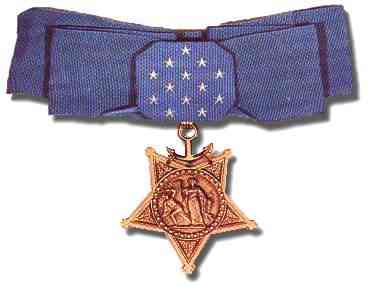
Medal of Honor: R. R. Wright

RAYMOND R WRIGHT

Specialist Fourth Class, US Army; Company A, 3d Battalion, 60th Infantry, 9th Infantry Division

Born: 5 December 1945, Moriah, New York
Died: 24 September 1999, New York(?)

Citation: For conspicuous gallantry and intrepidity at the risk of his life above and beyond the call of duty. While serving as a rifleman with Company A [in the Ap Bac Zone, Republic of Vietnam], Sp4c. Wright distinguished himself during a combat patrol [on 2 May 1967] in an area where an enemy ambush had occurred earlier. Sp4c. Wright's unit suddenly came under intense automatic weapons and small-arms fire from an enemy bunker system protected by numerous snipers in nearby trees. Despite the heavy enemy fire, Sp4c. Wright and another soldier leaped to the top of a dike to assault the position. Armed with a rifle and several grenades, he and his comrade exposed themselves to intense fire from the bunkers as they charged the nearest one. Sp4c. Wright raced to the bunker, threw in a grenade, killing its occupant. The 2 soldiers then ran through a hail of fire to the second bunker. While his comrade covered him with his machinegun, Sp4c. Wright charged the bunker and succeeded in killing its occupant with a grenade. A third bunker contained an automatic rifleman who had pinned down much of the friendly platoon. While his comrade again covered him with machinegun fire, Sp4c. Wright charged in and killed the enemy rifleman with a grenade. The 2 soldiers worked their way through the remaining bunkers, knocking out 4 of them. Throughout their furious assault, Sp4c. Wright and his comrade had been almost continuously exposed to intense sniper fire from the treeline as the enemy desperately sought to stop their attack. Overcoming stubborn resistance from the bunker system, the men advanced into the treeline forcing the snipers to retreat, giving immediate chase, and driving the enemy away from the friendly unit so that it advanced across the open area without further casualty. When his ammunition was exhausted, Sp4c. Wright returned to his unit to assist in the evacuation of the wounded. This 2-man assault had driven an enemy platoon from a well prepared position, accounted for numerous enemy casualties, and averted further friendly casualties. Sp4c. Wright's extraordinary heroism, courage, and indomitable fighting spirit saved the lives of many of his comrades and inflicted serious damage on the enemy. His acts were in keeping with the highest traditions of the military service and reflect great credit upon himself and the U.S. Army.


Note: The other soldier mentioned in the citation was Sgt Leonard B Keller, who also received the Medal of Honor for this action.

21 October 2009

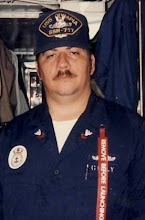
RIP: Leonard Keller

Leonard B Keller
25 Feb 1947 – 18 Oct 2009


ZUI this article from the Pensacola (FL) News Journal:
A Milton man who received the Medal of Honor for his service in Vietnam died after a motorcycle crash as he was leaving a veterans’ club Sunday.

Leonard “Len” Keller, 62, died at Sacred Heart Hospital in Pensacola following a crash outside the Fleet Reserve Association in Milton Sunday afternoon.

This article from the Northwest Florida Daily News includes further details on the accident.


************* *** *************

LEONARD B KELLER

Sergeant, US Army; Company A, 3d Battalion, 60th Infantry, 9th Infantry Division

Born: 25 February 1947, Rockford, Illinois
Died: 18 October 2009, Pensacola, Florida

Citation: For conspicuous gallantry and intrepidity in action at the risk of his life above and beyond the call of duty [on 2 May 1967, in the Ap Bac Zone, Republic of Vietnam]. Sweeping through an area where an enemy ambush had occurred earlier, Sgt. Keller's unit suddenly came under Intense automatic weapons and small-arms fire from a number of enemy bunkers and numerous snipers in nearby trees. Sgt. Keller quickly moved to a position where he could fire at a bunker from which automatic fire was received, killing 1 Viet Cong who attempted to escape. Leaping to the top of a dike, he and a comrade charged the enemy bunkers, dangerously exposing themselves to the enemy fire. Armed with a light machine gun, Sgt. Keller and his comrade began a systematic assault on the enemy bunkers. While Sgt. Keller neutralized the fire from the first bunker with his machine gun, the other soldier threw in a hand grenade killing its occupant. Then he and the other soldier charged a second bunker, killing its occupant. A third bunker contained an automatic rifleman who had pinned down much of the friendly platoon. Again, with utter disregard for the fire directed to them, the 2 men charged, killing the enemy within. Continuing their attack, Sgt. Keller and his comrade assaulted 4 more bunkers, killing the enemy within. During their furious assault, Sgt. Keller and his comrade had been almost continuously exposed to intense sniper fire as the enemy desperately sought to stop their attack. The ferocity of their assault had carried the soldiers beyond the line of bunkers into the treeline, forcing snipers to flee. The 2 men gave immediate chase, driving the enemy away from the friendly unit. When his ammunition was exhausted, Sgt. Keller returned to the platoon to assist in the evacuation of the wounded. The 2-man assault had driven an enemy platoon from a well prepared position, accounted for numerous enemy dead, and prevented further friendly casualties. Sgt. Keller's selfless heroism and indomitable fighting spirit saved the lives of many of his comrades and inflicted serious damage on the enemy. His acts were in keeping with the highest traditions of the military service and reflect great credit upon himself and the U.S. Army.


Note: The comrade mentioned in the citation was Specialist Fourth Class Raymond R Wright, who was also awarded the Medal of Honor for this action.

18 October 2009

Victoria Cross: J. Maxwell

JOSEPH MAXWELL, MC DCM

Lieutenant, 18th (New South Wales) Battalion, Australian Imperial Force

Born: 10 February 1896, Forest Lodge, New South Wales, Australia
Died: 6 July 1967, Matraville, New South Wales, Australia

Citation: For most conspicuous bravery and leadership in attack on the Beaurevoir-Fonsomme line near Estrees, North of St. Quentin, on the 3rd October, 1918.
His company commander was severely wounded early in the advance, and Lt. Maxwell at once took charge. The enemy wire when reached under intense fire was found to be exceptionally strong and closely supported by machine guns, whereupon Lt. Maxwell pushed forward single-handed through the wire and captured the most dangerous gun, killing three and capturing four enemy. He thus enabled his company to penetrate the wire and reach the objective. Later, he again dashed forward and silenced, single-handed, a gun which was holding up a flank company. Subsequently, when with two men only he attempted to capture a strong party of the enemy, he handled a most involved situation very skilfully, and it was due to his resource that he and his comrades escaped.
Throughout the day Lt. Maxwell set a high example of personal bravery, coupled with excellent judgment and quick decision.

[London Gazette issue 31108 dated 6 January 1919, published 3 January 1919.]


Note: Maxwell was subsequently awarded a Bar to his Military Cross for his actions near Rainecourt, France, on 9 August 1918.

Medal of Honor: W. Seach

WILLIAM SEACH

Ordinary Seaman, US Navy; USS Newark (C 1)

Born: 23 May 1877, London, England
Died: 24 October 1978, Brockton, Massachusetts

Citation: In action with the relief expedition of the Allied forces in China during the battles of 13, 20, 21 and 22 June 1900. June 13: Seach and 6 others were cited for their courage in repulsing an attack by 300 Chinese Imperialist soldiers and Boxer militants with a bayonet charge, thus thwarting a planned massive attack on the entire force. June 20: During a day-long battle, Seach ran across an open clearing, gained cover, and cleaned out nests of Chinese snipers. June 21: During a surprise sabre attack by Chinese cavalrymen, Seach was cited for defending gun emplacements. June 22: Seach and others breached the wall of a Chinese fort, fought their way to the enemy's guns, and turned the cannon upon the defenders of the fort. Throughout this period and in the presence of the enemy, Seach distinguished himself by meritorious conduct.

13 October 2009

Hope

"These are hard times. The world hurts. We live in fear and forget to walk with hope. But hope has not forgotten you. So ask it to dinner. It's probably hungry and would appreciate the invitation."
-- Libba Bray, Going Bovine

11 October 2009

Victoria Cross: E. S. F. Fegen

EDWARD STEPHEN FOGARTY FEGEN

Commander (acting Captain), Royal Navy; commanding HMS Jervis Bay

Born: 8 October 1891, Southsea, Hampshire
Died: 5 November 1940, Atlantic Ocean aboard HMS Jervis Bay

Citation: The KING has been graciously pleased to approve the award of the VICTORIA CROSS to

the late Commander (acting Captain) Edward Stephen Fogarty Fegen, Royal Navy

for valour in challenging hopeless odds and giving his life to save the many ships it was his duty to protect.
On the 5th of November, 1940, in heavy seas, Captain Fegen, in His Majesty's Armed Merchant Cruiser Jervis Bay, was escorting thirty-eight merchantmen [in convoy HX34]. Sighting a powerful German warship he at once drew clear of the Convoy, made straight for the Enemy, and brought his ship between the Raider and her prey, so that they might scatter and escape. Crippled, in flames, unable to reply, for nearly an hour the Jervis Bay held the German's fire. So she went down; but of the merchantmen all but four or five were saved.

[London Gazette issue 34999 dtd 22 Nov 1940, published 22 Nov 1940]

Note: The German ship that sank Jervis Bay - a 14,000-ton merchant cruiser which had been converted from a 1922-vintage passenger liner - was the pocket battleship Admiral Scheer, commanded by Theodor Krancke.
Fegen, as commanding officer of HMS Garland, was awarded the Sea Gallantry Medal (the Board of Trade Medal for Saving Life) in silver during World War I.

Medal of Honor: T. W. Custer

THOMAS WARD CUSTER

Second Lieutenant, Company B, 6th Michigan Cavalry

Born: 15 March 1845, New Rumley, Ohio
Died: 25 June 1876, near the Little Bighorn River, Montana Territory

Citation: Capture of flag [at Namozine Church, Virginia] on 3 May 1863.


Citation: 2d Lt. Custer leaped his horse over the enemy's works [at Sayler's Creek, Virginia, on 6 April 1865] and captured 2 stands of colors, having his horse shot from under him and receiving a severe wound.


Note: One of 19 men to receive the Medal of Honor twice. He was George Armstrong Custer's younger brother, and died with him at the Battle of the Little Bighorn.

07 October 2009

RIP: Generalleutnant Günther Rall


Günther Rall
10 Mar 1918 - 4 Oct 2009


Günther Rall, one of Germany's top fighter aces of World War II, died Sunday at his home in Bad Reichenhall, Germany. ZUI this article (in German) from Frankfurter Allgemeine, and also this article at Warbirds.

According to Wikipedia, Rall flew a total of 621 combat missions, was shot down eight times and was wounded thrice. He scored a total of 275 victories, 272 of them on the Eastern Front (including 241 Soviet fighters), flying a Messerschmitt Bf 109. After the war, he served with the West German Air Force; a page on his service (also in German) can be found at their website.

Ace Pilots also has a biography of Rall.


Bundesarchiv photos of Genlt Rall (1970 and 1943) copied from Wikimedia Commons.

06 October 2009

58, please....

I found a 57 yesterday afternoon. Anybody have a 58?

05 October 2009

Mistakes

Mayor's Assistant: I guess it is better to learn from the mistakes of others rather than to make them yourself.
Robot Police Officer: Speaking of which, could you get your management personnel to admit to making mistakes? There are many learning opportunities going undocumented.

04 October 2009

Victoria Cross: A. M. C. McReady-Diarmid

ALLASTAIR MALCOLM CLUNY McREADY-DIARMID

Temporary Lieutenant (Acting Captain), 17th (Service) Battalion The Middlesex Regiment

Born: 21 March 1888, Southgate, North London
Died: 1 December 1917, Moeuvres Sector, France

Citation: His Majesty the KING has been graciously pleased to approve of the award of the Victoria Cross to the undermentioned Officer:-
T./Lt. (A.Capt.) Allastair Malcolm Cluny McReady-Diarmid (formerly Arthur Malcolm McReady-Drew), late Midd'x R.
For most conspicuous bravery and brilliant leadership.
When the enemy penetrated some distance into our position [on 30 November 1917] and the situation was extremely critical, Captain McReady-Diarmid at once led his company forward through a heavy barrage. He immediately engaged the enemy, with such success that he drove them back at least 300 yards, causing numerous casualties and capturing 27 prisoners.
The following day the enemy again attacked and drove back another company which had lost all its officers. This gallant officer at once called for volunteers and attacked. He drove them back again for 300 yards, with heavy casualties. Throughout this attack Captain McReady-Diarmid led the way himself, and it was absolutely and entirely due to his marvellous throwing of bombs that the ground was regained.
His absolute disregard for danger, his cheerfulness and coolness at a most trying time inspired all who saw him.
This most gallant officer was eventually killed by a bomb when the enemy had been driven right back to their starting point.

[London Gazette issue 30578 dated 15 Mar 1918, published 12 Mar 1918.]

Medal of Honor: R. E. Rosser

RONALD E ROSSER

Corporal, US Army; Heavy Mortar Company, 38th Infantry Regiment, 2d Infantry Division

Born: 24 October 1929, Columbus, Ohio
Died: TBD

Citation: Cpl. Rosser, distinguished himself by conspicuous gallantry above and beyond the call of duty. While assaulting heavily fortified enemy hill positions [in the vicinity of Ponggilli, Korea, on 12 January 1952], Company L, 38th Infantry Regiment, was stopped by fierce automatic-weapons, small-arms, artillery, and mortar fire. Cpl. Rosser, a forward observer was with the lead platoon of Company L, when it came under fire from 2 directions. Cpl. Rosser turned his radio over to his assistant and, disregarding the enemy fire, charged the enemy positions armed with only carbine and a grenade. At the first bunker, he silenced its occupants with a burst from his weapon. Gaining the top of the hill, he killed 2 enemy soldiers, and then went down the trench, killing 5 more as he advanced. He then hurled his grenade into a bunker and shot 2 other soldiers as they emerged. Having exhausted his ammunition, he returned through the enemy fire to obtain more ammunition and grenades and charged the hill once more. Calling on others to follow him, he assaulted 2 more enemy bunkers. Although those who attempted to join him became casualties, Cpl. Rosser once again exhausted his ammunition obtained a new supply, and returning to the hilltop a third time hurled grenades into the enemy positions. During this heroic action Cpl. Rosser single-handedly killed at least 13 of the enemy. After exhausting his ammunition he accompanied the withdrawing platoon, and though himself wounded, made several trips across open terrain still under enemy fire to help remove other men injured more seriously than himself. This outstanding soldier's courageous and selfless devotion to duty is worthy of emulation by all men. He has contributed magnificently to the high traditions of the military service.

02 October 2009

New Space Station crew launched

ZUI this NASA press release dated 30 September:
The next residents of the International Space Station launched into orbit aboard a Soyuz spacecraft Wednesday from the Baikonur Cosmodrome in Kazakhstan. NASA astronaut Jeff Williams, Russian cosmonaut Max Suraev and spaceflight participant Guy Laliberte lifted off at 2:14 a.m. CDT.

Future Expedition 22 Commander Williams, Soyuz Commander Suraev and Laliberte are scheduled to dock with the station at 3:37 a.m., Friday, Oct. 2. They will spend nine days as members of a joint crew that includes Expedition 20 Commander Gennady Padalka, NASA's Mike Barratt and Nicole Stott, the European Space Agency's Frank De Winne, Russian cosmonaut Roman Romanenko and the Canadian Space Agency's Bob Thirsk.

*******

On Oct. 10, Padalka will transfer command of the station to De Winne, who will become commander of the next station mission, designated Expedition 21. Padalka, Barratt and Laliberte will land in Kazakhstan at about 11:29 p.m. Padalka and Barratt have been aboard the orbiting laboratory since March 2009.

Laliberte, a Canadian citizen and the founder of Cirque du Soleil, is flying to the station under an agreement between the Russian Federal Space Agency and Space Adventures, Ltd. He will spend nine days aboard the orbiting laboratory.

ZUI also this article from the Montreal Gazette:
The billionaire founder of the Cirque du Soleil blasted off into orbit on a Russian rocket on Wednesday to bring his trademark humour and acrobatic energy into the ultra-serious world of space flight.

Guy Laliberte, 50, a Canadian who spent millions from a personal fortune on his two week visit to the International Space Station (ISS), is likely to be the last such "space tourist" for several years.

He blasted off on schedule from Russia's Baikonur cosmodrome, located in neighbouring Kazakhstan, at 0714 GMT alongside a professional Russian cosmonaut and a US astronaut.

Televised images showed the three crew members waving at mission control from the cockpit of the Soyuz spacecraft with a toy lion mascot dangling from the ceiling.

The Soyuz successfully reached its designated orbit and is due to dock with the ISS on Friday at 0835 GMT.

Laliberte, a former fire-eater and stiltwalker, is taking nine red clown noses into space -- one for each member of the ISS crew -- and has said he will not abandon his lighter side once in space.

*******

The circus founder, the seventh person to go into space as a tourist, could be the last for some time as seats will be limited aboard the Soyuz once NASA takes its shuttles out of service from 2010.

"When we have the chance we will send another tourist into space but for the moment we don't know which year it will be," said [Russian space agency head Anatoly] Perminov, confirming there will be no space tourist in 2010.

COL Williams (US Army, ret). Col Suraev (Russian AF). Laliberte. Col Padalka (Russian AF). Dr Barratt. Stott. Col de Winne (Belgian AF).* Maj Romanenko. Dr Thirsk.


* Or Viscount de Winne, if you prefer.

01 October 2009

Book list - Sep 09

Moondial - children's, by Helen Cresswell
The Disunited States of America - AH/SF, by Harry Turtledove
Operation Yes - YA, by Sara Lewis Holmes
The Year We Disappeared: A Father-Daughter Memoir - memoirs, by Cylin Busby and John Busby
Her Majesty's Spymaster: Elizabeth I, Sir Francis Walsingham, and the Birth of Modern Espionage - English history, by Stephen Budiansky
The Other Side of Truth - YA, by Beverley Naidoo (Carnegie Medal, 2000)
Federations: Vast, Epic, Interstellar - SF (short stories), edited by John Joseph Adams
Bagthorpes Unlimited - children's, by Helen Cresswell
Skellig - YA, by David Almond (Carnegie Medal, 1998)
A Swiftly Tilting Planet - YA fantasy, by Madeleine L'Engle
Many Waters - YA fantasy, by Madeleine L'Engle
Bagthorpes v the World - children's, by Helen Cresswell
Dead Girl Dancing - YA, by Linda Joy Singleton
Farthing - AH/mystery, by Jo Walton
Ha'penny - AH/mystery, by Jo Walton
Half a Crown - AH/thriller, by Jo Walton
Arm of the Starfish - YA, by Madeleine L'Engle
Bagthorpes Abroad - children's, by Helen Cresswell
Bagthorpes Haunted - children's, by Helen Cresswell
The Lady in Red: An Eighteenth-Century Tale of Sex, Scandal, and Divorce - English history, by Hallie Rubenhold
My Side of the Mountain - children's, by Jean Craighead George *


21 books this month, with one reread (marked with an asterisk). To reach my goal of 209 books this year, I have to average 17.417 per month, so I'm currently ahead of track.

The two Carnegie Medal winners bring me up to 19 of 70.

Carnegie Medal books

Having finished reading the Newbery Medal winners, I'm continuing with the books which have been awarded the Andrew Carnegie Medal - the British equivalent of the Newbery Medal, now awarded by the Chartered Institute of Library and Information Professionals (CILIP).

The medal was first awarded in 1937, for the best children's book of 1936, but there have been three years when no book was considered suitable, so there are only 71 winners thus far. In addition to the gold medal, the winner receives £500 worth of books to donate to a library of his/her/their choice.

Here's the list. (Dates marked in red indicate the six books I had already read before last year; dates in purple indicate the ones I've read since.)

1936: Pigeon Post, by Arthur Ransome
1937: The Family from One End Street, by Eve Garnett
1938: The Circus is Coming, by Noel Streatfield
1939: Radium Woman, by Eleanor Doorly
1940: Visitors from London, by Kitty Barne
1941: We Couldn't Leave Dinah, by Mary Treadgold
1942: The Little Grey Men, by 'BB' (D J Watkins-Pitchford)
1943: Prize withheld as no book was considered suitable
1944: The Wind on the Moon, by Eric Linklater
1945: Prize withheld as no book was considered suitable
1946: The Little White Horse, by Elizabeth Goudge
1947: Collected Stories for Children, Walter De La Mare
1948: Sea Change, by Richard Armstrong
1949: The Story of Your Home, by Agnes Allen
1950: The Lark on the Wing, by Elfrida Vipont Foulds
1951: The Woolpack, by Cynthia Harnett
1952: The Borrowers, by Mary Norton
1953: A Valley Grows Up, by Edward Osmond
1954: Knight Crusader, by Ronald Welch (Felton Ronald Oliver)
1955: The Little Bookroom, by Eleanor Farjeon
1956: The Last Battle, by C S Lewis
1957: A Grass Rope, by William Mayne
1958: Tom's Midnight Garden, by Philipa Pearce
1959: The Lantern Bearers, by Rosemary Sutcliff
1960: The Making of Man, by Dr I W Cornwall
1961: A Stranger at Green Knowe, by Lucy M Boston
1962: The Twelve and the Genii, by Pauline Clarke
1963: Time of Trial, by Hester Burton
1964: Nordy Bank, by Sheena Porter
1965: The Grange at High Force, by Philip Turner
1966: Prize withheld as no book was considered suitable
1967: The Owl Service, by Alan Garner
1968: The Moon in the Cloud, by Rosemary Harris
1969: The Edge of the Cloud, by Kathleen Peyton
1970: The God Beneath the Sea, by Leon Garfield and Edward Blishen
1971: Josh, by Ivan Southall
1972: Watership Down, by Richard Adams
1973: The Ghost of Thomas Kempe, by Penelope Lively
1974: The Stronghold, by Mollie Hunter
1975: The Machine Gunners, by Robert Westall
1976: Thunder and Lightnings, by Jan Mark
1977: The Turbulent Term of Tyke Tiler, by Gene Kemp
1978: The Exeter Blitz, by David Rees
1979: Tulku, by Peter Dickinson
1980: City of Gold, by Peter Dickinson
1981: The Scarecrows, by Robert Westall
1982: The Haunting, by Margaret Mahy
1983: Handles, by Jan Mark
1984: The Changeover, by Margaret Mahy
1985: Storm, by Kevin Crossley-Holland
1986: Granny was a Buffer Girl, by Berlie Doherty
1987: The Ghost Drum, by Susan Price
1988: A Pack of Lies, by Geraldine McCaughrean
1989: Goggle-eyes, by Anne Fine
1990: Wolf, by Gillian Cross
1991: Dear Nobody, by Berlie Doherty
1992: Flour Babies, by Anne Fine
1993: Stone Cold, by Robert Swindells
1994: Whispers in the Graveyard, by Theresa Breslin
1995: Northern Lights, by Philip Pullman*
1996: Junk, by Melvin Burgess
1997: River Boy, by Tim Bowler
1998: Skellig, by David Almond
1999: Postcards From No Man's Land, by Aidan Chambers
2000: The Other Side of Truth, by Beverley Naidoo
2001: The Amazing Maurice and his Educated Rodents, by Terry Pratchett
2002: Ruby Holler, by Sharon Creech
2003: A Gathering Light, by Jennifer Donnelly
2004: Millions, by Frank Cottrell Boyce
2005: Tamar, by Mal Peet
2006: **
2007: Just in Case, by Meg Rosoff
2008: Here Lies Arthur, by Philip Reeve
2009: Bog Child, by Siobhan Dowd

So the count now is 19 down, 51 to go. Unfortunately, our local library system (Groton, Waterford and Mystic/Noank) only has a dozen or so of the ones I haven't read yet, so I'm going to have to make a lot of ILL requests....

Skellig is a very strange book....


* His Dark Materials, Book 1. Published in the US as The Golden Compass.

** Up through the award for 2005, the winners were referred to by the year of publication. Beginning in 2007, the winners were referred to by the year the award was given, as with the American Newbery Medal. Thus there is no "2006 winner" of the Carnegie Medal. Tamar, the 2005 winner, was published in '05, and received the medal in '06. Just in Case, the 2007 winner, was published in '06 and received the award in '07.

27 September 2009

Victoria Cross: B. S. Kingsbury

BRUCE STEEL KINGSBURY

Private, 2nd/14th (Victoria) Battalion, Australian Military Forces

Born: 8 January 1918, Armadale, Melbourne, Australia
Died: 29 August 1942, near Isurava, New Guinea

Citation: In New Guinea, the Battalion to which Private Kingsbury belonged had been holding a position in the Isurava area for two days against continuous and fierce enemy attacks. On the 29th August, 1942, the enemy attacked in such force that they succeeded in breaking through the Battalion's right flank, creating a serious threat both to the rest of the Battalion and to its Headquarters. To avoid the situation becoming more desperate, it was essential to regain immediately the lost ground on the right flank.
Private Kingsbury, who was one of the few survivors of a Platoon which had been over-run and severely cut about by the enemy, immediately volunteered to join a different platoon which had been ordered to counter-attack.
He rushed forward firing his Bren Gun from the hip through terrific machine-gun fire and succeeded in clearing a path through the enemy. Continuing to sweep the enemy positions with his fire and inflicting an extremely high number of casualties on them, Private Kingsbury was seen to fall to the ground shot dead by the bullet from a sniper hiding in the wood.
Private Kingsbury displayed a complete disregard for his own safety. His initiative and superb courage made possible the recapture of the position which undoubtedly saved Battalion Headquarters, as well as causing heavy casualties amongst the enemy. His coolness, determination and devotion to duty in the face of great odds was an inspiration to his comrades.

Medal of Honor: J. Lummus

JACK LUMMUS

First Lieutenant, US Marine Corps Reserve; 2d Battalion, 27th Marines, 5th Marine Division

Born: 22 October 1915, Ennie, Texas
Died: 8 March 1945, Iwo Jima

Citation: For conspicuous gallantry and intrepidity at the risk of his life above and beyond the call of duty as leader of a Rifle Platoon attached to the 2d Battalion, 27th Marines, 5th Marine Division, in action against enemy Japanese forces on Iwo Jima in the Volcano Islands, 8 March 1945. Resuming his assault tactics with bold decision after fighting without respite for 2 days and nights, 1st Lt. Lummus slowly advanced his platoon against an enemy deeply entrenched in a network of mutually supporting positions. Suddenly halted by a terrific concentration of hostile fire, he unhesitatingly moved forward of his front lines in an effort to neutralize the Japanese position. Although knocked to the ground when an enemy grenade exploded close by, he immediately recovered himself and, again moving forward despite the intensified barrage, quickly located, attacked, and destroyed the occupied emplacement. Instantly taken under fire by the garrison of a supporting pillbox and further assailed by the slashing fury of hostile rifle fire, he fell under the impact of a second enemy grenade but, courageously disregarding painful shoulder wounds, staunchly continued his heroic 1-man assault and charged the second pillbox, annihilating all the occupants. Subsequently returning to his platoon position, he fearlessly traversed his lines under fire, encouraging his men to advance and directing the fire of supporting tanks against other stubbornly holding Japanese emplacements. Held up again by a devastating barrage, he again moved into the open, rushed a third heavily fortified installation and killed the defending troops. Determined to crush all resistance, he led his men indomitably, personally attacking foxholes and spider traps with his carbine and systematically reducing the fanatic opposition until, stepping on a land mine, he sustained fatal wounds. By his outstanding valor, skilled tactics, and tenacious perseverance in the face of overwhelming odds, 1st Lt. Lummus had inspired his stouthearted marines to continue the relentless drive northward, thereby contributing materially to the success of his regimental mission. His dauntless leadership and unwavering devotion to duty throughout sustain and enhance the highest traditions of the U.S. Naval Service. He gallantly gave his life in the service of his country.

22 September 2009

STS-132 and STS-133 crews announced

Actually, the STS-132 crew was announced a few months ago, but I haven't been paying proper attention to the space programme lately. ZUI this NASA press release dated 14 May 09:
NASA has assigned the crew for space shuttle mission STS-132, targeted for launch in April 2010. This flight will deliver the Russian-built Mini Research Module (MRM1) to the International Space Station.

Navy Capt. Ken Ham will command the shuttle Atlantis for this 11-day mission. Navy Cmdr. Tony Antonelli will serve as the pilot. Mission specialists are Navy Capt. Steve Bowen, Karen Nyberg, Garrett Reisman, and Piers Sellers.

This will be the third spaceflight for Sellers, and the second for each of the others.

Capt Ham (USN). Cdr Antonelli (USN). Capt Bowen (USN). Dr Nyberg. Dr Reisman. Dr Sellers.


For the shuttle programme's final flight, ZUI this press release dated 18 Sep:
NASA has assigned the crew for the last scheduled space shuttle mission, targeted to launch in September 2010. The flight to the International Space Station will carry a pressurized logistics module to the station.

Veteran shuttle commander and retired Air Force Col. Steven W. Lindsey will command the eight-day mission, designated STS-133. Air Force Col. Eric A. Boe will serve as the pilot; it will be his second flight as a shuttle pilot. Mission Specialists are shuttle mission veteran Air Force Col. Benjamin Alvin Drew, Jr., and long-duration spaceflight veterans Michael R. Barratt, Army Col. Timothy L. Kopra and Nicole P. Stott.

*******

Lindsey currently is chief of the Astronaut Office. Long-duration spaceflight veteran and former space station commander Peggy A. Whitson has been named his successor when Lindsey transitions in October to training for his spaceflight. Whitson was a flight engineer aboard the station during Expedition 5 in 2002 and the commander of Expedition 16 in 2007 to 2008.

This will be Lindsey's fifth spaceflight, and the second for each of the others.


Col Lindsey (USAF, ret). Col Boe (USAF). Col Drew (USAF). Dr Barratt. Col Kopra (US Army). Stott.

20 September 2009

Victoria Cross: R. L. Zengel

RAPHAEL LOUIS ZENGEL, MM

Serjeant, 5th Battalion the Saskatchewan Regiment, Canadian Expeditionary Force

Born: 11 November 1894, Faribault, Minnesota, USA
Died: 27 February 1977, Errington, British Columbia, Canada

Citation: For most conspicuous bravery and devotion to duty while protecting the battalion right flank [on 9 August 1918, east of Warvillers, France]. He was leading his platoon gallantly forward to the attack, but had not gone far when he realised that a gap had occurred on his flank, and that an enemy machine gun was firing at close range into the advancing line. Grasping the situation, he rushed forward some 200 yards ahead of the platoon, tackled the machine-gun emplacement, killed the officer and operator of the gun, and dispersed the crew. By his boldness and prompt action he undoubtedly saved the lives of many of his comrades.
Later, when the battalion was held up by very heavy machine-gun fire, he displayed much tactical skill and directed his fire with destructive results. Shortly afterwards he was rendered unconscious for a few minutes by an enemy shell, but on recovering consciousness he at once continued to direct harassing fire on the enemy.
Sjt. Zengel's work throughout the attack was excellent, and his utter disregard for personal safety, and the confidence he inspired in all ranks, greatly assisted in bringing the attack to a successful end.

(London Gazette Issue 30922 dated 27 Sep 1918, published 24 Sep 1918.)

Medal of Honor: C. F. Schilt

CHRISTIAN FRANK SCHILT

First Lieutenant, US Marine Corps; Observation Squadron 7M

Born: 19 March 1895, Richland County, Illinois
Died: 8 January 1987

Citation: During the progress of an insurrection at Quilali, Nicaragua, 6, 7, and 8 January 1928, 1st Lt. Schilt, then a member of a marine expedition which had suffered severe losses in killed and wounded, volunteered under almost impossible conditions to evacuate the wounded by air and transport a relief commanding officer to assume charge of a very serious situation. 1st Lt. Schilt bravely undertook this dangerous and important task [in his Vought O2U Corsair] and, by taking off a total of 10 times in the rough, rolling street of a partially burning village, under hostile infantry fire on each occasion, succeeded in accomplishing his mission, thereby actually saving 3 lives and bringing supplies and aid to others in desperate need.


Note: Schilt retired in 1957 with the rank of general. His other awards included the Distinguished Service Medal, the Legion of Merit with Combat "V," the Distinguished Flying Cross, the Bronze Star with Combat "V" and the Air Medal with four gold stars.

18 September 2009

What's in a Name reading challenge

Another reading challenge I just stumbled across:
*This is a challenge that anyone can join, no matter what types of books they like to read. You should be able to find books from any genre that will work.

*Dates: January 1, 2009 through December 31, 2009

*The Challenge: Choose one book from each of the following categories.

1. A book with a "profession" in its title. Examples might include: The Book Thief, The Island of Dr. Moreau, The Historian

2. A book with a "time of day" in its title. Examples might include: Twilight, Four Past Midnight, The Curious Incident of the Dog in the Night-Time

3. A book with a "relative" in its title. Examples might include: Eight Cousins, My Father's Dragon, The Daughter of Time

4. A book with a "body part" in its title. Examples might include: The Bluest Eye, Bag of Bones, The Heart of Darkness

5. A book with a "building" in its title. Examples might include: Uncle Tom's Cabin, Little House on the Prairie, The Looming Tower

6. A book with a "medical condition" in its title. Examples might include: Insomnia, Coma, The Plague

*You may overlap books with other challenges, but please don't use the same book for more than one category.

*Again, there will be some small prizes scattered throughout. No set schedule, so just be sure to check in once a while. There will also be a prize awarded at the conclusion to one participant who completes the challenge.

*You don't need to decide exactly which books you will be reading ahead of time, though you're certainly welcome to. Either way, I'd love to see your lists of possibilities, and I'll bet everyone else would love to read them as well. To join in, simply leave a link here. Or, if you don't have a blog, simply leave your name (and feel free to share your list in the comments if you'd like).

Click on the picture above for the original post at What's in a Name-2.

I've already read books for items 1, 3 and 5* (and possibly 6) this year, so I'm off to a good start....


* Alcatraz Versus the Evil Librarians, by Brandon Sanderson; Sister Light, Sister Dark, by Jane Yolen; and The Secret of the Old Mill, by "Franklin W Dixon."

WWII reading challenge

It's a little late, but I just found this reading challenge at War through the Generations.
War Through the Generation’s very first reading challenge will be World War II. The challenge will run from January 1, 2009, to December 31, 2009.

Rules:

To participate in the WWII Reading Challenge, you must commit to reading at least five books throughout the year. We plan to read more than that, and feel free to do the same! The books can be fiction or non-fiction, and they can be about any aspect of WWII. WWII should be the primary or secondary theme, and it doesn’t matter whether the book takes place during the war or after the war. Children’s literature is acceptable! (Please visit the WWII Reading List page for some recommendations.) You can count books you are reading for other challenges, so long as they meet the aforementioned criteria.

You can decide which books you’d like to read right away, or you can choose them during the course of the challenge. However, when you sign up, we ask that you set a reading goal for the challenge. At the end of the challenge, those who met or exceeded their reading goals will be entered in a drawing (prizes to be announced later).


**Participants anywhere in the world are eligible for most prizes in the drawing!**

Click on the picture above for instructions on how to sign up.

I've already read three WWII books* this year, so I've signed up for a total of six.


* Shadows in the Jungle: The Alamo Scouts Behind Japanese Lines in World War II, by Larry Alexander; The Silver Sword (aka Escape from Warsaw), by Ian Serraillier; and Battleship Bismarck: A Survivor's Story, by Baron Burkard von Müllenheim-Rechberg.

Hunches

"My rule with a hunch is that if it calls for more work, like right now, follow it. If it calls for less or something like skimping, then ignore it. If it's a case where there are sixteen leads and none more likely than any other and you might as well take them in alphabetical order, then a hunch might well be the back of your mind drawing your attention to something the front of your mind missed."
-- Jo Walton, Farthing

15 September 2009

Medal of Honor to be presented Thursday


ZUI this article from www.Army.mil:
Ask anyone - family, friends, Soldiers - who knew Sgt. 1st Class Jared Monti of the 10th Mountain Division, and they'll tell you he was the best friend, best Soldier, best noncommissioned officer, best person they ever knew.

*******

He was posthumously promoted to sergeant first class the following day and will be the first Soldier awarded the Medal of Honor for Operation Enduring Freedom Thursday, when President Barack Obama presents the nation's highest honor to Monti's parents in a White House ceremony. Monti will also be honored in a Pentagon ceremony Friday.

Monti earned the Medal when he and 15 other Soldiers became the first American servicemembers to ever set foot in the Gremen Valley, near the Pakistan border. Reports had showed insurgents were in the area, but not their exact location, their numbers or the types of weapons they had.

************* *** *************

JARED CHRISTOPHER MONTI

Sergeant First Class (then Staff Sergeant), US Army; 3d Squadron, 71st Cavalry Regiment, 3d Brigade Combat Team, 10th Mountain Division (Light Infantry)

Born: 20 September 1975, Abington, Massachusetts
Died: 21 June 2006, Nuristan Province, Afghanistan

Citation: For conspicuous gallantry and intrepidity in action at the risk of his life above and beyond the call of duty. Sergeant First Class Monti distinguished himself at the cost of his life while serving as a team leader with the Headquarters and Headquarters Troop, 3d Squadron, 71st Cavalry Regiment in Nuristan Province, Afghanistan on 21 June 2006. On that day, Sergeant First Class Monti was leading a mission to gather intelligence and to direct fires against the enemy in support of a squadron-size interdiction mission. While at an observation position on top of a mountain ridge, Sergeant First Class Monti’s sixteen-man patrol came under attack by a superior force consisting of as many as 50 enemy fighters. On the verge of being overrun, Sergeant First Class Monti directed his patrol to set up a hasty defensive position behind a collection of rocks. He then began to call for indirect fire from a nearby support base; accurately bringing the rounds upon the enemy who had closed to within 50 meters of his position. While still calling for fire, Sergeant First Class Monti personally engaged the enemy with his rifle and a grenade, successfully disrupting an attempt to flank the patrol. Sergeant First Class Monti then realized that one of his Soldiers was lying wounded and exposed in the open ground between the advancing enemy and the patrol’s position. With complete disregard for his own safety, Sergeant First Class Monti moved from behind the cover of the rocks into the face of withering enemy fire. After closing within meters of his wounded Soldier, the heavy volume of fire forced Sergeant First Class Monti to seek cover. Sergeant First Class Monti then gathered himself and rose again to maneuver through a barrage of enemy fire to save his wounded Soldier. Again, Sergeant First Class Monti was driven back by relentless enemy fire. Unwilling to leave his Soldier wounded and exposed, Sergeant First Class Monti made another attempt to move across open terrain and through the enemy fire to the aide of his wounded Soldier. On his third attempt, Sergeant First Class Monti was mortally wounded, sacrificing his own life in an effort to save his Soldier. Sergeant First Class Monti’s acts of heroism inspired the patrol to fight off the larger enemy force. Sergeant First Class Monti’s immeasurable courage and uncommon valor were in keeping with the highest traditions of military service and reflect great credit upon himself, 3d Squadron 71st Cavalry Regiment, the 3d Brigade Combat Team, the 10th Mountain Division (Light Infantry), and the United States Army.

14 September 2009

RIP: Gertrude Baines

Gertrude Baines
6 Apr 1894 - 11 Sep 2009


The oldest person in the world has died. ZUI this article from the Los Angeles Times:
Although she liked her bacon crispy and her chicken fried, she never drank, smoked or fooled around, Gertrude Baines once said, describing a life that lasted an astonishing 115 years and earned her the title of oldest person on the planet.

It was a title Baines quietly relinquished Friday when she died in her sleep at Western Convalescent Hospital, her home since she gave up living alone at age 107 after breaking a hip.

She likely suffered a heart attack, said her longtime physician, Dr. Charles Witt, although an autopsy was scheduled to determine the exact cause of death.

*******

Baines was born in Shellman, Ga., on April 6, 1894, when Grover Cleveland was in the White House, radio communication was just being developed and television was still more than a half-century from becoming a ubiquitous household presence.

She was 4 years old when the Spanish-American War broke out and 9 when the first World Series was played. She had already reached middle age by the time the U.S. entered World War II in 1941.

*******

The centenarian, who worked as a maid at Ohio State University dormitories until her retirement, had outlived all of her family members. Her only daughter died of typhoid at age 18.

In her final years, she passed her days watching her favorite TV program, "The Jerry Springer Show," and consuming her favorite foods: bacon, fried chicken and ice cream. She complained often, however, that the bacon served to her was too soft.

Baines is the first supercentenarian listed by the Gerontology Research Group (GRG) to die since the death of Gertrude Noone on 10 September.

The GRG's list of validated living supercentenarians (people who have reached their 110th birthday) currently includes 72 people (4 men and 68 women), ranging from Kama Chinen of Japan (born 10 May 1895) to Ruth Anderson of Minnesota (born 24 Jul 1899). The oldest person in the United States is now Mary Josephine Ray of New Hampshire (born 17 May 1895 in Canada), the world's second-oldest person; 26 other supercentenarians live in the US, though none are in California.

RIP: Gertrude Noone

Gertrude Noone
30 Dec 1898-10 Sep 2009


The oldest military veteran in the world has died. ZUI this article from the Los Angeles Times:
Gertrude Noone was a 44-year-old insurance policy clerk for Travelers in Hartford, Conn., in 1943 when she enlisted in the Women's Army Corps.

When she died peacefully Thursday morning at age 110 at an assisted-living facility in Milford, Conn., she was the oldest known living military veteran in the world -- a fact that made her proud.

*******

Noone, who rose to the rank of sergeant first class, was chief clerk of the large dispensary at Ft. Myer, Va., by the time she left the Army in 1949. She then worked as an administrative assistant at a private psychiatric hospital in Stamford, Conn., until retiring in 1962.

Bob Johnson, a retired Air Force lieutenant colonel who has spent the last 19 years helping World War I and World War II veterans receive recognition and awards, said the title of the world's oldest known living military veteran passed to Noone when British World War I veteran Harry Patch died July 25 at 111.

*******

One of 10 children, Noone was born Dec. 30, 1898, in Ansonia, Conn.

All nine of Noone's siblings predeceased her. The most recent was her sister Esther Balogh, who served as an Army nurse during World War II and died in 2003 at 103.

Noone, who never married, lived with Balogh for many years until 2002, when she moved into Carriage Green, where she joined the gardening club and participated in a weekly exercise group.

There are still three living World War I veterans, but the oldest - John Babcock, a Canadian now living in the US - is only 109.

Noone, who at the time of her death was the 60th-oldest person in the world, is the fourth supercentenarian listed by the Gerontology Research Group (GRG) to die since the death of Harry Patch. The others were Ethel Johnson of Ohio (28 Sep 1897-29 Jul 2009), Sarah Wilkins of Iowa (27 Mar 1899-8 Aug 2009) and Pasqualina Franco of Ontario (2 Dec 1898-16 Aug 2009).

13 September 2009

Victoria Cross: H. W. Pitcher and G. V. Fosbery

HENRY WILLIAM PITCHER

Lieutenant, 4th Punjab Infantry, Bengal Staff Corps

Born: 20 December 1841, Bath, Somerset
Died: 5 July 1875, Dehra Ghazi Khan, India

Citation: For the daring and gallant manner in which, in the course of the recent operations against the Frontier Tribes, on the 30th October, 1863, he led a party of his Regiment to re-capture the Crag Picket, after its garrison had been driven in by the enemy; on which occasion sixty of them were killed in desperate hand to hand fighting.
From the nature of the approach to the top of the Crag, amongst the large rocks, one or two men only could advance at one time; "and while I ascended one path," relates Major Keyes, commanding the 1st Punjab Infantry, "I directed Lieutenant Fosbery, of the late 4th European Regiment, to push up another, at the head of a few men. He led this party with the greatest coolness and intrepidity, and was the first man to gain the top of the Crag, on his side of the attack. Lieutenant Pitcher, equally cool and daring, led a party of men up to the last rock, until he was knocked down and stunned by a large stone thrown from above, within a few yards of him."
Lieutenant Pitcher also displayed great gallantry in leading on a party of his Regiment to endeavour to recover the Crag Picket, when it again fell into the enemy's hands, on the 13th of November, as related in the following extract from Major Keyes' report of the 16th of that month;
"The duty of leading the first charge devolved upon Lieutenant Pitcher, and I beg to bring to the special notice of the Brigadier-General Commanding, the admirable manner in which he performed this important duty. He was by many yards the foremost of his party, and the gallant bearing of this excellent young Officer was the admiration of all spectators. It is impossible to say too much, or to over-rate his services on this occasion. Lieutenant Pitcher was severely wounded, and was obliged to be carried back."

[London Gazette issue 22876 dtd 19 Jul 1864, published 19 Jul 1864.]


GEORGE VINCENT FOSBERY

Lieutenant, 4th Bengal European Regiment, British Indian Army

Born: 11 April 1832, Stert, Wiltshire
Died: 8 May 1907, Bath, Somerset

Citation: For the daring and gallant manner in which, on the 30th of October, 1863, acting as a Volunteer at the time, he led a party of his Regiment to re-capture the Crag Picquet, after its garrison had been driven in by the enemy, on which occasion sixty of them were killed in desperate hand to hand fighting.
From the nature of the approach to the top of the Crag, amongst the large rocks, one or two men only could advance at one time; and "whilst I ascended one path," relates Lieutenant-Colonel Keyes, C.B., commanding the 1st Punjab Infantry, "I directed Lieutenant Fosbery, of the late 4th European Regiment, to push up another at the head of a few men. He led this party with the greatest coolness and intrepidity, and was the first man to gain the top of the Crag on his side of the attack."
Subsequently, Lieutenant-Colonel Keyes being wounded, Lieutenant Fosbery assembled a party with which he pursued the routed enemy in the direction of the Lalloo ridge, inflicting on them further loss and confirming possession of the post.

[London Gazette issue 22988 dated 7 Jul 1865, published 7 Jul 1865.]


Note: Fosbery was the inventor of the Paradox rifle/shotgun, and also of a self-cocking revolver, which was manufactured by the Webley & Scott Revolver & Arms Company.

Medal of Honor: A. Savage

AUZELLA SAVAGE

Ordinary Seaman, US Navy; USS Santiago de Cuba

Born: 1846, Maine
Died: at sea

Citation: On board the U.S.S. Santiago de Cuba in the assault on Fort Fisher, [near Wilmington, North Carolina, on] 15 January 1865. When the landing party to which he was attached charged on the fort with a cheer, and the determination to plant the colors on the ramparts, Savage remained steadfast when more than two-thirds of the marines and sailors fell back in panic during the fight. When enemy fire shot away the flagstaff above his hand, he bravely seized the remainder of the staff and brought his colors safely off.

11 September 2009

Operational Honours and Awards List

A new Operational Honours and Awards List has been issued by the Ministry of Defence. ZUI this article from the MOD Defence News:
A total of 145 members of the Armed Forces have received honours and awards in the Operational Honours List dated today, 11 September 2009.

Amongst the awards is a Military Cross given to Medical Assistant Class 1 Kate Louise Nesbitt, RN, for service in Afghanistan - the first MC awarded to a woman in the Royal Navy and only the second MC awarded to any woman. ZUI this article from The Times:
A 20-year-old medic who repeatedly rushed forward to save colleagues while under attack from the Taleban has become the first woman in the Royal Navy to be awarded the Military Cross and only the second in the Armed Forces.

Able Seaman Class 1 Kate Nesbitt tended wounded colleagues from 3 Commando Brigade Royal Marines several times when they came under fire while on patrol in Afghanistan. The Ministry of Defence said: “Able Seaman Nesbitt’s actions throughout a series of offensive operations were exemplary. Under fire and under pressure her commitment and courage were inspirational and made the difference between life and death. She performed in the highest traditions of her service.”

The Military Cross is given to members of the Armed Forces “for exemplary gallantry during active operations against the enemy”, and ranks below only the Victoria Cross and Conspicuous Gallantry Cross as a recognition of bravery in battle.

Private Michelle Norris, 18, a medic with the Royal Army Medical Corps, was the first woman to win the Military Cross. She braved heavy sniper and machinegun fire from 200 insurgents during a fierce battle in southern Iraq in 2006. She climbed on top of an armoured vehicle to give life-saving treatment to a comrade.

This article from The Telegraph includes brief descriptions of some of the awards, as does this one from the BBC.


Able Seaman Kate Nesbitt MC

Operation Yes (Sara Lewis Holmes)

I read a lot of books, but seldom write reviews - for the simple reason that I hate writing reviews. The process always reminds me of high-school English class, where we would read a perfectly good story and then ruin it by dissecting it. (I'm a surface reader - I read the story exactly as written, without regard for possible parables, allegories or other hidden meanings.) This week, however....

I mentioned a while back that one of the books I was looking forward to this year was Operation Yes, by Sara Lewis Holmes. It finally came out on 1 September, and it was well worth the wait.

The book is set on an Air Force base in North Carolina. Bo Whaley, son of the base commander, doesn't like school; he's acquired a reputation as a troublemaker, too. Gari Whaley doesn't want to spend a year with her uncle Phil's family, but her mother is an Army nurse who's being sent to Iraq for a year. Bo and Gari are both going to be in the sixth grade at Young Oaks School.

Carol Loupe dropped out of the Air Force Academy to become a teacher. She's the only one in her family who isn't in the service - her sister is an Air Force pilot, one brother is at the Academy and the other brother is part of a Special Forces team in Afghanistan. Miss Loupe is also at Young Oaks, doing her first year as a sixth-grade teacher.

Miss Loupe is a very active teacher. On the first day of school, she is down on her knees, taping off a rectangle on the classroom floor whilst calling roll (from memory). The Taped Space is meant to be a stage for improv, leading to some wild scenes. Unfortunately, the School Commission is coming to do a material inspection of the school, and theatre isn't part of the state-approved sixth-grade curriculum....

And then Miss Loupe receives bad news. Very bad news. And Bo, Gari and the rest of the sixth grade - aided by their first-grade reading buddies and 100,000 Little Green Men - set out to help her recover.

Holmes, I believe, was an Air Force brat; she's now an Air Force wife. So her descriptions of life on base sound right, and she deals well with problems like Gari's separation from her mother or Bo's worries about what will happen when his father transfers next year. Favourite bits include the school librarian, who uses book titles as cuss words ("Frog and Toad!" Miss Candy said.); the FOD walkdown Bo organises to find a lost pendant; the performance presented by the Ugly Couch Players, and:
"A milk run is a routine mission," said Mr. Nix to his class as they came through the line. "Does anyone know what the opposite of routine is?"
One of his first graders tried to raise her hand and dropped her pudding. A glob of it landed on his shoe.
"No, that's not it," said Mr. Nix.

Operation Yes, by Sara Lewis Holmes. Scholastic, 2009. Ages 9-12 (though our public library lists it as YA). Available from Amazon and Barnes & Noble, of course - though buying through IndieBound or from your local independent bookseller is highly recommended!

06 September 2009

Victoria Cross: R. H. Gray

ROBERT HAMPTON GRAY

Temporary Lieutenant, Royal Canadian Naval Volunteer Reserve; 1841 Squadron, Fleet Air Arm (on board HMS Formidable)

Born: 2 November 1917, Trail, British Columbia, Canada
Died: 9 August 1945, Onagawa Wan (Onagawa Bay), Japan

Citation: For great valour in leading an attack on a Japanese destroyer in Onagawa Wan on 9th August, 1945. In the face of fire from shore batteries and a heavy concentration of fire from some five warships Lieutenant Gray pressed home his attack, flying very low in order to ensure success, and, although he was hit and his aircraft was in flames, he obtained at least one direct hit, sinking the destroyer. Lieutenant Gray has consistently shown a brilliant fighting spirit and most inspiring leadership.

(London Gazette Issue 37346 dated 13 Nov 1945, published 9 Nov 1945.)


Note: Lieutenant Gray was the last Canadian to win the Victoria Cross. His target was the Etorofu-class escort Amakusa.

Medal of Honor: L. P. Sijan

LANCE P SIJAN

Captain, US Air Force; 366th Fighter Wing/4th Allied POW Wing

Born: 13 April 1942, Milwaukee, Wisconsin
Died: 22 January 1968, Hoa Lo, North Vietnam

Citation: While on a flight over North Vietnam [on 9 November 1967], Capt. Sijan ejected from his disabled [F-4C] aircraft and successfully evaded capture for more than 6 weeks. During this time, he was seriously injured and suffered from shock and extreme weight loss due to lack of food. After being captured by North Vietnamese soldiers, Capt. Sijan was taken to a holding point for subsequent transfer to a prisoner of war camp. In his emaciated and crippled condition, he overpowered 1 of his guards and crawled into the jungle, only to be recaptured after several hours. He was then transferred to another prison camp where he was kept in solitary confinement and interrogated at length. During interrogation, he was severely tortured; however, he did not divulge any information to his captors. Capt. Sijan lapsed into delirium and was placed in the care of another prisoner. During his intermittent periods of consciousness until his death, he never complained of his physical condition and, on several occasions, spoke of future escape attempts. Capt. Sijan's extraordinary heroism and intrepidity above and beyond the call of duty at the cost of his life are in keeping with the highest traditions of the U.S. Air Force and reflect great credit upon himself and the U.S. Armed Forces.

04 September 2009

J. R. Rustin

ZUI this article - "Chipley Native - Medal of Honor Recipient - Dies" - from the Foster Folly News*:
James Relius "Dick" Rustin (1929-2009), went to be with the Lord on August 29, 2009. He was born on November 29, 1929 in Chipley, Florida. He had a life span of 79 years which included a much honored military career.

For two years he served with the U.S. Marine Corp, then transferred into the U.S. Army where he served for 20 years. As well as serving in the Korean War and World War II, Dick was awarded many military honors including the Medal of Honor.

However, the Army's Medal of Honor page does not list a medal awarded to anyone named Rustin in either World War I or Korea (or for that matter, Vietnam). And if Mr Rustin was in fact born on 29 Nov 1929, he was only 15 years old when World War II ended, making his service in that war highly unlikely.

Something seems amiss....


* "A Washington County Florida Community Newspaper"

02 September 2009

First Elizabeth Cross presented


ZUI this article from the MOD Defence News:
The first Elizabeth Cross, awarded to families of Service personnel killed on operations in recognition of their loss, has been presented to the family of Warrant Officer Class 2 (WO2) Sean Upton today.

WO2 Sean Upton, from 5th Regiment Royal Artillery, was killed in an explosion while on a foot patrol in Sangin district, Helmand province, Afghanistan, on 27 July 2009.

His family were presented with the Elizabeth Cross at his funeral in Catterick today, Tuesday 18 August 2009.

01 September 2009

Book list - Aug 09

Strawberry Girl - children's, by Lois Lenski (Newbery Medal, 1946) *
The Grey King - children's modern fantasy, by Susan Cooper (Newbery Medal, 1976)
Tomorrow's Magic - fantasy, by Pamela F Service
Daniel Boone - children's biography, by James Daugherty (Newbery Medal, 1940)
Winter in Thrush Green - fiction, by Miss Read
The Spartacus War - ancient history, by Barry S Strauss
Battles at Thrush Green - fiction, by Miss Read
The Last Thing I Remember - YA thriller, by Andrew Klavan
Driving Like Crazy - automobiles, by P J O'Rourke
From the Mixed-Up Files of Mrs Basil E Frankweiler - children's, by E L Konigsburg (Newbery Medal, 1968) *
Battleship Bismarck: A Survivor's Story - WW II, by Burkard Freiherr von Müllenheim-Rechberg
A Wrinkle in Time - children's, by Madeleine L'Engle (Newbery Medal, 1963) *
The Tomorrow Code - YA SF, by Brian Falkner
Many Skies: Alternative Histories of the Sun, Moon, Planets, and Stars - AH/astronomy, by Arthur R Upgren
Saint Antony's Fire - AH/SF, by Steve White
Ordinary Jack - children's, by Helen Cresswell
Time Out - children's time travel, by Helen Cresswell
Shelter Me - YA historical fiction, by Alex McAulay
Gateway - SF, by Frederik Pohl
Absolute Zero - children's, by Helen Cresswell
A Wind in the Door - children's, by Madeleine L'Engle


21 books this month, with three rereads. To reach my goal of 209 books this year, I have to average 17.417 per month, so I'm currently three behind track. Almost caught up!

When I finished reading Daniel Boone on 7 August, it meant that I had read all 88 winners of the John Newbery Medal. Finishing my reread of A Wrinkle in Time on 21 August meant that I had finished reading all 88 within the last two and a half years. I commented on them here.

No Carnegie Medal winners this month, so I'm still at 16 of 70. It's been suggested that I should start reading the Caldecott Medal winners next. Perhaps....