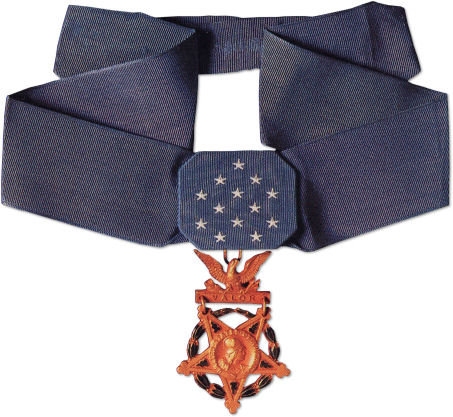
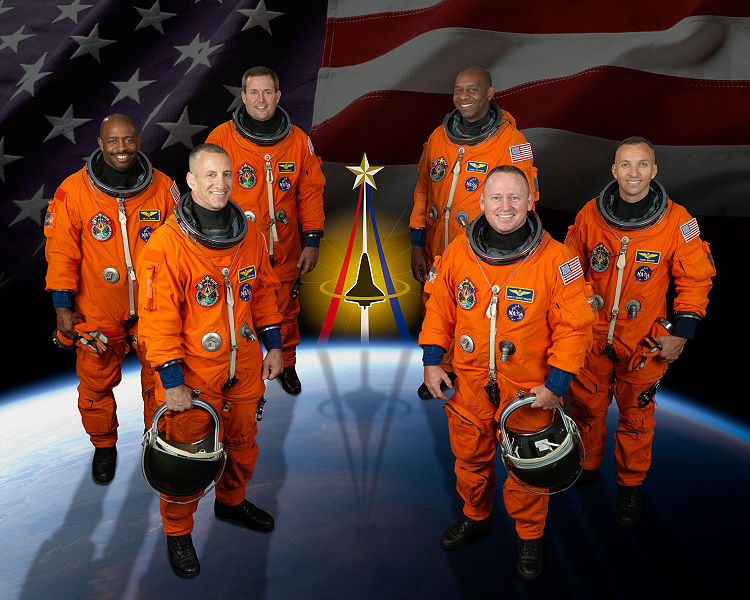
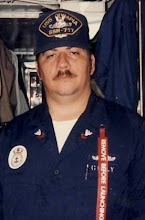
22 October 2010

Medal of Honor to be presented 16 November

ZUI this White House press release:
On November 16, President Barack Obama will award Staff Sergeant Salvatore Giunta, U.S. Army, the Medal of Honor for conspicuous gallantry. Staff Sergeant Giunta will receive the Medal of Honor for his courageous actions during combat operations against an armed enemy in the Korengal Valley, Afghanistan in October, 2007. Staff Sergeant Giunta's wife, Jennifer, and his parents, Steven and Rosemary Giunta will join the President at the White House to commemorate his example of selfless service.

*******

Salvatore Augustine Giunta was born on January 21, 1985. He is a native of Hiawatha, Iowa. He enlisted in the United States Army in November 2003. He attended Basic Training and Advanced Individual Training at Fort Benning, Georgia. Staff Sergeant Giunta is currently assigned to 2-503rd Infantry Battalion, Rear Detachment, Camp Ederle, Italy.

Staff Sergeant Giunta has completed two combat tours to Afghanistan totaling 27 months of deployment.

SSG Giunta will be the first living person to receive the Medal of Honor since the Vietnam War.

17 October 2010

Victoria Cross: J. H. Tombs

JOSEPH HARCOURT TOMBS

Corporal, 1st Battalion The King's (Liverpool Regiment)

Born: 23 March 1887, Birmingham
Died: 28 June 1966, Toronto, Ontario, Canada

Citation: For most conspicuous gallantry near Rue du Bois, on 16th June, 1915. On his own initiative he crawled out repeatedly under a very heavy shell and machine gun fire, to bring in wounded men who were lying about 100 yards in front of our trenches. He rescued four men, one of whom he dragged back by means of a rifle sling placed round his own neck and the man's body. This man was so severely wounded that unless he had been immediately attended to he must have died.

[London Gazette issue 29240 dtd 24 Jul 1915, published 23 Jul 1915.]

Medal of Honor: G. O. Young

GERALD ORREN YOUNG

Captain, US Air Force; 37th Air Rescue Squadron

Born: 9 May 1930, Chicago, Illinois
Died: 6 June 1990

Citation: For conspicuous gallantry and intrepidity at the risk of his life above and beyond the call of duty. Capt. Young distinguished himself while serving as a helicopter rescue crew commander [at Khe Sanh, Republic of Vietnam, on 9 November 1967]. Capt. Young was flying escort for another helicopter attempting the night rescue of an Army ground reconnaissance team in imminent danger of death or capture. Previous attempts had resulted in the loss of 2 helicopters to hostile ground fire. The endangered team was positioned on the side of a steep slope which required unusual airmanship on the part of Capt. Young to effect pickup. Heavy automatic weapons fire from the surrounding enemy severely damaged 1 rescue helicopter, but it was able to extract 3 of the team. The commander of this aircraft recommended to Capt. Young that further rescue attempts be abandoned because it was not possible to suppress the concentrated fire from enemy automatic weapons. With full knowledge of the danger involved, and the fact that supporting helicopter gunships were low on fuel and ordnance, Capt. Young hovered under intense fire until the remaining survivors were aboard. As he maneuvered the aircraft for takeoff, the enemy appeared at point-blank range and raked the aircraft with automatic weapons fire. The aircraft crashed, inverted, and burst into flames. Capt. Young escaped through a window of the burning aircraft. Disregarding serious burns, Capt. Young aided one of the wounded men and attempted to lead the hostile forces away from his position. Later, despite intense pain from his burns, he declined to accept rescue because he had observed hostile forces setting up automatic weapons positions to entrap any rescue aircraft. For more than 17 hours he evaded the enemy until rescue aircraft could be brought into the area. Through his extraordinary heroism, aggressiveness, and concern for his fellow man, Capt. Young reflected the highest credit upon himself, the U.S. Air Force, and the Armed Forces of his country.

15 October 2010

RIP: David McNerney

David Herbert McNerney
2 Jun 1931 - 10 Oct 2010


ZUI this article from the Houston Chronicle:
David H. McNerney, a Medal of Honor recipient whose Vietnam War heroics later became the subject of a documentary, died Sunday after a battle with lung cancer. The Crosby man was 79.

His actions on a day in March 1967 still have a profound impact on his colleagues.

"There's a bunch of guys walking around today who wouldn't be here if it wasn't for him," Leonard McElroy said of fighting alongside McNerney in Vietnam. He said the soldiers of A Company were in awe of him.

*******

McNerney was born June 2, 1931, in Lowell, Mass. His family later moved to Houston, where he graduated from St. Thomas High School in 1949.

First Sgt. McNerney had already served two combat tours in 1966 when he was assigned to a company of green infantrymen at Fort Lewis, Wash.

"His job was to train us for Vietnam but he wasn't going with us," said Sam Ponsoll, from Danville, Ky.,who served with McNerney in A Company, 1st Battalion, 8th Infantry Regiment. By pulling enough strings with the 4th Infantry Division brass, though, McNerney eventually received orders to accompany "his boys" into combat.

*******

McNerney returned to Texas after Vietnam and worked for U.S. Customs at the Port of Houston until his second retirement in 1995.

His wife, Parmelia, died in 2003. The couple had no children.

************* *** *************

DAVID H McNERNEY

First Sergeant, US Army; Company A, 1st Battalion, 8th Infantry, 4th Infantry Division

Born: 2 June 1931, Lowell, Massachusetts
Died: 10 October 2010, Houston, Texas

Citation: 1st Sgt. McNerney distinguished himself when his unit was attacked by a North Vietnamese battalion near Polei Doc [Republic of Vietnam, on 22 March 1967]. Running through the hail of enemy fire to the area of heaviest contact, he was assisting in the development of a defensive perimeter when he encountered several enemy at close range. He killed the enemy but was painfully injured when blown from his feet by a grenade. In spite of this injury, he assaulted and destroyed an enemy machinegun position that had pinned down 5 of his comrades beyond the defensive line. Upon learning his commander and artillery forward observer had been killed, he assumed command of the company. He adjusted artillery fire to within 20 meters of the position in a daring measure to repulse ??enemy assaults. When the smoke grenades used to mark the position were gone, he moved into a nearby clearing to designate the location to friendly aircraft. In spite of enemy fire he remained exposed until he was certain the position was spotted and then climbed into a tree and tied the identification panel to its highest branches. Then he moved among his men readjusting their position, encouraging the defenders and checking the wounded. As the hostile assaults slackened, he began clearing a helicopter landing site to evacuate the wounded. When explosives were needed to remove large trees, he crawled outside the relative safety of his perimeter to collect demolition material from abandoned rucksacks. Moving through a fusillade of fire he returned with the explosives that were vital to the clearing of the landing zone. Disregarding the pain of his injury and refusing medical evacuation 1st Sgt. McNerney remained with his unit until the next day when the new commander arrived. First Sgt. McNerney's outstanding heroism and leadership were inspirational to his comrades. His actions were in keeping with the highest traditions of the U.S. Army and reflect great credit upon himself and the Armed Forces of his country.

10 October 2010

Victoria Cross: J. Crimmin

JOHN CRIMMIN

Surgeon, Bombay Medical Service; attached 27th Bombay Infantry

Born: 19 March 1859, Dublin, Ireland
Died: 20 February 1945, Wells, Somerset

Citation: Lieutenant Tighe, 27th Bombay Infantry (to the Mounted Infantry of which Corps Surgeon Crimmin was attached) states that in the action near Lwekaw, Eastern Karenni, on the 1st January last [1889], four men charged with him into the midst of a large body of the enemy who were moving off from the Karen left flank, and two men fell to the ground wounded. He saw Surgeon Crimmin attending one of the men about 200 yards to the rear. Karens were round the party in every direction, and he saw several fire at Surgeon Crimmin and the wounded man. A Sepoy then galloped up to Surgeon Crimmin, and the latter joined the fighting line which then came up. Lieutenant Tighe further states that very shortly afterwards they were engaged in driving the enemy from small clumps of trees and bamboo, in which the Karens took shelter. Near one of these clumps he saw Surgeon Crimmin attending a wounded man. Several Karens rushed out at him. Surgeon Crimmin thrust his sword through one of them and attacked a second, a third Karen then dropped from the fire of a Sepoy, upon which the remaining Karens fled.

[London Gazette issue 25975 dtd 17 Sep 1889, published 17 Sep 1889.]


Notes: At the time of his death, he was Colonel John Crimmin VC CB CIE VD.
Karenni, now known as Kayah State, is a part of southeastern Burma.

Medal of Honor: M. T. McMahon

MARTIN T McMAHON

Captain and aide-de-camp, US Volunteers

Born: 21 March 1838, Laprairie County, Quebec, Canada
Died: 21 April 1906, New York City, New York

Citation: Under fire of the enemy [at White Oak Swamp, Virginia, on 30 June 1862], successfully destroyed a valuable train that had been abandoned and prevented it from falling into the hands of the enemy.


Note: Captain McMahon, originally the commanding officer of a cavalry troop, was serving as aide-de-camp to General George McClellan. He finished the war with the rank of Brevet Major General.

08 October 2010

Ancient critters

Utahceratops gettyi. Kosmoceratops richardsoni. Concavenator corcovatus. Sarahsaurus aurifontanalis. Prorotodactylus. Inkayacu paracasensis. All sorts of fossils have been in the news lately.

To begin with, ZUI this article (dated 23 Sep) from Laboratory Equipment:
Two remarkable new species of horned dinosaurs have been found in Grand Staircase-Escalante National Monument, southern Utah. The giant plant-eaters were inhabitants of the "lost continent" of Laramidia, formed when a shallow sea flooded the central region of North America, isolating the eastern and western portions of the continent for millions of years during the Late Cretaceous Period.

The newly discovered dinosaurs, close relatives of the famous Triceratops, were announced yesterday in PLoS ONE, the online open-access journal produced by the Public Library of Science.

*******

The bigger of the two new dinosaurs, with a skull about 7 feet long, is Utahceratops gettyi (U-tah-SARA-tops get-EE-i). The first part of the name combines the state of origin with ceratops, Greek for "horned face." The second part of the name honors Mike Getty, paleontology collections manager at the Utah Museum of Natural History and the discoverer of this animal.

In addition to a large horn over the nose, Utahceratops has short and blunt eye horns that project strongly to the side rather than upward, much more like the horns of modern bison than those of Triceratops or other ceratopsians. Mark Loewen, one of the authors on the paper, likened Utahceratops to "a giant rhino with a ridiculously supersized head."

Second of the new species is Kosmoceratops richardsoni (KOZ-mo-SARA-tops RICH-ard-SON-i). Here, the first part of the name refers to kosmos, Latin for "ornate," and ceratops, once again meaning "horned face." The latter part of the name honors Scott Richardson, the volunteer who discovered two skulls of this animal. Kosmoceratops also has sideways oriented eye horns, although much longer and more pointed than in Utahceratops.

In all, Kosmoceratops possesses a total of 15 horns-one over the nose, one atop each eye, one at the tip of each cheek bone, and ten across the rear margin of the bony frill-making it the most ornate-headed dinosaur known. Sampson, the paper's lead author, claimed that, "Kosmoceratops is one of the most amazing animals known, with a huge skull decorated with an assortment of bony bells and whistles."

*******

The dinosaurs were discovered in Grand Staircase-Escalante National Monument (GSENM), which encompasses 1.9 million acres of high desert terrain in south-central Utah. This vast and rugged region, part of the National Landscape Conservation System administered by the Bureau of Land Management, was the last major area in the lower 48 states to be formally mapped by cartographers.

Today GSENM is the largest national monument in the United States. Sampson added that, "Grand Staircase-Escalante National Monument is now one of the country's last great, largely unexplored dinosaur boneyards."

For most of the Late Cretaceous, exceptionally high sea levels flooded the low-lying portions of several continents around the world. In North America, a warm, shallow sea called the Western Interior Seaway extended from the Arctic Ocean to the Gulf of Mexico, subdividing the continent into eastern and western landmasses, known as Appalachia and Laramidia, respectively.

Whereas little is known of the plants and animals that lived on Appalachia, the rocks of Laramidia exposed in the Western Interior of North America have generated a plethora of dinosaur remains. Laramidia was less than one-third the size of present day North America, approximating the area of Australia.

Next, ZUI this article (dated 13 Sep) from the New York Times:
Researchers have discovered the most complete fossil of a meat-eating dinosaur from Europe in Las Hoyas, Spain. Curiously, it is humpbacked. The study appears in the journal Nature.

Named Concavenator corcovatus, the dinosaur belongs to the theropod family. In most ways, the dinosaur is not unusual, and it shares many characteristics with other medium-size theropods.

But the humplike structure on the 20-foot creature has previously never been seen in a dinosaur.

*******

The fossil also suggests that the dinosaur had bony bumps on its limbs, possibly structures from which feathers protruded. The dinosaur lived during the Early Cretaceous period, about 130 million years ago. Earlier dinosaur fossils have shown evidence of feathers, and birds are now generally considered to be dinosaur descendants.

And this article (dated 6 Oct) from National Geographic:
The discovery of Sarahsaurus aurifontanalis, which roamed North America about 190 million years ago, also boosts the idea that at least some dinosaurs became masters of their domain less by dominance than by opportunistic behavior and a bit of good luck.

A remarkably complete Sarahsaurus skeleton, found in Arizona, shows that the early Jurassic herbivore was, at 14 feet (4.3 meters) long and 250 pounds (113 kilograms), smaller than its enormous sauropod cousins such as Apatosaurus, which arose later. (See a sauropod picture.)

Like the sauropods — the largest animals to walk Earth — Sarahsaurus featured a long neck and small head. But the newly identified creature also boasted strong teeth and an unusual clawed hand, that, while only human size, was clearly built for enormous power and leverage, according to paleontologists.

And this article (dated 6 Oct) from Fox News:
The oldest footprints of the dinosaur lineage have been found, dating back about a quarter-billion years.

The age of these prints reveals they were made in the immediate aftermath of the worst mass extinction in history -- the devastating Permian-Triassic event, which eliminated as much as 95 percent of the planet's species. As such, these findings suggest the roughly 160-million-year-long Age of Dinosaurs not only ended in disaster, but might have begun because of one as well.

"The Permian-Triassic was a time of global devastation, but also a time of great opportunity, because new groups had the space and freedom to evolve in the post-apocalyptic world," said researcher Stephen Brusatte, a paleontologist at the American Museum of Natural History in New York.

Scientists uncovered the roughly 250-million-year-old footprints in the Holy Cross Mountains of central Poland. They came from a housecat-sized creature [named Prorotodactylus] with feet only about three-quarters of an inch (2 cm) long. The animal walked on all four legs, and possessed much longer hindlimbs than forelimbs, given how its footprints apparently overstep the handprints.

The different lengths of the creature's toes and the way they were angled suggest it was an ancestor of the dinosaur lineage known as a dinosauromorph.

And finally, ZUI this article (dated 5 Oct) from ABC News:
The preserved feathers and scales of a giant fossilized penguin discovered on Peru's central coast provide a glimpse of Peru's Eocene period, and how the species evolved to its modern state, paleontologists say.

The ancient version of the marine bird was about 1.5 meters (5 feet) tall and weighed almost 60 kg (132 lb), dwarfing today's Emperor Penguin, the largest of the modern-day species."By looking at this fossil, we were prompted to ask new questions about living penguins and the world we live in today," said Julia Clarke, an expert in avian anatomy at the University of Texas at Austin.

The paleontologists date the remains to 36 million years ago. They dubbed the ancient penguin "Inkayacu paracasensis," which means "emperor of the water" in the indigenous language of Quechua.

(Links appear in original articles.)

Medal of Honor awarded for Afghanistan

ZUI this article from the Department of Defense:
During a White House ceremony, the president awarded a posthumous Medal of Honor recognizing Staff Sgt. Robert J. Miller’s 2008 actions in Afghanistan. Miller’s parents, Phil and Maureen Miller, accepted the award.

“We are a nation of more than 300 million Americans. Of these, less than 1 percent wears the uniform of our armed services. And of these, just a small fraction has earned the badges of our special operations forces,” the president said. “In the finest military the world has ever known, these warriors are the best of the best. In an era that prizes celebrity and status, they are quiet professionals -- never seeking the spotlight. In a time of war, they have borne a burden far beyond their small numbers.”

The Medal of Honor is the highest military award a servicemember can receive for valor in action against a combatant force. Miller’s Medal of Honor is the seventh awarded, all posthumously, to troops serving in the Iraq and Afghanistan wars. A living soldier, Army Staff Sgt. Salvatore Giunta, has been chosen for the award but has yet to receive it.

*******

Miller served as a weapons sergeant for Company A, 3rd Battalion, 3rd Special Forces Group Airborne. He was the team’s youngest member, on his second deployment to Afghanistan.

His team was supporting an Afghan Border Police security patrol in Kunar province Jan. 25, 2008. Taliban fighters opened fire on the group from nearby buildings and from behind boulders. The team called in air strikes on the enemy position, but came under fire again when they moved forward to search for survivors.

Miller’s team captain was seriously wounded, and Miller remained at the front of the patrol to lay down suppressive fire as the captain was moved to safety. Other team members bounded back over the snowy terrain to find cover and return fire.

*******

Miller’s courage saved his captain’s life, and enabled seven of his fellow Special Forces soldiers and 15 Afghan troops to survive, gain cover and repel the attack, Army officials said.

*******

Miller was born in Harrisburg, Pa., and raised in Wheaton, Ill. His family moved to Florida shortly after the young man graduated from Wheaton High School. He joined the Army in 2003, graduated from the Special Forces Qualification Course in 2004 and completed the Special Forces Weapons Sergeant Course in 2005.

In addition to his parents, Miller is survived by his brothers Thomas, Martin and Edward; and sisters Joanna, Mary, Therese and Patricia.

ZUI also this article:
A Pentagon ceremony today formally inscribed the name of Army Special Forces Staff Sgt. Robert J. Miller, who yesterday was awarded a posthumous Medal of Honor, onto the nation’s list of military heroes.

In January 2008, Miller, at age 24, died in action in Afghanistan, charging the enemy through a hailstorm of bullets to give 22 other soldiers a chance to survive. Today, Miller’s family, teammates, and friends gathered at the Pentagon alongside the U.S. military’s most-senior leaders to honor their fallen son’s life, heroism and courage.

*******

During Army Secretary John M. McHugh’s remarks at the ceremony, he described Miller’s interests in gymnastics, basketball, history, languages and the military as he was growing up. Later, as a young Green Beret, Miller brought his characteristic intensity, enthusiasm, leadership and dedication to the job, the Army secretary said.

“He was funny, generous, passionate and determined,” McHugh said of Miller. “He was someone we would all have liked to know … a life that while too short, was a life of extraordinary measure.”

*******

In an interview before this week’s ceremonies, Staff Sgt. Nicholas McGarry said during that conversation, Miller had told him he wanted to be remembered for how he had lived, and not how he died. As the two single guys on the team, McGarry recalled that he and Miller hung out together, and rode mountain bikes after work.

“He was incredibly joyful – a motivated, energetic person,” McGarry said of his departed friend. “Just a good friend to have around, because he always wanted to do something. He was always in a good mood –- kind of a playful spirit, I guess.”

************* *** *************

ROBERT JAMES MILLER

Staff Sergeant, US Army; Company A, 3rd Battalion, 3rd Special Forces Group (Airborne)

Born: 14 October 1983, Harrisburg, Pennsylvania
Died: 25 January 2008, Kunar Province, Afghanistan
Citation: Staff Sergeant Robert J. Miller distinguished himself by extraordinary acts of heroism while serving as the weapons sergeant in Special Forces Operational Detachment Alpha 3312, Special Operations Task Force 33, Combined Joint Special Operations Task Force Afghanistan, during combat operations against an armed enemy in Kunar Province, Afghanistan, on January 25th, 2008.

While conducting a combat reconnaissance patrol through the Gowardesh Valley, Staff Sergeant Miller and his small element of U.S. and Afghan National Army soldiers engaged a force of 15 to 20 insurgents occupying prepared fighting positions. Staff Sergeant Miller initiated the assault by engaging the enemy positions with his vehicle’s turret-mounted Mk 19 40-millimeter automatic grenade launcher, while simultaneously providing detailed descriptions of the enemy positions to his command, enabling effective, accurate close air support.

Following the engagement, Staff Sergeant Miller led a small squad forward to conduct a battle damage assessment. As the group neared the small, steep, narrow valley that the enemy had inhabited, a large, well-coordinated insurgent force initiated a near ambush, assaulting from elevated positions with ample cover.

Exposed and with little available cover, the patrol was totally vulnerable to enemy rocket-propelled grenades and automatic weapons fire.

As a point man, Staff Sergeant Miller was at the front of the patrol, cut off from supporting elements and less than 20 meters from enemy forces. Nonetheless, with total disregard for his own safety, he called for his men to quickly move back to cover positions as he charged the enemy over exposed ground and under overwhelming enemy fire in order to provide protective fire for his team.

While maneuvering to engage the enemy, Staff Sergeant Miller was shot in the upper torso. Ignoring the wound, he continued to push the fight. Moving to draw fire from over 100 enemy fighters upon himself, he then again charged forward through an open area in order to allow his teammates to safely reach cover.

After killing at least 10 insurgents, wounding dozens more and repeatedly exposing himself to withering enemy fire while moving from position to position, Staff Sergeant Miller was mortally wounded by enemy fire. His extraordinary valor ultimately saved the lives of seven members of his own team and 15 Afghan National Army soldiers.

Staff Sergeant Miller’s heroism and selflessness above and beyond the call of duty and at the cost of his own life are in keeping with the highest traditions of military service and reflect great credit upon himself and the United States Army.

03 October 2010

Victoria Cross: T. Flawn and F. Fitzpatrick

THOMAS FLAWN

Private, 94th Foot

Born: 22 December 1857, Irthlingborough, Northamptonshire
Died: 19 January 1925, Plumstead, SE London


FRANCIS FITZPATRICK

Private, 94th Foot

Born: 1859, Tullycorbet, County Monaghan, Ireland
Died: 10 July 1933, Glasgow

Citation: In recognition of their gallant conduct during the attack on Sekukuni's Town on the 28th November last [1879], in carrying out of action Lieutenant Dewar, 1st Dragoon Guards, when badly wounded.
At the time when he received his wound, Lieutenant Dewar had with him only Privates Flawn and Fitzpatrick, and six of the Native Contingent, and, being incapable of moving without assistance, the natives proceeded to carry him down the hill, when about thirty of the enemy appeared in pursuit about 40 yards in the rear, whereupon the men of the Native Contingent deserted Lieutenant Dewar, who must have been killed but for the devoted gallantry of Privates Flawn and Fitzpatrick, who carried him alternately, one covering the retreat and firing on the enemy.

[London Gazette issue 24814 dtd 24 Feb 1880, published 24 Feb 1880.]


Note: Sekukuni's Town was in what is now the Sekhukhune District Municipality, in South Africa.

Medal of Honor: C. B. Hutchins

CARLTON BARMORE HUTCHINS

Lieutenant, US Navy

Born: 12 September 1904, Albany, New York
Died: 2 February 1938, off the California coast

Citation: For extraordinary heroism as the pilot of the U.S. Navy Seaplane PBY-2 No. 0463 (11-P-3) while engaged in tactical exercises with the U.S. Fleet on 2 February 1938. Although his plane was badly damaged [in a mid-air collision], Lt. Hutchins remained at the controls endeavoring to bring the damaged plane to a safe landing and to afford an opportunity for his crew to escape by parachutes. His cool, calculated conduct contributed principally to the saving of the lives of all who survived. His conduct on this occasion was above and beyond the call of duty.


Note: USS Hutchins (DD 476) was named in his honour.

01 October 2010

Carnegie Medal books

Having finished reading the Newbery Medal winners, I'm continuing with the books which have been awarded the Andrew Carnegie Medal - the British equivalent of the Newbery Medal, now awarded by the Chartered Institute of Library and Information Professionals (CILIP).

The medal was first awarded in 1937, for the best children's book of 1936, but there have been three years when no book was considered suitable, so there are only 71 winners thus far. In addition to the gold medal, the winner receives £500 worth of books to donate to a library of his/her/their choice.

Here's the list. (Dates marked in red indicate the six books I had already read before last year; dates in purple indicate the ones I've read since.)

1936: Pigeon Post, by Arthur Ransome
1937: The Family from One End Street, by Eve Garnett
1938: The Circus is Coming (aka Circus Shoes), by Noel Streatfield
1939: Radium Woman, by Eleanor Doorly
1940: Visitors from London, by Kitty Barne
1941: We Couldn't Leave Dinah, by Mary Treadgold
1942: The Little Grey Men, by 'BB' (D J Watkins-Pitchford)
1943: Prize withheld as no book was considered suitable
1944: The Wind on the Moon, by Eric Linklater
1945: Prize withheld as no book was considered suitable
1946: The Little White Horse, by Elizabeth Goudge
1947: Collected Stories for Children, Walter De La Mare
1948: Sea Change, by Richard Armstrong
1949: The Story of Your Home, by Agnes Allen
1950: The Lark on the Wing, by Elfrida Vipont Foulds
1951: The Woolpack, by Cynthia Harnett
1952: The Borrowers, by Mary Norton
1953: A Valley Grows Up, by Edward Osmond
1954: Knight Crusader, by Ronald Welch (Felton Ronald Oliver)
1955: The Little Bookroom, by Eleanor Farjeon
1956: The Last Battle, by C S Lewis
1957: A Grass Rope, by William Mayne
1958: Tom's Midnight Garden, by Philipa Pearce
1959: The Lantern Bearers, by Rosemary Sutcliff
1960: The Making of Man, by Dr I W Cornwall
1961: A Stranger at Green Knowe, by Lucy M Boston
1962: The Twelve and the Genii, by Pauline Clarke
1963: Time of Trial, by Hester Burton
1964: Nordy Bank, by Sheena Porter
1965: The Grange at High Force, by Philip Turner
1966: Prize withheld as no book was considered suitable
1967: The Owl Service, by Alan Garner
1968: The Moon in the Cloud, by Rosemary Harris
1969: The Edge of the Cloud, by Kathleen Peyton
1970: The God Beneath the Sea, by Leon Garfield and Edward Blishen
1971: Josh, by Ivan Southall
1972: Watership Down, by Richard Adams
1973: The Ghost of Thomas Kempe, by Penelope Lively
1974: The Stronghold, by Mollie Hunter
1975: The Machine Gunners, by Robert Westall
1976: Thunder and Lightnings, by Jan Mark
1977: The Turbulent Term of Tyke Tiler, by Gene Kemp
1978: The Exeter Blitz, by David Rees
1979: Tulku, by Peter Dickinson
1980: City of Gold and Other Stories from the Old Testament, by Peter Dickinson
1981: The Scarecrows, by Robert Westall
1982: The Haunting, by Margaret Mahy
1983: Handles, by Jan Mark
1984: The Changeover, by Margaret Mahy
1985: Storm, by Kevin Crossley-Holland
1986: Granny was a Buffer Girl, by Berlie Doherty
1987: The Ghost Drum, by Susan Price
1988: A Pack of Lies, by Geraldine McCaughrean
1989: Goggle-eyes, by Anne Fine
1990: Wolf, by Gillian Cross
1991: Dear Nobody, by Berlie Doherty
1992: Flour Babies, by Anne Fine
1993: Stone Cold, by Robert Swindells
1994: Whispers in the Graveyard, by Theresa Breslin
1995: Northern Lights, by Philip Pullman*
1996: Junk, by Melvin Burgess
1997: River Boy, by Tim Bowler
1998: Skellig, by David Almond
1999: Postcards From No Man's Land, by Aidan Chambers
2000: The Other Side of Truth, by Beverley Naidoo
2001: The Amazing Maurice and his Educated Rodents, by Terry Pratchett
2002: Ruby Holler, by Sharon Creech
2003: A Gathering Light, by Jennifer Donnelly**
2004: Millions, by Frank Cottrell Boyce
2005: Tamar, by Mal Peet
2006: ***
2007: Just in Case, by Meg Rosoff
2008: Here Lies Arthur, by Philip Reeve
2009: Bog Child, by Siobhan Dowd
2010: The Graveyard Book, by Neil Gaiman

So the count now is 42 down, 29 to go. The ILLs are still coming in - my thanks (again) to the Enfield Central Library, Hazardville CT, and the Eastern Connecticut State College Library, Willimantic CT, for the loan of their books.


* His Dark Materials, Book 1. Published in the US as The Golden Compass.

** Published in the US as A Northern Light.

*** Up through the award for 2005, the winners were referred to by the year of publication. Beginning in 2007, the winners were referred to by the year the award was given, as with the American Newbery Medal. Thus there is no "2006 winner" of the Carnegie Medal. Tamar, the 2005 winner, was published in '05, and received the medal in '06. Just in Case, the 2007 winner, was published in '06 and received the award in '07.

Book list - Sep 10

The Swamp Shack Mystery - children's mystery, by Mary Urmston *
Three Hearts and Three Lions - fantasy, by Poul Anderson *
Collected Stories for Children - children's (short stories), by Walter de la Mare (Carnegie Medal, 1947)
City of Gold and Other Stories from the Old Testament - children's Bible stories (short stories), by Peter Dickinson (Carnegie Medal, 1980)
Invasion of the Sea - SF, by Jules Verne
The Twisted Claw - children's mystery, by "Franklin W Dixon" *
Noninterference - SF, by Harry Turtledove *
Anson's Way - children's historical fiction, by Gary D Schmidt
Kaleidoscope - SF, fantasy and AH (short stories), by Harry Turtledove
The Secret of Skull Mountain - children's mystery, by "Franklin W Dixon" *
It All Started with Stones and Clubs - humour, by Richard Armour *
The 7 Professors of the Far North - children's adventure, by John Fardell
Earthgrip - SF, by Harry Turtledove
The Mystery of Skull Cap Island - children's mystery, by Marion Garthwaite *
The Ballad of Beta-2 - SF, by Samuel R Delany *
The Flight of the Silver Turtle - children's adventure, by John Fardell


Sixteen books last month, with eight rereads (marked by asterisks). To reach my goal of 210 books this year, I have to average 17.5 per month; I may not be able to catch up.

The two Carnegie Medal winners bring me up to 42 of 71. My thanks to the Eastern Connecticut State College Library, Willimantic CT, and the Andover Public Library, Andover CT, for the ILLs.

The Armour book could also be classified as military history. The full title, for those who have time to read it, is It All Started with Stones and Clubs: Being a Short History of War and Weaponry From Earliest Times to the Present, Noting the Gratifying Progress Made by Man Since His First Crude, Small-Scale Efforts to Do Away with Those Who Disagreed with Him.

30 September 2010

Operational Honours List

The Operational Honours and Awards List was released on 24 September. 130 members of the British Armed Forces, as well as one civilian, were included in the list. Awards for Afghanistan include two OBEs, five MBEs, four DSOs, five CGCs (one* posthumous), eighteen MCs (one** posthumous), three DFCs and a GM.

Amongst them:

Lance Corporal James McKie, 3rd Battalion The Rifles, was awarded the Conspicuous Gallantry Cross after picking up a live grenade which landed at his feet and throwing it back at the enemy. It exploded right after he released it, wounding him, but his action saved the lives of his commander and a fellow rifleman.

Acting Corporal Sarah Bushbye, Royal Army Medical Corps, is only the third woman*** to receive the Military Cross, after running 500 yards under heavy fire to try to save four wounded men.

Staff Sergeant Gareth Wood (left), 11 Explosive Ordnance Disposal Regiment, Royal Logistic Corps, received the Military Cross, and Acting Warrant Officer Class Two Karl Ley (right), also from 11 Explosive Ordnance Disposal Regiment, received the George Medal. "Willingly accepting an incredibly high level of personal risk, on one 72-hour operation A/WO2 Ley defused 28 victim-operated devices and tackled 14 bombs - a feat which displays incredible determination and awesome bravery."

The only civilian on the list, Constable Amanda Henderson, Ministry of Defence Police, received the Queen's Commendation for Valuable Service for training female police officers in Afghanistan.


* Corporal Lee Brownson, 3rd Battalion The Rifles.
** Lieutenant Douglas Dalzell, 1st Battalion Coldstream Guards.
*** The other two - Private Michelle Norris MC, RAMC, and Able Seaman Medical Assistant Kate Nesbitt MC, RN, were also medics.

Photographs © Crown Copyright/MOD 2010.

Honours

I completely forgot about checking the Queen's Birthday Honours List, released on 12 June, what with everything else that was going on that month. Looking through it:

Order of the British Empire
Commanders of the Order of the British Empire


Elizabeth, Mrs BURNLEY
Chief Guide, Girlguiding UK. For services to Young People.
(Doncaster, South Yorkshire)

Order of the British Empire
Officers of the Order of the British Empire


Ms Sharon BERRY
Chief Executive, Storybook Dads. For services to Children and Families.
(Saltash, Cornwall)

Barry CUNNINGHAM
Chief Publisher and Managing Director, Chicken House Books. For services to the Publishing Industry.
(Blackford, Somerset)

I don't think the Girl Guides need any introduction. Storybook Dads make CDs of imprisoned fathers reading bedtime stories for their children, complete with edited-in music and sound effects (and edited-out errors). Chicken House Publishing are, according to their website, "an independent-minded children's book publishing company with a special enthusiasm for finding new writers, artists and ideas."


Lapel pin for members of the Order of the British Empire.

26 September 2010

Victoria Cross: A. R. Hill and J. Doogan

ALAN RICHARD HILL

Lieutenant, 2nd Battalion the Northamptonshire Regiment

Born: 12 July 1859, Northallerton, North Yorkshire
Died: 21 April 1944, Thirsk, North Yorkshire

Citation: For gallant conduct at the action of Laing's Nek on the 28th January, 1881, in having, after the retreat was ordered, remained behind and endeavoured to carry out of action Lieutenant Baillie, of the same Corps, who was lying on the ground severely wounded. Being unable to lift that officer into the saddle, he carried him in his arms until Lieutenant Baillie was shot dead. Lieutenant Hill then brought a wounded man out of action on his horse, after which he returned and rescued another. All these acts being performed under a heavy fire.

[London Gazette issue 25084 dtd 14 Mar 1882, published 14 Mar 1882.]


JOHN DOOGAN

Private, 1st Dragoon Guards

Born: March 1853, Aughrim, County Galway, Ireland
Died: 24 January 1940, Folkestone, Kent

Citation: For gallant conduct at the action of Laing's Nek on the 28th January, 1881. During the charge of the mounted men Private Doogan, servant to Major Brownlow, 1st Dragoon Guards, seeing that officer (whose horse had been shot) dismounted and among the Boers, rode up and (though himself severely wounded) dismounted and pressed Major Brownlow to take his horse, receiving another wound while trying to induce him to accept it.

[London Gazette issue 25084 dtd 14 Mar 1882, published 14 Mar 1882.]


Note: Laing's Nek is in northeastern South Africa, between Lesotho and Swaziland.

Medal of Honor: W. R. Button

WILLIAM ROBERT BUTTON

Corporal, US Marine Corps; First Provisional Brigade of Marines (Gendarmerie d'Haiti)

Born: 3 December 1895, St Louis, Missouri
Died: 15 April 1921, St Louis, Missouri

Citation: For extraordinary heroism and conspicuous gallantry and intrepidity in actual conflict with the enemy near Grande Riviere, Republic of Haiti, on the night of 31 October-l November 1919, resulting in the death of Charlemagne Peralte, the supreme bandit chief in the Republic of Haiti, and the killing, capture and dispersal of about 1,200 of his outlaw followers. Cpl. William R. Button not only distinguished himself by his excellent judgment and leadership but also unhesitatingly exposed himself to great personal danger when the slightest error would have forfeited not only his life but the lives of the detachments of Gendarmerie under his command. The successful termination of his mission will undoubtedly prove of untold value to the Republic of Haiti.


Note: 2nd Lt Herman H Hanneken also received the Medal of Honor for this action.

21 September 2010

Medal of Honor awarded for Vietnam

ZUI this article from the US Department of Defence:
President Barack Obama today presented the Medal of Honor for conspicuous gallantry to the family of an Air Force chief master sergeant killed in action 42 years ago in Laos.

“Today, we present the Medal of Honor to an American who displayed such gallantry more than four decades ago: Chief Master Sgt. Richard L. Etchberger,” the president said at a White House ceremony. “This medal reflects the gratitude of an entire nation.”

Etchberger’s brother, Robert, and sons, Cory Etchberger, Richard Etchberger and Steve Wilson, attended the ceremony.

*******

During a “small, private” Pentagon ceremony in the winter of 1968, Etchberger’s wife, Catherine, and sons were presented with an Air Force Cross, Obama said, but public awareness of Etchberger’s actions didn’t occur until the Air Force declassified his mission in 1986.

“That’s when they learned the truth: that their father had given his life, not in Vietnam, but in neighboring Laos,” the president said. “That’s when they began to learn the true measure of their father’s heroism.”

*******

Obama then presented the cased award to Etchberger’s sons. Etchberger became only the 14th airman to receive the Medal of Honor for actions during the Vietnam War, and only the third enlisted airmen so honored.

************* *** *************

RICHARD LOY ETCHBERGER

Chief Master Sergeant, US Air Force; Detachment 1, 1043rd Radar Evacuation Squadron

Born: 5 March 1933, Hamburg, Pennsylvania
Died: 11 March 1968, Laos

Citation: Chief Master Sgt. Richard L. Etchberger distinguished himself by extraordinary heroism on March 11, 1968, in the country of Laos. While assigned as Ground Radar Superintendent, Detachment 1, 1043rd Radar Evacuation Squadron. On that day, Chief Etchberger and his team of technicians were manning a top-secret defensive position at Lima Site 85 when the base was overrun by an enemy ground force. Receiving sustained and withering heavy artillery attacks directly upon his unit’s position, Chief Etchberger’s entire crew lay dead or severely wounded. Despite having received little or no combat training, Chief Etchberger single-handedly held off the enemy with an M-16, while simultaneously directing air strikes into the area and calling for air rescue.

Because of his fierce defense and heroic and selfless actions, he was able to deny the enemy access to his position and save the lives of his remaining crew. With the arrival of the rescue aircraft, Chief Etchberger without hesitation repeatedly and deliberately risked his own life, exposing himself to heavy enemy fire, in order to place three surviving wounded comrades into rescue slings hanging from the hovering helicopter waiting to airlift them to safety. With his remaining crew safely aboard, Chief Etchberger finally climbed into the evacuation sling himself, only to be fatally wounded by enemy ground fire as he was being raised into the aircraft.

Chief Etchberger’s bravery and determination in the face of persistent enemy fire and overwhelming odds are in keeping with the highest standards of performance and traditions of military service. Chief Etchberger’s gallantry, self-sacrifice, and profound concern for his fellow men, at risk of his life, above and beyond the call of duty, reflect the highest credit on himself and the United States Air Force.

19 September 2010

Victoria Cross: T. O'Hea

TIMOTHY O'HEA

Private, 1st Battalion the Prince Consort's Own Rifle Brigade

Born: 1846, Bantry, County Cork, Ireland
Died: November 1874, in the desert of Queensland, Australia

Citation: THE Queen having been graciously pleased, by a Warrant under Her Royal Sign Manual, bearing date the 10th of August, 1858, to direct that the decoration of the Victoria Cross shall be conferred, subject to the rules and ordinances already made and ordained for the government thereof, on Officers and Men of Her Majesty's Naval and Military Services who may perform acts of conspicuous courage and bravery under circumstances of extreme danger, such as the occurrence of a fire on board ship, or of the foundering of a vessel at sea, or under any other circumstances in which, through the courage and devotion displayed, life or public property may be saved:--Her Majesty has accordingly been pleased to signify Her intention to confer this high distinction on the under-mentioned Private Soldier, whose claim to the same has been submitted for Her Majesty's approval, for his courageous conduct in Canada, as recorded against his name; viz:
For his courageous conduct on the occasion of a Fire which occurred in a Railway Car containing ammunition, between Quebec and Montreal, on the 9th of June last [1866]. The Serjeant in charge of the Escort states that, when at Danville Station, on the Grand Trunk Railway, the alarm was given that the Car was on fire; it was immediately disconnected, and, whilst considering what was best to be done, Private O'Hea took the keys from his hand, rushed to the Car, opened it, and called out for water and a ladder. It is stated that it was due to his example that the fire was suppressed.

[London Gazette issue 23204 dated 1 Jan 1867, published 1 Jan 1867.]


Note: Private O'Hea is the only person to have been awarded the Victoria Cross for service in Canada. He died of thirst whilst a member of a party searching the Australian desert for looking for a reported survivor of the Ludwig Leichhardt expedition, which had been lost in 1848. See here and here.

Medal of Honor: C. A. MacGillivary

CHARLES ANDREW MacGILLIVARY

Sergeant, US Army; Company I, 71st Infantry, 44th Infantry Division

Born: 7 January 1917, Charlottetown, Prince Edward Island, Canada
Died: 24 June 2000, Brockton, Massachusetts

Citation: He led a squad when his unit moved forward in darkness to meet the threat of a breakthrough by elements of the 17th German Panzer Grenadier Division [near Woelfling, France, on 1 January 1945]. Assigned to protect the left flank, he discovered hostile troops digging in. As he reported this information, several German machineguns opened fire, stopping the American advance. Knowing the position of the enemy, Sgt. MacGillivary volunteered to knock out 1 of the guns while another company closed in from the right to assault the remaining strong points. He circled from the left through woods and snow, carefully worked his way to the emplacement and shot the 2 camouflaged gunners at a range of 3 feet as other enemy forces withdrew. Early in the afternoon of the same day, Sgt. MacGillivary was dispatched on reconnaissance and found that Company I was being opposed by about 6 machineguns reinforcing a company of fanatically fighting Germans. His unit began an attack but was pinned down by furious automatic and small arms fire. With a clear idea of where the enemy guns were placed, he voluntarily embarked on a lone combat patrol. Skillfully taking advantage of all available cover, he stalked the enemy, reached a hostile machinegun and blasted its crew with a grenade. He picked up a submachine gun from the battlefield and pressed on to within 10 yards of another machinegun, where the enemy crew discovered him and feverishly tried to swing their weapon into line to cut him down. He charged ahead, jumped into the midst of the Germans and killed them with several bursts. Without hesitation, he moved on to still another machinegun, creeping, crawling, and rushing from tree to tree, until close enough to toss a grenade into the emplacement and close with its defenders. He dispatched this crew also, but was himself seriously wounded. Through his indomitable fighting spirit, great initiative, and utter disregard for personal safety in the face of powerful enemy resistance, Sgt. MacGillivary destroyed four hostile machineguns and immeasurably helped his company to continue on its mission with minimum casualties.

18 September 2010

Pennsic XXXVIII and XXXVIX

It occurs to me that I never posted a link to Darter the Chronicler's pictures from last year's Pennsic War.


He only has a few pictures from this year, as he didn't attend the full war.


And for those who are more interested in the swishy-poke style of fighting, there are some pictures from the Queen's Rapier Tourney, held last year in Æthelmearc.

14 September 2010

Discovery preparing for final flight

I've been more than a little remiss in paying attention to the space programme this last twelve months, having missed events such as the STS-129 (16-27 Nov 09), STS-130 (8-21 Feb 10), STS-131 (5-20 Apr 10) and STS-132 (14-26 May 10; last scheduled flight of space shuttle Atlantis and second spaceflight for CAPT Steve Bowen, the second American submariner in space) flights.

STS-129 (space shuttle Atlantis): Mission specialist Leland D Melvin, commander Charles O Hobaugh, mission specialist Michael Foreman, mission specialist Robert Satcher, pilot Barry E Wilmore and mission specialist Randolph Bresnik. (They were joined for the return flight by mission specialist Nicole Stott, who travelled to the space station aboard STS-128.)

STS-130 (Endeavour): Mission specialist Nicholas Patrick, pilot Terry Virts, mission specialist Robert L Behnken, mission specialist Kathryn P Hire, commander George D Zamka and mission specialist Stephen Robinson.


STS-131 (Discovery): Mission specialist Rick Mastracchio, mission specialist Stephanie Wilson, pilot James Dutton, mission specialist Dorothy Metcalf-Lindenburger, commander Alan Poindexter, mission specialist Naoko Yamazaki (JAXA) and mission specialist Clayton Anderson.

STS-132 (Atlantis): Mission specialist Garrett Reisman, commander Kenneth Ham and mission specialist Stephen G Bowen (seated, left to right); and mission specialist Michael T Good, pilot Tony Antonelli and mission specialist Piers Sellers (standing, left to right).

Discovery will be making its final flight this fall. ZUI this NASA press release:
NASA's Shuttle Discovery To Make Its Final Trip To Launch Pad

Journalists are invited to cover space shuttle Discovery’s last move from the Vehicle Assembly Building (VAB) to Launch Pad 39A on Sept. 20 at NASA’s Kennedy Space Center in Florida. Six astronauts are set to launch aboard the shuttle on Nov. 1. The

STS-133 mission to the International Space Station is the final scheduled flight for Discovery before it is retired.

Live coverage of Discovery's rollout will air on NASA Television beginning at 8 p.m. EDT. NASA TV’s Video File will broadcast highlights of the move.

Discovery's first motion out of the VAB to the pad is scheduled for 8 p.m. The shuttle's 3.4- mile journey atop a giant crawler-transporter is expected to take approximately six hours.

*******

The 11-day mission will be the 35th flight to the station and the 39th flight for Discovery. The mission will deliver and install the Permanent Multipurpose Module, the Express Logistics Carrier 4 - an external platform that holds large equipment - and critical spare components for the space station. Discovery also will deliver Robonaut 2, or R2, to become a permanent resident of the station as the first human-like robot in space.

(Yes, the extra line feeds in the first paragraph appear in the actual press release.)

The STS-133 crew consists of mission specialists Col Tim Kopra (USAF) and Col Alvin Drew (USAF), pilot Col Eric Boe (USAF), commander Col Steve Lindsey (USAF, ret), and mission specialists Dr Michael Barratt and Nicole Stott (left to right in photo below). This - the 164th American manned space flight as well as the 133d space shuttle mission - will be the fifth space flight for Lindsey and the second for each of the others.


12 September 2010

Victoria Cross: G. Hinckley

GEORGE HINCKLEY

Able Seaman, Royal Navy; HMS Sphinx (Naval Brigade)

Born: 22 Jun 1819, Liverpool, Lancashire
Died: 31 Dec 1904, Plymouth, Devonshire

Citation: For volunteering, while under the East Gate of the city of Fung-Wha [on 9 October 1862], to carry to a joss house, a hundred and fifty yards distant, under a heavy and continuous fire of musketry, gingalls and stink-pots, Mr. Coker, Master's Assistant of the "Sphinx," who had been wounded in the advance to the gate; in which object Hinckley succeeded.
On his return to the gate, under a similar fire, he again volunteered, and succeeded in carrying to the joss-house Mr. Bremen, an officer of Ward's force, who had been also wounded in the advance on the gate; and he again returned to his post under the gate.

[London Gazette issue 22705 dtd 6 Feb 1863, published 6 Feb 1863.]


Notes: Fung-Wha, now known as Fenghua, is in eastern China. A gingall (or jingal) is a heavy musket used as light artillery. Stink-pots were incendiary weapons similar to grenades.

Medal of Honor: W. D. and H. H. Miller

WILLARD DWIGHT MILLER

Seaman, US Navy; USS Nashville (PG 7)

Born: 5 June 1877, Noel Shore, Hants County, Nova Scotia
Died: 19 February 1959

Citation: On board the U.S.S. Nashville during the operation of cutting the cable leading from Cienfuegos, Cuba, 11 May 1898. Facing the heavy fire of the enemy, Miller displayed extraordinary bravery and coolness throughout this action.


HARRY HERBERT MILLER

Seaman, US Navy; USS Nashville (PG 7)

Born: 4 May 1879, Noel Shore, Hants County, Nova Scotia
Died: 12 March 1968, Costa Rica

Citation: On board the U.S.S. Nashville, during the operation of cutting the cable leading from Cienfuegos, Cuba, 11 May 1898. Facing the heavy fire of the enemy, Miller displayed extraordinary bravery and coolness throughout this action.


Note: One of eight pairs of brothers who have been awarded the Medal of Honor - and the only pair who received it for the same action.

11 September 2010

Medal of Honor to be awarded for Afghanistan

For the first time since the end of the Vietnam War, the Medal of Honor will be awarded to a living man. ZUI this article from the Wall Street Journal:
On a moonlit Afghan ridge in 2007, Staff Sgt. Salvatore Giunta ran alone through a barrage of gunfire to rescue a friend being dragged off by insurgent fighters.

On Friday, the White House said Sgt. Giunta will receive the Medal of Honor for his bravery, making him the first living serviceman from the Iraq or Afghan wars to receive the nation's highest military award.

"His courage and leadership while under extreme enemy fire were integral to his platoon's ability defeat an enemy ambush and recover a fellow American paratrooper from enemy hands," the White House said.

*******

The selection of a living Medal of Honor recipient comes as welcome news to the military. The seven medals from Iraq or Afghanistan announced until now had been for men killed performing the acts of courage for which they were being recognized.

*******

Sgt. Giunta's action came on his second deployment to Afghanistan, when his unit — Co. B, 2nd Battalion, 503rd Infantry Regiment (Airborne) — was operating in the Korengal Valley, at the time considered the most dangerous spot in the country for U.S. troops.

ZUI also this article from the New York Times, this one from the Los Angeles Times, and this press release from the White House. Note that "[f]urther information about the date and time of the ceremony will be released at a later date."

09 September 2010

Medal of Honor to be awarded for Afghanistan

ZUI this article from the American Forces Press Service:
In an Oct. 6 ceremony at the White House, President Barack Obama will present the Medal of Honor to the parents of a soldier who died while saving members of his team and 15 Afghan soldiers.

Army Staff Sgt. Robert J. Miller, who was 24 years old when he died, will receive the Medal of Honor posthumously for heroic actions in Barikowt, Afghanistan, on Jan. 25, 2008.

*******

Miller ... enlisted in the Army in August 2003 as a Special Forces candidate. He attended basic training and advanced individual training at Fort Benning, Ga., and received his Green Beret in 2005.

He served as a weapons sergeant in Alpha Company, 3rd Battalion, 3rd Special Forces Group, based at Fort Bragg, N.C.

07 September 2010

Medal of Honor to be awarded for Vietnam

ZUI this post from the official US Air Force news site:
An Air Force senior NCO who was killed 42 years ago will receive the Medal of Honor for actions he took after enemy forces overran a clandestine U.S. radar site in Laos.

Chief Master Sgt. Richard L. "Dick" Etchberger, 35, died March 11, 1968, after being shot following an overnight battle on Mount Phou Pha Thi at Lima Site 85, as the radar location was known to Americans, where he helped maintain equipment that aided the U.S. bombing campaign of North Vietnam.

Despite having received little or no combat training, Chief Etchberger single-handedly held off the enemy with an M-16, while simultaneously directing air strikes into the area and calling for air rescue. Because of his fierce defense and heroic and selfless actions, he was able to deny the enemy access to his position and save the lives of some of his crew.

*******

"He should have a 55-gallon drum full of medals," said retired Tech Sgt. John G. Daniel, 71, of La Junta, Colo. Sergeant Daniel was one of the three rescued. "I wouldn't be alive without him."

Following a 2008 personnel board of review of the chief's actions, Secretary of the Air Force Michael Donley nominated the Hamburg, Pa., native for the U.S. military's highest decoration, which is awarded "for conspicuous gallantry and intrepidity at the risk of life above and beyond the call of duty."

President Obama approved the Medal of Honor, which will be presented in a White House ceremony on Sept. 21.

ZUI also this article (dated 3 Nov 08) from the Air Force Times:
Etchberger was nominated for the Medal of Honor in 1968, but President Lyndon B. Johnson didn’t approve it. Military officials instead awarded Etchberger the Air Force Cross.

This is where the story gets complicated.

Johnson didn’t sign off on the award because the U.S. wasn’t supposed to have troops in Laos, and at the time of his death, Etchberger wasn’t technically in the Air Force.

Before he was deployed to Lima Site 85 — a radar station used to locate bombing targets in North Vietnam and Laos — Etchberger and his wife went to Washington, D.C., along with the other airmen about to go on the secret mission and their wives. There they were told they would be made into civilian employees who worked for Lockheed Aircraft Services as a cover, said Col. Gerald H. Clayton, then the commander of 1043rd Radar Evaluation Squadron, Detachment 1.

“The site was established and operated by American technicians in a manner designed not to violate the 1962 Geneva Agreements and to ‘guarantee’ the ‘neutrality’ of Laos,” according to declassified top secret Air Force report, “The Fall of Site 85.”

*******

For 14 years Etchberger’s sons didn’t know the truth of their father’s death, Cory Etchberger said.

His mother was briefed on the mission when she went to D.C. with her husband, but was sworn to secrecy. Not until the mission was declassified did she tell her sons about what their father did in Laos.

The official White House announcement is here.

05 September 2010

Victoria Cross: A. C. Booth

ANTHONY CLARKE BOOTH

Colour-Sergeant, 80th Foot

Born: 21 April 1846, Carrington, Nottinghamshire
Died: 8 December 1899, Brierley Hill, Staffordshire

Citation: For his gallant conduct on the 12th March, 1879, during the Zulu attack on the Intombi River, in having, when considerably outnumbered by the enemy, rallied a few men on the south bank of the river, and covered the retreat of fifty soldiers and others for a distance of three miles. The Officer Commanding 80th Regiment reports that, had it not been for the coolness displayed by this Non-commissioned Officer, not one man would have escaped.

[London Gazette issue 24814 dtd 24 Feb 1880, published 24 Feb 1880.]

Medal of Honor: W. S. Sitman

WILLIAM S SITMAN

Sergeant First Class, US Army; Company M, 23d Infantry Regiment, 2d Infantry Division

Born: 9 August 1923, Bellwood, Pennsylvania
Died: 14 February 1951, near Chipyong-ni, South Korea

Citation: Sfc. Sitman distinguished himself by conspicuous gallantry and intrepidity above and beyond the call of duty in action against an armed enemy of the United Nations. Sfc. Sitman, a machine gun section leader of Company M, was attached to Company I, under attack by a numerically superior hostile force [near Chipyong-ni, South Korea, on 14 February 1951]. During the encounter when an enemy grenade knocked out his machine gun, a squad from Company I, immediately emplaced a light machine gun and Sfc. Sitman and his men remained to provide security for the crew. In the ensuing action, the enemy lobbed a grenade into the position and Sfc. Sitman, fully aware of the odds against him, selflessly threw himself on it, absorbing the full force of the explosion with his body. Although mortally wounded in this fearless display of valor, his intrepid act saved 5 men from death or serious injury, and enabled them to continue inflicting withering fire on the ruthless foe throughout the attack. Sfc. Sitman's noble self-sacrifice and consummate devotion to duty reflect lasting glory on himself and uphold the honored traditions of the military service.


Note: Chipyong-ni is now known as Jipyeong-ri.

01 September 2010

Quote of the day

A BROKEN CAR. NEVER. GETS INTO AN ACCIDENT. IF MANUFACTURERS REALLY CARED. ABOUT THEIR CUSTOMERS. THEY WOULD NOT SELL. CARS YOU COULD DRIVE.

Book list - Aug 10

Bamboo People: A Novel - YA, by Mitali Perkins
Lucy's Legacy: The Quest for Human Origins - palaeoanthropology, by Donald C Johanson
A Hundred Million Francs (aka The Horse Without a Head) - children's mystery, by Paul Berna *
Crossing the Tracks - YA historical fiction, by Barbara Stuber
Germania: In Wayward Pursuit of the Germans and Their History - German history, by Simon Winder
Family Reunion - YA, by Caroline B Cooney
The Coils of Time - SF, by A Bertram Chandler *
They Never Came Back - YA, by Caroline B. Cooney
Into the Alternate Universe - SF, by A Bertram Chandler *
Both Sides of Time - YA time travel, by Caroline B Cooney
The Ransom of Mercy Carter - YA historical fiction, by Caroline B Cooney
Baxter, the Pig Who Wanted to Be Kosher - children's picture book, by Laurel Snyder
The Moon in the Cloud - children's Bible story, by Rosemary Harris (Carnegie Medal, 1968)
Conquistador - SF, by S M Stirling *
Wildside - SF, by Steven Gould *
Prisoner of Time - YA time travel, by Caroline B Cooney


Sixteen books last month, with five rereads (marked by asterisks). To reach my goal of 210 books this year, I have to average 17.5 per month, so I'm currently still a bit behind track....

The one Carnegie Medal winner brings me up to 40 of 71. My thanks to the Enfield Central Library, Hazardville CT, for the ILL.

29 August 2010

Victoria Cross: S. Hodge

SAMUEL HODGE

Private, 4th West India Regiment

Born: c 1840, Tortola, Virgin Islands
Died: 14 January 1868, Belize City, Belize

Citation: For his bravery at the storming and capture of the stockaded town of Tubabecolong, in the kingdom of Barra, River Gambia, on the evening of the 30th of June last [1866]. Colonel D'Arcy, of the Gambia Volunteers, states that this man and another, who was afterwards killed, - pioneers in the 4th West India Regiment, - answered his call for volunteers, with axes in hand, to hew down the stockade. Colonel D'Arcy having effected an entrance, Private Hodge followed him through the town, opening with his axe two gates from the inside, which were barricaded, so allowing the supports to enter, who carried the place from east to west at the point of the bayonet. On issuing to the glacis through the west gate, Private Hodge was presented by Colonel D'Arcy to his comrades, as the bravest soldier in their regiment, a fact which they acknowledged with loud acclamations.

[London Gazette issue 23205 dtd 4 Jan 1867, published 4 Jan 1867.]

Medal of Honor: H. A. Wilbanks

HILLIARD A WILBANKS

Captain, US Air Force; 21st Tactical Air Support Squadron

Born: 26 July 1933, Cornelia, Georgia
Died: 24 February 1967, near Dalat, Republic of Vietnam

Citation: For conspicuous gallantry and intrepidity in action at the risk of his life above and beyond the call of duty. As a forward air controller Capt. Wilbanks was pilot of an unarmed, light aircraft flying visual reconnaissance ahead of a South Vietnam Army Ranger Battalion [near Dalat, Republic of Vietnam, on 24 February 1967]. His intensive search revealed a well-concealed and numerically superior hostile force poised to ambush the advancing rangers. The Viet Cong, realizing that Capt. Wilbanks' discovery had compromised their position and ability to launch a surprise attack, immediately fired on the small aircraft with all available firepower. The enemy then began advancing against the exposed forward elements of the ranger force which were pinned down by devastating fire. Capt. Wilbanks recognized that close support aircraft could not arrive in time to enable the rangers to withstand the advancing enemy, onslaught. With full knowledge of the limitations of his unarmed, unarmored, light reconnaissance aircraft, and the great danger imposed by the enemy's vast firepower, he unhesitatingly assumed a covering, close support role. Flying through a hail of withering fire at treetop level, Capt. Wilbanks passed directly over the advancing enemy and inflicted many casualties by firing his rifle out of the side window of his aircraft. Despite increasingly intense antiaircraft fire, Capt. Wilbanks continued to completely disregard his own safety and made repeated low passes over the enemy to divert their fire away from the rangers. His daring tactics successfully interrupted the enemy advance, allowing the rangers to withdraw to safety from their perilous position. During his final courageous attack to protect the withdrawing forces, Capt. Wilbanks was mortally wounded and his bullet-riddled aircraft crashed between the opposing forces. Capt. Wilbanks' magnificent action saved numerous friendly personnel from certain injury or death. His unparalleled concern for his fellow man and his extraordinary heroism were in the highest traditions of the military service, and have reflected great credit upon himself and the U.S. Air Force.

23 August 2010

Four million

Brigid was expecting to hit the four-million-visitor mark on her blog over the weekend. To commemmorate this moment, she has answered a few personal questions. (And read the comments on that post - the truck story is priceless.)