11 May 2012

Medal of Honor to be awarded for Vietnam

ZUI this article from the Pittsburgh (PA) Post-Gazette:
"There is a certain enthusiasm in liberty," Alexander Hamilton observed, "that makes human nature rise above itself, in acts of bravery and heroism."

*******

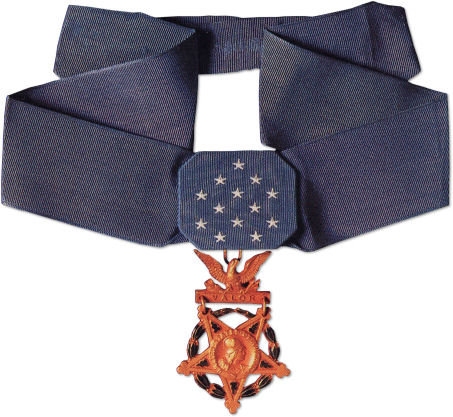
On May 10, 1970, {Specialist Fourth Class Leslie H] Sabo, a rifleman in Bravo Company, 3rd Battalion, 506th Infantry Regiment, 101st Airborne Division, was roused to such conspicuous acts of courage that a Congress and president of the United States generations later would be moved to correct an oversight of history.

President Barack Obama will honor Sabo with the posthumous award of the Medal of Honor, making him another hero in a region that has swelled the ranks of conspicuous heroes. Soldiers & Sailors Memorial Hall & Museum in Oakland has inducted more than 80 recipients of the Medal of Honor from Western Pennsylvania into its Hall of Valor.

*******

Incredibly, although the medal request was submitted at the time, his paperwork was lost in the bureaucratic labyrinth, only to be found in 1999 by a veteran of the 101st Airborne, who was doing research in the military repository of the National Archives. Even then it took many years of effort, and special legislation by Congress, to do justice to Sabo's forgotten sacrifice.

When the president presents the medal on May 16 to Sabo's widow, Rose Mary Sabo Brown, with his brother George and 50 men from his old unit in attendance, that too can be ascribed to a certain enthusiasm in liberty that lifts human nature above the ordinary. For just as an effort is made to retrieve fallen American troops from the battlefield, so an effort was made to retrieve one soldier's lost glory for posterity.

06 May 2012

George Cross: A. D. Merriman

ARTHUR DOUGLAS MERRIMAN

Born: 25 November 1892, South Manchester
Died: 1972

Citation: The KING has been graciously pleased to approve the award of the GEORGE CROSS to:—
Arthur Douglas Merriman, Part-time Experimental Officer, Directorate of Scientific Research, Ministry of Supply.
For conspicuous bravery in connection with bomb disposal.

[London Gazette issue 35006 dated 3 Dec 1940, published 3 Dec 1940.]

Victoria Cross: H. Jones

HERBERT JONES, OBE

Lieutenant Colonel, commanding 2nd Battalion The Parachute Regiment

Born: 14 May 1940, Putney, London
Died: 28 May 1982, Darwin Hill, East Falklands

Citation: On 28th May 1982 Lieutenant Colonel JONES was commanding 2nd Battalion The Parachute Regiment on operations on the Falkland Islands. The Battalion was ordered to attack enemy positions in and around the settlements of Darwin and Goose Green.
During the attack against an enemy who was well dug in with mutually supporting positions sited in depth, the Battalion was held up just South of Darwin by a particularly well-prepared and resilient enemy position of at least eleven trenches on an important ridge. A number of casualties were received. In order to read the battle fully and to ensure that the momentum of his attack was not lost, Colonel Jones took forward his reconnaissance party to the foot of a re-entrant which a section of his Battalion had just secured. Despite persistent, heavy and accurate fire the reconnaissance party gained the top of the re-entrant, at approximately the same height as the enemy positions. From here Colonel Jones encouraged the direction of his Battalion mortar fire, in an effort to neutralise the enemy positions. However, these had been well prepared and continued to pour effective fire onto the Battalion advance, which, by now held up for over an hour and under increasingly heavy artillery fire, was in danger of faltering.
In his effort to gain a good viewpoint, Colonel Jones was now at the very front of his Battalion. It was clear to him that desperate measures were needed in order to overcome the enemy position and rekindle the attack, and that unless these measures were taken promptly the Battalion would sustain increasing casualties and the attack perhaps even fail. It was time for personal leadership and action. Colonel Jones immediately seized a sub-machine gun, and, calling on those around him and with total disregard for his own safety, charged the nearest enemy position. This action exposed him to fire from a number of trenches. As he charged up a short slope at the enemy position he was seen to fall and roll backward downhill. He immediately picked himself up, and again charged the enemy trench, firing his sub-machine gun and seemingly oblivious to the intense fire directed at him. He was hit by fire from another trench which he outflanked, and fell dying only a few feet from the enemy he had assaulted. A short time later a company of the Battalion attacked the enemy, who quickly surrendered. The devasting display of courage by Colonel Jones had completely undermined their will to fight further.
Thereafter the momentum of the attack was rapidly regained, Darwin and Goose Green were liberated, and the Battalion released the local inhabitants unharmed and forced the surrender of some 1,200 of the enemy.
The achievements of 2nd Battalion The Parachute Regiment at Darwin and Goose Green set the tone for the subsequent land victory on the Falklands. They achieved such a moral superiority over the enemy in this first battle that, despite the advantages of numbers and selection of battle-ground, they never thereafter doubted either the superior fighting qualities of the British troops, or their own inevitable defeat.
This was an action of the utmost gallantry by a Commanding Officer whose dashing leadership and courage throughout the battle were an inspiration to all about him.

[London Gazette issue 49134 dated 11 Oct 1982, published 8 Oct 1982.]

Medal of Honor: A. W. Greely

ADOLPHUS WASHINGTON GREELY

Major General, US Army; retired

Born: 27 March 1844, Newburyport, Massachusetts
Died: 20 October 1935, Washington, District of Columbia

Citation: For his life of splendid public service, begun on 27 March 1844, having enlisted as a private in the U.S. Army on 26 July 1861, and by successive promotions was commissioned as major general 10 February 1906, and retired by operation of law on his 64th birthday.


Notes: USS General A W Greely (AP 141) was named in his honour.
The medal was awarded by act of Congress on 21 Mar 1935.

29 April 2012

Victoria Cross: F. C. Roberts

FRANK CROWTHER ROBERTS, DSO MC

Captain (acting Lieutenant-Colonel), Worcestershire Regiment

Born: 2 June 1891, Highbury, Middlesex
Died: 12 January 1982, Stanhope Bretby, Derbyshire

Citation: During continuous operations which covered over twelve days Lt-Col Roberts showed most conspicuous bravery, exceptional military skill in dealing with the many very difficult situations of the retirement, and amazing endurance and energy in encouraging aud inspiring all ranks under his command.
On one occasion the enemy attacked a village and had practically cleared it of our troops, when this officer got together an improvised party and led a counter-attack which temporarily drove the enemy out of the village, thus covering the retirement of troops on their flanks who would otherwise have been cut off.
The success of this action was entirely due to his personal valour and skill.

[London Gazette issue 30675 dated 8 May 1918, published 7 May 1918.]

Medal of Honor: T. B. McGuire, Jr.

THOMAS BUCHANAN McGUlRE JR

Major, US Army Air Corps; commanding 431st Fighter Squadron, 475th Fighter Group, 13th Air Force

Born: 1 August 1920, Ridgewood, New Jersey
Died: 7 January 1945, Los Negros Island, Philippines

Citation: He fought with conspicuous gallantry and intrepidity over Luzon, Philippine Islands. Voluntarily, he led a squadron of 15 P-38's as top cover for heavy bombers striking Mabalacat Airdrome [on 25 December 1944], where his formation was attacked by 20 aggressive Japanese fighters. In the ensuing action he repeatedly flew to the aid of embattled comrades, driving off enemy assaults while himself under attack and at times outnumbered 3 to 1, and even after his guns jammed, continuing the fight by forcing a hostile plane into his wingman's line of fire. Before he started back to his base he had shot down 3 Zeros. The next day he again volunteered to lead escort fighters on a mission to strongly defended Clark Field. During the resultant engagement he again exposed himself to attacks so that he might rescue a crippled bomber. In rapid succession he shot down 1 aircraft, parried the attack of 4 enemy fighters, 1 of which he shot down, single-handedly engaged 3 more Japanese, destroying 1, and then shot down still another, his 38th victory in aerial combat. On 7 January 1945, while leading a voluntary fighter sweep over Los Negros Island, he risked an extremely hazardous maneuver at low altitude in an attempt to save a fellow flyer from attack, crashed, and was reported missing in action. With gallant initiative, deep and unselfish concern for the safety of others, and heroic determination to destroy the enemy at all costs, Maj. McGuire set an inspiring example in keeping with the highest traditions of the military service.


Note: In 1948, Fort Dix Army Air Base, at Fort Dix, New Jersey, was renamed McGuire Air Force Base in his honour.

22 April 2012

Victoria Cross: H. R. Martineau

HORACE ROBERT MARTINEAU

Sergeant, Protectorate Regiment

Born: 31 October 1871, London
Died: 7 April 1916, Dunedin, New Zealand

Citation: On the 26th December, 1899, during the fight at Game Tree, near Mafeking, when the order to retire had been given, Sergeant Martineau stopped and picked up Corporal Le Camp, who had been struck down about 10 yards from the Boer trenches, and half dragged, half carried, him towards a bush about 150 yards from the trenches. In doing this Sergeant Martineau was wounded in the side, but paid no attention to it, and proceeded to stanch and bandage the wounds of his comrade, whom he, afterwards, assisted to retire. The firing while they were retiring was very heavy and Sergeant Martineau was again wounded. When shot the second time he was absolutely exhausted from supporting his comrade, and sank down unable to proceed further. He received three wounds, one of which necessitated the amputation of his arm near the shoulder

[London Gazette issue 27208 dated 6 Jul 1900, published 6 Jul 1900.]

Medal of Honor: R. D. De Wert

RICHARD DAVID DE WERT

Hospital Corpsman, US Navy; 2nd Battalion, 7th Marines

Born: 17 November 1931, Taunton, Massachusetts
Died: 5 April 1951, North Korea

Citation: For conspicuous gallantry and intrepidity at the risk of his life above and beyond the call of duty while serving as a HC, in action against enemy aggressor forces [in North Korea on 5 April 1951]. When a fire team from the point platoon of his company was pinned down by a deadly barrage of hostile automatic weapons fired and suffered many casualties, HC Dewert rushed to the assistance of 1 of the more seriously wounded and, despite a painful leg wound sustained while dragging the stricken marine to safety, steadfastly refused medical treatment for himself and immediately dashed back through the fireswept area to carry a second wounded man out of the line of fire. Undaunted by the mounting hail of devastating enemy fire, he bravely moved forward a third time and received another serious wound in the shoulder after discovering that a wounded marine had already died. Still persistent in his refusal to submit to first aid, he resolutely answered the call of a fourth stricken comrade and, while rendering medical assistance, was himself mortally wounded by a burst of enemy fire. His courageous initiative, great personal valor, and heroic spirit of self-sacrifice in the face of overwhelming odds reflect the highest credit upon HC Dewert and enhance the finest traditions of the U.S. Naval Service. He gallantly gave his life for his country.


Note: USS De Wert (FFG 45) was named in his honour.

15 April 2012

Victoria Cross: R. K. Ridgeway

RICHARD KIRBY RIDGEWAY

Captain, Bengal Staff Corps; attached 8th Gurkha Rifles

Born: 18 August 1848, Oldcastle, County Meath, Ireland
Died: 11 October 1924, Harrogate, Yorkshire

Citation: THE Queen has been graciously pleased to signify Her intention to confer the decoration of the Victoria Cross upon the undermentioned Officer, whose claim to the same has been submitted for Her Majesty's approval, for his gallant conduct at Konoma, on the Eastern Frontier of India, as recorded against his name; viz.:—
For conspicuous gallantry throughout the attack on Konoma, on the 22nd November, 1879, more especially in the final assault, when, under a heavy fire from the enemy, he rushed up to a barricade and attempted to tear down the planking surrounding it, to enable him to effect an entrance, in which act he received a very severe rifle shot wound in the left shoulder.

[London Gazette issue 24843 dated 11 May 1880, published 11 May 1880.]

Medal of Honor: G. Jordan

GEORGE JORDAN

Sergeant, Company K, 9th US Cavalry

Born: 1847, Williamson County, Tennessee
Died: 24 October 1904

Citation: While commanding a detachment of 25 men at Fort Tularosa, N. Mex., [on 14 May 1880,] repulsed a force of more than 100 Indians. At Carrizo Canyon, N . Mex., while commanding the right of a detachment of 19 men, on 12 August 1881, he stubbornly held his ground in an extremely exposed position and gallantly forced back a much superior number of the enemy, preventing them from surrounding the command.

13 April 2012

Five new submarines named

ZUI this DoD press release:
Secretary of the Navy Ray Mabus announced today the next five Virginia-class attack submarines will be named the USS Illinois, the USS Washington, the USS Colorado, the USS Indiana, and the USS South Dakota.

Mabus named the Virginia-class submarines to honor the great contributions and support these states have given the military through the years.

“Each of these five states serves as home to military bases that support our national defense and provides men and women who volunteer to serve their country,” Mabus said. “I look forward to these submarines joining the fleet and representing these great states around the world.”

None of the five states has had a ship named for it for more than 49 years. The most recent to serve was the battleship the USS Indiana, which was decommissioned in October 1963.

The selection of Illinois, designated SSN 786, is the second ship to bear the state name and is home to the Navy’s one and only Recruit Training Command in Great Lakes where every enlisted sailor begins his or her service.

The selection of Washington, designated SSN 787, is the third ship to bear the state name and the state’s Puget Sound area, where the Navy’s third-largest fleet concentration is located.

The selection of Colorado, designated SSN 788, is the third ship to bear the state name. The second ship was a battleship that stood as the lead ship of her class and took part in the Tarawa invasion.

The selection of Indiana, designated SSN 789, is the third ship to bear the state name and is the home to the Naval Surface Warfare Center, the Navy’s premier engineering, acquisition and sustainment organization which supports our maritime warriors.

The selection of South Dakota, designated SSN 790, is the third ship to bear the state name. The second ship was a battleship that also stood as the lead ship of her class and fought extensively in the Pacific theater during World War II.

“Prior ships carrying the names of these five states stood as defenders of freedom on the water. Now these states will represent the latest and greatest technology ever assembled to submerge below the surface and project power forward,” Mabus said.

So, just for the record....

USS Illinois (BB 7) - one of three Illinois-class battleships, commissioned 16 Sep 1901
Illinois (BB 65) - one of six Iowa-class battleships, laid down 15 Jan 1945 at the Philadelphia Navy Yard; canceled 12 Aug 1945

USS Washington (ACR 11) - one of four Tennessee-class armoured cruisers, commissioned 7 Aug 1906
USS Washington (BB 56) - one of two North Carolina-class battleships, commissioned 15 May 1941
(There were six previous ships named USS Washington, but according to DANFS they were named after the president, not the state.)

USS Colorado (ACR 7) - one of six Pennsylvania-class armoured cruisers, commissioned 19 Jan 1905
USS Colorado (BB 45) - one of three Colorado-class battleships, commissioned 30 Aug 1923
(There was one previous USS Colorado, named for the river rather than the state.)

USS Indiana (BB 1) - one of three Indiana-class battleships, commissioned 20 Nov 1895
Indiana (BB 50) - one of six South Dakota-class battleships, laid down 1 Nov 1920 at the New York Navy Yard; construction was cancelled 8 Feb 1922 in accordance with the Washington Naval Treaty.
USS Indiana (BB 58) - one of four South Dakota-class battleships, commissioned 30 Apr 1942

USS South Dakota (ACR 9) - one of six Pennsylvania-class armoured cruisers, commissioned 27 Jan 1908
South Dakota (BB 49) - one of six South Dakota-class battleships, laid down 15 Mar 1920 at the New York Navy Yard; construction was suspended 8 Feb 1922 in accordance with the Washington Naval Treaty and the unfinished hull was sold 25 Oct 1923
USS South Dakota (BB 57) - one of four South Dakota-class battleships, commissioned 20 Mar 1942

08 April 2012

Victoria Cross: J. Pearson

JAMES PEARSON

Private, 86th Regiment

Born: 2 October 1822, Rathdowney, Queen's County, Ireland
Died: 23 January 1900, near Madras, India

Citation: THE Queen has been graciously pleased to signify Her intention to confer the decoration of the Victoria Cross on the under-mentioned Soldier, whose claim to the same has been submitted for Her Majesty's approval, on account of an Act of Bravery performed by him in India, as recorded against his name; viz.:
For having gallantly attacked a number of armed rebels, on the occasion of the storming of Jhansi, on the 3rd April, 1858, one of whom he killed, and bayonetted two others. He was himself wounded in the attack.
Also, for having brought in, at Calpee, under a heavy fire, Private Michael Burns, who afterwards died of his wounds.

[London Gazette issue 22381 dated 1 May 1860, published 1 May 1860.]


Notes: Jhansi and Calpee (now Kalpi) are in Uttar Pradesh, in northern India near Nepal.
Queen's County is now known as County Laois.

Medal of Honor: A. E. Schwab

ALBERT EARNEST SCHWAB

Private First Class, US Marine Corps Reserve; Headquarters Company, 1st Battalion, 5th Marines

Born: 17 July 1920, Washington, District of Columbia
Died: 7 May 1945, Okinawa

Citation: For conspicuous gallantry and intrepidity at the risk of his life above and beyond the call of duty as a flamethrower operator in action against enemy Japanese forces on Okinawa Shima in the Rykuyu Islands, 7 May 1945. Quick to take action when his company was pinned down in a valley and suffered resultant heavy casualties under blanketing machinegun fire emanating from a high ridge to the front, Pfc. Schwab, unable to flank the enemy emplacement because of steep cliffs on either side, advanced up the face of the ridge in bold defiance of the intense barrage and, skillfully directing the fire of his flamethrower, quickly demolished the hostile gun position, thereby enabling his company to occupy the ridge. Suddenly a second enemy machinegun opened fire, killing and wounding several marines with its initial bursts. Estimating with split-second decision the tactical difficulties confronting his comrades, Pfc. Schwab elected to continue his l-man assault despite a diminished supply of fuel for his flamethrower. Cool and indomitable, he moved forward in the face of a direct concentration of hostile fire, relentlessly closed the enemy position and attacked. Although severely wounded by a final vicious blast from the enemy weapon, Pfc. Schwab had succeeded in destroying 2 highly strategic Japanese gun positions during a critical stage of the operation and, by his dauntless, single-handed efforts, had materially furthered the advance of his company. His aggressive initiative, outstanding valor and professional skill throughout the bitter conflict sustain and enhance the highest traditions of the U.S. Naval Service.

01 April 2012

Book list - Mar 12

Metzger's Dog - thriller, by Thomas Perry *
Poor Tom's Ghost - children's time travel, by Jane Louise Curry
Case for Three Detectives - mystery, by Leo Bruce
A Century of Progress - SF/AH, by Fred Saberhagen
Eye of the Storm - thriller, by Jack Higgins


Again, only five books last month, with the one reread marked by an asterisk. I did reread most of It Can't Happen Here - fiction, by Sinclair Lewis - but didn't get it finished before I had to return it to the library. (It was an ILL, so I couldn't renew it.)

George Cross: B. Spillett

BRIAN SPILLETT

Born: 1937
Died: 16 January 1965

Citation: The QUEEN has been graciously pleased to make the undermentioned award:
GEORGE CROSS
Brian SPILLETT (deceased), Detail Fitter, Waltham Cross, Hertfordshire.

A fire broke out at a house, the home of a man and his wife and their child and the grandfather. The fire had reached an advanced stage when the family were aroused and it was only with great difficulty that the wife and child and the grandfather escaped. The father was still in the house when Mr. Spillett, attracted by shouting, came from his house a few doors away. He arrived only partly dressed. When he reached the door of the house both downstairs and upstairs were a mass of flames. Mr. Spillett enquired whether everyone was out of the house and on learning the father was still in it on the first floor, he ran straight into the flames. Attempts to hold him back were brushed aside. Mr. Spillett reached the first floor but was unable to rescue the father. By now the inside of the house was a blazing inferno and he only managed to escape himself by jumping through a first floor window. He was found some time later in the garden of an adjoining house, very extensively burnt and with other serious injuries. He died in hospital a week later. Mr. Spillett sacrificed his life in an effort to save that of a neighbour.

[London Gazette issue 43698 dated 29 June 1965, published 25 June 1965.]


Note: A detail fitter in civilian life, Mr Spillett was also a Lance-Bombardier in the Territorial Army (P Battery, 289 Parachute Light Regiment, Royal Horse Artillery).

Victoria Cross: J. Shepherd

JOHN SHEPHERD (or SHEPPARD)

Boatswain, Royal Navy; HMS St Jean d'Acre (attached Naval Brigade)

Born: 22 September 1817, Hull, East Yorkshire
Died: 17 December 1884, Padstow, Cornwall

Citation: Recommmended by Captain Keppel, for on the 15th July, 1855, while serving as Boatswain's Mate of the St. Jean d'Acre (attached to the Naval Brigade) proceeding in a punt with an exploding apparatus into the harbour of Sebastopol, to endeavour to blow up one of the Russian line-of-battle ships.
This service, which was twice attempted, is described by Lord Lyons "as a bold one, and gallantly executed." On the first occasion, Mr. Shepherd proceeded past the enemy's steam-boats, at the entrance of Careening Bay; but was prevented penetrating further by the long string of boats that were carrying troops from the south to the north side of Sebastopol. The second attempt was made on the 16th August, from the side of Careening Bay, in the possession of the French.
(Despatches from Captain Honourable H. Keppel in Admiral Lord Lyons' letter 10th May, 1856, and Admiral Lord Lyons, 4th October, 1855.)

[London Gazette issue 21971 dated 24 Feb 1857, published 24 Feb 1857.]

Medal of Honor: R. J. Keppler

REINHARDT JOHN KEPPLER

Boatswain's Mate First Class, US Navy; USS San Francisco (CA 38)

Born: 22 January 1918, Ralston, Washington
Died: 15 November 1942, off Guadalcanal

Citation: For extraordinary heroism and distinguished courage above and beyond the call of duty while serving aboard the U.S.S. San Francisco during action against enemy Japanese forces in the Solomon Islands, 12-13 November 1942. When a hostile torpedo plane, during a daylight air raid, crashed on the after machine-gun platform, Keppler promptly assisted in removal of the dead and, by his capable supervision of the wounded, undoubtedly helped save the lives of several shipmates who otherwise might have perished. That night, when the ship's hangar was set afire during the great battle off Savo Island, he bravely led a hose into the starboard side of the stricken area and there, without assistance and despite frequent hits from terrific enemy bombardment, eventually brought the fire under control. Later, although mortally wounded, he labored valiantly in the midst of bursting shells, persistently directing fire-fighting operations and administering to wounded personnel until he finally collapsed from loss of blood. His great personal valor, maintained with utter disregard of personal safety, was in keeping with the highest traditions of the U.S. Naval Service. He gallantly gave his life for his country.


Note: USS Keppler (DE 311), USS Keppler (DE 375) and USS Keppler (DD 765) were named in his honour (though the first two were cancelled during construction).

Words of wisdom

April 1. This is the day upon which we are reminded of what we are on the other three hundred and sixty-four.
-- Mark Twain
The Tragedy of Pudd'nhead Wilson

25 March 2012

Victoria Cross: D. E. Garland and T. Gray

DONALD EDWARD GARLAND

Flying Officer, Royal Air Force; 12 Squadron

Born: 28 June 1918, Ballinacor, County Wicklow, Ireland
Died: 12 May 1940, near Maastricht, The Netherlands


THOMAS GRAY

Sergeant, Royal Air Force; 12 Squadron

Born: 17 May 1914, Devizes, Wiltshire
Died: 12 May 1940, near Maastricht, The Netherlands

Joint Citation: Flying Officer Garland was the pilot and Sergeant Gray the observer of the leading aircraft of a formation of five aircraft that attacked a bridge over the Albert Canal which had not been destroyed and was allowing the enemy to advance into Belgium. All the air crews of the squadron concerned volunteered for the operation and, after five crews had been selected by drawing lots, the attack was delivered at low altitude against this vital target. Orders were issued that this bridge was to be destroyed at all costs. As had been anticipated, exceptionally intense machine gun and anti-aircraft fire was encountered, and the bridge area was heavily protected by enemy fighters. In spite of this the formation successfully delivered a dive bombing attack from the lowest practicable altitude and British fighters in the vicinity reported that the target was obscured by the bombs bursting on it and in its vicinity. Only one aircraft returned from this mission out of the five concerned. The pilot of this aircraft reports that in addition to the extremely heavy antiaircraft fire, through which our aircraft dived to attack the objective, they were also attacked by a large number of enemy fighters after they had released their bombs on the target. Much of the success of this vital operation must be attributed to the formation leader, Flying Officer Garland, and to the coolness and resource of Sergeant Gray, who navigated Flying Officer Garland's aircraft under most difficult conditions in such a manner that the whole formation was able successfully to attack the target in spite of subsequent heavy losses. Flying Officer Garland and Sergeant Gray unfortunately failed to return from the mission.

[London Gazette issue 34870 dated 11 Jun 1940, published 11 Jun 1940.]

Medal of Honor: W. H. Carney

WILLIAM H CARNEY

Sergeant, Company C, 54th Massachusetts Colored Infantry

Born: Norfolk, Virginia

Citation: When the color sergeant was shot down [at Fort Wagner, South Carolina, on 18 July 1863], this soldier grasped the flag, led the way to the parapet, and planted the colors thereon. When the troops fell back he brought off the flag, under a fierce fire in which he was twice severely wounded.


Note: Carney was the first black man to earn the Medal of Honor, though Robert Blake was the first to actually receive it.

20 March 2012

RIP: William R. Charette

William Richard Charette
29 Mar 1932 - 19 Mar 2012


ZUI this article from the Bradenton (FL) Herald:
The Congressional Medal of Honor Society announces that Master Chief Hospital Corpsman William R. Charette, Medal of Honor recipient, passed away Sunday, March 18, 2012 in Lake Wales, Florida at age 79.

He was awarded the Medal of Honor by President Dwight D. Eisenhower at a White House ceremony on January 12, 1954.

His heroic action occurred at the Panmunjam Corridor (DNZ) Korea, on March 27, 1953. As a Hospital Corpsman Third Class he served with the 1st Marine Division attached to Company F, 2nd Battalion, 7th Marines.

Wikipedia has an article about Charette here.

There are now 81 living Medal of Honor recipients.

************* *** *************

WILLIAM RICHARD CHARETTE

Hospital Corpsman Third Class, US Navy; Company F, 2nd Battalion, 7th Marines, 1st Marine Division

Born: 29 March 1932, Ludington, Michigan
Died: 19 March 2012, Lakeland, Florida

Citation: For conspicuous gallantry and intrepidity at the risk of his life above and beyond the call of duty in action against enemy aggressor forces [in Korea] during the early morning hours [of 27 March 1953]. Participating in a fierce encounter with a cleverly concealed and well-entrenched enemy force occupying positions on a vital and bitterly contested outpost far in advance of the main line of resistance, HC3c. Charette repeatedly and unhesitatingly moved about through a murderous barrage of hostile small-arms and mortar fire to render assistance to his wounded comrades. When an enemy grenade landed within a few feet of a marine he was attending, he immediately threw himself upon the stricken man and absorbed the entire concussion of the deadly missile with his body. Although sustaining painful facial wounds, and undergoing shock from the intensity of the blast which ripped the helmet and medical aid kit from his person, HC3c. Charette resourcefully improvised emergency bandages by tearing off part of his clothing, and gallantly continued to administer medical aid to the wounded in his own unit and to those in adjacent platoon areas as well. Observing a seriously wounded comrade whose armored vest had been torn from his body by the blast from an exploding shell, he selflessly removed his own battle vest and placed it upon the helpless man although fully aware of the added jeopardy to himself. Moving to the side of another casualty who was suffering excruciating pain from a serious leg wound, HC3c. Charette stood upright in the trench line and exposed himself to a deadly hail of enemy fire in order to lend more effective aid to the victim and to alleviate his anguish while being removed to a position of safety. By his indomitable courage and inspiring efforts in behalf of his wounded comrades, HC3c. Charette was directly responsible for saving many lives. His great personal valor reflects the highest credit upon himself and enhances the finest traditions of the U.S. Naval Service.


Note: HMCM(SS) Charette retired from the Navy in 1977, after 26 years of service.

18 March 2012

Victoria Cross: W. D. Kenny

WILLIAM DAVID KENNY

Lieutenant, 4/39th Garhwal Rifles, Indian Army

Born: 1 February 1899, Saintfield, County Down, Ireland
Died: 2 January 1920, Kot Kai, Northwest Frontier, India

Citation: For most conspicuous bravery and devotion to duty near Kot Kai (Waziristan) on the 2nd January, 1920, when in command of a company holding an advanced covering position, which was repeatedly attacked by the Mahsuds in greatly superior numbers.
For over four hours this officer maintained his position, repulsing three determined attacks, being foremost in the hand-to-hand fighting which took place, and repeatedly engaging the enemy with bomb and bayonet. His gallant leadership undoubtedly saved the situation and kept intact the right flank, on which depended the success of the operation and the safety of the troops in rear.
In the subsequent withdrawal, recognising that a diversion was necessary to enable the withdrawal of the company, which was impeded by their wounded, with a handful of his men he turned, back and counter-attacked the pursuing enemy, and, with the rest of his party, was killed fighting to the last.
This very gallant act of self-sacrifice not only enabled the wounded to be withdrawn, but also averted a situation which must have resulted in considerable loss of life.

[London Gazette issue 32046 dated 9 Sep 1920, published 7 Sep 1920.]


Note: The Mahsud are a Pashtun tribe in South Waziristan, in western Pakistan.

Medal of Honor: D. J. Gott and W. E. Metzger, Jr.

DONALD J GOTT

First Lieutenant, US Army Air Corps; 729th Bomber Squadron, 452nd Bombardment Group

Born: 3 June 1923, Arnett, Oklahoma
Died: 9 November 1944

Citation: On a bombing run upon the marshaling yards at Saarbrucken [on 9 November 1944] a B-17 aircraft piloted by 1st. Lt. Gott was seriously damaged by antiaircraft fire. Three of the aircraft's engines were damaged beyond control and on fire; dangerous flames from the No. 4 engine were leaping back as far as the tail assembly. Flares in the cockpit were ignited and a fire raged therein, which was further increased by free-flowing fluid from damaged hydraulic lines. The interphone system was rendered useless. In addition to these serious mechanical difficulties the engineer was wounded in the leg and the radio operator's arm was severed below the elbow. Suffering from intense pain, despite the application of a tourniquet, the radio operator fell unconscious. Faced with the imminent explosion of his aircraft, and death to his entire crew, mere seconds before bombs away on the target, 1st. Lt. Gott and his copilot conferred. Something had to be done immediately to save the life of the wounded radio operator. The lack of a static line and the thought that his unconscious body striking the ground in unknown territory would not bring immediate medical attention forced a quick decision. 1st. Lt. Gott and his copilot decided to fly the flaming aircraft to friendly territory and then attempt to crash land. Bombs were released on the target and the crippled aircraft proceeded alone to Allied-controlled territory. When that had been reached, 1st. Lt. Gott had the copilot personally inform all crewmembers to bail out. The copilot chose to remain with 1st. Lt. Gott in order to assist in landing the bomber. With only one normally functioning engine, and with the danger of explosion much greater, the aircraft banked into an open field, and when it was at an altitude of 100 feet it exploded, crashed, exploded again and then disintegrated. All 3 crewmembers were instantly killed. 1st. Lt. Gott's loyalty to his crew, his determination to accomplish the task set forth to him, and his deed of knowingly performing what may have been his last service to his country was an example of valor at its highest.


WILLIAM E METZGER JR

Second Lieutenant, US Army Air Corps; 729th Bomber Squadron, 452nd Bombardment Group

Born: 9 February 1922, Lima, Ohio
Died: 9 November 1944

Citation: On a bombing run upon the marshaling yards at Saarbrucken, Germany, on 9 November 1944, a B17 aircraft on which 2d Lt. Metzger was serving as copilot was seriously damaged by antiaircraft fire. Three of the aircraft's engines were damaged beyond control and on fire; dangerous flames from the No. 4 engine were leaping back as far as the tail assembly. Flares in the cockpit were ignited and a fire roared therein which was further increased by free-flowing fluid from damaged hydraulic lines. The interphone system was rendered useless. In addition to these serious mechanical difficulties the engineer was wounded in the leg and the radio operator's arm was severed below the elbow. Suffering from intense pain, despite the application of a tourniquet, the radio operator fell unconscious. Faced with the imminent explosion of his aircraft and death to his entire crew, mere seconds before bombs away on the target, 2d Lt. Metzger and his pilot conferred. Something had to be done immediately to save the life of the wounded radio operator. The lack of a static line and the thought that his unconscious body striking the ground in unknown territory would not bring immediate medical attention forced a quick decision. 2d Lt. Metzger and his pilot decided to fly the flaming aircraft to friendly territory and then attempt to crash land. Bombs were released on the target and the crippled aircraft proceeded along to Allied-controlled territory. When that had been reached 2d Lt. Metzger personally informed all crewmembers to bail out upon the suggestion of the pilot. 2d Lt. Metzger chose to remain with the pilot for the crash landing in order to assist him in this emergency. With only 1 normally functioning engine and with the danger of explosion much greater, the aircraft banked into an open field, and when it was at an altitude of 100 feet it exploded, crashed, exploded again, and then disintegrated. All 3 crewmembers were instantly killed. 2d Lt. Metzger's loyalty to his crew, his determination to accomplish the task set forth to him, and his deed of knowingly performing what may have been his last service to his country was an example of valor at its highest.

11 March 2012

30 years

30 years ago today - 11 Mar 1982 - I started a whole new life.

That was the day I reported in to Recruit Training Command, NTC Great Lakes IL, to begin boot camp: Six weeks of non-fun that would transform me from a civilian into a sailor.

A little over 21 1/2 years later, I transferred to the Fleet Reserve, and in just a few short weeks I will officially retire.

Somehow it just doesn't seem possible that 30 years have gone by already. Some of that time was fun (Scotland, Gibraltar, Slovenia); some wasn't ("Vulcan death watch" drill sets, being racked out for training, weeks at sea after 9/11 wondering when we would get to go home). All in all, I'm a lot older now, and I hope a little wiser.

And yes, I'd do it again.


An old shipmate linked to this video on Facebook a few days ago. It's a nicely done view of what life is like for a submariner (with a little SEAL action at the end).

Victoria Cross: S. F. Godley

SIDNEY FRANK GODLEY

Private, 4th Battalion The Royal Fusiliers, City of London Regiment

Born: 14 August 1889, East Grinstead, Sussex
Died: 29 June 1957, Epping, Essex

Citation: For coolness and gallantry in fighting his machine gun under a hot fire for two hours after he had been wounded at Mons on 23rd August.

[London Gazette issue 28985 dated 25 Nov 1914, published 24 Nov 1914.]

Medal of Honor: O. K. Ingram

OSMOND KELLY INGRAM

Gunner's Mate First Class, US Navy; USS Cassin (DD 43)

Born: 4 August 1887, Pratt City, Alabama
Died: 15 October 1917, off Ireland

Citation: For extraordinary heroism in the presence of the enemy on the occasion of the torpedoing of the Cassin, on 15 October 1917. While the Cassin was searching for the submarine, Ingram sighted the torpedo coming, and realizing that it might strike the ship aft in the vicinity of the depth charges, ran aft with the intention of releasing the depth charges before the torpedo could reach the Cassin. The torpedo struck the ship before he could accomplish his purpose and Ingram was killed by the explosion. The depth charges exploded immediately afterward. His life was sacrificed in an attempt to save the ship and his shipmates, as the damage to the ship would have been much less if he had been able to release the depth charges.


Notes: USS Osmond Ingram (DD 255/AVD 9/APD 35) was named in his honour.

The submarine which attacked Cassin was SM U-61.

05 March 2012

John Carter


We went to see John Carter Saturday evening. My wife and the girls loved it. I probably would have liked it, too, if Disney hadn't been trying to pass it off as a book I've read four or five times. Unfortunately, it's one of the worst cases of Hollywood vs The Author I've ever seen.

Yes, I understand that some changes are necessary when converting a book into a movie, such as compressing or deleting scenes in order to keep the film to a reasonable length. But most of the changes in this story seem utterly needless, such as a scene at the beginning where a colonel tries to draft former Confederate officer Carter into the US Cavalry; the whole point of this seemed to be to show A) how stubborn Carter is, and B) what a great punching bag he makes.

What puzzles me, really, is that the director (Andrew Stanton) and the scriptwriters (Stanton, Mark Andrews and Michael Chabon) didn't want to take full credit for their flights of imagination. If you're going to change a story this much, why not just make it a new story and claim it as your own, instead of saying it's someone else's? Change the names, leave out a couple of scenes (such as Carter's tomb and his translation to Mars), tweak the CGI (remove the extra arms from the Tharks and Warhoons), and probably no-one would connect it with A Princess of Mars.

John Carter will be released this Friday, 9 Mar 12. If you like a fantasy/SF movie with a (more or less) studly hero, a hot chick, lots of action and good special effects, you'll probably like it. Just don't expect to see a story by Edgar Rice Burroughs....

A Princess of Mars can be found at Gutenberg.

RIP: Van T. Barfoot

Van Thomas Barfoot
15 Jun 1919–2 Mar 2012


ZUI this article from the Washington Post:
Retired Army Col. Van T. Barfoot, who received the Medal of Honor during World War II and decades later drew national attention when he fought successfully against his homeowners association to keep a flagpole flying the Stars and Stripes in his front yard, died March 2 at a hospital in Richmond. He was 92.

*******

Col. Barfoot grew up on a Mississippi cotton plantation before enlisting in the Army infantry in 1940. By the end of his career in 1974, he had served in three wars and received the military’s highest award for valor — the Medal of Honor — for leading an assault on German troops during World War II.

*******

Van Thurman Barfoot was born June 15, 1919, in Edinburg, Miss. He later changed his name to Van Thomas Barfoot.

In the Army, Col. Barfoot worked his way up the enlisted ranks before receiving a field commission during World War II.

*******

Col. Barfoot served in the Korean War and later in Vietnam as a helicopter pilot. His other military decorations included the Silver Star; two awards of the Legion of Merit; the Bronze Star; three awards of the Purple Heart; and 11 awards of the Air Medal.

His wife of 48 years, the former Norma Louise Davis, died in 1992. Survivors include four children, Margaret Nicholls of Richmond, Van T. Barfoot Jr. of Bremerton, Wash., James D. Barfoot of Lake Tapps, Wash., and C. Odell Barfoot of Huntsville, Tex.; a sister; 12 grandchildren; and six great-grandchildren.

In 2010, Virginia Gov. Robert F. McDonnell (R) signed legislation inspired by Col. Barfoot that prohibited homeowners associations from barring the proper display of the U.S. flag.

There are now 82 living Medal of Honor recipients.

************* *** *************

VAN THOMAS BARFOOT

Second Lieutenant (then Technical Sergeant), US Army; 157th Infantry, 45th Infantry Division

Born: 15 June 1919, Edinburg, Mississippi
Died: 2 March 2012, Richmond, Virginia

Citation: For conspicuous gallantry and intrepidity at the risk of life above and beyond the call of duty on 23 May 1944, near Carano, Italy. With his platoon heavily engaged during an assault against forces well entrenched on commanding ground, 2d Lt. Barfoot (then Tech. Sgt.) moved off alone upon the enemy left flank. He crawled to the proximity of 1 machinegun nest and made a direct hit on it with a hand grenade, killing 2 and wounding 3 Germans. He continued along the German defense line to another machinegun emplacement, and with his tommygun killed 2 and captured 3 soldiers. Members of another enemy machinegun crew then abandoned their position and gave themselves up to Sgt. Barfoot. Leaving the prisoners for his support squad to pick up, he proceeded to mop up positions in the immediate area, capturing more prisoners and bringing his total count to 17. Later that day, after he had reorganized his men and consolidated the newly captured ground, the enemy launched a fierce armored counterattack directly at his platoon positions. Securing a bazooka, Sgt. Barfoot took up an exposed position directly in front of 3 advancing Mark VI tanks. From a distance of 75 yards his first shot destroyed the track of the leading tank, effectively disabling it, while the other 2 changed direction toward the flank. As the crew of the disabled tank dismounted, Sgt. Barfoot killed 3 of them with his tommygun. He continued onward into enemy terrain and destroyed a recently abandoned German fieldpiece with a demolition charge placed in the breech. While returning to his platoon position, Sgt. Barfoot, though greatly fatigued by his Herculean efforts, assisted 2 of his seriously wounded men 1,700 yards to a position of safety. Sgt. Barfoot's extraordinary heroism, demonstration of magnificent valor, and aggressive determination in the face of pointblank fire are a perpetual inspiration to his fellow soldiers.

04 March 2012

George Cross: A. D. Ross

ARTHUR DWIGHT ROSS, OBE

Air Commodore, Royal Canadian Air Force; commanding No 62 Base, No 6 Group RCAF

Born: 18 March 1907, Winnipeg, Manitoba, Canada
Died: 27 September 1981, Kingston, Ontario, Canada

Citation: The KING has been graciously pleased to approve the following awards of the GEORGE CROSS, the George Medal and the British Empire Medal (Military Division) to the undermentioned: —

Awarded The GEORGE CROSS.

Air Commodore Arthur Dwight Ross, O.B.E., Royal Canadian Air Force.

Awarded the George Medal.

Can/R.96959 Flight Sergeant Joseph Rene Marcel St. Germain, Royal Canadian Air Force.
Can/R.87217 Corporal Maurice Marquet, Royal Canadian Air Force.

Awarded the British Empire Medal
(Military Division).

Can/R.273581 Leading Aircraftman Melvin Muir McKenzie, Royal Canadian Air Force.
Can/R.188008 Leading Aircraftman Robert Rubin Wolfe, Royal Canadian Air Force.

One night in June, 1944, an aircraft, while attempting to land [at RAF Tholthorpe, Yorkshire], crashed into another which was parked in the dispersal area and fully loaded with bombs. The former aircraft had broken into 3 parts and was burning furiously. Air Commodore Ross was at the airfield to attend the return of aircraft from operations and the interrogation of aircrews. Flight Sergeant St. Germain a bomb aimer, had just returned from an operational sortie and Corporal Marquet was in charge of the night ground crew, whilst leading Aircraftmen McKenzie and Wolfe were members of the crew of the crash tender. Air Commodore Ross with the assistance of Corporal Marquet, extricated the pilot who had sustained severe injuries. At that moment ten 500 lb. bombs in the second aircraft, about 8o yards away, exploded, and this officer and airman were hurled to the ground. When the hail of debris had subsided, cries were heard from the rear turret of the crashed aircraft. Despite further explosions from bombs and petrol tanks which might have occurred, Air Commodore Ross and Corporal Marquet returned to the blazing wreckage and endeavoured in vain to swing the turret to release the rear gunner. Although the port tail plane was blazing furiously, Air Commodore Ross hacked at the perspex with an axe and then handed the axe through the turret to the rear gunner who enlarged the aperture. Taking the axe again the air commodore, assisted now by Flight Sergeant St. Germain as well as by Corporal Marquet, finally broke the perspex steel frame supports and extricated the rear gunner. Another 500 lb. bomb exploded which threw the 3 rescuers to the ground. Flight Sergeant St. Germain quickly rose and threw himself upon a victim in order to shield him from flying debris. Air Commodore Ross's arm was practically severed between the wrist and elbow by the second explosion. He calmly walked to the ambulance and an emergency amputation was performed on arrival at station sick quarters. Meanwhile, Corporal Marquet had inspected the surroundings, and seeing petrol running down towards two nearby aircraft, directed their removal from the vicinity by tractor. Leading Aircraftmen McKenzie and Wolfe rendered valuable assistance in trying to bring the fire under control and they also helped to extricate the trapped rear gunner both being seriously injured by flying debris.
Air Commodore Ross showed fine leadership and great heroism in an action which resulted in the saving of the lives of the pilot and rear gunner. He was ably assisted by Flight Sergeant St. Germain and Corporal Marquet who both displayed courage of a high order. Valuable service was also rendered by Leading Aircraftmen McKenzie and Wolfe in circumstances of great danger.

[London Gazette issue 36767 dated 27 Oct 1944, published 24 Oct 1944.]

Victoria Cross: G. H. B. Coulson

GUSTAVUS HAMILTON BLENKINSOPP COULSON

Lieutenant and Adjutant, King's Own Scottish Borderers, 7th Mounted Infantry

Born: 1 April 1879, Wimbledon, Surrey, England
Died: 18 May 1901, Lambrechtfontein Farm, Orange Free State, South Africa

Citation: This Officer during a rear-guard action, near Lambrecht Fontein, on the 18th of May, 1901, seeing Corporal Cranmer, 7th Mounted Infantry, dismounted, his horse having been shot, remained behind and took him up on his own horse. He rode a short distance, when the horse was shot, and both Lieutenant Coulson and the Corporal were brought to the ground. Lieutenant Coulson told Corporal Cranmer to get along with the wounded horse as best he could, and he would look after himself. Corporal Cranmer got on the horse and rode away to the column. No. 4792 Corporal Shaw (Lincolns), 7th Mounted Infantry, seeing Lieutenant Coulson's position of danger, rode back through the rear-guard, and took him up on his horse. A few minutes later Corporal Shaw was shot through the body, and there is reason to believe that Lieutenant Coulson was wounded also, as he fell off his horse. Corporal Shaw fell off a few minutes later.
This Officer on many occasions throughout the Campaign displayed great coolness and gallantry under fire.

[London Gazette issue 27462 dated 8 Aug 1902, published 8 Aug 1902.]

Medal of Honor: P. W. Bucha

PAUL WILLIAM BUCHA

Captain, US Army; Company D, 3d Battalion. 187th Infantry, 3d Brigade, 101st Airborne Division

Born: 1 August 1943, Washington, District of Columbia
Died: TBD

Citation: For conspicuous gallantry and intrepidity in action at the risk of his life above and beyond the call of duty [during the period 16-19 March 1968, near Phuoc Vinh, Binh Duong Province, Republic of Vietnam]. Capt. Bucha distinguished himself while serving as commanding officer, Company D, on a reconnaissance-in-force mission against enemy forces near Phuoc Vinh, The company was inserted by helicopter into the suspected enemy stronghold to locate and destroy the enemy. During this period Capt. Bucha aggressively and courageously led his men in the destruction of enemy fortifications and base areas and eliminated scattered resistance impeding the advance of the company. On 18 March while advancing to contact, the lead elements of the company became engaged by the heavy automatic weapon, heavy machine gun, rocket propelled grenade, Claymore mine and small-arms fire of an estimated battalion-size force. Capt. Bucha, with complete disregard for his safety, moved to the threatened area to direct the defense and ordered reinforcements to the aid of the lead element. Seeing that his men were pinned down by heavy machine gun fire from a concealed bunker located some 40 meters to the front of the positions, Capt. Bucha crawled through the hail of fire to single-handedly destroy the bunker with grenades. During this heroic action Capt. Bucha received a painful shrapnel wound. Returning to the perimeter, he observed that his unit could not hold its positions and repel the human wave assaults launched by the determined enemy. Capt. Bucha ordered the withdrawal of the unit elements and covered the withdrawal to positions of a company perimeter from which he could direct fire upon the charging enemy. When 1 friendly element retrieving casualties was ambushed and cut off from the perimeter, Capt. Bucha ordered them to feign death and he directed artillery fire around them. During the night Capt. Bucha moved throughout the position, distributing ammunition, providing encouragement and insuring the integrity of the defense. He directed artillery, helicopter gunship and Air Force gunship fire on the enemy strong points and attacking forces, marking the positions with smoke grenades. Using flashlights in complete view of enemy snipers, he directed the medical evacuation of 3 air-ambulance loads of seriously wounded personnel and the helicopter supply of his company. At daybreak Capt. Bucha led a rescue party to recover the dead and wounded members of the ambushed element. During the period of intensive combat, Capt. Bucha, by his extraordinary heroism, inspirational example, outstanding leadership and professional competence, led his company in the decimation of a superior enemy force which left 156 dead on the battlefield. His bravery and gallantry at the risk of his life are in the highest traditions of the military service, Capt. Bucha has reflected great credit on himself, his unit, and the U.S. Army.

01 March 2012

Book list - Feb 12

The Penderwicks at Point Mouette - children's, by Jeanne Birdsall
Mask of the Sun - time travel, by Fred Saberhagen
Dead End in Norvelt - YA, by Jack Gantos (Newbery Medal, 2012)
Golden Reflections - time travel/AH (short stories), edited by Joan Spicci Saberhagen and Robert E Vardeman
Island in the Sea of Time - AH, by S M Stirling *


Five books last month, with only one reread (marked by an asterisk). I'm not setting an official goal this year, though I do expect to read around 125 books.

No Carnegie Medal winners, so I'm still at 56 of 72

26 February 2012

Victoria Cross: H. F. Whitchurch

HARRY FREDERICK WHITCHURCH

Surgeon Captain, Bengal Medical Service

Born: 22 September 1866, Kensington, London
Died: 16 August 1907, Dharmsala, Punjab, India

Citation: During the sortie from Chitral Fort of the 3rd March last [1895], at the commencement of the siege, Surgeon-Captain Whitchurch went to the assistance of Captain Baird, 24th Bengal Infantry, who was mortally wounded, and brought him back to the fort under a heavy fire from the enemy. Captain Baird was on the right of the fighting line, and had only a small party of Gurkhas and men of the 4th Kashmir Rifles. He was wounded on the heights at a distance of a mile and a half from the fort. When Surgeon-Captain Whitchurch proceeded to his rescue, the enemy, in great strength, had broken through the fighting line; darkness had set in and Captain Baird, Surgeon-Captain Whitchurch, and the sepoys were completely isolated from assistance. Captain Baird was placed in a dooly by Surgeon-Captain Whitchurch, and the party then attempted to return to the fort. The Gurkhas bravely clung to the dooly until three were killed and a fourth was severely wounded. Surgeon-Captain Whitchurch then put Captain Baird upon his back and carried him some distance with heroic courage and resolution. The little party kept diminishing in numbers, being fired at the whole way. On one or two occasions Surgeon-Captain Whitchurch was obliged to charge walls, from behind which the enemy kept up an incessant fire. At one place particularly the whole party was in imminent danger of being cut up, having been surrounded by the enemy. Surgeon-Captain Whitchurch gallantly rushed the position, and eventually succeeded in getting Captain Baird and the sepoys into the fort.
Nearly all the party were wounded, Captain Baird receiving two additional wounds before reaching the fort.

[London Gazette issue 26644 dated 16 Jul 1895, published 16 July 1895.]

Medal of Honor: M. Kocak

MATEJ KOCAK

Sergeant, US Marine Corps

Born: 31 December 1882, Gbely, Austria
Died: 4 October 1918, Champagne, France

Citation: For extraordinary heroism while serving with the 66th Company, 5th Regiment, 2d Division, in action in the Viller-Cottertes section, south of Soissons, France, 18 July 1918. When a hidden machinegun nest halted the advance of his battalion, Sgt. Kocak went forward alone unprotected by covering fire and worked his way in between the German positions in the face of heavy enemy fire. Rushing the enemy position with his bayonet, he drove off the crew. Later the same day, Sgt. Kocak organized French colonial soldiers who had become separated from their company and led them in an attack on another machinegun nest which was also put out of action.

Citation: When the advance of his battalion was checked by a hidden machinegun nest, he went forward alone, unprotected by covering fire from his own men, and worked in between the German positions in the face of fire from enemy covering detachments. Locating the machinegun nest, he rushed it and with his bayonet drove off the crew. Shortly after this he organized 25 French colonial soldiers who had become separated from their company and led them in attacking another machinegun nest, which was also put out of action.


Notes: Kocak was one of five Marines who received both Navy and Army medals for a single action during World War I.
USNS Sgt Matej Kocak (T-AK 3005), formerly SS John B Waterman, was renamed in his honour when it was taken over by the Military Sealift Command.
Gbely is now in Slovakia.

22 February 2012

Save one book....

If all the books in the world were about to disappear, and you could save one - and only one - which one would you pick? That's what Ali B and her fourth-grade son Mateo are asking over at Literary Lunchbox....

19 February 2012

Victoria Cross: R. H. Keatinge

RICHARD HARTE KEATINGE

Major, Bombay Artillery

Born: 17 June 1825, Dublin, Ireland
Died: 24 May 1904, Horsham, Sussex

Citation: For having rendered most efficient aid at the assault of Chundairee [on 17 March 1858], in voluntarily leading the Column through the breach, which was protected by a heavy cross fire. He was one of the foremost to enter, and was severely wounded in the breach. The Column was saved from a serious loss that would probably have resulted, but for Major Keatinge's knowledge of the small path leading across the ditch, which had been examined during the night by himself and a servant, who declined, when required, to lead the Column, without his master. Having cleared the breach; he led into the Fort, where he was struck down by another dangerous wound. The Commander-in-Chief in India states that the success at Chundairee was mainly owing to this Officer, whose gallantry, really brilliant, he considers was equalled by his ability and devotion.
Major Keatinge was at the time a Political Officer with the 2nd Brigade of the Central India Field Force.

[London Gazette issue 22601 dated 25 Feb 1862, published 25 Feb 1862.]


Note: Chundairee (modern Chunderi) is in Madhya Pradesh state, in central India.

Medal of Honor: W. M. Corry, Jr.

WILLIAM MERRILL CORRY JR

Lieutenant Commander, US Navy

Born: 5 October 1889, Quincy, Florida
Died: 6 October 1920, Hartford, Connecticut

Citation: For heroic service in attempting to rescue a brother officer from a flame-enveloped airplane. On 2 October 1920, an airplane in which Lt. Comdr. Corry was a passenger crashed and burst into flames [near Hartford, Connecticut]. He was thrown 30 feet clear of the plane and, though injured, rushed back to the burning machine and endeavored to release the pilot. In so doing he sustained serious burns, from which he died 4 days later.


Notes: At the time of his death, Corry was assigned as aviation aide to the Commander in Chief, Atlantic Fleet, aboard USS Pennsylvania (BB 38).
USS Corry (DD 334), USS Corry (DD 463), USS Corry (DD 817) and Corry Field (now NTTC Corry Station, Pensacola, Florida) were named in his honour.

18 February 2012

Washington's Birthday

5 USC § 6103 - HOLIDAYS

(a) The following are legal public holidays:
New Year’s Day, January 1.
Birthday of Martin Luther King, Jr., the third Monday in January.
Washington’s Birthday, the third Monday in February.
Memorial Day, the last Monday in May.
Independence Day, July 4.
Labor Day, the first Monday in September.
Columbus Day, the second Monday in October.
Veterans Day, November 11.
Thanksgiving Day, the fourth Thursday in November.
Christmas Day, December 25.

************* ************* *************

2011 Connecticut Code
Title 1 Provisions of General Application
Chapter 2 Legal Holidays and Standard of Time
Sec. 1-4. Days designated as legal holidays.


Sec. 1-4. Days designated as legal holidays. In each year the first day of January (known as New Year's Day), the fifteenth day of January of each year prior to 1986, and commencing on the twentieth day of January in 1986, the first Monday occurring on or after January fifteenth (known as Martin Luther King Day), the twelfth day of February (known as Lincoln Day), the third Monday in February (known as Washington's Birthday), the last Monday in May (known as Memorial Day or Decoration Day), the fourth day of July (known as Independence Day), the first Monday in September (known as Labor Day), the second Monday in October (known as Columbus Day), the eleventh day of November (known as Veterans' Day) and the twenty-fifth day of December (known as Christmas) and any day appointed or recommended by the Governor of this state or the President of the United States as a day of thanksgiving, fasting or religious observance, shall each be a legal holiday[.]

17 February 2012

New destroyer names announced

The Navy has announced that the next three Arleigh Burke class guided missile destroyers (DDG 113-115) will be named after Medal of Honor recipients John Finn (23 Jul 1909–27 May 2010) and Ralph Johnson (1 Jan 1949–5 Mar 1968), and Navy Cross recipient Rafael Peralta (7 Apr 1979–15 Nov 2004). All three ships are currently under construction; USS John Finn is scheduled for delivery in late 2015, and USS Ralph Johnson in late 2016.

ZUI this article from the Defense Times.

12 February 2012

Victoria Cross: W. M'Wheeney

WILLIAM M'WHEENEY

Serjeant, 44th Regiment

Born: 1830, Bangor, County Down, Ireland
Died: 17 May 1866, Dover, Kent

Citation: Volunteered as sharpshooter at the commencement of the siege, and was in charge of the party of the 44th Regiment; was always vigilant and active, and signalised himself on the 20th October, 1854, when one of his party, Private John Keane, 44th Regiment, was dangerously wounded in the Woronzoff Road, at the time the sharpshooters were repulsed from the Quarries by overwhelming numbers. Serjeant M'Wheeney, on his return, took the wounded man on his back, and brought him to a place of safety. This was under a very heavy fire.
He was also the means of saving the life of Corporal Courtney. This man was one of the sharpshooters, and was severely wounded in the head, 5th December, 1854. Serjeant M'Wheeney brought him from under fire, and dug up a slight cover with his bayonet, where the two remained until dark, when they retired.
Serjeant M'Wheeney volunteered for the advanced guard of General Eyre's Brigade, in the Cemetery, on the 18th June, 1855, and was never absent from duty during the war.

[London Gazette issue 21971 dated 24 Feb 1857, published 24 Feb 1857.]

Medal of Honor: J. G. Hanson

JACK G HANSON

Private First Class, US Army; Company F, 31st Infantry Regiment

Born: 18 September 1930, Escaptawpa, Mississippi
Died: 7 June 1951, near Pachi-dong, Korea

Citation: Pfc. Hanson, a machine gunner with the 1st Platoon, Company F, distinguished himself by conspicuous gallantry and intrepidity at the risk of his life above and beyond the call of duty in action against an armed enemy of the United Nations [near Pachi-dong, Korea, on 7 June 1951]. The company, in defensive positions on two strategic hills separated by a wide saddle, was ruthlessly attacked at approximately 0300 hours, the brunt of which centered on the approach to the divide within range of Pfc. Hanson's machine gun. In the initial phase of the action, 4 riflemen were wounded and evacuated and the numerically superior enemy, advancing under cover of darkness, infiltrated and posed an imminent threat to the security of the command post and weapons platoon. Upon orders to move to key terrain above and to the right of Pfc. Hanson's position, he voluntarily remained to provide protective fire for the withdrawal. Subsequent to the retiring elements fighting a rearguard action to the new location, it was learned that Pfc. Hanson's assistant gunner and 3 riflemen had been wounded and had crawled to safety, and that he was maintaining a lone-man defense. After the 1st Platoon reorganized, counterattacked, and resecured its original positions at approximately 0530 hours, Pfc. Hanson's body was found lying in front of his emplacement, his machine gun ammunition expended, his empty pistol in his right hand, and a machete with blood on the blade in his left hand, and approximately 22 enemy dead lay in the wake of his action. Pfc. Hanson's consummate valor, inspirational conduct, and willing self-sacrifice enabled the company to contain the enemy and regain the commanding ground, and reflect lasting glory on himself and the noble traditions of the military service.

07 February 2012

Augusta Chiwi honoured

It's not exactly new news, but I just ran across this article (dated 12 Dec 11) from the Marine Corps Times:
A Belgian nurse who saved the lives of hundreds of American soldiers during the Battle of the Bulge was given a U.S. award for valor Monday — 67 years late.

Congolese-born Augusta Chiwy, now 93, received the Civilian Award for Humanitarian Service medal from U.S. Ambassador Howard Gutman at a ceremony in the military museum in Brussels.

“She helped, she helped, and she helped,” Gutman said at the ceremony. He said the long delay in presenting the award was because it was assumed that Chiwy had been killed when a bomb destroyed her hospital.

*******

“What I did was very normal,” Chiwy said during the ceremony. “I would have done it for anyone. We are all children of God.”

But Col. J.P. McGee, who commands a brigade of the 101st Airborne Division based in Fort Campbell, Ky., said that to the wounded soldiers Chiwy was “a goddess.”

“Men lived and families were reunited due to your efforts,” he said.

McGee said the Army’s doctor in Bastogne, John Prior, had joked that the German snipers couldn’t hit Chiwy because she was so tiny. But Chiwy, who moved to Belgium from the colony of Congo before the war, responded that they were just bad shots.

*******

After the battle, Chiwy slipped into obscurity, working as a hospital nurse treating spinal injuries. She married a Belgian soldier and had two children.

Fans of the Band of Brothers mini-series will remember Chiwy (whose name is also spelt Chiwi) as the black nurse who appeared in episode six, "Bastogne."

RIP: Florence Green

Florence Green
19 Feb 1901 - 5 Feb 2012


The last known veteran of World War I has died, just two and a half years before the centennial of that war's beginning. ZUI this article from the Eastern Daily Press:
She passed away in her sleep at a care home in King’s Lynn just two weeks before her 111th birthday.

The great-grandmother was only 17-years-old when she joined the Women’s Royal Air Force in the late summer of 1918.

Come the 11th day of the 11th month, she was working as a waitress at RAF Marham, when the pilots greeted news of the German surrender by clambering into their planes and bombing nearby RAF Narborough airfield with bags of flour.

Last year, she became the last surviving person to have seen active service in the first world war following the death of British-born sailor Claude Choules in Australia last year.

*******

She married her husband Walter – a porter at King’s Lynn station – two years after the war. They had three children together, Mr Green passed away in 1970.

As well as her daughter May, she also leaves behind her youngest daughter, June Evetts, 76, who lives in Oundle, near Peterborough and a son, Bob, 86, who lives in Edinburgh. She is also survived by four grandchildren and seven great-grandchildren.

*******

Mrs Green was only identified as a surviving war veteran in 2008, when a researcher of gerontology found her service record, listed under her maiden name, Patterson, at the National Archives.

Though she never saw the front line, her service in the WRAF qualifies her for veteran status.

*******

The WRAF in which Mrs Green served was founded only months before she joined up. Its original intent was to provide female mechanics in order to free up men for service.

But the organisation saw huge enrolment, with women volunteering for positions as drivers and mechanics and filling other wartime needs.

*******

History certainly records RAF Marham as a busy place to have served, as the battle in the skies grew in significance as the war progressed. FE2bs, RE7s, BE2s – wooden aircraft with engines less powerful than those on most modern motorbikes – set off for bombing raids throughout the day.

Today it is the base for four squadrons of Tornadoes, ground-attack aircraft that are still serving in Afghanistan. The pilots of these supersonic jets have rather different concerns than their First World War counterparts.

According to the Gerontology Research Group, Mrs Green was the sixth-oldest person in England at the time of her death.

Doesn't seem possible that it's been fifty years since was reading the WWI sesquitennial articles in Life magazine - I still remember the fold-outs and the pages full of photographs.

Edit 0951 17 Feb 12: ZUI also this article, with photographs, from the MOD Defence News.

05 February 2012

George Cross: Awang anak Rawang

AWANG anak RAWANG

Iban Scout; attached 10 Platoon, D Company, 1st Battalion The Worcestershire Regiment

Born: 1925, Federation of Malaya
Died: TBD

Citation: During operations against the bandits in Malaya a section of a platoon of the Worcestershire Regiment was ambushed by about 50 of the enemy. The leading scout was killed instantly and the Section Commander fatally wounded. Awang anak Rawang was hit through the thigh bone and at the same time a soldier, moving behind him, was hit below the knee, the bullet completely shattering the bone. Awang anak Rawang, although wounded and lying exposed under heavy rifle and automatic fire, collected his own weapons and that of the soldier and dragged him into the cover of the jungle. In view of the impending bandit attack Awang, completely disregarding his own wound, took up a position to defend the injured man. There he remained, firing on every attempt made by the bandits to approach, and successfully drove off several attacks. Ultimately Awang was again wounded, the bullet shattering his right arm and rendering further use of his rifle or parang impossible. Despite loss of blood from his undressed wounds, he dragged himself over to the wounded soldier and took a grenade from the man's pouch. He resumed his position on guard, pulled out the pin of the grenade with his teeth and with the missile in his left hand defied the bandits to approach. So resolute was his demeanour that the bandits, who had maintained their attacks for some forty minutes, and who were now threatened by the other sections, withdrew.
The coolness, fortitude and offensive spirit displayed by Awang anak Rawang were of the highest order. Despite being twice severely wounded he showed the utmost courage and resolution to continue the fight and protect the injured soldier.

[London Gazette issue 39387 dated 20 Nov 191, published 16 Nov 1951.]

Victoria Cross: J. B. Mackey

JOHN BERNARD MACKEY

Corporal, 2nd/3rd Australian Pioneer Battalion, Australian Military Forces

Born: 16 May 1922, Leichhardt, Sydney, New South Wales, Australia
Died: 12 May 1945, Tarakan Island, Borneo

Citation: For most conspicuous bravery in the face of strong enemy resistance in the attack on the Helen feature at Tarakan on 12th May, 1945.
Corporal Mackey was in charge of a section of the 2nd/3rd Australian Pioneer Battalion in the attack on the feature known as Helen, East of Tarakan town. Led by Corporal Mackey the section moved along a narrow spur with scarcely width for more than one man when it came under fire from three well sited positions near the top of a very steep razor-backed ridge. The ground fell away almost sheer on each side of the track making it almost impossible to move to a flank so Corporal Mackey led his men forward.
He charged the first Light Machine Gun position but slipped and after wrestling with one enemy, bayoneted him, and charged straight on to the Heavy Machine Gun which was firing from a bunker position six yards to his right. He rushed this post and killed the crew with grenades.
He then jumped back and changing his rifle for a sub-machine gun he attacked farther up the steep slope another Light Machine Gun position which was firing on his platoon. Whilst charging he fired his gun and reached within a few feet of the enemy position when he was killed by Light Machine Gun fire but not before he had killed two more enemy.
By his exceptional bravery and complete disregard for his own life Corporal Mackey was largely responsible for the killing of seven Japanese and the elimination of two machine gun posts which enabled his platoon to gain its objective, from which the Company continued to engage the enemy. His fearless action and outstanding courage were an inspiration to the whole battalion.

[London Gazette issue 37340 dated 8 Nov 1945, published 6 Nov 1945.]

Medal of Honor: E. V. Rickenbacker

EDWARD VERNON RICKENBACKER

First Lieutenant, US Army Air Corps; 94th Aero Squadron

Born: 8 October 1890, Columbus, Ohio
Died: 27 July 1973, Zürich, Switzerland

Citation: For conspicuous gallantry and intrepidity above and beyond the call of duty in action against the enemy near Billy, France, 25 September 1918. While on a voluntary patrol over the lines, 1st Lt. Rickenbacker attacked 7 enemy planes (5 type Fokker, protecting two type Halberstadt). Disregarding the odds against him, he dived on them and shot down one of the Fokkers out of control. He then attacked one of the Halberstadts and sent it down also.


Note: Rickenbacker was the top US ace of World War I, with a total of 26 enemy aircraft. In addition to the Medal of Honor, he was awarded the Distinguished Service Cross with six oak leaf clusters denoting subsequent awards.
Rickenbacker Air National Guard Base (formerly Rickenbacker Air Force Base) and Rickenbacker International Airport, both in Columbus OH, were named in his honour.

01 February 2012

Book list - Jan 12

Dead As a Dinosaur - mystery, by Frances and Richard Lockridge
When The Star Kings Die - SF, by John Jakes
Cats Are Not Peas: A Calico History of Genetics - genetics, by Laura Gould


A very slow start to the year - only three books last month (none a reread), though I also read about half of Scavenger, by David Morrell, before giving up on it. Again, I'm not setting an official goal this year.

No more Carnegie Medal winners yet, so I'm still at 56 of 72.