28 July 2013

RIP: Bud Day

ZUI this article from the New York Times:
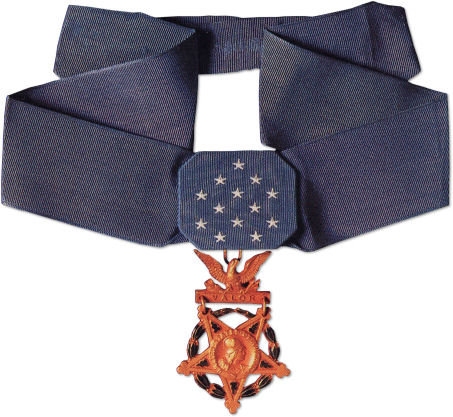
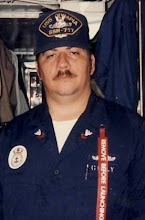
Col. Bud Day, an Air Force fighter pilot who was shot down in the Vietnam War, imprisoned with John McCain in the notorious “Hanoi Hilton,” and defiantly endured more than five years of brutality without divulging sensitive information to his captors, earning him the Medal of Honor, died on Saturday in Shalimar, Fla. He was 88.

*******

Colonel Day was among America’s most highly decorated servicemen, having received nearly 70 medals and awards, more than 50 for combat exploits. In addition to the Medal of Honor, the nation’s highest award for valor, he was awarded the Air Force Cross, the highest combat award specifically for airmen.

*******

George Everette Day, known as Bud, was born on Feb. 24, 1925, in Sioux City, Iowa. He quit high school to join the Marines in 1942 and served with an antiaircraft battery on Johnston Island in the Pacific during World War II.

*******

In addition to his wife, Colonel Day is survived by his sons Steven and George Jr; his daughters Sandra Hearn and Sonja LaJeunesse, and 14 grandchildren.

Wikipedia's article is here.

There are currently 78 living Medal of Honor recipients.

************* *** *************

GEORGE EVERETTE DAY

Colonel (then Major), US Air Force; Detachment 1, 416th Tactical Fighter Squadron, 37th Tactical Fighter Wing

Born: 24 February 1925, Sioux City, Iowa
Died: 27 July 2013, Fort Walton Beach, Florida

Citation: On 26 August 1967, Col. Day was forced to eject from his [North American F-100 Super Sabre] aircraft over North Vietnam when it was hit by ground fire. His right arm was broken in 3 places, and his left knee was badly sprained. He was immediately captured by hostile forces and taken to a prison camp where he was interrogated and severely tortured. After causing the guards to relax their vigilance, Col. Day escaped into the jungle and began the trek toward South Vietnam. Despite injuries inflicted by fragments of a bomb or rocket, he continued southward surviving only on a few berries and uncooked frogs. He successfully evaded enemy patrols and reached the Ben Hai River, where he encountered U.S. artillery barrages. With the aid of a bamboo log float, Col. Day swam across the river and entered the demilitarized zone. Due to delirium, he lost his sense of direction and wandered aimlessly for several days. After several unsuccessful attempts to signal U.S. aircraft, he was ambushed and recaptured by the Viet Cong, sustaining gunshot wounds to his left hand and thigh. He was returned to the prison from which he had escaped and later was moved to Hanoi after giving his captors false information to questions put before him. Physically, Col. Day was totally debilitated and unable to perform even the simplest task for himself. Despite his many injuries, he continued to offer maximum resistance. His personal bravery in the face of deadly enemy pressure was significant in saving the lives of fellow aviators who were still flying against the enemy. Col. Day's conspicuous gallantry and intrepidity at the risk of his life above and beyond the call of duty are in keeping with the highest traditions of the U.S. Air Force and reflect great credit upon himself and the U.S. Armed Forces.

01 July 2013

Book list - Apr-Jun 13

Galactic Derelict - SF, by Andre Norton *
The Wrong Hill to Die On - mystery, by Donis Casey
The Defiant Agents - SF, by Andre Norton *
Worlds of the Imperium - SF/AH, by Keith Laumer *
The Other Side of Time - SF/AH, by Keith Laumer *
Key out of Time - SF, by Andre Norton *
Myth-Quoted - fantasy, by Jody Lynn Nye
Assignment in Nowhere - SF/AH, by Keith Laumer
The ABC Murders - mystery, by Agatha Christie
Myth-ion Improbable - fantasy, by Robert Lynn Asprin
Thirteen at Dinner (aka Lord Edgware Dies) - mystery, by Agatha Christie
Murder on the Orient Express (aka Murder in the Calais Coach) - mystery, by Agatha Christie
Cards on the Table - mystery, by Agatha Christie
Myth-Fortunes - fantasy, by Robert Lynn Asprin and Jody Lynn Nye
The Secret Adversary - mystery, by Agatha Christie
Myth-ing Persons - fantasy, by Robert Lynn Asprin *


Doing much better - 16 books this time round, with six of them rereads (marked by asterisks). And I'm still at 58 of 74 on the Carnegie Medal winners.

13 June 2013

RIP: Jiroemon Kimura

Jiroemon Kimura
19 April 1897 – 12 June 2013


ZUI this article from the Daily Mirror:
The world’s oldest person has died of natural causes at the age of 116.

Jiroemon Kimura who had seven children, 14 grandchildren, 25 great-grandchildren, and 13 great-great-grandchildren, passed away at a hospital yesterday.
Kimura was not only the oldest living person in the world - he was also the last surviving man born in the 19th century, and the only man verified by the Gerontology Research Group to have reached the age of 116.

According to this Wikipedia article, Kimura became the oldest living man on the death of Walter Breuning (21 Sep 1896-14 Apr 2011), and the oldest living person on the death of Dina Manfredini (4 Apr 1897-17 Dec 2012). He became the oldest man ever on 28 Dec 12, when he passed the age reached by Christian Mortensen (16 Aug 1882-25 Apr 1998).

According to the GRG, Kimura was the 27th supercentenarian (person who had reached the age of 110) to die in 2013. There are now 59 living supercentenarians: 55 women and four men, ranging from Japan's Misao Okawa (born 5 Mar 1898) to Pennsylvania's Ida Schlesinger (born 7 Nov 1902). 19 of these people - all women - were born in the 19th century. The oldest living man is now Newfoundland-born James McCoubrey (born 13 Sep 1901), who is the 32nd-oldest living person.

This article from Japan Today, posted three days before Kimura's death, talks about the changes in the world during his lifetime.

01 April 2013

Book list - Jan-Mar 13

Cold Days - urban fantasy, by Jim Butcher
The Ram Rebellion - AH (short stories), edited by Eric Flint and Virginia DeMarce
Dream Park - SF, by Larry Niven and Steven Barnes
Ice Crown - SF, by Andre Norton *
Forerunner - SF, by Andre Norton


Only five books this time round, one of them a reread (marked by an asterisk). And I'm still at 58 of 73 on the Carnegie Medal winners.

31 March 2013

Medal of Honor: M. H. Dethlefsen

MERLYN HANS DETHLEFSEN

Captain (later Major), US Air Force; 333rd Fighter Squadron

Born: 29 June 1934, Greenville, Iowa
Died: 14 December 1987

Citation: Maj. Dethlefsen was 1 of a flight of F-105 aircraft engaged [on 10 March 1967] in a fire suppression mission designed to destroy a key antiaircraft defensive complex containing surface-to-air missiles (SAM), an exceptionally heavy concentration of antiaircraft artillery, and other automatic weapons. The defensive network was situated to dominate the approach and provide protection to an important North Vietnam industrial center that was scheduled to be attacked by fighter bombers immediately after the strike by Maj. Dethlefsen's flight. In the initial attack on the defensive complex the lead aircraft was crippled, and Maj. Dethlefsen's aircraft was extensively damaged by the intense enemy fire. Realizing that the success of the impending fighter bomber attack on the center now depended on his ability to effectively suppress the defensive fire, Maj. Dethlefsen ignored the enemy's overwhelming firepower and the damage to his aircraft and pressed his attack. Despite a continuing hail of antiaircraft fire, deadly surface-to-air missiles, and counterattacks by MIG interceptors, Maj. Dethlefsen flew repeated close range strikes to silence the enemy defensive positions with bombs and cannon fire. His action in rendering ineffective the defensive SAM and antiaircraft artillery sites enabled the ensuing fighter bombers to strike successfully the important industrial target without loss or damage to their aircraft, thereby appreciably reducing the enemy's ability to provide essential war material. Maj. Dethlefsen's consummate skill and selfless dedication to this significant mission were in keeping with the highest traditions of the U.S. Air Force and reflect great credit upon himself and the Armed Forces of his country.

17 February 2013

Victoria Cross: O. C. S. Watson

OLIVER CYRIL SPENCER WATSON, DSO

Major (acting Lieutenant-Colonel), King's Own Yorkshire Light Infantry

Born: 7 September 1876, Cavendish Square, London
Died: 28 March 1918, Rossignol Wood, near Hebuterne, France

Citation: For most conspicuous bravery, self-sacrificing devotion to duty, and exceptionally gallant leading during a critical period of operations.
His command was at a point where continual attacks were made by the enemy in order to pierce the line [at Rossignol Wood, north of Hebuterne, France], and an intricate system of old trenches in front, coupled with the fact that his position was under constant rifle and machine-gun fire, rendered the situation still more dangerous.
A counter-attack had been made against the enemy position, which at first achieved its object, but as they were holding out in two improvised strong points, Lt-Col Watson saw that immediate action was necessary, and he led his remaining small reserve to the attack, organising bombing parties and leading attacks under intense rifle and machinegun fire.
Outnumbered, he finally ordered his men to retire, remaining himself in a communication trench to cover the retirement, though he faced almost certain death by so doing. The assault he led was at a critical moment, and without doubt saved the line. Both in the assault and in covering his men's retirement, he held his life as nothing, and his splendid bravery inspired all troops in the vicinity to rise to the occasion and save a breach being made in a hardly tried and attenuated line.
Lt-Col Watson was killed while covering the withdrawal.

[London Gazette issue 30675 dated 8 May 1918, published 7 May 1918.]

03 February 2013

George Cross: R. T. Donoghue

RAYMOND TASMAN DONOGHUE

Tram Conductor, Metropolitan Transport Trust

Born: 10 December 1920, Hobart, Tasmania, Australia
Died: 29 April 1960, Hobart, Tasmania, Australia

Citation: During a peak traffic period, Mr. Donoghue was on duty as a tram conductor. As a result of an accident the tram became out of control and started to run backwards, rapidly gaining speed, on a steep hill. He could easily have saved his life, either by leaving the tram or by passing into the rear of the compartment to which he had moved the passengers. Realising the danger in the dense traffic, he deliberately scorned the way of safety so that he might, by continuous ringing of the alarm bell, warn other traffic, while attempting by the use of the brake to arrest the vehicle. At the bottom of the hill the runaway tram collided with a stationary tram. Donoghue was still at his post at the moment of impact and was killed. By sacrificing his life Donoghue was responsible for saving the lives of a number of other persons.

[London Gazette issue 42162 dated 11 Oct 1960, published 7 Oct 1960.]


Note: Donoghue served with 2nd/12th Battalion, Australian Imperial Force in Britain, the Middle East and Greece, where he was captured by the Germans on 28 April 1941, remaining a POW until 8 May 1945.

20 January 2013

Victoria Cross: J. Prettyjohn

JOHN PRETTYJOHN

Bombardier, Royal Marine Artillery

Born: 11 June 1823, Dean Prior, Devon
Died: 20 January 1887, Manchester

Citation: Reported for gallantry at the Battle of Inkerman, having placed himself in an advanced position; and noticed, as having himself shot four Bussians.
(Despatch from Lieutenant-Colonel Hopkine, Senior Officer of Marines, engaged at Inkerman, and letter from Colonel Wesley, Deputy Adjutant-General.)

16 January 2013

Medal of Honor to be awarded for Afghanistan


ZUI this article from the Pueblo (Colorado) Chieftain:
Clinton Romesha, the newest recipient of the Medal of Honor, insists "any other soldier would have done the same things" but the former Pueblo man is slowly coming to grips with the attention that comes with the nation's highest award for bravery in combat.

Romesha (pronounced Rome-e-shay) will receive the medal from President Barack Obama on Feb. 11 at the White House. The award honors Romesha for his bravery and leadership during a vicious, daylong battle with Taliban fighters on Oct. 3, 2009, in Afghanistan. Eight U.S. soldiers were killed in the fight.

*******

Romesha was a section leader in the 4th Infantry Division's 4th Brigade Combat Team. He went from position to position under fire, is credited with killing numerous Taliban attackers inside the outpost and, despite his own wounds, rescued wounded U.S. soldiers without regard for his own safety.
The official White House press release can be found here.

08 January 2013

100 best children's novels

A couple years ago Betsy, at A Fuse #8 Production, did a poll, asking readers to nominate the best children's chapter books. She repeated it again last year. Unfortunately, I almost completely missed it - in fact, by the time I found out about it she was already almost through reporting the results.

Here (finally) is the new list:

1. Charlotte’s Web, by E B White (#1 in 2010)
2. A Wrinkle in Time, by Madeleine L’Engle (#2)
3. Harry Potter and the Sorcerer’s Stone, by J K Rowling (#3)
4. The Giver, by Lois Lowry (#7)
5. The Lion, the Witch and the Wardrobe, by C S Lewis (#4)
6. Holes, by Louis Sachar (#6)
7. From the Mixed-Up Files of Mrs. Basil E. Frankweiler, by E L Konigsburg (#5)
8. Anne of Green Gables, by L M Montgomery (#9)
9. The Westing Game, by Ellen Raskin (#11)
10. Bridge to Terabithia, by Katherine Paterson (#13)
11. When You Reach Me, by Rebecca Stead (#39)
12. Harry Potter and the Prisoner of Azkaban, by J K Rowling (#14)
13. The Thief, by Megan Whalen Turner (#83)
14. The Hobbit, by J R R  Tolkien (#12)
15. The Secret Garden, by Frances Hodgson Burnett (#8)
16. Tuck Everlasting, by Natalie Babbitt (#20)
17. Harriet the Spy, by Louise Fitzhugh (#16)
18. The Book of Three, by Lloyd Alexander (#82)
19. Little House in the Big Woods, by Laura Ingalls Wilder (#23)
20. Because of Winn-Dixie, by Kate DiCamillo (#15)
21. The Phantom Tollbooth, by Norton Juster (#10)
22. The Dark is Rising, by Susan Cooper (#29)
23. Hatchet, by Gary Paulsen (#26)
24. Ramona the Pest, by Beverly Cleary (#43)
25. The Watsons Go to Birmingham, 1963, by Christopher Paul Curtis (#34)
26. Winnie-the-Pooh, by A A Milne (#30)
27. Little House on the Prairie, by Laura Ingalls Wilder (#42)
28. The Golden Compass, by Philip Pullman (#45)
29. The Penderwicks: A Summer Tale of Four Sisters, Two Rabbits, and a Very Interesting Boy, by Jeanne Birdsall (#48)
30. Matilda, by Roald Dahl (#18)
31. Alice’s Adventures in Wonderland, by Lewis Carroll (#27)
32. Roll of Thunder, Hear My Cry, by Mildred Taylor (#37)
33. Mrs. Frisby and the Rats of NIMH, by Robert C O’Brien (#32)
34. Where the Red Fern Grows, by Wilson Rawls (#46)
35. Tales of a Fourth Grade Nothing, by Judy Blume (#44)
36. The Witch of Blackbird Pond, by Elizabeth George Speare (#41)
37. The Wednesday Wars, by Gary D Schmidt (--)
38. Frindle, by Andrew Clements (#49)
39. The Invention of Hugo Cabret, by Brian Selznick (#52)
40. Maniac Magee, by Jerry Spinelli (#17)
41. The Wonderful Wizard of Oz, by L Frank Baum (#40)
42. Gone-Away Lake, by Elizabeth Enright (#63)
43. Jacob Have I Loved, by Katherine Paterson (--)
44. Okay for Now, by Gary D Schmidt (--)
45. Island of the Blue Dolphins, by Scott O’Dell (#50)
46. The True Confessions of Charlotte Doyle, by Avi (#60)
47. Little Women, by Louisa May Alcott (#25)
48. The Bad Beginning, by Lemony Snicket (the series as a whole was #71)
49. My Father’s Dragon, by Ruth Stiles Gannett (#72)
50. Number the Stars, by Lois Lowry (#56)
51. The Tale of Despereaux: Being the Story of a Mouse, A Princess, Some Soup, and a Spool of Thread, by Kate DiCamillo (#22)
52. Betsy-Tacy, by Maud Hart Lovelace (#70)
53. The Graveyard Book, by Neil Gaiman (#80)
54. Half Magic, by Edward Eager (#31)
55. All-of-a-Kind Family, by Sydney Taylor (#79)
56. A Little Princess, by Frances Hodgson Burnett (#28)
57. The Wolves of Willoughby Chase, by Joan Aiken (#58)
58. Swallows and Amazons, by Arthur Ransome (#94)
59. The Miraculous Journey of Edward Tulane, by Kate DiCamillo (#97)
60. Bud, Not Buddy, by Christopher Paul Curtis (#47)
61. Charlie and the Chocolate Factory, by Roald Dahl (#19)
62. Clementine, by Sara Pennypacker (#107)
63. The Great Gilly Hopkins, by Katherine Paterson (#55)
64. The Twenty-One Balloons, by William Pene du Bois (--)
65. Wonder, by R J Palacio (--)
66. The Evolution of Calpurnia Tate, by Jacqueline Kelly (--)
67. A Long Way from Chicago, by Richard Peck (#64)
68. The High King, by Lloyd Alexander (#88)
69. The Ruins of Gorlan, by John Flanagan (--)
70. Walk Two Moons, by Sharon Creech (#68)
71. Each Little Bird That Sings, by Deborah Wiles (--)
72. Where the Mountain Meets the Moon, by Grace Lin (#81)
73. The Best Christmas Pageant Ever, by Barbara Robinson (--)
74. Are You There, God? It’s Me, Margaret, by Judy Blume (#36)
75. The Saturdays, by Elizabeth Enright (#51)
76. Diary of a Wimpy Kid, by Jeff Kinney (--)
77. My Side of the Mountain, by Jean Craighead George (#73)
78. Ballet Shoes, by Noel Streatfeild (#65)
79. The Egypt Game, by Zilpha Keatley Snyder (#100)
80. The Four-Story Mistake, by Elizabeth Enright (--)
81. The Witches, by Roald Dahl (#96)
82. The Cricket in Times Square, by George Selden (#108)
83. Ozma of Oz, by L Frank Baum (--)
84. The Long Winter, by Laura Ingalls Wilder (--)
85. Ella Enchanted, by Gail Carson Levine (#92)
86. Peter Pan, by J M Barrie (--)
87. The Strange Case of Origami Yoda, by Tom Angleberger (--)
88. The BFG, by Roald Dahl (#54)
89. The Mouse and the Motorcycle, by Beverly Cleary (--)
90. The Children of Green Knowe, by Lucy M Boston (#98)
91. Pippi Longstocking, by Astrid Lindgren (#95)
92. Flipped, by Wendelin Van Draanen (--)
93. Journey to the River Sea, by Eva Ibbotson (--)
94. Ramona and her Father, by Beverly Cleary (#89)
95. The Little Prince, by Antoine de Saint-Exupery (--)
96. The Horse and His Boy, by C S Lewis (--)
97. The Diamond in the Window, by Jane Langton (--)
98. Harry Potter and the Goblet of Fire, by J K Rowling (#35)
99. The Boxcar Children, by Gertrude Chandler Warner (#117)
100. Love That Dog, by Sharon Creech (#75)

I think I've read 58 of these.

There was a big turnover between the two polls - 24 of the 100 books on this list weren't on the 2010 list (though three of them were on Betsy's additional post which listed the books that almost made the top 100 -  numbers 101-120).  Percy Jackson and the Olympians: The Lightning Thief, by Rick Riordan, was #21 in the previous poll; it's the highest-ranked book from last time that fell off the list completely. Other books that appeared last time but don't here are:

Harry Potter and the Deathly Hallows, by J K Rowling (#24)
James and the Giant Peach, by Roald Dahl (#33)
Harry Potter and the Order of the Phoenix, by J K Rowling (#38)
The Wind in the Willows, by Kenneth Grahame (#53)
Ramona Quimby, Age 8, by Beverly Cleary (#57)
Inkheart, by Cordelia Funke (#59)
Stargirl, by Jerry Spinelli (#61)
The Secret of the Old Clock, by "Carolyn Keene" (#62)
Henry Huggins, by Beverly Cleary (#66)
Jeremy Thatcher, Dragon Hatcher, by Bruce Coville (#67)
The Mysterious Benedict Society, by Trentoon Lee Stewart (#69)
The Borrowers, by Mary Norton (#74)
Out of the Dust, by Karen Hesse (#76)
The City of Ember, by Jeanne DuPrau (#77)
Johnny Tremaine, by Esther Forbes (#78)
The Little White Horse, by Elizabeth Goudge (#84)
On the Banks of Plum Creek, by Laura Ingalls Wilder (#85)
Harry Potter and the Chamber of Secrets, by J K Rowling (#86)
The View from Saturday, by E L Konigsburg (#87)
Sarah, Plain and Tall, by Patricia MacLachlan (#90)
Sideways Stories from Wayside School, by Louis Sachar (#91)
Caddie Woodlawn, by Carol Ryrie Brink (#93)
The Indian in the Cupboard, by Lynne Reid Banks (#99)

(I've read 15 of those.)


Note: I actually started writing this post several months ago, but got bogged down in deleting all the superfluous HTML which Blogger had for some bizarre reason inserted into the list - there was actually far more HTML than list. (Was it really necessary to specify "style="background-color: white; line-height: 15px; text-align: left; text-decoration: none;" twice - once before the item number and again before the book's title - for each of the 100 books??) Apologies to Betsy and everyone else for the delay....

06 January 2013

Book list - 2012

Here's the complete list of books I read in 2012. I didn't set a goal for this year, so I can't report success in reaching it (nor, of course, must I admit to failure, either).

An asterisk indicates a reread. Numbers refer to the order in which the books were read.


"Adult" Fiction (29 books)
1. Dead As a Dinosaur - mystery, by Frances and Richard Lockridge
2. When The Star Kings Die - SF, by John Jakes
5. Mask of the Sun - time travel, by Fred Saberhagen
7. Golden Reflections - time travel/AH (short stories), edited by Joan Spicci Saberhagen and Robert E Vardeman
8. Island in the Sea of Time - AH, by S M Stirling *
9. Metzger's Dog - thriller, by Thomas Perry *
11. Case for Three Detectives - mystery, by Leo Bruce
12. A Century of Progress - SF/AH, by Fred Saberhagen
13. Eye of the Storm - thriller, by Jack Higgins
14. Empress of Outer Space - SF, by A Bertram Chandler *
18. Cold War Hot: Alternate Decisions of the Cold War - AH, by Peter Tsouras
21. Time Crime - SF/AH, by H Beam Piper
22. Null-ABC - SF, by H Beam Piper
23. Rendezvous with Rama - SF, by Arthur C Clarke *
25. In the Courts of the Crimson Kings - AH/SF, by S M Stirling *
26. Some Like It Hawk - mystery, by Donna Andrews
27. 1632 - AH, by Eric Flint *
28. 1633 - AH, by David Weber and Eric Flint *
31. 1634: The Baltic War - AH, by David Weber and Eric Flint
32. 1634: The Bavarian Crisis - AH, by Eric Flint and Virginia DeMarce
33. 1635: The Eastern Front - AH, by Eric Flint
35. Caravan to Vaccares - thriller, by Alistair MacLean *
36. Under the Andes - adventure, by Rex Stout
37. Grantville Gazette II - AH (short stories), edited by Eric Flint
38. 1636: The Saxon Uprising - AH, by Eric Flint
39. Grantville Gazette III - AH (short stories), edited by Eric Flint
40. Ill Wind - SF/TEOTWAWKI, by Kevin J Anderson and Doug Beason *
41. Grantville Gazette IV - AH (short stories), edited by Eric Flint
42. Grantville Gazette VI - AH (short stories), edited by Eric Flint

Children's/YA Fiction (9)
4. The Penderwicks at Point Mouette - children's, by Jeanne Birdsall
6. Dead End in Norvelt - YA, by Jack Gantos (Newbery Medal, 2012)
10. Poor Tom's Ghost - children's time travel, by Jane Louise Curry
16. Old Possum's Book of Practical Cats - children's poetry, by T S Eliot
20. The Callahan Cousins - children's, by Elizabeth Doyle Carey
24. The Blue-Eyed Aborigine - children's historic fiction, by Rosemary Hayes
29. The Grange at High Force - children's, by Philip Turner (Carnegie Medal, 1965)
30. The Turbulent Term of Tyke Tiler - children's, by Gene Kemp (Carnegie Medal, 1977)
34. Plutonia - children's SF, by Vladimir Obruchev *

Non-Fiction (4)
3. Cats Are Not Peas: A Calico History of Genetics - genetics, by Laura Gould
15. Sea of Thunder: Four Commanders and the Last Great Naval Campaign 1941-1945 - WW II, by Evan Thomas
17. A Natural History of Domesticated Mammals - agriculture, by Juliet Clutton-Brock
19. Cathedral, Forge and Waterwheel: Technology and Invention in the Middle Ages - history, by Frances and Joseph Gies *


The biggest categories were AH (16) and SF (8). Eric Flint was the most-read author of the year (13 books), as I finally started reading my way through the 1632 series (two of which I'd read before). And 11 of the 42 books were rereads.

My favourites? Mask of the Sun, Some Like It Hawk (the 14th Meg Langslow mystery) and The Turbulent Term of Tyke Tiler - not necessarily in that order - were the best of the new (to me, anyway) books. Metzger's Dog is an old favourite, which I've read several times.

Having not set a goal for last year, I'm not setting one for this year either. But I do hope to do a lot more reading this year....

George Cross: M. J. Munnelly

MICHAEL JOSEPH MUNNELLY

Born: 1941
Died: 24 December 1964, London

Citation: The QUEEN has been graciously pleased to make the undermentioned award:
GEORGE CROSS
Michael Joseph MUNNELLY (deceased), Journalist, London S.E.24.

Fourteen youths had been drinking at Kentish Town and had travelled in a van to Regents Park Road to a flat where two of them had been invited. They were in an extremely rowdy mood shouting and swearing. The fourteen were refused entry to the flat and some of them immediately attacked the occupier. Others went to a dairy opposite and from crates left outside began to bombard the flat with milk bottles, resulting in all the windows being broken, also the window of the shop next door. Some of the youths were attacking the occupier of the flat, some were throwing dozens of bottles and all were shouting, swearing and milling about. Although there were several onlookers, it appears they were all too frightened to interfere. In an endeavour to protect his property, the dairyman went into the street where he was immediately attacked by being butted, kicked and knifed in the groin. Michael Joseph Munnelly, his brother and a friend were the occupants of a third floor flat and hearing the noise of breaking glass and shouting, looked out of the window and saw the dairyman was on the ground being kicked. All three men decided they must go and help him and ran to the street. They detained two men but Munnelly was hit on the head by some person and released the man he was holding. The van, which had left the scene, then returned and was followed into the next turning by Munnelly's friend who in an attempt to stop the van banged on the side. The van stopped and he grabbed a youth who was sitting next to the driver. This resulted in a cry for help, the rear door of the van opened and several of the youths attacked him until they had kicked him senseless. Munnelly immediately went to his rescue. Bottles were thrown at him, he was kicked and received a fatal stab wound in his lower left abdomen. The youths then fled. Munnelly and the others were mere onlookers who could have stayed in the safety of the flat but without thought for themselves they went to the assistance of the dairyman. Munnelly saw his friend being attacked with knives and immediately went to his rescue. Within a few minutes he was dead. He had given his life to save that of his friend.

[London Gazette issue 43698 dated 29 June 1965, published 25 June 1965.]


Note: Munnelly's friend, Donald Smith, was awarded the George medal, and the dairyman, William Eirwyn Thomas Griffiths, received the British Empire Medal for Gallantry (Civil Division).

01 January 2013

Books - Oct-Dec 12

Plutonia - children's SF, by Vladimir Obruchev *
Caravan to Vaccares - thriller, by Alistair MacLean *
Under the Andes - adventure, by Rex Stout
Grantville Gazette II - AH (short stories), edited by Eric Flint
1636: The Saxon Uprising - AH, by Eric Flint
Grantville Gazette III - AH (short stories), edited by Eric Flint
Ill Wind - SF/TEOTWAWKI, by Kevin J Anderson and Doug Beason *
Grantville Gazette IV - AH (short stories), edited by Eric Flint
Grantville Gazette VI - AH (short stories), edited by Eric Flint


Only nine books this time round, three of them rereads (marked by an asterisk). Don't know if Plutonia was really meant to be a children's book, but the Waukegan Public Library had it in their children's section (back in the late '60s), so that's what I'm calling it here. And I'm still at 58 of 73 on the Carnegie Medal winners.

19 December 2012

RIP: Daniel K. Inouye

ZUI this article from The Atlantic:
Daniel Inouye, the senior senator from Hawaii and the president pro-tempore of the Senate, died at Walter Reed Medical Center Monday evening. He was 88. Officials said the cause of death was respiratory complications.

With Inouye's death, the Senate -- and the nation -- lose more than just a long-serving senator. His death signals the end of an era for his state, too. It's tough to overstate the association between Inouye and his home state. Not only was his last word "Aloha," he also represented Hawaii in Congress -- first as a representative, from 1959 to 1963, and then as a senator -- for the archipelago's entire history as a state.

*******

Although his father was born in Japan, Inouye was not interned [after the Pearl Harbor attack] because Hawaii immediately came under military government, he told NPR in 2011, but he was declared an "enemy alien." He and others petitioned the government for the right to serve in the military to prove their allegiance, and in late 1942, at age 17, he enlisted. Serving in Europe, he rose quickly to become a non-commissioned and later a commissioned officer. On one occasion, he said a silver dollar in his shirt pocket stopped a bullet in France.

Inouye's greatest moment of heroism came in April 1945, near the end of the war, and he was awarded a Distinguished Service Cross for it, later upgraded by President Clinton to a Medal of Honor.

Wikipedia gives further details regarding Inouye's Medal of Honor action:
On April 21, 1945, Inouye was grievously wounded while leading an assault on a heavily-defended ridge near San Terenzo in Tuscany, Italy called Colle Musatello. The ridge served as a strongpoint along the strip of German fortifications known as the Gothic Line, which represented the last and most unyielding line of German defensive works in Italy. As he led his platoon in a flanking maneuver, three German machine guns opened fire from covered positions just 40 yards away, pinning his men to the ground. Inouye stood up to attack and was shot in the stomach; ignoring his wound, he proceeded to attack and destroy the first machine gun nest with hand grenades and fire from his Thompson submachine gun. After being informed of the severity of his wound by his platoon sergeant, he refused treatment and rallied his men for an attack on the second machine gun position, which he also successfully destroyed before collapsing from blood loss.

As his squad distracted the third machine gunner, Inouye crawled toward the final bunker, eventually drawing within 10 yards. As he raised himself up and cocked his arm to throw his last grenade into the fighting position, a German inside the bunker fired a rifle grenade that struck him on the right elbow, severing most of his arm and leaving his own primed grenade reflexively "clenched in a fist that suddenly didn't belong to me anymore". Inouye's horrified soldiers moved to his aid, but he shouted for them to keep back out of fear his severed fist would involuntarily relax and drop the grenade. As the German inside the bunker reloaded his rifle, Inouye pried the live grenade from his useless right hand and transferred it to his left. As the German aimed his rifle to finish him off, Inouye tossed the grenade off-hand into the bunker and destroyed it. He stumbled to his feet and continued forward, silencing the last German resistance with a one-handed burst from his Thompson before being wounded in the leg and tumbling unconscious to the bottom of the ridge. When he awoke to see the concerned men of his platoon hovering over him, his only comment before being carried away was to gruffly order them to return to their positions, since, as he pointed out, "nobody called off the war!"

The remainder of Inouye's mutilated right arm was later amputated at a field hospital without proper anesthesia, as he had been given too much morphine at an aid station and it was feared any more would lower his blood pressure enough to kill him.

Although Inouye had lost his right arm, he remained in the military until 1947 and was honorably discharged with the rank of captain.

There are now 79 surviving Medal of Honor recipients.

************* *** *************

DANIEL KEN INOUYE

Second Lieutenant, US Army; 442nd Regimental Combat Team

Born: 7 September 1924, Honolulu, Territory of Hawaii
Died: 17 December 2012, Bethesda, Maryland

Citation: Second Lieutenant Daniel K. Inouye distinguished himself by extraordinary heroism in action on 21 April 1945, in the vicinity of San Terenzo, Italy. While attacking a defended ridge guarding an important road junction, Second Lieutenant Inouye skillfully directed his platoon through a hail of automatic weapon and small arms fire, in a swift enveloping movement that resulted in the capture of an artillery and mortar post and brought his men to within 40 yards of the hostile force. Emplaced in bunkers and rock formations, the enemy halted the advance with crossfire from three machine guns. With complete disregard for his personal safety, Second Lieutenant Inouye crawled up the treacherous slope to within five yards of the nearest machine gun and hurled two grenades, destroying the emplacement. Before the enemy could retaliate, he stood up and neutralized a second machine gun nest. Although wounded by a sniper's bullet, he continued to engage other hostile positions at close range until an exploding grenade shattered his right arm. Despite the intense pain, he refused evacuation and continued to direct his platoon until enemy resistance was broken and his men were again deployed in defensive positions. In the attack, 25 enemy soldiers were killed and eight others captured. By his gallant, aggressive tactics and by his indomitable leadership, Second Lieutenant Inouye enabled his platoon to advance through formidable resistance, and was instrumental in the capture of the ridge. Second Lieutenant Inouye's extraordinary heroism and devotion to duty are in keeping with the highest traditions of military service and reflect great credit on him, his unit, and the United States Army.

02 December 2012

George Cross: H. H. Reed

HENRY HERBERT REED

Bombardier, No 2 Battery, 1 Maritime AA Regt, Royal Artillery; SS Cormount

Born: 1911, Sunderland
Died: 20 June 1941, at sea (aboard SS Cormount)

Citation: The KING has been graciously pleased to award the GEORGE CROSS to: —
Henry Herbert Reed (deceased), Gunner.
The ship was attacked [on 20 June 1941] by enemy aircraft with cannon, machine-guns and bombs. She replied at once with her defensive armament and the men at the guns went on firing despite the hail of bullets and cannon shell.
Gunner Reed behaved with the utmost gallantry. He was badly wounded but when the Master asked how he was, he said that he would carry on. The Chief Officer was also badly wounded. Reed carried him from the bridge down two ladders to the deck below and placed him in shelter near a lifeboat. Gunner Reed then died. It was afterwards found that his stomach had been ripped open by machine-gun bullets.
By his gallant and utterly selfless action Gunner Reed saved the life of the Chief Officer.

[London Gazette issue 35280 dated 23 Sep 1941, published 19 Sep 1941.]

Victoria Cross: T. de C. Hamilton

THOMAS de COURCY HAMILTON

Captain, 68th Regiment

Born: 20 July 1825, Stranraer, Galloway, Scotland
Died: 3 March 1908, Cheltenham, Gloucestershire

Citation: For having, on the night of the llth May, 1855, during a most determined sortie, boldly charged the enemy, with a small force, from a battery of which they had obtained possession in great numbers, thereby saving the works from falling into the hands of the enemy.
He was conspicuous on this occasion for his gallantry, and daring conduct.

[London Gazette issue 21971 dated 24 Feb 1857, published 24 Feb 1857.]

30 November 2012

Alba gu bràth


Alba gu brath!


If the Irish can go around saying "Erin go bragh" on St Patrick's Day, then I can say "Alba gu bràth" on St Andrew's....

14 November 2012

RIP: James L. Stone

ZUI this article from the Biloxi (MS) Sun Herald:
On the evening of Nov. 21, 1951, James L. Stone looked out from his hilltop outpost in Korea and sensed what was coming. He was an Army lieutenant whose eight months of combat experience were enough to alert him to the imminence of an enemy assault.

The attack began at 9 p.m. with artillery and mortar fire and raged through the night as hundreds of Chinese stormed the hill. By the next day, half the men in the platoon were dead and their 28-year-old lieutenant had been shot three times.

But the lieutenant survived to spend nearly 30 years in the Army, rising to the rank of colonel and receiving the nation's highest military decoration for valor.

*******

Stone died Nov. 9 in Arlington, Texas, the Congressional Medal of Honor Society announced. The cause was not disclosed. He was 89.

*******

When U.S. reinforcements retook the hill the next day, Collier wrote, they found 545 enemy dead.

"I am not proud of that," Stone told the Fort Worth Star-Telegram in 2005. "I hate to see men killed. But, it's either you or them."

James Lamar Stone was born Dec. 27, 1922, in Pine Bluff, Ark. He studied chemistry and zoology at the University of Arkansas, where he received a bachelor's degree, according to the Fort Worth Star-Telegram.

After the Korean War, Col. Stone served in Germany, oversaw ROTC units and served a year in Vietnam. A complete list of survivors could not be determined.

There are now 80 surviving Medal of Honor recipients.

************* *** *************

JAMES LAMAR STONE

First Lieutenant, US Army; Company E, 8th Cavalry Regiment, 1st Cavalry Division

Born: 27 December 1922, Pine Bluff, Arkansas
Died: 9 November 2012, Arlington, Texas

Citation: 1st Lt. Stone distinguished himself by conspicuous gallantry and indomitable courage above and beyond the call of duty in action against the enemy [near Sokkogae, Korea, on the night of 21-22 November 1951]. When his platoon, holding a vital outpost position, was attacked by overwhelming Chinese forces, 1st Lt. Stone stood erect and exposed to the terrific enemy fire calmly directed his men in the defense. A defensive flame-thrower failing to function, he personally moved to its location, further exposing himself, and personally repaired the weapon. Throughout a second attack, 1st Lt. Stone, though painfully wounded, personally carried the only remaining light machine gun from place to place in the position in order to bring fire upon the Chinese advancing from 2 directions. Throughout he continued to encourage and direct his depleted platoon in its hopeless defense. Although again wounded, he continued the fight with his carbine, still exposing himself as an example to his men. When this final overwhelming assault swept over the platoon's position his voice could still be heard faintly urging his men to carry on, until he lost consciousness. Only because of this officer's driving spirit and heroic action was the platoon emboldened to make its brave but hopeless last ditch stand.

11 November 2012

Medal of Honor: The Unknown Americans


Left to right: Army, Navy/Marine Corps and Air Force Medals of Honor


By virtue of an act of Congress approved 24 August 1921, the Medal of Honor, emblem of highest ideals and virtues is bestowed in the name of the Congress of the United States upon the unknown American, typifying the gallantry and intrepidity, at the risk of life above and beyond the call of duty, of our beloved heroes who made the supreme sacrifice in the World War. They died in order that others might live (293.8, A.G:O.) (War Department General Orders, No. 59, 13 Dec. 1921, sec. I).

*******

AN ACT To authorize the President to award the Medal of Honor to the unknown American who lost his life while serving overseas in the armed forces of the United states during the Second World War.

Be it enacted by the Senate and House of Representatives of the United States of America in Congress assembled, That the President is hereby authorized and directed to award, in the name of Congress, a Medal of Honor to the unknown American who lost his life while serving overseas in the armed forces of the United States during the Second World War, and who will lie buried in the Memorial Amphitheater of the National Cemetery at Arlington, Virginia, as authorized by the Act of June 24, 1946, Public Law 429, Seventy-ninth Congress.

Approved March 9, 1948. Public Law 438, 80th Congress.

*******

AN ACT To authorize the President to award the Medal of Honor to the unknown American who lost his life while serving overseas in the Armed Forces of the United States during the Korean conflict.

Be it enacted by the Senate and House of Representatives of the United States of America in Congress assembled, That the President is hereby authorized and directed to award, in the name of the Congress, a Medal of Honor to the unknown American who lost his life while serving overseas in the Armed Forces of the United States during the Korean conflict, and who will lie buried in the Memorial Amphitheater of the National Cemetery at Arlington, Virginia, as authorized by the Act of August 3, 1956, Public Law 975, Eighty_fourth Congress.

Approved August 31, 1957. Public Law 85_251.

*******

AN ACT To authorize the President to award the Medal of Honor to the unknown American who lost his life while serving in the Armed Forces of the United States in Southeast Asia during the Vietnam era and who has been selected to be buried in the Memorial Amphitheater at Arlington National Cemetery.

Be it enacted by the Senate and House of Representatives of the United States of America in Congress assembled, That the President is hereby authorized and directed to award, in the name of the Congress, a Medal of Honor to the unknown American who lost his life while serving in Southeast Asia during the Vietnam era as a member of the Armed Forces of the United States and who has been selected to lie buried in the Memorial Amphitheater of the National Cemetery at Arlington, Virginia, as authorized by the National Cemeteries Act of 1973.

07 November 2012

Australian VC awarded for Afghanistan


ZUI this article (dated 1 Nov 12) from the Melbourne Herald Sun:
AN AUSTRALIAN infantry soldier who repeatedly broke cover in a hail of Taliban gunfire and helped clear the way for the rescue of casualties has been awarded the nation's highest military honour, the Victoria Cross.
Corporal Daniel Keighran, 29, from Nambour in Queensland, had the medal pinned on his chest by the Governor-General at a ceremony in Canberra today attended by the Prime Minister, Opposition Leader, military top brass and other dignitaries.
Corporal Keighran was involved in a firefight between Taliban fighters and Australian and Afghan troops. He repeatedly broke cover to draw fire, allowing the enemy locations to be identified and neutralised.

*******

Defence force chief David Hurley said the battle near the village of Derapet in Oruzgan province showed there was nothing simple about war.
"Battles are frightening, confusing and confronting. But there are also moments of crystal clarity.''
Corporal Keighran "deliberately and repeatedly'' drew intense enemy fire away from other members of his patrol, General Hurley said.
"Despite the enemy bullets biting into the dirt at his feet he returned fire and provided critical information about the insurgents' positions,'' he said.
Corporal Keighran acted with exceptional clarity and composure and helped turn the fight in our favour, General Hurley said.

*******

Prime Minister Julia Gillard, who met with Corporal Keighran and his wife yesterday, expressed a "tremendous sense of pride".
Corporal Keighran had been modest about his "amazing acts of valour", Ms Gillard said.
"To you Corporal Keighran, here today, despite your modesty we acknowledge those acts of valour," the Prime Minister said.
"We acknowledge them because it is always important to accurately record the history of our nation and what makes our nation and these acts of courage speak to who we are as Australians."

*******

Warrant Officer Keith Payne, who was awarded the Victoria Cross for acts of gallantry in the Vietnam War, also attended the ceremony.
Corporal Mark Donaldson, who was awarded the honour in 2009, attended the ceremony. SAS Corporal Ben Roberts-Smith, the last recipient, was unable to attend but his wife Emma was at the ceremony.
The Victoria Cross for Australia is the "decoration for according recognition to persons who in the presence of the enemy, perform acts of the most conspicuous gallantry, or daring or pre-eminent acts of valour or self-sacrifice or display extreme devotion to duty."

 ZUI also this article  from news.com.au. The citation for Keighran's VC, along with his official biography, can be found here.

************* *** *************

DANIEL ALAN KEIGHRAN

Corporal, 6th Battalion The Royal Australian Regiment

Born: 18 June 1983, Nambour, Queensland
Died: TBD

Citation: For the most conspicuous acts of gallantry and extreme devotion to duty in action in circumstances of great peril at Derapet, Uruzgan Province, Afghanistan as part of the Mentoring Task Force One on Operation SLIPPER.
Corporal Keighran deployed to Afghanistan in February 2010 with the 6th Battalion Royal Australian Regiment. On 24 August 2010 he was a member of a partnered fighting patrol with soldiers of the Afghan National Army’s 1st Kandak, 4th Brigade, 205th (Hero) Corps which was engaged by a numerically superior and coordinated enemy attack from multiple firing points in three separate locations. The attack was initiated by a high volume of sustained and accurate machine-gun and small-arms fire which pinned down the combined Australian and Afghan patrol and caused a loss of momentum.
In the early stages of the attack, and upon realising that the forward elements of the patrol needed effective fire support, Corporal Keighran and another patrol member moved under sustained and accurate enemy fire to an exposed ridgeline to identify enemy locations and direct the return fire of both Australian and Afghan machine guns.
On reaching this position and with complete disregard for his own wellbeing, Corporal Keighran deliberately drew enemy fire by leaving the limited cover he had and moved over the ridgeline in order to positively identify targets for the machine gunners of the combined patrol. After identifying some of the enemy firing positions, Corporal Keighran, under persistent enemy fire continued to lead and mentor his team and move around the ridge to both direct the fire of the Afghan and Australian machine gunners and to move them to more effective firing positions.
As the intensity of enemy fire grew, Corporal Keighran returned to the crest of the ridgeline to identify targets and adjust the fire of Australian Light Armoured vehicles. His actions resulted in the effective suppression of enemy firing points, which assisted in turning the fight in the favour of the combined patrol. Moving to a new position, Corporal Keighran deliberately and repeatedly again exposed himself to heavy enemy fire to assist in target identification and the marking of the forward line of troops for fire support elements whilst simultaneously engaging the enemy. Realising that the new position provided a better location for the patrol’s joint fire controller, Corporal Keighran moved over 100 metres across exposed parts of the ridgeline, attracting a high volume of accurate enemy fire, to locate and move the fire controller to the new position. He then rose from cover again to expose his position on four successive occasions, each movement drawing more intense fire than the last in order to assist in the identification of a further three enemy firing points that were subsequently engaged by fire support elements.
During one of these occasions, when his patrol sustained an Australian casualty, Corporal Keighran with complete disregard for his own safety, left his position of cover on the ridgeline to deliberately draw fire away from the team treating the casualty. Corporal Keighran remained exposed and under heavy fire while traversing the ridgeline, in order to direct suppressing fire and then assist in the clearance of the landing zone to enable evacuation of the casualty.
Corporal Keighran’s acts of the most conspicuous gallantry to repeatedly expose himself to accurate and intense enemy fire, thereby placing himself in grave danger, ultimately enabled the identification and suppression of enemy firing positions by both Australian and Afghan fire support elements. These deliberate acts of exceptional courage in circumstances of great peril were instrumental in permitting the withdrawal of the combined Australian and Afghan patrol with no further casualties. His valour is in keeping with the finest traditions of the Australian Army and the Australian Defence Force.


Photograph © Commonwealth of Australia 2012