getting old?
6 years ago
I have many interests, so this is going to be a blog on lots of subjects. Submarines, my family, history, books I read, the space programme, archaeology, astronomy, current events, the occasional joke.... Just don't expect any politics, sports or deep philosophy, and we should get along fine.
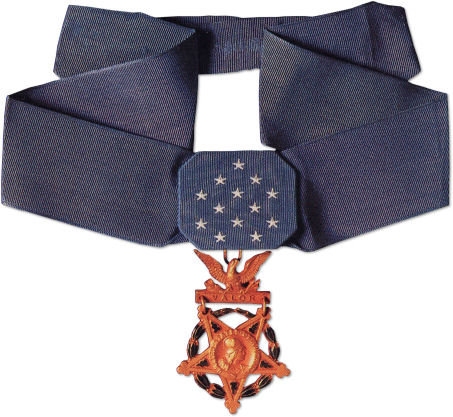
Ola “Lee” Mize received the Medal of Honor, the military’s highest award for valor, for his heroism in the battle in which he defended a strategically important hill and saved the lives of numerous comrades — and in which his superiors thought he had lost his own. He later served three tours of duty in Vietnam and retired as a colonel.Mize's death brings the number of surviving Medal of Honor recipients to 74, nine of whom were awarded the medal for heroism in Korea.
He died March 5 at his home in Gadsden, Ala. He was 82. The cause was cancer, said Rick Vaughan, a family spokesman.
The son of an Alabama sharecropper, Col. Mize left high school and joined the Army to support his family. He was nearing the end of his enlistment when the Korean War began, according to several accounts, and he reupped so that he would not miss the opportunity to serve in combat.
*******
Ola Lee Mize was born Aug. 28, 1931, in Albertville, Ala. He was a butcher before joining the Army and was initially turned down by military recruiters because he weighed only 120 pounds.
After his tour in Korea, Col. Mize served in the Army Special Forces, or Green Berets, including as a camp commander in Vietnam. He helped train local populations to oppose the Viet Cong, according to a biographical sketch in the book “America’s Heroes,”and later was director of the Special Forces School at Fort Bragg, N.C.
Col. Mize retired in 1981 but remained involved in military affairs for several decades as a motivational speaker, trainer and consultant, his family’s spokesman said.
Survivors include his wife of 59 years, Betty Jackson Mize of Gadsden; their daughter, Teresa Peterson of Rainbow City, Ala.; a half-brother; four grandchildren; and five great-grandchildren. His daughter Donna Feazell died in 2001.
Citation: M/Sgt. Mize, a member of Company K, distinguished himself by conspicuous gallantry and outstanding courage above and beyond the call of duty in action against the enemy. Company K was committed to the defense of "Outpost Harry", a strategically valuable position [near Surang-ni, Korea], when the enemy launched a heavy attack [during the night of 10-11 June 1953]. Learning that a comrade on a friendly listening post had been wounded he moved through the intense barrage, accompanied by a medical aid man, and rescued the wounded soldier. On returning to the main position he established an effective defense system and inflicted heavy casualties against attacks from determined enemy assault forces which had penetrated into trenches within the outpost area. During his fearless actions he was blown down by artillery and grenade blasts 3 times but each time he dauntlessly returned to his position, tenaciously fighting and successfully repelling hostile attacks. When enemy onslaughts ceased he took his few men and moved from bunker to bunker, firing through apertures and throwing grenades at the foe, neutralizing their positions. When an enemy soldier stepped out behind a comrade, prepared to fire, M/Sgt. Mize killed him, saving the life of his fellow soldier. After rejoining the platoon, moving from man to man, distributing ammunition, and shouting words of encouragement he observed a friendly machine gun position overrun. He immediately fought his way to the position, killing 10 of the enemy and dispersing the remainder. Fighting back to the command post, and finding several friendly wounded there, he took a position to protect them. Later, securing a radio, he directed friendly artillery fire upon the attacking enemy's routes of approach. At dawn he helped regroup for a counterattack which successfully drove the enemy from the outpost. M/Sgt. Mize's valorous conduct and unflinching courage reflect lasting glory upon himself and uphold the noble traditions of the military service.
President Obama will correct a historical act of discrimination next month when he awards the Medal of Honor, the nation’s highest commendation for combat valor, to a group of Hispanic, Jewish and African-American veterans who were passed over because of their racial or ethnic backgrounds.All 24 recipients served in the Army - seven in World War II (all in the European theatre of operations), nine in Korea, and eight (including the three still living) in Vietnam.
The unusual presentation will culminate a 12-year Pentagon review ordered by Congress into past discrimination in the ranks and will hold a particular poignancy when conducted by the nation’s first African-American president.
*******
With the ornate White House East Room as backdrop, the March 18 ceremony will mark another step to revisit a history of discrimination in the armed forces as the nation’s demographics and social values shift rapidly.
The recipients, whom the White House announced Friday afternoon, served in World War II, Korea, and Vietnam.
*******
Just three of the 24 veterans who will be honored are still alive. All but five of the soldiers are Hispanic, Jewish or African American[.]
*******
Officials from each service branch focused on service members who had been awarded the second-highest medal for gallantry: the Distinguished Service Cross for the Army, the Air Force Cross for that branch, and the Navy Cross for the Navy and Marine Corps.
Walt Ehlers, who received the Medal of Honor for bravery during the D-Day invasion of Nazi-held France during World War II, died Thursday morning. He was 92.Accorfing to this article from NBC News:
*******
Ehlers and his older brother, Roland, were Kansas farm boys who joined the Army together during the Depression to help their family. After three years in the peacetime Army, the brothers found themselves headed to Europe after the United States entered the war following the attack on Pearl Harbor in December 1941.
The pair fought side-by-side across North Africa and Sicily. Once, in Italy, Walt had to dig Roland out from under a pile of dirt and rocks after an artillery shell exploded near them.
Ehlers also earned three Purple Hearts and a Silver Star during his service with the 3rd Infantry Division and the 1st Infantry Division.There are now 75 surviving Medal of Honor recipients, seven of whom were awarded the medal for heroism in World War II.
After the war, Ehlers became an advocate for military veteran benefits and proudly worked as a security guard for Disneyland when it opened in California.
He is survived by his wife, Dorothy Ehlers; three children; 11 grandchildren; and two great-grandchildren.
Citation: For conspicuous gallantry and intrepidity at the risk of his life above and beyond the call of duty on 9-10 June 1944, near Goville, France. S/Sgt. Ehlers, always acting as the spearhead of the attack, repeatedly led his men against heavily defended enemy strong points exposing himself to deadly hostile fire whenever the situation required heroic and courageous leadership. Without waiting for an order, S/Sgt. Ehlers, far ahead of his men, led his squad against a strongly defended enemy strong point, personally killing 4 of an enemy patrol who attacked him en route. Then crawling forward under withering machinegun fire, he pounced upon the guncrew and put it out of action. Turning his attention to 2 mortars protected by the crossfire of 2 machineguns, S/Sgt. Ehlers led his men through this hail of bullets to kill or put to flight the enemy of the mortar section, killing 3 men himself. After mopping up the mortar positions, he again advanced on a machinegun, his progress effectively covered by his squad. When he was almost on top of the gun he leaped to his feet and, although greatly outnumbered, he knocked out the position single-handed. The next day, having advanced deep into enemy territory, the platoon of which S/Sgt. Ehlers was a member, finding itself in an untenable position as the enemy brought increased mortar, machinegun, and small arms fire to bear on it, was ordered to withdraw. S/Sgt. Ehlers, after his squad had covered the withdrawal of the remainder of the platoon, stood up and by continuous fire at the semicircle of enemy placements, diverted the bulk of the heavy hostile fire on himself, thus permitting the members of his own squad to withdraw. At this point, though wounded himself, he carried his wounded automatic rifleman to safety and then returned fearlessly over the shell-swept field to retrieve the automatic rifle which he was unable to carry previously. After having his wound treated, he refused to be evacuated, and returned to lead his squad. The intrepid leadership, indomitable courage, and fearless aggressiveness displayed by S/Sgt. Ehlers in the face of overwhelming enemy forces serve as an inspiration to others.
THE bravery that earned Australian soldier Cameron Baird a posthumous Victoria Cross was revealed as his parents accepted his award today.This was the fourth award of the Victoria Cross for Australia, and the 100th award of the VC to an Australian.
He was the 40th Australian soldier to die in Afghanistan, the fourth awarded a VC, and the first to get the award posthumously since Vietnam.
Governor-General Quentin Bryce read an official citation outlining Corporal Baird’s actions as she conferred the award on his parents, Doug and Kaye Baird, during a ceremony at Canberra’s Government House today.
Citation: For the most conspicuous acts of valour, extreme devotion to duty and ultimate self-sacrifice at Ghawchak village, Uruzgan Province, Afghanistan as a Commando Team Commander in Special Operations Task Group on Operation SLIPPER.5 U.S. Code § 6103 - Holidays
The following are legal public holidays:
New Year’s Day, January 1.
Birthday of Martin Luther King, Jr., the third Monday in January.
Washington’s Birthday, the third Monday in February.
Memorial Day, the last Monday in May.
Independence Day, July 4.
Labor Day, the first Monday in September.
Columbus Day, the second Monday in October.
Veterans Day, November 11.
Thanksgiving Day, the fourth Thursday in November.
Christmas Day, December 25.
THE Victoria Cross will be awarded posthumously to Australian commando Corporal Cameron Baird, killed in Afghanistan in June 2013, Tony Abbott has announced.
The Prime Minister told parliament that Corporal Baird, of the Special Operations Task Group, was the 100th Australian recipient of the highest military honour for bravery in wartime.
Killed by small arms fire during a battle with Afghan insurgents, he was the 40th - and last - Australian to die in Afghanistan and the fourth Australian VC from the conflict.
*******
Corporal Baird, from the 2nd Commando Regiment based at Holsworthy Barracks in Sydney, was killed during an engagement with insurgents in the Khod Valley in southern Afghanistan on June 22, 2013.
*******
Born in Burnie, Tasmania, Corporal Baird he is survived by his parents, brother and his partner.
Governor-General Quentin Bryce will award the posthumous honour at a ceremony at Government House in Canberra next Tuesday [18 Feb].
John J. McGinty III, a retired Marine Corps officer who received the Medal of Honor for saving the lives of dozens of his men during an enemy attack in Vietnam, but later relinquished it for religious reasons, died on Friday in Beaufort, S.C. He was 73.There are now 76 surviving Medal of Honor recipients, 52 of whom were awarded the medal for Vietnam War service.
The cause was bone cancer, his son Michael said.
Staff Sgt. McGinty, a platoon leader, had already been severely wounded in the left eye by shrapnel during heavy fighting on July 18, 1966, when about 20 of his men became separated from the others and found themselves pinned down by enemy fire on three sides.
He received the Medal of Honor for sprinting through gunfire and mortar shell blasts to reach them and lead them to safety.
*******
Mr. McGinty led one of four platoons in Company K of the Third Battalion, Third Marine Division, during a major sortie in July 1966 known as Operation Hastings. The mission was to block North Vietnamese troops from infiltrating the demilitarized zone between the Communist-led North and the American-backed South.
*******
John James McGinty III was born in Boston on Jan. 21, 1940, to John and Eve McGinty and grew up in Louisville, Ky. His father was a diver for commercial deep-sea recovery operations
.
Besides his son Michael, Mr. McGinty is survived by another son, John J. McGinty IV. His wife, Elaine Elizabeth Hathaway, died in 1991.
Mr. McGinty retired from the Marines as a captain in October 1976. He later worked for the Department of Veterans Affairs in several positions. After years of surgical efforts to repair it, Mr. McGinty lost his left eye. He wore an eye patch in public.
Citation: For conspicuous gallantry and intrepidity at the risk of his life above and beyond the call of duty [in the Republic of Vietnam, on 18 July 1966]. 2d Lt. McGinty's platoon, which was providing rear security to protect the withdrawal of the battalion from a position which had been under attack for 3 days, came under heavy small arms, automatic weapons and mortar fire from an estimated enemy regiment. With each successive human wave which assaulted his 32-man platoon during the 4-hour battle, 2d Lt. McGinty rallied his men to beat off the enemy. In 1 bitter assault, 2 of the squads became separated from the remainder of the platoon. With complete disregard for his safety, 2d Lt. McGinty charged through intense automatic weapons and mortar fire to their position. Finding 20 men wounded and the medical corpsman killed, he quickly reloaded ammunition magazines and weapons for the wounded men and directed their fire upon the enemy. Although he was painfully wounded as he moved to care for the disabled men, he continued to shout encouragement to his troops and to direct their fire so effectively that the attacking hordes were beaten off. When the enemy tried to out-flank his position, he killed 5 of them at point-blank range with his pistol. When they again seemed on the verge of overrunning the small force, he skillfully adjusted artillery and air strikes within 50 yards of his position. This destructive firepower routed the enemy, who left an estimated 500 bodies on the battlefield. 2d Lt. McGinty's personal heroism, indomitable leadership, selfless devotion to duty, and bold fighting spirit inspired his men to resist the repeated attacks by a fanatical enemy, reflected great credit upon himself, and upheld the highest traditions of the Marine Corps and the U.S. Naval Service.
The 2014 winner of the John Newbery Medal for the most distinguished contribution to American literature for children is Flora & Ulysses: The Illuminated Adventures, written by Kate DiCamillo and illustrated by K G Campbell, and published by Candlewick Press. DiCamillo received the Newbery Medal in 2004 for The Tale of Despereux; the new award makes her the sixth person to have won the medal twice. The Newbery Honor Books (ie, runners-up) are Doll Bones, by Holly Black; The Year of Billy Miller, by Kevin Henkes; One Came Home, by Amy Timberlake; and Paperboy, by Vince Vawter.
The Randolph Caldecott Medal, for the most distinguished American picture book for children, was awarded to Locomotive, written and illustrated by Brian Floca, and published by Atheneum Books for Young Readers. The Caldecott Honor Books are Journey, written and illustrated by Aaron Becker; Flora and the Flamingo, written and illustrated by Molly Idle; and Mr Wuffles!, written and illustrated by David Wiesner.The Michael L Printz Award, for excellence in young-adult literature: Midwinterblood, by Marcus Sedgwick.
The Coretta Scott King Book Award, recognizing an African-American author and illustrator of outstanding books for children and young adults: (author) P.S. Be Eleven, by Rita Williams-Garcia, and (illustrator) Knock Knock: My Dad's Dream for Me, illustrated by Bryan Collier and written by Daniel Beaty.
The Pura Belpré Awards, for Latino authors and illustrators whose work best portrays, affirms and celebrates the Latino cultural experience in children's books: (author) Yaqui Delgado Wants to Kick Your Ass, by Meg Medina, and (illustrator) Nino Wrestles the World,, written and illustrated by Yuyi Morales.
The Margaret A Edwards Award, for lifetime achievement in writing for young adults: Markus Zusak.
The Theodor Seuss Geisel Award, for the most distinguished book for beginning readers: The Watermelon Seed, written and illustrated by Greg Pizzoli.
The Robert F Sibert Informational Book Award, for the most distinguished informational book for children: Parrots Over Puerto Rico," written by Susan L Roth and Cindy Trumbore, and illustrated by Susan L Roth.
The YALSA Award for Excellence in Nonfiction for Young Adults: The Nazi Hunters: How a Team of Spies and Survivors Captured the World's Most Notorious Nazi, by Neal Bascomb.
The Mildred L Batchelder Award, for the most outstanding children's book translated from a foreign language and subsequently published in the United States: Mister Orange, originally written in Dutch (with the same title) by Truus Matti and translated by Laura Watkinson.
Cpl. Rodolfo "Rudy" Hernandez was given a hero's farewell Monday when hundreds gathered to pay their respects to the fallen Medal of Honor recipient.There are now 77 surviving Medal of Honor recipients, ten of whom were awarded the medal for Korean War service.
Hernandez, who died Dec. 21 at age 82, was buried at Sandhills State Veterans Cemetery in Spring Lake.
*******
Hernandez earned the Medal of Honor in 1951 when, armed only with grenades and a bayonet and facing what believed to be a mortal head wound, he single-handedly charged into North Korean soldiers.
His actions spurred his fellow soldiers, who had been withdrawing, to attack. Hernandez was found the next day near death but surrounded by the bodies of six enemy soldiers who had been killed with the bayonet.
*******
Hernandez is survived by his wife, Denzil Hernandez, and three children with his first wife, Bertha Hernandez.
Citation: Cpl. Hernandez, a member of Company G, distinguished himself by conspicuous gallantry and intrepidity above and beyond the call of duty in action against the enemy [near Wontong-ni, Korea, on 31 May 1951]. His platoon, in defensive positions on Hill 420, came under ruthless attack by a numerically superior and fanatical hostile force, accompanied by heavy artillery, mortar, and machine gun fire which inflicted numerous casualties on the platoon. His comrades were forced to withdraw due to lack of ammunition but Cpl. Hernandez, although wounded in an exchange of grenades, continued to deliver deadly fire into the ranks of the onrushing assailants until a ruptured cartridge rendered his rifle inoperative. Immediately leaving his position, Cpl. Hernandez rushed the enemy armed only with rifle and bayonet. Fearlessly engaging the foe, he killed 6 of the enemy before falling unconscious from grenade, bayonet, and bullet wounds but his heroic action momentarily halted the enemy advance and enabled his unit to counterattack and retake the lost ground. The indomitable fighting spirit, outstanding courage, and tenacious devotion to duty clearly demonstrated by Cpl. Hernandez reflect the highest credit upon himself, the infantry, and the U.S. Army.
More than 150 years after he gave his life at Gettysburg leading the effort to repel Pickett’s Charge, 1st Lt. Alonzo H. Cushing is finally on track to get the Medal of Honor after Congress last month approved waiving the time limit for the nation’s top military honor.Cushing served with Battery A, 4th United States Artillery.
The waiver was one of a half-dozen included in the massive defense policy bill — legislation that also began to tweak the Medal of Honor system, standardizing the amount of time a nomination may be considered and removing a cap that, in recent years, had said nobody could win the medal more than once.
*******
Now that the Cushing nomination is officially pending, the Pentagon would not comment on his chances, nor those of the five other troops from long-ended wars in Vietnam and Korea whom Congress also made eligible to receive the Medal of Honor or the Distinguished Service Cross, which is the second-highest honor for a soldier.
Pentagon officials did say, however, that they asked for two of the changes that could affect current troops.The complete text of the National Defense Authorization Act for Fiscal Year 2014 can be found here.
In one change, the law now allows service members to earn multiple Medals of Honor if their actions merit it.
*******
The other major change was to set a standard time frame for all of the services. The law sets time limits for how long after the combat action someone can be recommended and awarded the medal, but the limits varied among the services.
Now, all of the services will have three years to make the recommendation and five years to issue the award.
Citation: The KING has been graciously pleased to approve of the award of the Albert Medal for Gallantry in Saving Life at Sea to
Note: The Albert Medal was discontinued in 1971, and all living recipients were invited to trade in their medals for the George Cross. Lt-Cdr Robin Hoare DSO* DSC AM had died on 6 Feb 1959, but Bagot accepted the offer and received his GC on 26 Nov 1972.
Citation: On board the U.S.S. Brooklyn during action against rebel forts and gunboats and with the ram Tennessee in Mobile Bay, 5 August 1864. Despite severe damage to his ship and the loss of several men on board as enemy fire raked the deck, Cpl. Oviatt fought his gun with skill and courage throughout the furious 2-hour battle which resulted in the surrender of the rebel ram Tennessee.
Citation: On board the U.S.S. Brooklyn during action against rebel forts and gunboats, and with the ram Tennessee in Mobile Bay, 5 August 1864. Despite severe damage to his ship and the loss of several men on board as enemy fire continued to fall, Cpl. Smith fought his gun with skill and courage throughout the furious 2-hour battle which resulted in the surrender of the rebel ram Tennessee.
Dream Park, by Larry Niven and Steven BarnesThe four Niven/Barnes books make up a series; it's hard to say which of the four I liked best. The four Mass books are also a series, and the last one does a good job of explaining some of the questions raised by the other three.
The Hen of the Baskervilles, by Donna Andrews
11 Birthdays, by Wendy Mass
Presumed Lost: The Incredible Ordeal of America's Submarine POWs During the Pacific War, by Stephen L Moore
Finally, by Wendy Mass
13 Gifts, by Wendy Mass
The Barsoom Project, by Larry Niven and Steven Barnes
The California Voodoo Game, by Larry Niven and Steven Barnes
Duck the Halls, by Donna Andrews
The Moon Maze Game, by Larry Niven and Steven Barnes
The Last Present, by Wendy Mass
Burning Paradise, by Robert Charles Wilson