25 February 2014

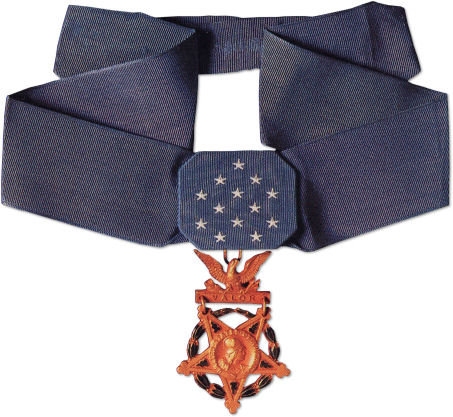
Medal of Honor to be awarded to 24

ZUI this article from the Washington Post:
President Obama will correct a historical act of discrimination next month when he awards the Medal of Honor, the nation’s highest commendation for combat valor, to a group of Hispanic, Jewish and African-American veterans who were passed over because of their racial or ethnic backgrounds.

The unusual presentation will culminate a 12-year Pentagon review ordered by Congress into past discrimination in the ranks and will hold a particular poignancy when conducted by the nation’s first African-American president.

*******

With the ornate White House East Room as backdrop, the March 18 ceremony will mark another step to revisit a history of discrimination in the armed forces as the nation’s demographics and social values shift rapidly.

The recipients, whom the White House announced Friday afternoon, served in World War II, Korea, and Vietnam.

*******

Just three of the 24 veterans who will be honored are still alive. All but five of the soldiers are Hispanic, Jewish or African American[.]

*******

Officials from each service branch focused on service members who had been awarded the second-highest medal for gallantry: the Distinguished Service Cross for the Army, the Air Force Cross for that branch, and the Navy Cross for the Navy and Marine Corps.
All 24 recipients served in the Army - seven in World War II (all in the European theatre of operations), nine in Korea, and eight (including the three still living) in Vietnam.

Travelin' Tuesday: Spain


Cartagena (2011 population 218,210) is a city in Murcia, on the Mediterranean coast of Spain. "Cartagena" derives from Carthago Nova (New Carthage), its Roman name; the city was founded around 227 BCE by Hasdrubal the Fair, brother-in-law of the great Carthaginian general Hannibal. The city is now the site of an important Spanish navy base. The Gran Hotel, shown here, was built 1907-17; only the facade remains of the original hotel, alas, as the interior was demolished to make an office building.

Picture taken 2 Jun 01.

21 February 2014

RIP: Walter Ehlers

ZUI this post from the Orange County (CA) Register:
Walt Ehlers, who received the Medal of Honor for bravery during the D-Day invasion of Nazi-held France during World War II, died Thursday morning. He was 92.

*******

Ehlers and his older brother, Roland, were Kansas farm boys who joined the Army together during the Depression to help their family. After three years in the peacetime Army, the brothers found themselves headed to Europe after the United States entered the war following the attack on Pearl Harbor in December 1941.

The pair fought side-by-side across North Africa and Sicily. Once, in Italy, Walt had to dig Roland out from under a pile of dirt and rocks after an artillery shell exploded near them.
Accorfing to this article from NBC News:
Ehlers also earned three Purple Hearts and a Silver Star during his service with the 3rd Infantry Division and the 1st Infantry Division.

After the war, Ehlers became an advocate for military veteran benefits and proudly worked as a security guard for Disneyland when it opened in California.

He is survived by his wife, Dorothy Ehlers; three children; 11 grandchildren; and two great-grandchildren.
There are now 75 surviving Medal of Honor recipients, seven of whom were awarded the medal for heroism in World War II.


************* *** *************

WALTER DAVID EHLERS

Staff Sergeant, US Army; 18th Infantry Regiment, 1st Infantry Division

Born: 7 May 1921, Junction City, Kansas
Died: 20 February 2014, California

Citation: For conspicuous gallantry and intrepidity at the risk of his life above and beyond the call of duty on 9-10 June 1944, near Goville, France. S/Sgt. Ehlers, always acting as the spearhead of the attack, repeatedly led his men against heavily defended enemy strong points exposing himself to deadly hostile fire whenever the situation required heroic and courageous leadership. Without waiting for an order, S/Sgt. Ehlers, far ahead of his men, led his squad against a strongly defended enemy strong point, personally killing 4 of an enemy patrol who attacked him en route. Then crawling forward under withering machinegun fire, he pounced upon the guncrew and put it out of action. Turning his attention to 2 mortars protected by the crossfire of 2 machineguns, S/Sgt. Ehlers led his men through this hail of bullets to kill or put to flight the enemy of the mortar section, killing 3 men himself. After mopping up the mortar positions, he again advanced on a machinegun, his progress effectively covered by his squad. When he was almost on top of the gun he leaped to his feet and, although greatly outnumbered, he knocked out the position single-handed. The next day, having advanced deep into enemy territory, the platoon of which S/Sgt. Ehlers was a member, finding itself in an untenable position as the enemy brought increased mortar, machinegun, and small arms fire to bear on it, was ordered to withdraw. S/Sgt. Ehlers, after his squad had covered the withdrawal of the remainder of the platoon, stood up and by continuous fire at the semicircle of enemy placements, diverted the bulk of the heavy hostile fire on himself, thus permitting the members of his own squad to withdraw. At this point, though wounded himself, he carried his wounded automatic rifleman to safety and then returned fearlessly over the shell-swept field to retrieve the automatic rifle which he was unable to carry previously. After having his wound treated, he refused to be evacuated, and returned to lead his squad. The intrepid leadership, indomitable courage, and fearless aggressiveness displayed by S/Sgt. Ehlers in the face of overwhelming enemy forces serve as an inspiration to others.

19 February 2014

Australian VC awarded for Afghanistan

ZUI this article from news.com.au:
THE bravery that earned Australian soldier Cameron Baird a posthumous Victoria Cross was revealed as his parents accepted his award today.

He was the 40th Australian soldier to die in Afghanistan, the fourth awarded a VC, and the first to get the award posthumously since Vietnam.

Governor-General Quentin Bryce read an official citation outlining Corporal Baird’s actions as she conferred the award on his parents, Doug and Kaye Baird, during a ceremony at Canberra’s Government House today.
This was the fourth award of the Victoria Cross for Australia, and the 100th award of the VC to an Australian.

The citation for Baird's's VC, along with his official biography, can be found here.


************* *** *************


CAMERON STEWART BAIRD MG

Corporal, 4th Battalion, Royal Australian Regiment (Commando); Special Operations Task Group

Born: 7 June 1981, Burnie, Tasmania, Australia
Died: 22 June 2013, Khod Valley, Uruzgan Province, Afghanistan

Citation: For the most conspicuous acts of valour, extreme devotion to duty and ultimate self-sacrifice at Ghawchak village, Uruzgan Province, Afghanistan as a Commando Team Commander in Special Operations Task Group on Operation SLIPPER.
Corporal Cameron Baird enlisted in the Australian Regular Army in 2000, was discharged in 2004, and re-enlisted in 2006. In both periods of service, he was assigned to the 4th Battalion, Royal Australian Regiment (Commando). His operational service includes Operations TANAGER, FALCONER, BASTILLE and five tours on Operation SLIPPER. He was awarded the Medal for Gallantry for his service in Afghanistan in 2007-08.
On 22 June 2013, a Commando Platoon of the Special Operations Task Group, with partners from the Afghan National Security Forces, conducted a helicopter assault into Ghawchak village, Uruzgan Province, in order to attack an insurgent network deep within enemy-held territory. Shortly after insertion, Corporal Baird’s team was engaged by small arms fire from several enemy positions. Corporal Baird quickly seized the initiative, leading his team to neutralise the positions, killing six enemy combatants and enabling the assault to continue.
Soon afterwards, an adjacent Special Operations Task Group team came under heavy enemy fire, resulting in its commander being seriously wounded. Without hesitation, Corporal Baird led his team to provide support. En route, he and his team were engaged by rifle and machine gun fire from prepared enemy positions. With complete disregard for his own safety, Corporal Baird charged towards the enemy positions, supported by his team. On nearing the positions, he and his team were engaged by additional enemy on their flank. Instinctively, Corporal Baird neutralised the new threat with grenades and rifle fire, enabling his team to close with the prepared position. With the prepared position now isolated, Corporal Baird manoeuvred and was engaged by enemy machine gun fire, the bullets striking the ground around him. Displaying great valour, he drew the fire, moved to cover, and suppressed the enemy machine gun position. This action enabled his team to close on the entrance to the prepared position, thus regaining the initiative.
On three separate occasions Corporal Baird charged an enemy-held building within the prepared compound. On the first occasion he charged the door to the building, followed by another team member. Despite being totally exposed and immediately engaged by enemy fire, Corporal Baird pushed forward while firing into the building. Now in the closest proximity to the enemy, he was forced to withdraw when his rifle ceased to function. On rectifying his rifle stoppage, and reallocating remaining ammunition within his team, Corporal Baird again advanced towards the door of the building, once more under heavy fire. He engaged the enemy through the door but was unable to suppress the position and took cover to reload. For a third time, Corporal Baird selflessly drew enemy fire away from his team and assaulted the doorway. Enemy fire was seen to strike the ground and compound walls around Corporal Baird, before visibility was obscured by dust and smoke. In this third attempt, the enemy was neutralised and the advantage was regained, but Corporal Baird was killed in the effort.
Corporal Baird’s acts of valour and self-sacrifice regained the initiative and preserved the lives of his team members. His actions were of the highest order and in keeping with the finest traditions of the Australian Army and the Australian Defence Force.

18 February 2014

Travelin' Tuesday: Scotland


Loch Eck, 24 metres above sea level, is located in the Cowal Peninsula, to the north of Dunoon and the Holy Loch. This boat and its mooring buoy were located a bit north of the Coylet Inn, on the east side of the loch near its southern end.

Picture taken 29 Dec 91.

17 February 2014

"Presidents' Day"

5 U.S. Code § 6103 - Holidays


The following are legal public holidays:
New Year’s Day, January 1.
Birthday of Martin Luther King, Jr., the third Monday in January.
Washington’s Birthday, the third Monday in February.
Memorial Day, the last Monday in May.
Independence Day, July 4.
Labor Day, the first Monday in September.
Columbus Day, the second Monday in October.
Veterans Day, November 11.
Thanksgiving Day, the fourth Thursday in November.
Christmas Day, December 25.

So if this "Presidents' Day" isn't a legal holiday, it must be an illegal one, right?

(It's not on the Connecticut list of "Days designated as legal holidays," either.)

12 February 2014

Australian VC to be awarded for Afghanistan

ZUI this article from The Australian:
THE Victoria Cross will be awarded posthumously to Australian commando Corporal Cameron Baird, killed in Afghanistan in June 2013, Tony Abbott has announced.

The Prime Minister told parliament that Corporal Baird, of the Special Operations Task Group, was the 100th Australian recipient of the highest military honour for bravery in wartime.

Killed by small arms fire during a battle with Afghan insurgents, he was the 40th - and last - Australian to die in Afghanistan and the fourth Australian VC from the conflict.

*******

Corporal Baird, from the 2nd Commando Regiment based at Holsworthy Barracks in Sydney, was killed during an engagement with insurgents in the Khod Valley in southern Afghanistan on June 22, 2013.

*******

Born in Burnie, Tasmania, Corporal Baird he is survived by his parents, brother and his partner.

Governor-General Quentin Bryce will award the posthumous honour at a ceremony at Government House in Canberra next Tuesday [18 Feb].

11 February 2014

Travelin' Tuesday: South Korea


Most of the events during the 1988 Summer Olympics were held in Seoul, but some took place in other cities. Yachting and some of the preliminary football* matches were held in the city of Pusan (now spelt Busan), in the southeastern corner of South Korea.  This Olympic flame was located in Yong Du San Park, in Pusan.

Picture taken 10 Sep 88.


* Association football, of course, not American football.

05 February 2014

RIP: John J McGinty III

ZUI this article from the New York Times:
John J. McGinty III, a retired Marine Corps officer who received the Medal of Honor for saving the lives of dozens of his men during an enemy attack in Vietnam, but later relinquished it for religious reasons, died on Friday in Beaufort, S.C. He was 73.

The cause was bone cancer, his son Michael said.

Staff Sgt. McGinty, a platoon leader, had already been severely wounded in the left eye by shrapnel during heavy fighting on July 18, 1966, when about 20 of his men became separated from the others and found themselves pinned down by enemy fire on three sides.

He received the Medal of Honor for sprinting through gunfire and mortar shell blasts to reach them and lead them to safety.

*******

Mr. McGinty led one of four platoons in Company K of the Third Battalion, Third Marine Division, during a major sortie in July 1966 known as Operation Hastings. The mission was to block North Vietnamese troops from infiltrating the demilitarized zone between the Communist-led North and the American-backed South.

*******

John James McGinty III was born in Boston on Jan. 21, 1940, to John and Eve McGinty and grew up in Louisville, Ky. His father was a diver for commercial deep-sea recovery operations
.
Besides his son Michael, Mr. McGinty is survived by another son, John J. McGinty IV. His wife, Elaine Elizabeth Hathaway, died in 1991.

Mr. McGinty retired from the Marines as a captain in October 1976. He later worked for the Department of Veterans Affairs in several positions. After years of surgical efforts to repair it, Mr. McGinty lost his left eye. He wore an eye patch in public.
There are now 76 surviving Medal of Honor recipients, 52 of whom were awarded the medal for Vietnam War service.

************* *** *************

JOHN JAMES McGINTY III

Second Lieutenant (then Staff Sergeant), US Marine Corps; Company K, 3d Battalion, 4th Marines, 3d Marine Division, Fleet Marine Force

Born: 21 January 1940, Boston, Massachusetts
Died: 17 January 2014, Beaufort, South Carolina

Citation: For conspicuous gallantry and intrepidity at the risk of his life above and beyond the call of duty [in the Republic of Vietnam, on 18 July 1966]. 2d Lt. McGinty's platoon, which was providing rear security to protect the withdrawal of the battalion from a position which had been under attack for 3 days, came under heavy small arms, automatic weapons and mortar fire from an estimated enemy regiment. With each successive human wave which assaulted his 32-man platoon during the 4-hour battle, 2d Lt. McGinty rallied his men to beat off the enemy. In 1 bitter assault, 2 of the squads became separated from the remainder of the platoon. With complete disregard for his safety, 2d Lt. McGinty charged through intense automatic weapons and mortar fire to their position. Finding 20 men wounded and the medical corpsman killed, he quickly reloaded ammunition magazines and weapons for the wounded men and directed their fire upon the enemy. Although he was painfully wounded as he moved to care for the disabled men, he continued to shout encouragement to his troops and to direct their fire so effectively that the attacking hordes were beaten off. When the enemy tried to out-flank his position, he killed 5 of them at point-blank range with his pistol. When they again seemed on the verge of overrunning the small force, he skillfully adjusted artillery and air strikes within 50 yards of his position. This destructive firepower routed the enemy, who left an estimated 500 bodies on the battlefield. 2d Lt. McGinty's personal heroism, indomitable leadership, selfless devotion to duty, and bold fighting spirit inspired his men to resist the repeated attacks by a fanatical enemy, reflected great credit upon himself, and upheld the highest traditions of the Marine Corps and the U.S. Naval Service.

27 January 2014

Newbery and Caldecott winners announced

The 2014 winner of the John Newbery Medal for the most distinguished contribution to American literature for children is Flora & Ulysses: The Illuminated Adventures, written by Kate DiCamillo and illustrated by K G Campbell, and published by Candlewick Press. DiCamillo received the Newbery Medal in 2004 for The Tale of Despereux; the new award makes her the sixth person to have won the medal twice. The Newbery Honor Books (ie, runners-up) are Doll Bones, by Holly Black; The Year of Billy Miller, by Kevin Henkes; One Came Home, by Amy Timberlake; and Paperboy, by Vince Vawter.

Amazon and Barnes & Noble both have it, of course.*

The Randolph Caldecott Medal, for the most distinguished American picture book for children, was awarded to Locomotive, written and illustrated by Brian Floca, and published by Atheneum Books for Young Readers. The Caldecott Honor Books are Journey, written and illustrated by Aaron Becker; Flora and the Flamingo, written and illustrated by Molly Idle; and Mr Wuffles!, written and illustrated by David Wiesner.

Amazon and Barnes & Noble both have this one, too.*

(I'll let you do your own searches for the Honor Books.)

The American Library Association (ALA), who give both of the above awards, also announced a few others, including:
The Michael L Printz Award, for excellence in young-adult literature: Midwinterblood, by Marcus Sedgwick.

The Coretta Scott King Book Award, recognizing an African-American author and illustrator of outstanding books for children and young adults: (author) P.S. Be Eleven, by Rita Williams-Garcia, and (illustrator) Knock Knock: My Dad's Dream for Me, illustrated by Bryan Collier and written by Daniel Beaty.

The Pura Belpré Awards, for Latino authors and illustrators whose work best portrays, affirms and celebrates the Latino cultural experience in children's books: (author) Yaqui Delgado Wants to Kick Your Ass, by Meg Medina, and (illustrator) Nino Wrestles the World,, written and illustrated by Yuyi Morales.

The Margaret A Edwards Award, for lifetime achievement in writing for young adults: Markus Zusak.

The Theodor Seuss Geisel Award, for the most distinguished book for beginning readers: The Watermelon Seed, written and illustrated by Greg Pizzoli.

The Robert F Sibert Informational Book Award, for the most distinguished informational book for children: Parrots Over Puerto Rico," written by Susan L Roth and Cindy Trumbore, and illustrated by Susan L Roth.

The YALSA Award for Excellence in Nonfiction for Young Adults: The Nazi Hunters: How a Team of Spies and Survivors Captured the World's Most Notorious Nazi, by Neal Bascomb.

The Mildred L Batchelder Award, for the most outstanding children's book translated from a foreign language and subsequently published in the United States: Mister Orange, originally written in Dutch (with the same title) by Truus Matti and translated by Laura Watkinson.

PR Newswire has the complete list of awards, winners, and Honor Books here.


* Amazon and B&N links are provided for information. Buying from your local independent bookseller is of course strongly recommended!!

12 January 2014

RIP: Rodolfo Hernandez

ZUI this article from the Fayetteville (NC) Observer:
Cpl. Rodolfo "Rudy" Hernandez was given a hero's farewell Monday when hundreds gathered to pay their respects to the fallen Medal of Honor recipient.

Hernandez, who died Dec. 21 at age 82, was buried at Sandhills State Veterans Cemetery in Spring Lake.

*******

Hernandez earned the Medal of Honor in 1951 when, armed only with grenades and a bayonet and facing what believed to be a mortal head wound, he single-handedly charged into North Korean soldiers.

His actions spurred his fellow soldiers, who had been withdrawing, to attack. Hernandez was found the next day near death but surrounded by the bodies of six enemy soldiers who had been killed with the bayonet.

*******

Hernandez is survived by his wife, Denzil Hernandez, and three children with his first wife, Bertha Hernandez.
There are now 77 surviving Medal of Honor recipients, ten of whom were awarded the medal for Korean War service.

************* *** *************

RODOLFO PEREZ HERNANDEZ

Corporal, US Army; Company G, 187th Airborne Regimental Combat Team

Born: 14 April 1931, Colton, California
Died: 21 December 2013, Fayetteville, North Carolina

Citation: Cpl. Hernandez, a member of Company G, distinguished himself by conspicuous gallantry and intrepidity above and beyond the call of duty in action against the enemy [near Wontong-ni, Korea, on 31 May 1951]. His platoon, in defensive positions on Hill 420, came under ruthless attack by a numerically superior and fanatical hostile force, accompanied by heavy artillery, mortar, and machine gun fire which inflicted numerous casualties on the platoon. His comrades were forced to withdraw due to lack of ammunition but Cpl. Hernandez, although wounded in an exchange of grenades, continued to deliver deadly fire into the ranks of the onrushing assailants until a ruptured cartridge rendered his rifle inoperative. Immediately leaving his position, Cpl. Hernandez rushed the enemy armed only with rifle and bayonet. Fearlessly engaging the foe, he killed 6 of the enemy before falling unconscious from grenade, bayonet, and bullet wounds but his heroic action momentarily halted the enemy advance and enabled his unit to counterattack and retake the lost ground. The indomitable fighting spirit, outstanding courage, and tenacious devotion to duty clearly demonstrated by Cpl. Hernandez reflect the highest credit upon himself, the infantry, and the U.S. Army.

Medal of Honor authorised for Civil War and Vietnam

ZUI this article from the Washington Post.
More than 150 years after he gave his life at Gettysburg leading the effort to repel Pickett’s Charge, 1st Lt. Alonzo H. Cushing is finally on track to get the Medal of Honor after Congress last month approved waiving the time limit for the nation’s top military honor.

The waiver was one of a half-dozen included in the massive defense policy bill — legislation that also began to tweak the Medal of Honor system, standardizing the amount of time a nomination may be considered and removing a cap that, in recent years, had said nobody could win the medal more than once.

*******

Now that the Cushing nomination is officially pending, the Pentagon would not comment on his chances, nor those of the five other troops from long-ended wars in Vietnam and Korea whom Congress also made eligible to receive the Medal of Honor or the Distinguished Service Cross, which is the second-highest honor for a soldier.
Cushing served with Battery A, 4th United States Artillery.

Time-limit waivers for the Medal of Honor were also authorised for Sfc Bennie G Adkins, Special Forces Detachment A–102, for actions in Vietnam during March of 1966, and for Sp4/c Donald P Sloat, 1st Infantry Regiment (196th Light Infantry Brigade, Americal Division), for actions in Vietnam in January of 1970. Waivers for the Distinguished Service Cross were authorised for Sfc Robert F Keiser, 2nd Infantry Division (Korea, Nov 1950), Sfc Patrick N Watkins Jr, 5th Special Forces Group (Airborne) (Vietnam, Aug 1968), and Sp4/c Robert L Towles, 7th Cavalry (Vietnam, Nov 1965).

Whether any of these medals will actually be awarded remains to be seen.

From the same article:
Pentagon officials did say, however, that they asked for two of the changes that could affect current troops.

In one change, the law now allows service members to earn multiple Medals of Honor if their actions merit it.

*******

The other major change was to set a standard time frame for all of the services. The law sets time limits for how long after the combat action someone can be recommended and awarded the medal, but the limits varied among the services.

Now, all of the services will have three years to make the recommendation and five years to issue the award.
The complete text of the National Defense Authorization Act for Fiscal Year 2014 can be found here.

05 January 2014

George Cross: A. G. Bagot

ARTHUR GERALD BAGOT, DSC

Lieutenant (then Sub-Lieutenant), Royal Navy Volunteer Reserve

Born: 26 April 1888, Adelaide, South Australia, Australia
Died: 12 November 1979, Perth, Western Australia, Australia

Citation: The KING has been graciously pleased to approve of the award of the Albert Medal for Gallantry in Saving Life at Sea to
Lieutenant-Commander Keith Robin Hoare, D.S.O., D.S.C., R.N.V.R., and Lieutenant Arthur Gerald Bagot, D.S.C., R.N.V.R.
The account of the services in respect of which the Decoration has been conferred is as follows: —
On the 12th April, 1918, an explosion took place in the engine-room of H.M. Motor Launch 356, and the forward tanks burst into flame. The Officer and some of the crew were blown overboard by the explosion, and the remainder were quickly driven aft by the flames, and were taken off in a skiff. By this time the flames were issuing from the cabin hatch aft, and there was much petrol burning on the surface of the water. It was then realised by the crews of adjacent vessels that the aft petrol tanks and the depth charge were being attacked by the fire, and might explode at any moment. At the moment when others were running away, Lieutenant Hoare and Sub-Lieutenant Bagot jumped into their dinghy, rowed to the wreck, got on board, and removed the depth charge, thereby preventing an explosion which might have caused serious loss of life amongst the crowd of English and French sailors on the quay.

[London Gazette issue 30852 dated 20 Aug 1918, published 20 Aug 1918.]


Note: The Albert Medal was discontinued in 1971, and all living recipients were invited to trade in their medals for the George Cross.  Lt-Cdr Robin Hoare DSO* DSC AM had died on 6 Feb 1959, but Bagot accepted the offer and received his GC on 26 Nov 1972.

Medal of Honor: M. M. Oviatt and W. M. Smith

MILES MASON OVIATT

Corporal, US Marine Corps; USS Brooklyn

Born: 1 December 1840, Cattaraugus County, New York
Died: 1 November 1880

Citation: On board the U.S.S. Brooklyn during action against rebel forts and gunboats and with the ram Tennessee in Mobile Bay, 5 August 1864. Despite severe damage to his ship and the loss of several men on board as enemy fire raked the deck, Cpl. Oviatt fought his gun with skill and courage throughout the furious 2-hour battle which resulted in the surrender of the rebel ram Tennessee.


WILLARD M SMITH

Corporal, US Marine Corps; USS Brooklyn 

Born: 1840, Allegheny, New York
Died: 26 March 1918

Citation: On board the U.S.S. Brooklyn during action against rebel forts and gunboats, and with the ram Tennessee in Mobile Bay, 5 August 1864. Despite severe damage to his ship and the loss of several men on board as enemy fire continued to fall, Cpl. Smith fought his gun with skill and courage throughout the furious 2-hour battle which resulted in the surrender of the rebel ram Tennessee.

03 January 2014

Book list - 2013

Here's the complete list of books I read in 2013. I didn't set a goal for this year, so I can't report success in reaching it (nor must I admit to failure, either).

An asterisk indicates a reread. Numbers refer to the order in which the books were read.


"Adult" Fiction (43 books)
1. Cold Days - urban fantasy, by Jim Butcher
2. The Ram Rebellion - AH (short stories), edited by Eric Flint and Virginia DeMarce
3. Dream Park - SF, by Larry Niven and Steven Barnes
4. Ice Crown - SF, by Andre Norton *
5. Forerunner - SF, by Andre Norton
6. Galactic Derelict - SF, by Andre Norton *
7. The Wrong Hill to Die On - mystery, by Donis Casey
8. The Defiant Agents - SF, by Andre Norton *
9. Worlds of the Imperium - SF/AH, by Keith Laumer *
10. The Other Side of Time - SF/AH, by Keith Laumer *
11. Key out of Time - SF, by Andre Norton *
12. Myth-Quoted - fantasy, by Jody Lynn Nye
13. Assignment in Nowhere - SF/AH, by Keith Laumer
14. The ABC Murders - mystery, by Agatha Christie
15. Myth-ion Improbable - fantasy, by Robert Lynn Asprin
16. Thirteen at Dinner (aka Lord Edgware Dies) - mystery, by Agatha Christie
17. Murder on the Orient Express (aka Murder in the Calais Coach) - mystery, by Agatha Christie
18. Cards on the Table - mystery, by Agatha Christie
19. Myth-Fortunes - fantasy, by Robert Lynn Asprin and Jody Lynn Nye
20. The Secret Adversary - mystery, by Agatha Christie
21. Myth-ing Persons - fantasy, by Robert Lynn Asprin *
22. Little Myth Marker - fantasy, by Robert Lynn Asprin
23. The Windsor Knot - mystery, by Sharyn McCrumb
24. The Weans - humour, by Robert Nathan *
25. Partners in Crime - mystery (short stories), by Agatha Christie
26. A Slice of Murder - mystery, by Chris Cavender
27. Class Dis-Mythed - fantasy, by Robert Lynn Asprin and Jody Lynn Nye
28. Death in the Air (aka Death in the Clouds) - mystery, by Agatha Christie
29. The Hen of the Baskervilles - mystery, by Donna Andrews
30. Myth-Chief - fantasy, by Robert Lynn Asprin and Jody Lynn Nye
33. Eggs Benedict Arnold - mystery, by Laura Childs
38. The Barsoom Project - SF, by Larry Niven and Steven Barnes
39. The Long Earth - SF, by Terry Pratchett and Stephen Baxter
42. The California Voodoo Game - SF, by Larry Niven and Steven Barnes
43. Duck the Halls - mystery, by Donna Andrews
44. The Moon Maze Game - SF, by Larry Niven and Steven Barnes
47. Evolution - SF, by Stephen Baxter
49. Fellowship of Fear - thriller, by Aaron Elkins
50. Arctic Rising - SF thriller, by Tobias S Buckell
51. The Dark Place - mystery, by Aaron Elkins *
52. The Moonshine War - thriller, by Elmore Leonard *
53. Burning Paradise - AH/SF, by Robert Charles Wilson
54. Murder in the Queen's Armes - mystery, by Aaron Elkins *

Children's/YA Fiction (6)
31. 11 Birthdays - children's, by Wendy Mass
34. Finally - children's, by Wendy Mass
37. 13 Gifts - children's, by Wendy Mass
40. Momo - children's fantasy, by Michael Ende
45. The Last Present - children's, by Wendy Mass
46. He Went with Marco Polo - children's historical fiction, by Louise Andrews Kent

Non-Fiction (6)
32. Presumed Lost: The Incredible Ordeal of America's Submarine POWs During the Pacific War - WW II, by Stephen L Moore
35. Blondie & Dagwood's America - comics, by Dean Young and Rick Marschall
36. The Taste of War: World War II and the Battle for Food - WW II, by Lizzie Collingham
41. Call of Duty: A Montana Girl in World War II - WWII memoirs, by Grace Porter Miller
48. Sea of Gray: The Around-the-World Odyssey of the Confederate Raider Shenandoah - USCW, by Tom Chaffin
55. The Time Traveller's Guide to Elizabethan England - British history, by Ian Mortimer


The biggest categories were SF (16), mysteries (15), and fantasy (9). Dame Agatha Christie was the most-read author of the year (7 books); Robert Lynn Asprin was second (6). And 11 of the 55 books were rereads.

My favourites? I'd say Cold Days, by Jim Butcher, was the best book I read all year (especially with the unexpected twist at the end!). These twelve (listed in the order in which I read them) were also very good:
Dream Park, by Larry Niven and Steven Barnes
The Hen of the Baskervilles, by Donna Andrews
11 Birthdays, by Wendy Mass
Presumed Lost: The Incredible Ordeal of America's Submarine POWs During the Pacific War, by Stephen L Moore
Finally, by Wendy Mass
13 Gifts, by Wendy Mass
The Barsoom Project, by Larry Niven and Steven Barnes
The California Voodoo Game, by Larry Niven and Steven Barnes
Duck the Halls, by Donna Andrews
The Moon Maze Game, by Larry Niven and Steven Barnes
The Last Present, by Wendy Mass
Burning Paradise, by Robert Charles Wilson
The four Niven/Barnes books make up a series; it's hard to say which of the four I liked best. The four Mass books are also a series, and the last one does a good job of explaining some of the questions raised by the other three.

Having not set a goal for last year, I'm not setting one for this year either. But I do hope to do a lot more reading this year....

01 January 2014

Book list - Oct-Dec 2013

Momo - children's fantasy, by Michael Ende
Call of Duty: A Montana Girl in World War II - WWII memoirs, by Grace Porter Miller
The California Voodoo Game - SF, by Larry Niven and Steven Barnes
Duck the Halls - mystery, by Donna Andrews
The Moon Maze Game - SF, by Larry Niven and Steven Barnes
The Last Present - children's, by Wendy Mass
He Went with Marco Polo - children's historical fiction, by Louise Andrews Kent
Evolution - SF, by Stephen Baxter
Sea of Gray: The Around-the-World Odyssey of the Confederate Raider Shenandoah - USCW, by Tom Chaffin
Fellowship of Fear - thriller, by Aaron Elkins
Arctic Rising - SF thriller, by Tobias S Buckell
The Dark Place - mystery, by Aaron Elkins *
The Moonshine War - thriller, by Elmore Leonard *
Burning Paradise - AH/SF, by Robert Charles Wilson
Murder in the Queen's Armes - mystery, by Aaron Elkins *
The Time Traveller's Guide to Elizabethan England - British history, by Ian Mortimer


16 books last quarter, of which three were rereads (marked with asterisks). While this was the first time I'd actually read He Went with Marco Polo, my fifth-grade teacher read it to us in class - making it the only book that I can actually remember anyone's ever reading to me. (My sister taught me to read when I was three, and my earliest memories are from when I was four. I have no reason to doubt that my mother and sisters read to me when I was younger, as they say they did; I just don't remember it.)

01 December 2013

George Cross: G. I. Richardson and C. Walker

GERALD IRVING RICHARDSON

Superintendent, Lancashire Constabulary

Born: 2 November 1932, Blackpool, Lancashire
Died: 23 August 1971, Blackpool, Lancashire


CARL WALKER

Constable, Lancashire Constabulary

Born: 31 March 1934
Died: TBD

Joint Citation: The QUEEN has been graciously pleased to give orders for the following awards of the George Cross, the George Medal and the British Empire Medal for Gallantry (Civil Division) and for the publication in the London Gazette of the name of the person specially shown below as having received an expression of Commendation for Brave Conduct.

George Cross

Gerald Irving RICHARDSON (Deceased), Superintendent, Lancashire Constabulary.
Carl WALKER, Constable, Lancashire Constabulary.

Awarded the George Medal:

Ian HAMPSON, Constable, Lancashire Constabulary.
Andrew HILLIS, Constable, Lancashire Constabulary.
Patrick JACKSON, Constable, Lancashire Constabulary.
Kenneth MACKAY, Sergeant, Lancashire Constabulary.

Awarded the British Empire Medal for Gallantry (Civil Division):

Edward GRAY, Inspector, Lancashire Constabulary.
Edward HANLEY, Constable, Lancashire Constabulary.

Queen's Commendation for Brave Conduct:

Stephen Drummond REDPATH, Inspector, Lancashire Constabulary.

Following an armed robbery at a jewellers in Blackpool [on 23 August 1971], Constable Walker, having been directed to the scene by radio, arrived to see the bandits running towards a Triumph Estate car. All the men succeeded in getting into the car and a shotgun was pointed through the window at P.C. Walker; the car was then driven away followed by the Constable. A chase at high speeds then ensued; at several stages Constable Walker lost contact briefly with the Triumph but came upon it stationary in a blind alley. All the occupants were out of the car; the Constable remained in his Panda car which he parked at right angles to the alley, thus blocking the exit. The men then climbed back into the Triumph which was reversed at a fast speed down the alley into the side of the Panda car. As the car drove away from the alley Constable Hampson arrived on the scene in his Panda car. He saw Constable Walker sitting in his car, in a shocked condition, and he followed the Triumph. The bandit's car was driven in a fast and dangerous manner through various streets and Constable Hampson during the whole of this chase remained five to ten yards behind the Triumph relaying his position to Blackpool Central by personal radio. The Triumph suddenly screeched to a halt and Constable Hampson pulled up about five or six yards behind it. One of the gunmen ran back to the Panda car and shot the Constable through the passenger door window of the Panda car. The Constable, who was badly wounded in the chest, fell from the car into the roadway but managed to raise himself, reached his radio transmitter and gave his position to Control Room. A number of police cars were now in the area and Constable Walker, who had resumed the pursuit in his damaged Panda car saw the Triumph, and positioned his Panda at a junction to block its route. As he did so Constable Jackson in a Panda car, and Constable Hillis in a C.I.D. car, drove either side of his Panda, trapping the Triumph between them. Constable Jackson collided with the offside of the Triumph and Constable Hillis with the front nearside. All the gunmen climbed out of the Triumph. Constable Jackson was thrown across the front seat of his Panda car by the force of the collision and the driver of the Triumph threatened him and then ran towards an alley to the next street. Constable Hillis got out of his police car and saw the five men who were then retreating from the crashed car. The officer ran towards them and the driver of the Triumph pointed a pistol at him and fired two or three shots from a distance of about six feet, but did not hit him. Constable Hillis raised his arm in front of his face and when at this stage one of the robbers broke away, he ran after him and caught him after a violent struggle. In the meantime, another police car had arrived at the scene with Inspector Gray, Inspector Redpath and Superintendent Richardson. Inspector Redpath got out of the car and then the officers saw three of the gunmen, running towards an alley. Inspector Redpath ran after them. Inspector Gray with Superintendent Richardson drove into the next road in an effort to head them off. The three men were by now running along the alley, followed by Constables Walker and Jackson and when Constable Walker was about ten yards from the bandits the driver of the Triumph turned and fired a shot at him. The officer carried on running towards him, and when the man reached the end of the alley he turned to face the Constable and fired a second time; at a distance of about six feet he fired a third time and hit him in the groin. The man pointed the gun at Constable Walker again, looked at the officer who was clutching his injured leg, then turned away towards a Ford Transit delivery van which was parked outside a butcher's shop. The man jumped into the driving seat of the butcher's van, and two of the men ran to the back of the van and jumped in just as Inspector Gray and Superintendent Richardson arrived on the scene in their police car; the butcher's van moved off rapidly. Constable Jackson got into the police car with Superintendent Richardson and Inspector Gray, who then drove off in pursuit of the butcher's van which attempted to turn into an alley, collided with a garden wall and stopped. The police car stopped behind the van and Inspector Gray went to the rear of the van, attempting to keep the doors closed and trap the men inside. Superintendent Richardson and Constable Jackson ran to the front passenger door and saw that the front of the van was empty, the driver having clambered out and run to the rear of the van. The Superintendent and the Constable then went to the rear of the van just as the doors burst open and the men appeared and jumped out; two of the men ran off down the alley. Superintendent Richardson and Inspector Gray tried to talk the driver into surrendering his gun; but he continued to threaten the officers, turned round and ran off. The Police Officers ran after him, Superintendent Richardson leading, followed by Inspector Gray. A few yards into the alley Superintendent Richardson caught hold of the gunman. The man turned, thrust his gun into the Superintendent's stomach and fired. Before Inspector Gray could reach them the man fired a second time as Superintendent Richardson was falling to the ground. The man then escaped in a stolen van. Superintendent Richardson was taken to Blackpool Victoria Hospital where he died later the same morning. The other two bandits were seen by Sergeant Mackay and Constable Hanley, who had just arrived in the area in a C.I.D. car. These officers, still in their car, entered the pursuit and caught up with the two fugitives, one of whom levelled his pistol at Sergeant Mackay's head as the C.I.D. car drew alongside him. The Sergeant swung the driver's door open and it struck the man, knocking him off balance. The police car stalled and Constable Hanley, who was getting out of the passenger door, stumbled and fell. Both men ran off with Constable Hanley and other officers chasing them on foot Sergeant Mackay re-started the police car and drove after them, he quickly overtook the men and they turned round; one, who was only about six feet from the front of the car, levelled the revolver at Sergeant Mackay and pulled the trigger, but the gun did not fire. The Sergeant drove the car directly at the two men knocking them off balance, he knocked them off their feet several times by driving at them, he then got out of the police car and ran towards one of the men. During the chase through the alleys the men had run almost all the way back to the butcher's shop where Constable Walker had been shot. Inspector Redpath, who was still outside the butcher's shop, saw them emerge from the end of the alley, running directly towards him. Sergeant Mackay was immediately behind one of them and closing on him. The Inspector saw that he was carrying a revolver but he stood his ground waiting for him to come closer. The Sergeant then crash-tackled the man and brought him to the ground with his arms sprawled out in front of him, immediately in front of Inspector Redpath, who kicked the gun out of his hand. Constable Hanley, who was chasing the other man, knocked him down and arrested him. Throughout the pursuit which followed the robbery, all the police officers concerned were aware that they faced the threat of death or serious injury, but gave no thought to their own safety in their efforts to effect the arrest of armed and dangerous criminals.

[London Gazette issue 45826 dated 14 Nov 1972, published 13 Nov 1972.]

Medal of Honor: Kirby, Elson, Higgins and Cox

DENNIS THOMAS KIRBY

Major, 8th Missouri Infantry

Born: 15 September 1835
Died: 18 April 1922

Citation: Seized the colors when the color bearer was killed and bore them himself in the assault [at Vicksburg, Mississippi, on 22 May 1863].


JAMES M ELSON

Sergeant, Company C, 9th Iowa Infantry

Born: 6 November 1838, Coshocton, Ohio
Died: 26 March 1894, Shellsburg, Iowa

Citation: Carried the colors in advance of his regiment and was shot down while attempting to plant them on the enemy's works [at Vicksburg, Mississippi, on 22 May 1863].


THOMAS J HIGGINS

Sergeant, Company D, 99th Illinois Infantry

Born: 8 June 1831
Died: 15 August 1917

Citation: When his regiment fell back in the assault, repulsed, this soldier continued to advance and planted the flag on the parapet [at Vicksburg, Mississippi, on 22 May 1863], where he was captured by the enemy.

Note: Sgt Higgins was recommended for the Medal of Honor by men of the 2nd Texas Infantry.


ROBERT M COX

Corporal, Company K, 55th Illinois Infantry

Born: 1845
Died: 1932

Citation: Bravely defended the colors planted on the outward parapet of Fort Hill [at Vicksburg, Mississippi, on 22 May 1863].

19 November 2013

Living Medal of Honor recipients


Left to right: Army, Navy/Marine Corps and Air Force Medals of Honor


In this morning's post about John Hawk, I said that there are now 78 surviving MoH recipients. The complete list, with links to individual pages, can be found at the CMOHS site here; below is a simplified list, like that which I posted two years ago.

World War II

Charles H Coolidge, Technical Sergeant, US Army
Francis S Currey, Sergeant, US Army
Walter D Ehlers, Staff Sergeant, US Army
Arthur J Jackson, Private First Class, US Marine Corps
Robert D Maxwell, Technician Fifth Grade, US Army
Wilburn K Ross, Private, US Army
George T Sakato, Private, US Army
Hershel W Williams, Corporal, US Marine Corps

Korean War

Hector A Cafferata Jr, Private, US Marine Corps
Duane E Dewey, Corporal, US Marine Corps
Rodolfo P Hernandez, Corporal, US Army
Thomas J Hudner Jr, Lieutenant, US Navy
Einar H Ingman Jr, Sergeant, US Army
Hiroshi H Miyamura, Corporal, US Army
Ola L Mize, Master Sergeant, US Army
Ronald E Rosser, Corporal, US Army
Tibor Rubin, Corporal, US Army
Robert E Simanek, Private First Class, US Marine Corps
Ernest E West, Private First Class, US Army

Vietnam War

John P Baca, Specialist Fourth Class, US Army
Donald E Ballard, Hospital Corpsman Second Class, US Navy
Harvey C Barnum Jr, Captain, US Marine Corps
Gary B Beikirch, Sergeant, US Army
Patrick H Brady, Major, US Army
Paul W Bucha, Captain, US Army
Jon R Cavaiani, Staff Sergeant, US Army
Bruce P Crandall, Major, US Army
Sammy L Davis, Sergeant, US Army
Drew D Dix, Staff Sergeant, US Army
Roger H C Donlon, Captain, US Army
Frederick E Ferguson, Chief Warrant Officer, US Army
Bernard F Fisher, Major, US Air Force
Michael J Fitzmaurice, Specialist Fourth Class, US Army
James P Fleming, Captain, US Air Force
Robert F Foley, Captain, US Army
Wesley L Fox, Captain, US Marine Corps
Harold A Fritz, Captain, US Army
Charles C Hagemeister, Specialist Fifth Class, US Army
Frank A Herda, Specialist Fourth Class, US Army
Robert R Ingram, Hospital Corpsman Third Class, US Navy
Joe M Jackson, Lieutenant Colonel, US Air Force
Jack H Jacobs, Captain, US Army
Don J Jenkins, Staff Sergeant, US Army
Thomas G Kelley, Lieutenant Commander, US Navy
Allan J Kellogg Jr, Gunnery Sergeant, US Marine Corps
Joseph R Kerrey, Lieutenant (Junior Grade), US Navy
Thomas J Kinsman, Specialist Fourth Class, US Army
Howard V Lee, Major, US Marine Corps
Peter C Lemon, Sergeant, US Army
Angelo J Liteky, Captain, US Army
Gary L Littrell, Sergeant First Class, US Army
James E Livingston, Captain, US Marine Corps
Allen J Lynch, Sergeant, US Army
Walter J Marm Jr, First Lieutenant, US Army
John J McGinty III, Second Lieutenant, US Marine Corps
Robert J Modrzejewski, Major, US Marine Corps
Thomas R Norris, Lieutenant, US Navy
Robert E O'Malley, Sergeant, US Marine Corps
Robert M Patterson, Sergeant, US Army
Richard A Pittman, Sergeant, US Marine Corps
Alfred V Rascon, Specialist Fourth Class, US Army
Ronald E Ray, Captain, US Army
Gordon R Roberts, Sergeant, US Army
Clarence E Sasser, Specialist Fifth Class, US Army
James M Sprayberry, Captain, US Army
Kenneth E Stumpf, Specialist Fourth Class, US Army
James A Taylor, Captain, US Army
Brian M Thacker, First Lieutenant, US Army
Michael E Thornton, Engineman Second Class, US Navy
Leo K Thorsness, Lieutenant, US Air Force
Jay R Vargas, Major, US Marine Corps
Gary G Wetzel, Specialist Fourth Class, US Army

Afghanistan

Ty M Carter, Specialist, US Army
Salvatore A Giunta, Specialist, US Army
Dakota Meyer, Corporal, US Marine Corps
Leroy A Petry, Staff Sergeant, US Army
Clinton Romesha, Staff Sergeant, US Army
William D Swenson, Captain, US Army

That breaks down to:
8 World War II (6 Army, 2 Marine Corps)
11 Korean War (7 Army, 1 Navy and 3 Marine Corps)
53 Vietnam War (33 Army, 6 Navy, 10 Marine Corps and 4 Air Force)
6 Afghanistan (5 Army, 1 Marine Corps)

51 Army
7 Navy
16 Marine Corps
4 Air Force
(The only Coast Guardsman ever to be awarded the Medal, Signalman First Class Douglas A Munro, received it posthumously after his death at Guadalcanal in 1942.)

RIP: John D. Hawk

ZUI this article from the Kitsap (WA) Sun:
World War II hero and longtime educator John “Bud” Hawk, 89, died Monday morning.

One of the area’s most renowned residents, Hawk received the Medal of Honor and France’s Legion of Honor awards. Named after him were the Rollingbay post office on Bainbridge Island, where he grew up, and an education center at Joint Base Lewis-McChord.

*******

After returning to Bremerton, Hawk earned a bachelor’s degree in biology from the University of Washington. He was a teacher and principal in the Central Kitsap School District for 31 years, retiring in 1983.

*******

Son Mark, of Des Moines, also survives Hawk. Another son was killed in an accident while walking to school in 1956.

Hawk’s wife died several years ago.
There are now 78 surviving Medal of Honor recipients, eight of whom were awarded the medal for WWII service.

************* *** *************

JOHN DRUSE HAWK

Sergeant, US Army; Company E, 359th Infantry, 90th Infantry Division

Born: 30 May 1924, San Francisco, California
Died: 4 November 2013, Bremerton, Washington

Citation: He manned a light machinegun on 20 August 1944, near Chambois, France, a key point in the encirclement which created the Falaise Pocket. During an enemy counterattack, his position was menaced by a strong force of tanks and infantry. His fire forced the infantry to withdraw, but an artillery shell knocked out his gun and wounded him in the right thigh. Securing a bazooka, he and another man stalked the tanks and forced them to retire to a wooded section. In the lull which followed, Sgt. Hawk reorganized 2 machinegun squads and, in the face of intense enemy fire, directed the assembly of 1 workable weapon from 2 damaged guns. When another enemy assault developed, he was forced to pull back from the pressure of spearheading armor. Two of our tank destroyers were brought up. Their shots were ineffective because of the terrain until Sgt. Hawk, despite his wound, boldly climbed to an exposed position on a knoll where, unmoved by fusillades from the enemy, he became a human aiming stake for the destroyers. Realizing that his shouted fire directions could not be heard above the noise of battle, he ran back to the destroyers through a concentration of bullets and shrapnel to correct the range. He returned to his exposed position, repeating this performance until 2 of the tanks were knocked out and a third driven off. Still at great risk, he continued to direct the destroyers' fire into the Germans' wooded position until the enemy came out and surrendered. Sgt. Hawk's fearless initiative and heroic conduct, even while suffering from a painful wound, was in large measure responsible for crushing 2 desperate attempts of the enemy to escape from the Falaise Picket and for taking more than 500 prisoners.