07 December 2008

Medal of Honor: H. T. Elrod

HENRY TALMAGE ELROD

Captain, US Marine Corps; Marine Fighting Squadron 211

Born: 27 September 1905, Rebecca, Georgia
Died: 23 December 1941, Wake Island

Citation: For conspicuous gallantry and intrepidity at the risk of his life above and beyond the call of duty while attached to Marine Fighting Squadron 211, during action against enemy Japanese land, surface and aerial units at Wake Island, 8 to 23 December 1941. Engaging vastly superior forces of enemy bombers and warships on 9 and 12 December, Capt. Elrod shot down 2 of a flight of 22 hostile planes and, executing repeated bombing and strafing runs at extremely low altitude and close range, succeeded in inflicting deadly damage upon a large Japanese vessel, thereby sinking the first major warship to be destroyed by small caliber bombs delivered from a fighter-type aircraft. When his plane was disabled by hostile fire and no other ships were operative, Capt. Elrod assumed command of 1 flank of the line set up in defiance of the enemy landing and, conducting a brilliant defense, enabled his men to hold their positions and repulse intense hostile fusillades to provide covering fire for unarmed ammunition carriers. Capturing an automatic weapon during 1 enemy rush in force, he gave his own firearm to 1 of his men and fought on vigorously against the Japanese. Responsible in a large measure for the strength of his sector's gallant resistance, on 23 December, Capt. Elrod led his men with bold aggressiveness until he fell, mortally wounded. His superb skill as a pilot, daring leadership and unswerving devotion to duty distinguished him among the defenders of Wake Island, and his valiant conduct reflects the highest credit upon himself and the U.S. Naval Service. He gallantly gave his life for his country.


Note: USS Elrod (FFG 55) was named in his honour.

Medal of Honor: 7 Dec 1941

MERVYN SHARP BENNION

Captain, US Navy; commanding USS West Virginia (BB 48)

Born: 5 May 1887, Vernon, Utah
Died: 7 December 1941, Pearl Harbor, Territory of Hawaii

Citation: For conspicuous devotion to duty, extraordinary courage, and complete disregard of his own life, above and beyond the call of duty, during the attack on the Fleet in Pearl Harbor, by Japanese forces on 7 December 1941. As Commanding Officer of the U.S.S. West Virginia, after being mortally wounded, Capt. Bennion evidenced apparent concern only in fighting and saving his ship, and strongly protested against being carried from the bridge.

Note: USS Bennion (DD 662) was named in his honour.

*******

JOHN WILLIAM FINN

Lieutenant (then Chief Aviation Ordnanceman), US Navy; NAS Kaneohe Bay (Territory of Hawaii)

Born: 23 July 1909, Los Angeles, California
Died: 27 May 2010, Chula Vista, California

Citation: For extraordinary heroism distinguished service, and devotion above and beyond the call of duty. During the first attack by Japanese airplanes on the Naval Air Station, Kaneohe Bay, on 7 December 1941, Lt. Finn promptly secured and manned a .50-caliber machinegun mounted on an instruction stand in a completely exposed section of the parking ramp, which was under heavy enemy machinegun strafing fire. Although painfully wounded many times, he continued to man this gun and to return the enemy's fire vigorously and with telling effect throughout the enemy strafing and bombing attacks and with complete disregard for his own personal safety. It was only by specific orders that he was persuaded to leave his post to seek medical attention. Following first aid treatment, although obviously suffering much pain and moving with great difficulty, he returned to the squadron area and actively supervised the rearming of returning planes. His extraordinary heroism and conduct in this action were in keeping with the highest traditions of the U.S. Naval Service.

*******

FRANCIS C FLAHERTY

Ensign, US Naval Reserve; USS Oklahoma (BB 37)

Born: 15 March 1919, Charlotte, Michigan
Died: 7 December 1941, Pearl Harbor, Territory of Hawaii

Citation: For conspicuous devotion to duty and extraordinary courage and complete disregard of his own life, above and beyond the call of duty, during the attack on the Fleet in Pearl Harbor, by Japanese forces on 7 December 1941. When it was seen that the U.S.S. Oklahoma was going to capsize and the order was given to abandon ship, Ens. Flaherty remained in a turret, holding a flashlight so the remainder of the turret crew could see to escape, thereby sacrificing his own life.

Note: USS Flaherty (DE 135) was named in his honour.

*******

SAMUEL GLENN FUQUA

Lieutenant Commander, US Navy; USS Arizona (BB 39)

Born: 15 October 1899, Laddonia, Missouri
Died: 27 January 1987, Decatur, Georgia

Citation: For distinguished conduct in action, outstanding heroism, and utter disregard of his own safety above and beyond the call of duty during the attack on the Fleet in Pearl Harbor, by Japanese forces on 7 December 1941. Upon the commencement of the attack, Lt. Comdr. Fuqua rushed to the quarterdeck of the U.S.S. Arizona to which he was attached where he was stunned and knocked down by the explosion of a large bomb which hit the guarterdeck, penetrated several decks, and started a severe fire. Upon regaining consciousness, he began to direct the fighting of the fire and the rescue of wounded and injured personnel. Almost immediately there was a tremendous explosion forward, which made the ship appear to rise out of the water, shudder, and settle down by the bow rapidly. The whole forward part of the ship was enveloped in flames which were spreading rapidly, and wounded and burned men were pouring out of the ship to the quarterdeck. Despite these conditions, his harrowing experience, and severe enemy bombing and strafing, at the time, Lt. Comdr. Fuqua continued to direct the fighting of fires in order to check them while the wounded and burned could be taken from the ship and supervised the rescue of these men in such an amazingly calm and cool manner and with such excellent judgment that it inspired everyone who saw him and undoubtedly resulted in the saving of many lives. After realizing the ship could not be saved and that he was the senior surviving officer aboard, he directed it to be abandoned, but continued to remain on the quarterdeck and directed abandoning ship and rescue of personnel until satisfied that all personnel that could be had been saved, after which he left his ship with the final boatload. The conduct of Lt. Comdr. Fuqua was not only in keeping with the highest traditions of the naval service but characterizes him as an outstanding leader of men.

*******

EDWIN JOSEPH HILL

Chief Boatswain, US Navy; USS Nevada (BB 36)

Born: 4 October 1894, Philadelphia, Pennsylvania
Died: 7 December 1941, Pearl Harbor, Territory of Hawaii

Citation: For distinguished conduct in the line of his profession, extraordinary courage, and disregard of his own safety during the attack on the Fleet in Pearl Harbor, by Japanese forces on 7 December 1941. During the height of the strafing and bombing, Chief Boatswain Hill led his men of the linehandling details of the U.S.S. Nevada to the quays, cast off the lines and swam back to his ship. Later, while on the forecastle, attempting to let go the anchors, he was blown overboard and killed by the explosion of several bombs.

Note: USS Hill (DE 141) was named in his honour.

*******

HERBERT CHARPOIT JONES

Ensign, US Naval Reserve; USS California (BB 44)

Born: 1 December 1918, Los Angeles, California
Died: 7 December 1941, Pearl Harbor, Territory of Hawaii

Citation: For conspicuous devotion to duty, extraordinary courage, and complete disregard of his own life, above and beyond the call of duty, during the attack on the Fleet in Pearl Harbor, by Japanese forces on 7 December 1941. Ens. Jones organized and led a party, which was supplying ammunition to the antiaircraft battery of the U.S.S. California after the mechanical hoists were put out of action when he was fatally wounded by a bomb explosion. When 2 men attempted to take him from the area which was on fire, he refused to let them do so, saying in words to the effect, "Leave me alone! I am done for. Get out of here before the magazines go off."

Note: USS Herbert C Jones (DE 137) was named in his honour.

*******

ISAAC CAMPBELL KIDD

Rear Admiral, US Navy; commanding Battleship Division One

Born: 26 March 1884, Cleveland, Ohio
Died: 7 December 1941, Pearl Harbor, Territory of Hawaii

Citation: For conspicuous devotion to duty, extraordinary courage and complete disregard of his own life, during the attack on the Fleet in Pearl Harbor, by Japanese forces on 7 December 1941. Rear Adm. Kidd immediately went to the bridge and, as Commander Battleship Division One, courageously discharged his duties as Senior Officer Present Afloat until the U.S.S. Arizona, his Flagship, blew up from magazine explosions and a direct bomb hit on the bridge which resulted in the loss of his life.

Note: USS Kidd (DD 661), USS Kidd (DDG 993) and USS Kidd (DDG 100) were named in his honour.

*******

JACKSON CHARLES PHARRIS

Lieutenant, US Navy; USS California (BB 44)

Born: 26 June 1912, Columbus, Georgia
Died: 17 October 1966, Los Angeles, California

Citation: For conspicuous gallantry and intrepidity at the risk of his life above and beyond the call of duty while attached to the U.S.S. California during the surprise enemy Japanese aerial attack on Pearl Harbor, Territory of Hawaii, 7 December 1941. In charge of the ordnance repair party on the third deck when the first Japanese torpedo struck almost directly under his station, Lt. (then Gunner) Pharris was stunned and severely injured by the concussion which hurled him to the overhead and back to the deck. Quickly recovering, he acted on his own initiative to set up a hand-supply ammunition train for the antiaircraft guns. With water and oil rushing in where the port bulkhead had been torn up from the deck, with many of the remaining crewmembers overcome by oil fumes, and the ship without power and listing heavily to port as a result of a second torpedo hit, Lt. Pharris ordered the shipfitters to counterflood. Twice rendered unconscious by the nauseous fumes and handicapped by his painful injuries, he persisted in his desperate efforts to speed up the supply of ammunition and at the same time repeatedly risked his life to enter flooding compartments and drag to safety unconscious shipmates who were gradually being submerged in oil. By his inspiring leadership, his valiant efforts and his extreme loyalty to his ship and her crew, he saved many of his shipmates from death and was largely responsible for keeping the California in action during the attack. His heroic conduct throughout this first eventful engagement of World War II reflects the highest credit upon Lt. Pharris and enhances the finest traditions of the U.S. Naval Service.

Note: USS Pharris (DE 1094) was named in his honour.

*******

THOMAS JAMES REEVES

Radio Electrician (Warrant Officer), US Navy; USS California (BB 44)

Born: 9 December 1895, Thomaston, Connecticut
Died: 7 December 1941, Pearl Harbor, Territory of Hawaii

Citation: For distinguished conduct in the line of his profession, extraordinary courage and disregard of his own safety during the attack on the Fleet in Pearl Harbor, by Japanese forces on 7 December 1941. After the mechanized ammunition hoists were put out of action in the U.S.S. California, Reeves, on his own initiative, in a burning passageway, assisted in the maintenance of an ammunition supply by hand to the antiaircraft guns until he was overcome by smoke and fire, which resulted in his death.

Note: USS Reeves (DE 156) was named in his honour.

*******

DONALD KIRBY ROSS

Machinist, US Navy; USS Nevada (BB 36)

Born: 8 December 1910, Beverly, Kansas
Death: 27 May 1992, Bremerton, Washington

Citation: For distinguished conduct in the line of his profession, extraordinary courage and disregard of his own life during the attack on the Fleet in Pearl Harbor, Territory of Hawaii, by Japanese forces on 7 December 1941. When his station in the forward dynamo room of the U.S.S. Nevada became almost untenable due to smoke, steam, and heat, Machinist Ross forced his men to leave that station and performed all the duties himself until blinded and unconscious. Upon being rescued and resuscitated, he returned and secured the forward dynamo room and proceeded to the after dynamo room where he was later again rendered unconscious by exhaustion. Again recovering consciousness he returned to his station where he remained until directed to abandon it.

Note: USS Ross (DDG 71) was named in his honour.

*******

ROBERT R SCOTT

Machinist's Mate First Class, US Navy; USS California (BB 44)

Born: 13 July 1915, Massillon, Ohio
Died: 7 December 1941, Pearl Harbor, Territory of Hawaii

Citation: For conspicuous devotion to duty, extraordinary courage and complete disregard of his own life, above and beyond the call of duty, during the attack on the Fleet in Pearl Harbor by Japanese forces on 7 December 1941. The compartment, in the U.S.S. California, in which the air compressor, to which Scott was assigned as his battle station, was flooded as the result of a torpedo hit. The remainder of the personnel evacuated that compartment but Scott refused to leave, saying words to the effect "This is my station and I will stay and give them air as long as the guns are going."

Note: USS Scott (DE 214) was named in his honour.

*******

PETER TOMICH

Chief Watertender, US Navy; USS Utah (AG 16)

Born: 3 June 1893, Prolog, Austria
Died: 7 December 1941, Pearl Harbor, Territory of Hawaii

Citation: For distinguished conduct in the line of his profession, and extraordinary courage and disregard of his own safety, during the attack on the Fleet in Pearl Harbor by the Japanese forces on 7 December 1941. Although realizing that the ship was capsizing, as a result of enemy bombing and torpedoing, Tomich remained at his post in the engineering plant of the U.S.S. Utah, until he saw that all boilers were secured and all fireroom personnel had left their stations, and by so doing lost his own life.

Note: USS Tomich (DE 242) was named in his honour.

*******

FRANKLIN VAN VALKENBURGH

Captain, US Navy; commanding USS Arizona (BB 39)

Born: 5 April 1888, Minneapolis, Minnesota
Died: 7 December 1941, Pearl Harbor, Territory of Hawaii

Citation: For conspicuous devotion to duty, extraordinary courage and complete disregard of his own life, during the attack on the Fleet in Pearl Harbor T.H., by Japanese forces on 7 December 1941. As commanding officer of the U.S.S. Arizona, Capt. Van Valkenburgh gallantly fought his ship until the U.S.S. Arizona blew up from magazine explosions and a direct bomb hit on the bridge which resulted in the loss of his life.

Note: USS Van Valkenburgh (DD 656) was named in his honour.

*******

JAMES RICHARD WARD

Seaman First Class, US Navy; USS Oklahoma (BB 37)

Born: 10 September 1921, Springfield, Ohio
Died: 7 December 1941, Pearl Harbor, Territory of Hawaii

Citation: For conspicuous devotion to duty, extraordinary courage and complete disregard of his life, above and beyond the call of duty, during the attack on the Fleet in Pearl Harbor by Japanese forces on 7 December 1941. When it was seen that the U.S.S. Oklahoma was going to capsize and the order was given to abandon ship, Ward remained in a turret holding a flashlight so the remainder of the turret crew could see to escape, thereby sacrificing his own life.

Note: USS J Richard Ward (DE 243) was named in his honour.

*******

CASSIN YOUNG

Commander, US Navy; commanding USS Vestal (AR 4)

Born: 6 March 1894, Washington, DC
Died: 13 November 1942, off Guadalcanal

Citation: For distinguished conduct in action, outstanding heroism and utter disregard of his own safety, above and beyond the call of duty, as commanding officer of the U.S.S. Vestal, during the attack on the Fleet in Pearl Harbor, Territory of Hawaii, by enemy Japanese forces on 7 December 1941. Comdr. Young proceeded to the bridge and later took personal command of the 3-inch antiaircraft gun. When blown overboard by the blast of the forward magazine explosion of the U.S.S. Arizona, to which the U.S.S. Vestal was moored, he swam back to his ship. The entire forward part of the U.S.S. Arizona was a blazing inferno with oil afire on the water between the 2 ships; as a result of several bomb hits, the U.S.S. Vestal was afire in several places, was settling and taking on a list. Despite severe enemy bombing and strafing at the time, and his shocking experience of having been blown overboard, Comdr. Young, with extreme coolness and calmness, moved his ship to an anchorage distant from the U.S.S. Arizona, and subsequently beached the U.S.S. Vestal upon determining that such action was required to save his ship.

Note: USS Cassin Young (DD 793) was named in his honour.

Update 1314 2 Jun 2010: Added date of Lieutenant Finn's death.


No, I'm not discriminating or being chauvinistic by only listing Navy personnel. No member of the US Army, Army Air Corps, Marine Corps or Coast Guard was awarded the Medal of Honor in connexion with the Japanese attacks on Hawai`i.

05 December 2008

STS-130 and STS-131 crews announced

ZUI this NASA press release:
NASA has assigned the crews for space shuttle missions STS-130 and STS-131. The STS-130 mission will deliver a third connecting module to the International Space Station and a seven-windowed cupola to be used as a control room for robotics. The STS-131 mission will deliver research and science experiment equipment, a new sleeping area and supplies to the station in a logistics module carried in the shuttle's payload bay.

Marine Col. George Zamka will command the shuttle Endeavour during STS-130, targeted for launch in December 2009. Air Force Col. Terry Virts, Jr., will serve as the pilot. Mission specialists are NASA astronauts Air Force Lt. Col. Robert Behnken, Nicholas Patrick, Kathryn Hire and Stephen Robinson. Virts will be making his first trip to space.

Navy Capt. Alan Poindexter will command the shuttle Atlantis during STS-131, targeted for launch in February 2010. Air Force Lt. Col. James P. Dutton, Jr., will serve as the pilot. Mission specialists are NASA astronauts Rick Mastracchio, Clayton Anderson, Dorothy Metcalf-Lindenburger, Stephanie Wilson and Japan Aerospace Exploration Agency astronaut Naoko Yamazaki. Dutton, Metcalf-Lindenburger and Yamazaki will be making their first trip to space.

These two shuttle missions will be the fourth spaceflight for Robinson, and the third for Mastracchio and Wilson. Zamka, Behnken, Patrick, Hire, Poindexter and Anderson will be making their second spaceflight.

STS-125 (Atlantis) launch rescheduled

ZUI this NASA press release:
NASA announced Thursday that space shuttle Atlantis' STS-125 mission to repair the Hubble Space Telescope is targeted to launch May 12, 2009.

The final servicing mission to Hubble was delayed in September when a data handling unit on the telescope failed. Since then, engineers have been working to prepare a spare for flight. They expect to be able to ship the spare, known as the Science Instrument Command and Data Handling System, to NASA's Kennedy Space Center in Florida in spring 2009.

STS-125 is an 11-day flight featuring five spacewalks to extend Hubble's life into the next decade by refurbishing and upgrading the telescope with state-of-the-art science instruments and swapping failed hardware. Scott Altman will command STS-125, with Gregory C. Johnson serving as pilot. Mission specialists are veteran spacewalkers John Grunsfeld and Mike Massimino, and first-time space fliers Andrew Feustel, Michael Good and Megan McArthur.

The manifest has been adjusted to reflect current planning. The next space shuttle mission, STS-119, is targeted for launch on Feb. 12, 2009. Preparations continue for the STS-127 mission, currently targeted for launch in May 2009. That launch will be further assessed and coordinated with NASA's international partners at a later date. STS-128 is targeted for August 2009, and STS-129 is targeted for November 2009. All target launch dates are subject to change.

01 December 2008

Book List - Nov 08

Dig for a Treasure - children's, by Dean Marshall *
Up and Down the Scratchy Mountains - children's, by Laurel Snyder
Women Sailors and Sailors' Women: An Untold Maritime History - nautical history, by David Cordingly
Frindle - children's, by Andrew Clements
Foundation - SF, by Isaac Asimov *
Master & Commander - historical fiction, by Patrick O'Brian
The Owl Service - YA fantasy, by Alan Garner (Carnegie Medal, 1967)
Torpedo Run - WWII fiction, by Douglas Reeman
The Wizard's Apprentice - YA fantasy, by S P Somtow
Letters from Rapunzel - children's, by Sara Lewis Holmes
The Crossroads - children's ghost story, by Chris Grabenstein
Joyful Noise: Poems for Two Voices - children's poetry, by Paul Fleischman (Newbery Medal, 1989)
The Not-So-Star-Spangled Life of Sunita Sen - YA, by Mitali Perkins
Fire on the Waters - historical fiction, by David Poyer


Only 14 books this month - there would have been more, but I got hung up on a couple of books (the O'Brian and the Poyer) that I was determined to finish but which didn't really hold my attention. Asterisks mark the two rereads. I reached my goal of 208 books this year sometime around the 22nd (wasn't paying attention), with The Wizard's Apprentice.

The one Newbery Medal winner brings my total thus far up to 69 of 87, and the one Carnegie Medal winner brings me up to 12 of 69.

30 November 2008

Victoria Cross: W. J. English

WILLIAM JOHN ENGLISH

Lieutenant, 2nd Scottish Horse

Born: 6 October 1882, Cork, County Cork, Ireland
Died: 4 July 1941, aboard ship, off Egypt

Citation: This officer with five men was holding the right of a position at Vlakfontein on the 3rd July, 1901, during an attack by the Boers. Two of his men were killed and two wounded, but the position was still held, largely owing to Lieutenant English’s personal pluck. When the ammunition ran short he went over to the next party and obtained more; to do this he had to cross some 15 yards of open ground under a heavy fire at a range of from 20 to 30 yards.

(London Gazette issue 27362 dated 4 Oct 1901, published 4 Oct 1901.)


Medal of Honor: M. Hudson

MICHAEL HUDSON

Sergeant, US Marine Corps; USS Brooklyn

Born: 1834, County Sligo, Ireland
Died: 28 Dec 1891, Michigan

Citation: On board the U.S.S. Brooklyn during action against rebel forts and gunboats and with the ram Tennessee in Mobile Bay, 5 August 1864. Despite severe damage to his ship and the loss of several men on board as enemy fire raked the decks, Sgt. Hudson fought his gun with skill and courage throughout the furious 2-hour battle which resulted in the surrender of the rebel ram Tennessee.

This day in history: 30 Nov

1803: The Spanish transferred Lower Louisiana (including the city of New Orleans) to France. (Twenty days later, the French transferred it to the United States.)

1804: The US Senate began an impeachment trial against Supreme Court Justice Samuel Chase. This was the third impeachment trial, and the only such trial to date of a Supreme Court justice.

1853: The Russians destroyed the Ottoman fleet at the Battle of Sinope - the first battle of the Crimean War.

1864: The Army of Tennessee, under General John Bell Hood, attacked Union forces at Franklin, Tennessee. The battle was a Pyrrhic victory for the Confederates, with almost three times as many casualties as the Union had.

1934: Flying Scotsman, a Gresley A1 4-6-2 (nr 4472) operated by the London and North Eastern Railway, became the first steam locomotive to officially exceed 100 mph.

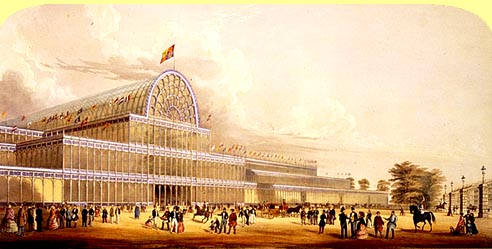
1936: The Crystal Palace was destroyed by fire.

1939: Soviet forces commanded by General K A Meretskov invaded Finland.

1940: Lucille Ball and Desi Arnaz were married, in Greenwich, Connecticut.


1942: Eight Japanese destroyers under Rear Admiral Raizo Tanaka defeated a US force consisting of five cruisers and four destroyers, commanded by Rear Admiral Carleton H Wright, in the Battle of Tassafaronga (aka the Fourth Battle of Savo Island). Destroyer Takanami and heavy cruiser USS Northampton (CA 26) were sunk; USS Minneapolis (CA 36), New Orleans (CA 32) and Pensacola (CA 24) were damaged.

1954: An 8.5-lb meteorite crashed through the roof of a house in Sylacauga, Alabama, bounced off a radio, and hit Mrs Ann Hodges - the only verified case of a person's being struck by a meteorite.

2000: Space shuttle Endeavour (mission STS-97) was launched from Cape Canaveral with a crew consisting of commander Brent W Jett, pilot Michael J Bloomfield, and mission specialists Joseph R Tanner, Carlos I Noriega and Marc Garneau.

King Edmund II "Ironside" (989-1016), Oscar Wilde (1854-1900), General Sir Arthur Currie GCMG KCB (1875-1933), Sir Hubert Wilkins MC* (1888-1958), Herbert Khaury (1932-1996) and Gertrude Ederle (1906-2003) died on this date.


And happy birthday to Andrea Doria (1466-1560), Andrea Palladio (1508-1580), Jonathan Swift (1667-1745), Oliver Winchester (1810-1880), Samuel Langhorne Clemens (1835-1910), Sir Winston Churchill KG OM CH TD FRS PC (1874-1965), Lucy Maud Montgomery (1874-1942), Efrem Zimbalist Jr (1918-TBD), Allan Sherman (1924-1973), Richard Crenna (1926-2003), Robert Guillaume (1927-TBD), G Gordon Liddy (1930-TBD), Sir Ridley Scott (1937-TBD), my sister (1944-2000), Colin Mochrie (1957-TBD), Ben Stiller (1965-TBD) and my niece (1969-TBD).

27 November 2008

RIP: Edna Parker


Edna Scott Parker
20 April 1893 – 26 November 2008


The oldest person in the world has died. ZUI this article from the Chicago Tribune:
Edna Parker, who once taught in a two-room schoolhouse and became the world's oldest person more than a year ago, has died at age 115.

UCLA gerontologist Dr. Stephen Coles said Parker's great nephew notified him that Parker passed away Wednesday at a nursing home in Shelbyville. She was 115 years, 120 days old.

Parker was born April 20, 1893 in central Indiana's Morgan County and had been recognized by Guinness World Records as the world's oldest person since the Aug. 14, 2007, death in Japan of Yone Minagawa, who was four months her senior.

*******

Parker had been a widow since her husband, Earl, died in 1938 of a heart attack. She lived alone in their farmhouse until age 100, when she moved into a son's home and later to the Shelbyville nursing home.

*******

Parker taught in a two-room school in the Shelby County town of Smithland for several years until she wed her childhood sweetheart and next-door neighbor, Earl Parker, in 1911. The same year, she graduated from Franklin College with a teaching certificate.

But as was the tradition of that era, her teaching career ended with her marriage. Parker traded the schoolhouse for life as a farmer's wife, preparing meals for as many as a dozen men who worked on her husband's farm.

Parker recalled last year that her chores included helping maintain the family's barn and butchering chickens for Sunday post-church supper. She noted with pride that she and her husband were one of the first owners of an automobile in their rural area.

She is the third supercentenarian listed by the Gerontology Research Group (GRG) to die since the death of Delfino Borroni on 26 October. The other two were Viola Koch of California (24 May 1897-11 Nov 2008) and Abeline Spiehs of Nebraska (4 Sept 1898-24 Nov 2008).

The GRG's list of validated living supercentenarians (people who have reached their 110th birthday) currently includes 88 people (10 men and 78 women), ranging from Maria de Jesus of Portugal (born 10 Sep 1893) to Annie Turnbull of Scotland (born 21 Sep 1898). According to the GRG, the oldest person in the US is now Gertrude Baines of California (born 6 Apr 1894), the world's second-oldest person.

It's that time of year again....


26 November 2008

NASA news

First, ZUI this NASA press release, dated 21 Nov 08, regarding Space Station crew assignments and updated Expedition numbering:
NASA and its international partners have assigned the International Space Station's crew members through 2010. The numbering sequence of expeditions was modified to reflect the start of six-person crews.

The update to the expedition numbering begins with the docking of a Soyuz spacecraft in May 2009. That Soyuz will mark the beginning of six-person crew operations. From that point forward, expeditions will end with the undocking of a Soyuz. The expedition number will change every two to four months as new crew members arrive and depart.

The arrangement emphasizes that every six-person crew living on the station is a cohesive team. A crew member typically will stay about six months and be part of two expeditions. In addition to the Russian Soyuz, the space shuttle will continue to provide transportation for station crew members through mission STS-129, targeted for the fall of 2009.

With the departure of a Soyuz, command of the station will be handed over to a crew member remaining aboard, and the next expedition will begin. Specific backup crew members will not be announced because of the streamlined training flow for six-person crews. If needed, backups can be selected from subsequent crews in training.

The groups of assigned crew members, beginning with the first six-person crew and including newly announced crew members, are outlined below by expedition. An asterisk indicates the crew member was previously announced.

Expedition 20 begins with the Soyuz 19 docking and the arrival of three new crew members in May 2009.
- Russian cosmonaut Gennady Padalka, International Space Station commander, who will launch in March 2009 on Soyuz 18 and return in October 2009 on Soyuz 18.*
- NASA astronaut Michael R. Barratt, who will launch in March 2009 on Soyuz 18 and return in October 2009 on Soyuz 18.*
- NASA astronaut Tim Kopra, who will launch on STS-127 and return on STS-128.*
- Russian cosmonaut Roman Romanenko, who will launch in May 2009 on Soyuz 19 and return in November 2009 on Soyuz 19.
- European Space Agency, or ESA, astronaut Frank De Winne, who will launch in May 2009 on Soyuz 19 and return in November 2009 on Soyuz 19*
- Canadian Space Agency, or CSA, astronaut Robert Thirsk, who will launch in May 2009 on Soyuz 19 and return on STS-129.*
- NASA astronaut Nicole Stott, who will launch on STS-128 and return in November 2009 on Soyuz 19.*

Expedition 21 begins with the Soyuz 18 undocking in October 2009. Two new crew members will arrive on Soyuz 20 for the handover before the previous crew departs.
- ESA astronaut Frank De Winne, the first European Space Agency station commander
- CSA astronaut Robert Thirsk
- Russian cosmonaut Roman Romanenko
- NASA astronaut Nicole Stott
- Russian Cosmonaut Maxim Suraev, who will launch in September 2009 on Soyuz 20 and return in March 2010 on Soyuz 20
- NASA astronaut Jeffrey N. Williams, who will launch in September 2009 on Soyuz 20 and return in March 2010 on Soyuz 20.

Expedition 22 begins with the Soyuz 19 undocking in November 2009. Three new crew members will arrive shortly thereafter on Soyuz 21.
- NASA astronaut Jeffrey N. Williams, station commander
- Russian cosmonaut Maxim Suraev
- Russian cosmonaut Oleg Kotov, who will launch in December 2009 on Soyuz 21 and return in May 2010 on Soyuz 21.
- Japan Aerospace Exploration Agency, or JAXA, astronaut Soichi Noguchi, who will launch in December 2009 on Soyuz 21 and return in May 2010 on Soyuz 21.*
- NASA astronaut T.J. Creamer, who will launch in December 2009 on Soyuz 21 and return in May 2010 on Soyuz 21.*

Expedition 23 begins with the Soyuz 20 undocking in March 2010. Three new crew members will arrive shortly thereafter on Soyuz 22.
- Russian cosmonaut Oleg Kotov, station commander
- JAXA astronaut Soichi Noguchi
- NASA astronaut T.J. Creamer
- Russian cosmonaut Alexander Kaleri, who will launch in April 2010 on Soyuz 22 and return in September 2010 on Soyuz 22.
- Russian cosmonaut Mikhail Kornienko, who will launch in April 2010 on Soyuz 22 and return in September 2010 on Soyuz 22.
- NASA astronaut Tracy E. Caldwell, who will launch in April 2010 on Soyuz 22 and return in September 2010 on Soyuz 22.

Expedition 24 begins with the Soyuz 21 undocking in May 2010. Three new crew members will arrive shortly thereafter on Soyuz 23.
- Russian cosmonaut Alexander Kaleri, station commander
- Russian cosmonaut Mikhail Kornienko
- NASA astronaut Tracy E. Caldwell
- Russian cosmonaut Alexander Skvortsov, who will launch in May 2010 on Soyuz 23 and return in November 2010 on Soyuz 23.
- NASA astronaut Shannon Walker, who will launch in May 2010 on Soyuz 23 and return November 2010 on Soyuz 23.
- NASA astronaut Douglas H. Wheelock, who will launch in May 2010 on Soyuz 23 and return in November 2010 on Soyuz 23.

Expedition 25 begins with the Soyuz 22 undocking in September 2010. Three new crew members will arrive shortly thereafter on Soyuz 24.
- NASA astronaut Douglas H. Wheelock, station commander
- Russian cosmonaut Alexander Skvortsov
- NASA astronaut Shannon Walker
- Russian cosmonaut Dmitri Kondratyev, who will launch in September 2010 on Soyuz 24 and return in March 2011 on Soyuz 24.
- Russian cosmonaut Oleg Skripochka, who will launch in September 2010 on Soyuz 24 and return in March 2011 on Soyuz 24.
- NASA astronaut Scott J. Kelly, who will launch in September 2010 on Soyuz 24 and return in March 2011 on Soyuz 24.

Expedition 26 begins with the Soyuz 23 undocking in November 2010. Three crew members will arrive shortly thereafter on Soyuz 25.
- NASA astronaut Scott J. Kelly, station commander
- Russian cosmonaut Dmitri Kondratyev
- Russian cosmonaut Oleg Skripochka
- Russian cosmonaut Andrey Borisienko, who will launch in November 2010 on Soyuz 25 and return in May 2011 on Soyuz 25.
- NASA astronaut Catherine Coleman, who will launch in November 2010 on Soyuz 25 and return in May 2011 on Soyuz 25.
- ESA astronaut Paolo Nespoli, who will launch in November 2010 on Soyuz 25 and return in May 2011 on Soyuz 25.

Second, ZUI this press release, dated 24 Nov 08, regarding the Juno mission to be launched in 2011:
NASA is officially moving forward on a mission to conduct an unprecedented, in-depth study of Jupiter.

Called Juno, the mission will be the first in which a spacecraft is placed in a highly elliptical polar orbit around the giant planet to understand its formation, evolution and structure. Underneath its dense cloud cover, Jupiter safeguards secrets to the fundamental processes and conditions that governed our early solar system.

"Jupiter is the archetype of giant planets in our solar system and formed very early, capturing most of the material left after the sun formed," said Scott Bolton, Juno principal investigator from the Southwest Research Institute in San Antonio. "Unlike Earth, Jupiter's giant mass allowed it to hold onto its original composition, providing us with a way of tracing our solar system's history."

The spacecraft is scheduled to launch aboard an Atlas rocket from Cape Canaveral, Fla., in August 2011, reaching Jupiter in 2016. The spacecraft will orbit Jupiter 32 times, skimming about 3,000 miles over the planet's cloud tops for approximately one year. The mission will be the first solar powered spacecraft designed to operate despite the great distance from the sun.

*******

The spacecraft will use a camera and nine science instruments to study the hidden world beneath Jupiter's colorful clouds. The suite of science instruments will investigate the existence of an ice-rock core, Jupiter's intense magnetic field, water and ammonia clouds in the deep atmosphere, and explore the planet's aurora borealis.

"In Greek and Roman mythology, Jupiter's wife Juno peered through Jupiter's veil of clouds to watch over her husband's mischief," said Professor Toby Owen, co-investigator at the University of Hawaii in Honolulu. "Our Juno looks through Jupiter's clouds to see what the planet is up to, not seeking signs of misbehavior, but searching for whispers of water, the ultimate essence of life."

Understanding the formation of Jupiter is essential to understanding the processes that led to the development of the rest of our solar system and what the conditions were that led to Earth and humankind. Similar to the sun, Jupiter is composed mostly of hydrogen and helium. A small percentage of the planet is composed of heavier elements. However, Jupiter has a larger percentage of these heavier elements than the sun.

*******

"Juno gives us a fantastic opportunity to get a picture of the structure of Jupiter in a way never before possible," said James Green, director of NASA's Planetary Division at NASA Headquarters in Washington. "It will allow us to take a giant step forward in our understanding on how giant planets form and the role that plays in putting the rest of the solar system together. "

The Juno mission is the second spacecraft designed under NASA's New Frontiers Program. The first was the Pluto New Horizons mission, launched in January 2006 and scheduled to reach Pluto's moon Charon in 2015. The program provides opportunities to carry out several medium-class missions identified as top priority objectives in the Decadal Solar System Exploration Survey, conducted by the Space Studies Board of the National Research Council in Washington.

For more information about the Juno mission, see here.

25 November 2008

23 November 2008

Victoria Cross: A. B. and V. B. Turner

ALEXANDER BULLER TURNER

Second Lieutenant, 3rd Battalion (attached 1st Battalion) Princess Charlotte of Wales's (Royal Berkshire) Regiment

Born: 22 May 1893, Reading, Berkshire
Died: 1 October 1915, Chocques, France

Citation: For most conspicuous bravery on 28th September, 1915, at "Fosse 8," near Vermelles.
When the regimental bombers could make no headway in Slag Alley, Second Lieutenant Turner volunteered to lead a second bombing attack. He pressed down the communication trench practically alone, throwing bombs incessantly with such dash and determination that he drove back the Germans about 150 yards without a check. His action enabled the reserves to advance with very little loss, and subsequently covered the flank of his regiment in its retirement, thus probably averting a loss of some hundreds of men.
This most gallant Officer has since died of wounds received in this action.

(London Gazette Issue 29371 dated 18 Nov 1915, published 16 Nov 1915.)


VICTOR BULLER TURNER

Major (temporary Lieutenant-Colonel), The Rifle Brigade (Prince Consort's Own)

Born: 17 January 1900, Thatcham, Newbury, Berkshire
Died: 7 August 1972, Ditchingham, Suffolk

Citation: For most conspicuous gallantry and devotion to duty on the 27th October, 1942, in the Western Desert.
Lieutenant-Colonel Turner led a Battalion of the Rifle Brigade at night for 4,000 yards through difficult country to their objective, where 40 German prisoners were captured. He then organised the captured position for all-round defence; in this position he and his Battalion were continuously attacked from 5.30 a.m. to 7 p.m., unsupported and so isolated that replenishment of ammunition was impossible owing to the concentration and accuracy of the enemy fire.
During this time the Battalion was attacked by not less than 90 German tanks which advanced in successive waves. All of these were repulsed with a loss to the enemy of 35 tanks which were in flames, and not less than 20 more which had been immobilised.
Throughout the action Lieutenant-Colonel Turner never ceased to go to each part of the front as it was threatened. Wherever the fire was heaviest, there he was to be found. In one case, finding a solitary six-pounder gun in action (the others being casualties) and manned only by another officer and a Sergeant, he acted as loader and with these two destroyed 5 enemy tanks. While doing this he was wounded in the head, but he refused all aid until the last tank was destroyed.
His personal gallantry and complete disregard of danger as he moved about encouraging his Battalion to resist to the last, resulted in the infliction of a severe defeat on the enemy tanks. He set an example of leadership and bravery which inspired his whole Battalion and which will remain an inspiration to the Brigade.

(London Gazette Issue 35790 dated 20 Nov 1942, published 17 Nov 1942.)


Note: One of four sets of brothers who were awarded the Victoria Cross. According to several sources, both brothers bear the name Buller due to a family connection with General Sir Redvers Buller VC GCB GCMG, though I have not been able to find out what that connection might be.

Medal of Honor: J. L. Jerstad

JOHN L JERSTAD

Major, US Army Air Corps; 9th Air Force

Born: 12 February 1918, Racine, Wisconsin
Died: 1 August 1943, Ploeşti, Romania

Citation: For conspicuous gallantry and intrepidity above and beyond the call of duty. On 1 August 1943, he served as pilot of the lead aircraft in his group in a daring low-level attack against enemy oil refineries and installations at Ploesti, Rumania. Although he had completed more than his share of missions and was no longer connected with this group, so high was his conception of duty that he volunteered to lead the formation in the correct belief that his participation would contribute materially to success in this attack. Maj. Jerstad led the formation into attack with full realization of the extreme hazards involved and despite withering fire from heavy and light antiaircraft guns. Three miles from the target his airplane was hit, badly damaged, and set on fire. Ignoring the fact that he was flying over a field suitable for a forced landing, he kept on the course. After the bombs of his aircraft were released on the target, the fire in his ship became so intense as to make further progress impossible and he crashed into the target area. By his voluntary acceptance of a mission he knew was extremely hazardous, and his assumption of an intrepid course of action at the risk of life over and above the call of duty, Maj. Jerstad set an example of heroism which will be an inspiration to the U.S. Armed Forces.

21 November 2008

"The Three-Decker"

I read Heavy Weather, by P G Wodehouse, a couple months ago. This poem, which I'd never heard (or for that matter heard of) before, was quoted therein by the Hon Galahad Threepwood.

The Three-Decker
Rudyard Kipling, 1894

Full thirty foot she towered from waterline to rail.
It cost a watch to steer her, and a week to shorten sail;
But, spite all modern notions, I found her first and best —
The only certain packet for the Islands of the Blest.

Fair held the breeze behind us — 'twas warm with lovers' prayers.
We'd stolen wills for ballast and a crew of missing heirs.
They shipped as Able Bastards till the Wicked Nurse confessed,
And they worked the old three-decker to the Islands of the Blest.

By ways no gaze could follow, a course unspoiled of Cook,
Per Fancy, fleetest in man, our titled berths we took
With maids of matchless beauty and parentage unguessed,
And a Church of England parson for the Islands of the Blest.

We asked no social questions — we pumped no hidden shame —
We never talked obstetrics when the Little Stranger came:
We left the Lord in Heaven, we left the fiends in Hell.
We weren't exactly Yussufs, but — Zuleika didn't tell.

No moral doubt assailed us, so when the port we neared,
The villain had his flogging at the gangway, and we cheered.
'Twas fiddle in the foc's'le — 'twas garlands on the mast,
For every one got married, and I went ashore at last.

I left 'em all in couples a-kissing on the decks.
I left the lovers loving and the parents signing cheques.
In endless English comfort by county-folk caressed,
I left the old three-decker at the Islands of the Blest!

That route is barred to steamers: you'll never lift again
Our purple-painted headlands or the lordly keeps of Spain.
They're just beyond your skyline, howe'er so far you cruise
In a ram-you-damn-you liner with a brace of bucking screws.

Swing round your aching search-light — 'twill show no haven's peace.
Ay, blow your shrieking sirens to the deaf, gray-bearded seas!
Boom out the dripping oil-bags to skin the deep's unrest —
And you aren't one knot the nearer to the Islands of the Blest!

But when you're threshing, crippled, with broken bridge and rail,
At a drogue of dead convictions to hold you head to gale,
Calm as the Flying Dutchman, from truck to taffrail dressed,
You'll see the old three-decker for the Islands of the Blest.

You'll see her tiering canvas in sheeted silver spread;
You'll hear the long-drawn thunder 'neath her leaping figure-head;
While far, so far above you, her tall poop-lanterns shine
Unvexed by wind or weather like the candles round a shrine!

Hull down — hull down and under — she dwindles to a speck,
With noise of pleasant music and dancing on her deck.
All's well — all's well aboard her — she's left you far behind,
With a scent of old-world roses through the fog that ties you blind.

Her crew are babes or madmen? Her port is all to make?
You're manned by Truth and Science, and you steam for steaming's sake?
Well, tinker up your engines — you know your business best —
She's taking tired people to the Islands of the Blest!


Click on the "Poetry Friday" button at left for this week's round-up, which is hosted by Holly at Brimstone Soup. (Susan, of Susan Writes, has done a round-up of previous round-ups here.)

Book giveaway: The Magician’s Book

Book Dads is having a book giveaway: Three lucky winners will receive a copy of The Magician’s Book: A Skeptic’s Adventures in Narnia, by Laura Miller.

Here is a full description from Hachette:
THE MAGICIAN’S BOOK is the story of one reader’s long, tumultuous relationship with C.S. Lewis’ The Chronicles of Narnia. Enchanted by its fantastic world as a child, prominent critic Laura Miller returns to the series as an adult to uncover the source of these small books’ mysterious power by looking at their creator, Clive Staples Lewis. What she discovers is not the familiar, idealized image of the author, but a more interesting and ambiguous truth: Lewis’s tragic and troubled childhood, his unconventional love life, and his intense but ultimately doomed friendship with J.R.R. Tolkien.

Finally reclaiming Narnia “for the rest of us,” Miller casts the Chronicles as a profoundly literary creation, and the portal to a life-long adventure in books, art, and the imagination.

The contest ends on Tuesday, 25 November. Book Dads will announce the winners the following day.

Only residents of the US or Canada are eligible to win. No PO Boxes please!

How to enter:
For one entry, simply leave a comment on the original post, on their blog, telling them you’d like to win the book.

For three entries, write a post about this contest on your blog with a link back to the original post.

Update 1411 27 Nov: The winners are:
Kyle from The Boy Reader
Marina from Momma Writes About Books
Tricia from The Miss Rumphius Effect

20 November 2008

Buried glaciers on Mars

ZUI this NASA press release:
NASA's Mars Reconnaissance Orbiter has revealed vast Martian glaciers of water ice under protective blankets of rocky debris at much lower latitudes than any ice previously identified on the Red Planet.

Scientists analyzed data from the spacecraft's ground-penetrating radar and report in the Nov. 21 issue of the journal Science that buried glaciers extend for dozens of miles from the edges of mountains or cliffs. A layer of rocky debris blanketing the ice may have preserved the underground glaciers as remnants from an ice sheet that covered middle latitudes during a past ice age. This discovery is similar to massive ice glaciers that have been detected under rocky coverings in Antarctica.

"Altogether, these glaciers almost certainly represent the largest reservoir of water ice on Mars that is not in the polar caps," said John W. Holt of the University of Texas at Austin, who is lead author of the report. "Just one of the features we examined is three times larger than the city of Los Angeles and up to half a mile thick. And there are many more. In addition to their scientific value, they could be a source of water to support future exploration of Mars."

Scientists have been puzzled by what are known as aprons -- gently sloping areas containing rocky deposits at the bases of taller geographical features -- since NASA's Viking orbiters first observed them on the Martian surface in the 1970s. One theory has been that the aprons are flows of rocky debris lubricated by a small amount ice. Now, the shallow radar instrument on the Mars Reconnaissance Orbiter has provided scientists an answer to this Martian puzzle.

*******

Radar echoes received by the spacecraft indicated radio waves pass through the aprons and reflect off a deeper surface below without significant loss in strength. That is expected if the apron areas are composed of thick ice under a relatively thin covering. The radar does not detect reflections from the interior of these deposits as would occur if they contained significant rock debris. The apparent velocity of radio waves passing through the apron is consistent with a composition of water ice.

*******

Holt and 11 co-authors report the buried glaciers lie in the Hellas Basin region of Mars' southern hemisphere. The radar also has detected similar-appearing aprons extending from cliffs in the northern hemisphere.

"There's an even larger volume of water ice in the northern deposits," said JPL geologist Jeffrey J. Plaut, who will be publishing results about these deposits in the American Geophysical Union's Geophysical Research Letters. "The fact these features are in the same latitude bands, about 35 to 60 degrees in both hemispheres, points to a climate-driven mechanism for explaining how they got there."

The rocky debris blanket topping the glaciers apparently has protected the ice from vaporizing, which would happen if it were exposed to the atmosphere at these latitudes.

"A key question is, how did the ice get there in the first place?" said James W. Head of Brown University in Providence, R.I. "The tilt of Mars' spin axis sometimes gets much greater than it is now. Climate modeling tells us ice sheets could cover mid-latitude regions of Mars during those high-tilt periods. The buried glaciers make sense as preserved fragments from an ice age millions of years ago. On Earth, such buried glacial ice in Antarctica preserves the record of traces of ancient organisms and past climate history."

JPL manages the Mars Reconnaissance Orbiter for NASA's Science Mission Directorate in Washington. For more information about the Mars Reconnaissance Orbiter, visit:
http://www.nasa.gov/mission_pages/MRO/main/index.html

Cool! (Pun not intentional, but I'm willing to take advantage of it....)

19 November 2008

RIP: Fernand Goux

Fernand Goux
31 Dec 1899 - 9 Nov 2008


The next-to-last French veteran of World War I seems to have died. Unfortunately, this article is the only one I've been able to locate thus far:
Le 12 mars 2008 à 12h45 s'éteignait Lazare Ponticelli, le dernier ancien combattant français connu de la Grande Guerre. Mais la France comptait encore quelques très rares vétérans, des vétérans qui n'avaient pas ou peu combattus durant cette guerre (pas assez pour prétendre à la qualité d'" ancien combattant "). Fernand Goux, 108 ans, était l'un d'eux. Par deux fois nous l'avions rencontré. Deux jours avant le 90e anniversaire de la fin de la Première Guerre mondiale, il s'est éteint. A partir d'éléments fournis par ses proches et des renseignements figurant sur son registre matricule de recrutement, nous avons tenté de retracer sa vie et son parcours militaire.

Fernand Goux naît le 31 décembre 1899, vers 23h00, à Sceaux du Gâtinais (Loiret) chez ses grand-parents. Il est l'aîné d'une famille de trois enfants. Ses parents sont agriculteurs à Butteaux, non loin de La Chapelle La Reine (Seine-et-Marne).

*******

Le 19 avril 1918, il est incorporé dans le 85e régiment d'infanterie sous le matricule 14 436. Affecté à l'arrière des lignes, il participe aux opérations de ravitaillement des troupes, enterre les corps des soldats tombés au front. Un temps il garde prisonnier des mutins français, avec la consigne d'abattre tous ceux qui tentent de fuir.

Le 3 novembre 1918, il passe au 82e RI qui stationne alors sur la ligne de front, dans les Ardennes. Son nouveau régiment vient de relever (le 2 novembre) les éléments en ligne du 407e RI. Malgré les tirs d'artillerie ennemie, le 82e RI avance dans le secteur de Chaudion, Remaucourt. L'Armistice du 11 novembre sonne bientôt la fin des combats. Selon ses proches, Fernand Goux, tombé malade, n'aurait pas participé à ces quelques jours de front.

Just set that anywhere....

ZUI this article from the Beeb:
Astronauts working on the International Space Station have lost a tool bag.

Heidemarie Stefanyshyn-Piper watched helplessly as the kit drifted away from her as she serviced the solar array system on the orbiting platform.

The briefcase-sized tool bag is one of the largest items ever lost on a spacewalk.

*******

Stefanyshyn-Piper's slip occurred as she was greasing a rotary joint on the station's giant starboard solar array system. The joint has been unable to automatically point the solar wings toward the Sun for maximum energy production for over a year.

Just as she was finishing up the job, the tool bag became untethered from a larger kit case and floated away along with a pair of grease guns, wipes and a putty knife.

She reached out, but to no avail. The lost bag is now moving ahead of the station and increasing its distance to the platform, giving flight controllers confidence it poses no danger to the ISS.

*******

The space station marks its 10th anniversary on Thursday. The first component of the platform - the Russian Zarya module - was launched on 20th November 1998. The construction of the station is nearly complete and the international partners expect to be using it well into the next decade.


CAPT Heidemarie Stefanyshyn-Piper, USN

16 November 2008

Victoria Cross: T. Bryan

THOMAS BRYAN

Lance-Corporal, 25th (S) Battalion the Northumberland Fusiliers

Born: 21 January 1882, at Stourbridge, Worcestershire
Died: 13 October 1945, Doncaster, South Yorkshire

Citation: For most conspicuous bravery during an attack [at Vimy Ridge, near Arras, France, on 9 April 1917].
Although wounded, this Non-commissioned Officer went forward alone, with a view to silencing a machine gun which was inflicting much damage. He worked up most skilfully along a communication trench, approached the gun from behind, disabled it and killed two of the team as they were abandoning the gun.
As this machine gun had been a serious obstacle in the advance to the second objective, the results obtained by Lance-Corporal Bryan’s gallant action were very far-reaching.

(London Gazette Issue 30122 dated 8 Jun 1917, published 8 Jun 1917.)