25 May 2007

Friday cat - 25 May


It's been a while since I last posted a cat picture, so here's Sextus (aka The Incredible Sneezing Cat) on our bed.

24 May 2007

HMS Hood


24 May 1941: A German force consisting of battleship Bismarck (Kapitän zur See Ernst Lindemann) and heavy cruiser Prinz Eugen (Kapitän zur See Helmuth Brinkmann), commanded by Admiral Günther Lütjens, met up with a British force consisting of battleship HMS Prince of Wales (Captain John C Leach), battlecruiser HMS Hood (Captain Ralph Kerr CBE) and four destroyers*, under Vice-Admiral Lancelot E Holland CB, in the Denmark Strait between Greenland and Iceland.

Action began at 0552, when Hood opened fire at a range of approximately 25,000 yards. At about 0559 Hood was struck by Bismarck's fifth salvo; there was a great explosion, and within minutes Hood was gone.

There were only three survivors** out of the 1418-man crew.


HMS Hood (all pictures above) and HMS Prince of Wales (below)


Bismarck (above) and Prinz Eugen (below)


For more details, ZUI the HMS Hood Association's website. The wreck was located in the summer of 2001; photos can be seen here.

* HM Ships Electra, Echo, Icarus and Achates.
** Midshipman William Dundas (1925-1965), Able Seaman Robert Tilburn (1921-1995) and Signalman Ted Briggs (1923-TBD).

23 May 2007

How many words do you know?

Ok, you're smart, but you're not THAT smart. Time to put a number on that reading ability of yours: How many words do you know?

Your Score: 55278 words


Congratulations! You scored 174!


You scored as knowing approximately 55278 words and word meanings. This officially qualifies you as "loquacious."

Link: The How Many Words do You Know Test written by 476herschel on OkCupid


RIF.

The Classic Leading Man Test

What kind of classic leading man would you make? Would you light up the silver screen with your classy good looks and suave demeanor? Or would you be a tough-talking man's man who needs a strong, steamy dame by his side? Maybe you would be funny, friendly and a little bit of an underdog. Find out how the chips fall for you in this test of your classic male film star aptitude.

Your Score: Jimmy Stewart


You scored 19% Tough, 4% Roguish, 80% Friendly, and 0% Charming!


You are the fun and friendly boy next door, the classic nice guy who still manages to get the girl most of the time. You're every nice girl's dreamboat, open and kind, nutty and charming, even a little mischievous at times, but always a real stand up guy. You're dependable and forthright, and women are drawn to your reliability, even as they're dazzled by your sense of adventure and fun. You try to be tough when you need to be, and will gladly stand up for any damsel in distress, but you'd rather catch a girl with a little bit of flair. Your leading ladies include Jean Arthur and Donna Reed, those sweet girl-next-door types.

Find out what kind of classic dame you'd make by taking the Classic Dames Test.


Link: The Classic Leading Man Test written by gidgetgoes on OkCupid


Fascinating.... Actually, I can think of many worse people to be than Jimmy Stewart. Did you know that he was a brigadier general in the USAF Reserve? He was awarded the Distinguished Flying Cross (x2), Air Medal (x4) and Croix de Guerre* with palm for his service as a bomber pilot during WW II.


* French

22 May 2007

Cutty Sark burnt


Cutty Sark? ZUI this from The Independent:
There is no ship anywhere like the Cutty Sark. She is the last, beautiful remaining product of the golden age of sailing ships, when Britain had world's greatest navy and had perfected the technology to make some of the most elegant cargo ships in history.

Since she has been dry-docked at Greenwich, 15 million people have paid to look inside her, and up to seven million people a year pass through Greenwich gardens to see her from the outside.

-------

Her global fame is not just a reminder of the great age of sail, but of Britain's history as an island nation whose success depended on maritime prowess.

She is the only tea clipper still in existence, built in 1869 at the height of British imperial grandeur, named after a character in a Robert Burns' poem and designed to win the annual - and lucrative - race across the globe from China to London to bring the first tea of the year.

But even in her own day, in late Victorian times, she was a very famous ship. Everybody who was interested in sailing ships knew about her and her history. She had several good runs to China and back, but what really made her famous was when she was used as a wool clipper between Australia and the UK.

Cutty Sark, which has been a museum ship in Greenwich, London, for the past several decades, was severely damaged by fire yesterday. ZUI this early report from ABC Online:
The Cutty Sark, the world's last remaining tea clipper and one of London's tourist attractions, has been damaged by fire.

The boat-museum, under reconstruction and due to reopen in 2009, was on fire at 5:30 am (local time) and firefighters were concerned gas canisters on board for repair work could explode.

Sky News showed firefighters saying the ship was "100 per cent on fire" and played amateur footage of massive flames climbing towards the sky.

Police evacuated nearby buildings and closed off the area.

"There is substantial damage," a London Fire Brigade spokesman said.

"We've got eight fire engines and 40 firefighters there."

By 7am local time the blaze had been brought under control.

And it may have been arson. From the Beeb:
A fire which swept through the famous 19th Century ship Cutty Sark may have been started deliberately, police say.
The vessel, which was undergoing a £25m restoration, is kept in a dry dock at Greenwich in south-east London.

Police are analysing CCTV images which are thought to show people in the area shortly before the fire started.

A Cutty Sark Trust spokesman said much of the ship had been removed for restoration and the damage could have been worse.

Half the planking and the masts had been taken away as part of the project.


H/T to LawDog.

21 May 2007

NYC to Glasgow

Need to get from New York City to Glasgow? Let Google Maps provide directions. (Read carefully....)

H/T to Tom Cerul for this one.

ISFP

Your Personality is Somewhat Rare (ISFP)

Your personality type is caring, peaceful, artistic, and calm.

Only about 7% of all people have your personality, including 8% of all women and 6% of all men.

You are Introverted, Sensing, Feeling, and Perceiving.


I remember doing this test a long time ago - whilst in Hawai`i, I think - but I have no idea what result I got then. But this seems reasonably accurate to me....

H/T to Kelly.

20 May 2007

Victoria Cross: B. C. G. Place and D. Cameron

BASIL CHARLES GODFREY PLACE, DSC

Lieutenant, Royal Navy; commanding HM Midget Submarine X7

Born: 19 July 1921, Little Malvern, Worcestershire


DONALD CAMERON

Lieutenant, Royal Naval Reserve; commanding HM Midget Submarine X6

Born: 18 March 1916, Carluke, Lanarkshire, Scotland

Joint Citation: Lieutenants Place and Cameron were the Commanding Officers of two of His Majesty's Midget Submarines X7 and X6, which on 22nd September 1943 carried out a most daring and successful attack on the German Battleship Tirpitz, moored in the protected anchorage of Kaafiord, North Norway.
To reach the anchorage necessitated the penetration of an enemy minefield and a passage of fifty miles up the fiord, known to be vigilantly patrolled by the enemy and to be guarded by nets, gun defences and listening posts, this after a passage of at least a thousand miles from base.
Having successfully eluded all these hazards and entered the fleet anchorage, Lieutenants Place and Cameron, with a complete disregard for danger, worked their small craft past the close anti-submarine and torpedo nets surrounding the Tirpitz, and from a position inside these nets, carried out a cool and determined attack.
Whilst they were still inside the nets a fierce enemy counter attack by guns and depth charges developed which made their withdrawal impossible. Lieutenants Place and Cameron therefore scuttled their craft to prevent them falling into the hands of the enemy. Before doing so they took every measure to ensure the safety of their crews, the majority of whom, together with themselves, were subsequently taken prisoner.
In the course of the operation these very small craft pressed home their attack to the full, in doing so accepting all the dangers inherent in such vessels and facing every possible hazard which ingenuity could devise for the protection in harbour of vitally important Capital Ships.
The courage, endurance and utter contempt for danger in the immediate face of the enemy shown by Lieutenants Place and Cameron during this determined and successful attack were supreme.

(London Gazette Issue 36390 dated 22 Feb 1944, published 18 Feb 1944.)


Note: Additionally, Temporary Sub-Lieutenants Robert Aitken RNVR (X7), Richard H Kendall RNVR (X6), and John T Lorimer RNVR (X6) were appointed Companions of the Distinguished Service Order, and Engine Room Artificer Fourth Class Edmund Goddard (X6) was awarded the Conspicuous Gallantry Medal.

Medal of Honor: A. A. M. and J. E. V. Gaujot

ANTOINE AUGUST MICHEL GAUJOT

Corporal, Company M, 27th Infantry, US Volunteers

Born: 12 December 1878, Eagle Harbor Township, Keweenaw County, Michigan
Died: 14 April 1936, Williamson, West Virginia

Citation: Attempted under a heavy fire of the enemy to swim a river [at San Mateo, Philippine Islands, 19 December 1899] for the purpose of obtaining and returning with a canoe.


JULIEN EDMOND VICTOR GAUJOT

Captain, Troop K, 1st US Cavalry

Born: 22 October 1874, Eagle Harbor Township, Keweenaw County, Michigan
Died: 7 April 1938, Williamson, West Virginia

Citation: Crossed the field of fire [at Aqua Prieta, Mexico, 13 April 1911] to obtain the permission of the rebel commander to receive the surrender of the surrounded forces of Mexican Federals and escort such forces, together with 5 Americans held as prisoners, to the American line.


Note: One of eight sets of brothers to receive the Medal of Honor, and the only pair to receive medals for service in different wars.

18 May 2007

World War I veterans


They're disappearing quickly.

According to Wikipedia, 23 WWI veterans (and two WWI-era veterans*) have died so far this year. Amongst them were:
Philip Mayne, the last surviving British officer (died 9 Apr)
Gheorghe Pănculescu, the last known Romanian veteran (9 Jan)
Lloyd Brown, the last surviving US Navy veteran (29 Mar)
Emiliano Mercado del Toro, who at the time of his death was the oldest living person in the world (24 Jan)
Howard Ramsey, the last US combat veteran (22 Feb)
Albert Wagner, the last USMC veteran (20 Jan)
Charlotte Winters, the last female US veteran (27 Mar)

How many are left? According to Wikipedia there are 28 WWI veterans and seven WWI-era veterans still living (plus four men with unverified claims). Amongst them:
John Campbell Ross, last Australian veteran (aged 108)
Gladys Powers, the last remaining female veteran (108)
Henry Allingham, the oldest man in Britain (110)
Henry Patch, last surviving British Army veteran (108)


* Wikipedia defines a "WWI-era veteran" as "those that joined the armed services after the Armistice date, or where there is debate on their join-date, or whose military service is sometimes viewed as outside the scope of "WWI" but are considered WWI-era vets by the press or the US government, or served in a related conflict."

RIP: Dwight Wilson


ZUI this article from the Los Angeles Times:
Dwight Wilson, one of the last two Canadian veterans of World War I, died Wednesday [9 May] in Toronto, officials said. He was 106.

Wilson's death leaves one known surviving Canadian veteran of the war — 106-year-old John Babcock of Spokane, Wash.

And this from the Ottawa Citizen:
Dwight Wilson's dogged determination to join his countrymen in the trenches of the First World War drove him to enlist not once, but twice, despite news reports chronicling the "horrendous" conflict being waged in Europe.

-------

"I think maybe in 1914, when the war broke out, some of the young boys signing up thought it would be a lark," said [his son, Paul] Wilson. "By 1916, there had been thousands upon thousands of them just killed. They had some horrendous battles."

It was in that climate that a 15-year-old Wilson, who had served as a bugler in the 9th Mississauga Horse militia a year earlier, headed overseas in the fall of 1916 despite his parents' objections.

-------

It was while awaiting orders to the frontline that Wilson's commanding officer discovered his true age, and put the young soldier to work digging defensive trenches in the south of England.

Wilson, already earning a reputation among his colleagues for his frequent singing while he worked, was sent back to Canada in January 1917 and discharged as a minor.

He managed to re-enlist in the 69th Battery in April. Four months later, Wilson was discharged as a minor yet again while stationed in Petawawa.

This day in history: 18 May

1152: Henry II married Eleanor of Aquitaine in Bordeaux Cathedral.

1268: The Principality of Antioch fell to the Mamluk Sultan Baybars.


1652: The General Court of Election in Rhode Island enacted the first colonial legislation limiting slavery, making perpetual enslavement of any person, black or white, illegal. The law was only enforced for about fifty years.

1803: The United Kingdom revoked the Treaty of Amiens and declared war on France.

1804: Napoleon Bonaparte was proclaimed Emperor of the French by the French Senate.

1848: The Frankfurt Parliament - Germany's first National Assembly - convened in St. Paul's Church, Frankfurt.

1863: The Siege of Vicksburg began; it would last until 4 July.

1869: The Ezo Republic, on Hokkaido, surrendered to Japan; the republic was dissolved on 27 June.

1876: Wyatt Earp started work as a deputy city marshal in Dodge City, Kansas.

1910: The Earth passed through the tail of Halley's Comet.

1917: The Selective Service Act was passed by the US Congress; men between the ages of 18 and 45 were required to register for the first draft since the US Civil War.

1927: Forty-four people were killed by bombs planted by a disgruntled school-board member in Bath Township, Michigan.

1941: Light cruiser HMS Coventry came to the aid of a hospital ship which was being attacked by German dive bombers south of Crete. Petty Officer Alfred E Sephton, manning a gun director on board Coventry, was mortally wounded by machine-gun fire from an attacking plane. Despite his wound, Sephton remained at his post until the air attack had been driven off. He died of his injuries the following day, and was awarded a posthumous Victoria Cross.*

1944: A reconnaissance group from the Polish 12th Podolski Lancers occupied Monte Cassino, which had been evacated by the Germans during the previous night.

1953: Jackie Cochran, flying a Canadair F-86 Sabre, became the first woman to break the sound barrier.

1956: Swiss mountaineers Ernst Reiss and Fritz Luchsinger completed the first ascent of 8516-metre Lhotse, the fourth highest mountain in the world.

1958: A Lockheed F-104A Starfighter, flown by Captain Walter W Irvin USAF, set a world speed record of 1,404.19 mph (2,259.82 km/h).

1967: Specialist Fourth Class Dale Wayrynen, 502nd Infantry, 101st Airborne Division, was assisting in the night evacuation of the wounded from an earlier enemy contact near Duc Pho when when the lead man of his platoon met face to face with a Viet Cong soldier. The lead man was wounded and knocked from his feet. Wayrynen, the second man in the formation, killed another enemy soldier who appeared, then dragged his injured companion back to cover. When an enemy grenade landed in the centre of the men, Wayrynen shouted a warning, pushed one soldier out of the way, and threw himself on the grenade. He received a posthumous award of the Medal of Honor.

1968: Specialist Fourth Class Peter Guenette, 506th Infantry, 101st Airborne Division, was engaged in a sweep of a suspected enemy base camp when his platoon came under light harassing fire from North Vietnamese Army regulars. As the platoon moved to within 10 meters of the fortified positions, the enemy fire became intense. Guenette and his assistant gunner immediately began to provide suppressing fire. An enemy grenade was thrown to Guenette's right; realising that the grenade would kill or wound at least 4 men and destroy his machine gun, he shouted a warning and smothered the grenade with his body. He received a posthumous award of the Medal of Honor.

1969: Apollo 10 (Thomas P Stafford, John W Young and Eugene A Cernan) was launched from Cape Canaveral, to return to Earth on 26 May.

1974: India successfully detonated its first nuclear weapon, becoming the sixth nation to do so.

1980: Mount St Helens, in the Cascade Mountains in southwestern Washington, erupted, killing 57 people.


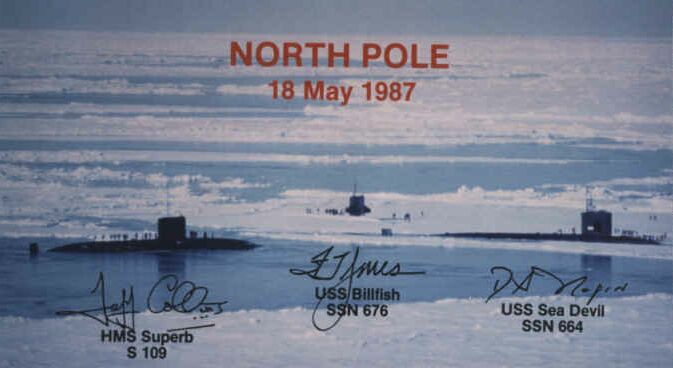
1987: Three submarines - USS Sea Devil (SSN 664), USS Billfish (SSN 676) and HMS Superb (S 109) - rendezvoused at the North Pole.

1990: A modified TGV train achieved a new rail world speed record of 515.3 km/h (320.3 mph,) superseding the previous record of 406.9 km/h set on 1 May 1988 by the German InterCityExperimental (ICE) train.

1991: Soyuz TM-12 (A P Artsebarsky, S K Krikalyov and Helen Sharman) was launched from Baikonur. Sharman, the first British astronaut to reach orbit, returned to Earth 26 May on board Soyuz TM-11.

1992: The Archivist of the United States certified that the 27th Amendment to the U.S. Constitution had been ratified - after over 200 years.

In addition to Sp4c Wayrynen (1947-1967) and Sp4c Guenette (1948-1968), Jacques Marquette (1637–1675), Elias Ashmole (1617–1692), Aleksandr Vasil'yevich Suvorov (1729–1800), Arthur O'Connell (1908–1981), Daws Butler (1916–1988) and Elizabeth Montgomery (1933–1995) died on this date.


And happy birthday to Omar Khayyam (1048-1131), Tsar Nicholas II of Russia (1868–1918), Frank Capra (1897–1991), Meredith Willson (1902–1984), Perry Como (1912–2001), George Welch (1918–1954), Pernell Roberts (1928-TBD), Don Martin (1931–2000), Dwayne Hickman (1934-TBD), Diane Duane (1952-TBD) and George Strait (1952-TBD).


* PO Sephton's VC was stolen on 25 September 1990 whilst on display in Coventry Cathedral. It has not been recovered.

** The Burj Dubai, scheduled to be completed in 2008, will be taller.

15 May 2007

Nerd, geek or dork?


Your Score: Tri-Lamb Material

56 % Nerd, 17% Geek, 52% Dork


For The Record:

A Nerd is someone who is passionate about learning/being smart/academia.
A Geek is someone who is passionate about some particular area or subject, often an obscure or difficult one.
A Dork is someone who has difficulty with common social expectations/interactions.
You scored better than half in Nerd and Dork, earning you the coveted title of: Tri-Lamb Material.

The classic, "80's" nerd, you are what most people think of when they think "nerd," largely due to 80's movies like Revenge of the Nerds and TV shows like Head of the Class. You're exceptionally bright and smart, and partly because of that have never quite fit in with your peers or social groups. Perhaps you've realized, or will someday, that it is possible to retain all of the things that you like about being brilliant and still make peace with the social cliques around you. Or maybe you won't--it's really not necessary. As the brothers of Lambda Lambda Lambda discovered, you're fine just the way you are and can take pride in that. I mean, who wants to be like Ogre, right!?

Congratulations!


Thanks Again! --
THE NERD? GEEK? OR DORK? TEST


Hmmm.... The Geek score seems about right, but I'd expected to score rather higher as Nerd, and a bit lower as Dork (say, 70% and 30%, respectively). Oh, well.

I've seen this one before, but H/T to Michele and Kelly for bringing it up again.

14 May 2007

Rack time

In my experience (which I admit is limited to 688s), the best racks on a boat are the top ones; you get a little more storage space that way, up amongst the pipes and cable runs. (As long as nobody comes along and tells you to clear that rubbish out - or clears it out for you - because it's causing sound shorts, anyway.) Middle racks are next best, and bottom racks are the worst, because you have to get down on your knees to get your stuff out or crawl into the rack, and back in the days of major pre-deployment load-outs, your bunkpan might disappear behind all the #10 cans that were used to repave the deck in berthing. Most of the racks on a 688 are the same size, but there are some that are just a wee bit different the rest. Some racks (outboard aft in Aft Berthing, for instance) suck because they're tucked in behind a locker or something, and you don't have easy access to your entire bunkpan.

And then there are the top bunks in the outboard row of Aft Berthing. Most bunks are nice, neat rectangular spaces, with more or less vertical walls at both ends and along the back. Due to the curvature of the hull, though, those four bunks have back walls that slope inward at the top, cutting down on the amount of space in the interior of the rack. And unless you're anorexic, you can't lie on your side in one of those racks without having your back (or front) touching that slanting back wall.

And thereby hangs a tale....

First WestPac, early '87. Hong Kong. We'd been under way for several weeks, and now we were parked, not at a pier, but out at an anchorage. A hazmat anchorage. (Nuclear wessel, you know.) The hazmat anchorages, of course, are the ones farthest out in the bay, so we had a pretty healthy ride from the anchorage to the pier. A good half-hour ride, if memory serves me correctly.

Naturally, nobody wanted to waste time on long liberty-boat rides. So those who could, took hotel rooms. And one of those-who-could was an STS2 named Mark. Who, for the past several weeks, had been living in one of those outboard top bunks.

Mark and another STS2, Steve, got themselves a room, and then went out and partied a wee bit before returning to the hotel to get some sleep. And about 0200, Steve woke up to find Mark pushing his bed (his own, that is, not Steve's) across the hotel room.

Steve watched this activity for a moment, then asked a perfectly logical question: "What the hell are you doing?"

The somewhat surly answer? "Trying to get some sleep."

Seemed that during all those weeks in that top rack, Mark had gotten so used to having his back up against the back of the rack that he couldn't get to sleep in the hotel bed. So he was pushing it up against the wall of the room, so that he could lie down with his back touching the wall....

13 May 2007

Victoria Cross: E. C. Boyle

EDWARD COURTNEY BOYLE

Lieutenant Commander, Royal Navy; commanding HM Submarine E14

Born: 23 March 1883, Carlisle, Cumberland

Citation: For most conspicuous bravery, in command of Submarine E. 14, when he dived his vessel under the enemy minefields and entered the Sea of Marmora on the 27th April, 1915. In spite of great navigational difficulties from strong currents, of the continual neighbourhood of hostile patrols, and of the hourly danger of attack from the enemy, he continued to operate in the narrow waters of the Straits and succeeded in sinking two Turkish gunboats and one large military transport.

(London Gazette Issue 29169 dated 21 May 1915, published 21 May 1915.)


Note: Lieutenant E G Stanley RN and Acting Lieutenant R W Lawrence RNR were awarded the Distinguished Service Cross, and the remaining members of the crew received the Distinguished Service Medal.

Medal of Honor: J. H. Helms

JOHN HENRY HELMS

Sergeant, US Marine Corps; USS Chicago (CA 14)

Born: 16 March 1874, Chicago, Illinois
Died: 17 February 1919

Citation: Serving on board the U.S.S. Chicago, for heroism in rescuing Ishi Tomizi, ship's cook, from drowning at Montevideo, Uruguay, 10 January 1901.

12 May 2007

ChapStick

ZUI this post from Wasted Electrons.

H/T to Tam - and she's right; make sure you swallow your drink before you read....

This day in history: 12 May

1191: King Richard I of England married Berengaria of Navarre at Limassol, Cyprus.

1264: The Battle of Lewes began. It ended two days later, after rebels led by Simon de Montfort, 6th Earl of Leicester, had captured both King Henry III and Prince Edward (later King Edward I).

1588: King Henry III of France fled Paris after Henry of Guise entered the city.

1863: Brigadier General John Gregg made the mistake of attacking James B. McPherson's XVII Corps in the Battle of Raymond, Mississippi. Outnumbered four to one, Gregg was forced to retreat.

1864: Thousands of Union and Confederate soldiers died in some of the most savage fighting of the whole Civil War, in "the Bloody Angle" at Spotsylvania. The battle - between Lee's Army of Northern Virginia and Grant's II Corps (Maj Gen Hancock)and VI Corps (Maj Gen Wright, after Maj. Gen. John Sedgwick was killed by a sharpshooter on the 9th) - ended inconclusively on the 21st, and Grant continued his push toward Richmond.

1865: The Battle of Palmito Ranch (Texas), the last major land action to take place during the Civil War, began, over a month after Lee's surrender at Appomattox. It ended the following day in a Confederate victory.

1885: The Battle of Batoche (Saskatchewan), which had begun on 9 May, ended in a decisive Canadian victory over Métis rebels; this led to the surrender of Louis Riel on 15 May.

1932: The infant son of Charles Lindbergh was found dead in Hopewell, New Jersey - just a few miles from the Lindberghs' home - ten weeks after his abduction.

1937: George VI, who had become King of Great Britain on the abdication of his brother, King Edward VIII, on 11 Dec 1936, was crowned at Westminster Abbey.


1940: Three Fairey Battle light bombers of No 12 Squadron RAF, led by Flying Officer Donald E Garland made a low-level attack on a bridge over the Albert Canal at Veldwezelt, Belgium. They were also met with extremely heavy anti-aircraft fire. Garland's aircraft was shot down over the bridge, and he, observer Sergeant Thomas Gray, and gunner LAC Reynolds were all killed. The second Battle was set on fire and forced to crash-land; its crew were captured. The third Battle went down, with no survivors, just after releasing its bombs. The bridge had, however, suffered serious damage, which was attributed to Garland's bombs, on its western end. Garland and Gray were awarded the Victoria Cross.

1942: The Second Battle of Kharkov began when Soviet forces under Marshal S K Timoshenko launched an offensive against the German Sixth Army (Gen Friedrich Paulus).

1949: The Berlin Blockade ended at 0001 when the Soviets opened their barricades. (The famous airlift, however, continued until 30 September.)

1965: The Soviet spacecraft Luna 5, launched from Baikonur on 9 May, crashed on the Moon after its retrorockets failed during an attempted soft landing.

1975: The Cambodian navy seized the American merchant ship SS Mayaguez in international waters.

Thomas Wentworth, 1st Earl of Strafford (1593–1641), J E B Stuart (1833–1864), Bedřich Smetana (1824-1884), John Cadbury (1801–1889), Józef Piłsudski (1867–1935), Frederick Schiller Faust (1892-1944), Erich von Stroheim (1885–1957), Robert Reed (1932–1992), Perry Como (1912–2001) and Alexei Andreyevich Tupolev (1925–2001) died on this date.

And happy birthday to Edward Lear (1812–1888), Florence Nightingale OM RRC (1820–1910), Lincoln Ellsworth (1880-1951), Katharine Hepburn (1907-2003), Leslie Charteris (1907–1993), Farley Mowat OC (1921-TBD), Burt Bacharach (1928-TBD), George Carlin (1937-TBD), Kix Brooks (1955-TBD), Emilio Estevez (1962-TBD) and Kim Fields (1969-TBD).

11 May 2007

Veterans Pride: Memorial Day

Memorial Day was first established in 1868 to honour those soldiers - both Union and Confederate - who died in the US Civil War; it has since been expanded to include all of America's dead from all wars. (Note that Memorial Day is for deceased veterans. Living veterans are honoured on Veterans' Day, in November.) The traditional date for Memorial Day is 30 May, but this year, under the National Holiday Act of 1971 (the "Monday Holiday Bill"), it will be observed on the 28th.

ZUI SecVet Jim Nicholson's message regarding Veterans Pride:
One of the things that stood out during the day-long [ANZAC Day] ceremonies [in Sydney, Australia, in 2006] was how all of the veterans and surviving family members wore their medals and campaign ribbons. It focused public pride and attention on those veterans as individuals with personal histories of service and sacrifice for the common good.

That is why I am calling on America's veterans to wear their military medals on Veterans Day, Memorial Day and the Fourth of July. Wearing their medals demonstrates the deep pride our veterans have in their military service and reminds all American citizens of the sacrifices our veterans have made.

Veterans, wear your pride on your left side on patriotic holidays! Let America know who you are and what you did for freedom.

A Veterans Pride brochure to be printed out can be found here.


The photos below were taken at the 2005 ANZAC Day celebration in Canberra, and illustrate what Mr Nicholson is referring to. The gentleman with the yellow tie who is wearing miniature medals on his right side is honouring a deceased relative, probably his father.*


* From the RAAF Manual of Dress, Chapter 4:
Wearing Medals of Deceased Relatives
52. On ANZAC Day, personnel not participating in an official RAAF or tri-Service contingent or guard of honour may wear medals (in uniform or civilian dress) of a deceased relative, passed down in direct line from grandparents and parents. The medals are to be worn on the right breast and should be worn only on ANZAC Day.

This day in history: 11 May

1502: Christopher Columbus departed Cádiz, Spain, with four ships - Capitana, Gallega, Vizcaína and Santiago de Palos - on his fourth (and final) voyage to the Americas.

1820: HMS Beagle, a 10-gun sloop, was launched at Woolwich Dockyard.

1841: Lt Charles Wilkes, commander of the United States Exploring Expedition, landed at Fort Nisqually, in Puget Sound.

1857: Mutineers attempted to seize the magazine in the city of Delhi. Defenders held the enemy off for five hours, but blew up the magazine, to deny the enemy the use of the weapons and ammunition stored there, when it became obvious the mutineers would take the magazine. Six of the nine defenders, along with many mutineers, were killed in the blast; the three survivors - Lieutenants William Raynor and George Forrest, and Deputy Assistant Commissary John Buckley - all received the Victoria Cross. (Lt Raynor is the oldest person to have been awarded the VC.)

1858: Minnesota was admitted to the Union as the 32nd state.

1862: CSS Virginia was scuttled in the James River, northwest of Norfolk, Virginia, to prevent her capture by Union forces.

1864: Major General J E B Stuart was shot by Private J A Huff, 5th Michigan Cavalry, during the Battle of Yellow Tavern, Virginia; he died the following day.


1910: President William Howard Taft signed the bill creating Glacier National Park.

1941: A Short Stirling bomber, N3654, from Number 15 Squadron RAF, was shot down near the Dutch village of Opmeer by a German night fighter. The body of the pilot, Wing Commander H R Dale RAF, was recovered and buried in the nearby town of Bergen; the bodies of the rest of the crew were not found.

1943: American troops invaded Attu, in the Aleutian Islands, in an attempt to expel occupying Japanese forces.

1953: 114 people were killed and 597 injured when a tornado hit Waco, Texas.

1960: Adolf Eichmann, living In Buenos Aires, Argentina, as Ricardo Klement, was captured by Israeli Mossad agents.

1996: 110 people died when ValuJet Flight 592 (a Douglas DC-9) crashed in the Florida Everglades.

2004: The remaining six members of Wg Cdr Dale's crew - Plt Off P R S Bird RAFVR, Plt Off D McL Campbell RNZAF, Sgt F A S Smith RAF, Sgt N H Nuttall RAFVR, Sgt S P Plumb RAFVR and Sgt E R Lucas RNZAF - were buried at Bergen next to their pilot. Their remains had been recovered when the aircraft was excavated the previous year.

William Pitt "the Elder," 1st Earl of Chatham (1708–1778), Sir John Herschel Bt (1792–1871), Alexandre Edmond Becquerel (1820-1891), Lex Barker (1919-1973), Chester Gould (1900–1985), H A R "Kim" Philby (1912–1988) and Joseph Bonanno (1905–2002) died on this date.

And happy birthday to Chang and Eng Bunker (1811–1874), Irving Berlin (1888–1989), Willis A Lee Jr (1888–1945), Lise de Baissac MBE (1905-2004), Phil Silvers (1911–1985), Foster Brooks (1912-2001), Richard Feynman (1918—1988), Mort Sahl (1927-TBD), Doug McClure (1935–1995), and Robert Jarvik (1946-TBD).

09 May 2007

By the Decade


ZUI 3M's new reading challenge: By the Decade. The goal is to read one book from each of however-many consecutive decades. (Since I'm trying to read all of the Newbery Medal books, that will fill in nine decades - '20s through '00s - for me.) The complete set of rules can be found here; the Reader's Digest version goes like this:
1. There will be a prize--a book (winner's choice) from Amazon.com priced at $15.00 or less.
2. Your choice of how many books to read. The number you read affects your chance of winning the prize - read X books, and you will have X chances at winning.
3. Books read for other challenges are acceptable.
4. This is meant to be a fun challenge - don't let this one stress you out. Most readers could probably muster up at least 3 or 4 books for it without even trying. (See my comment above about Newbery books.)
5. Any book read from 1 January through 31 December 2007 will count for the challenge. However, you must sign up (by commenting on 3M's post) NLT midnight ET, 30 June 07. If you're later than that you can still participate, but you won't be eligible for the prize. Provide a tentative list (you can change it at any time).

So. My (very) tentative list is:
1840s - Martin Chuzzlewit, by Charles Dickens (1843-44)
1850s - Adam Bede, by George Eliot (1859)
1860s - The Moonstone, by Wilkie Collins (1868)
1870s - The Adventures of Tom Sawyer, by Mark Twain (1876)
1880s - The Black Arrow, by Robert Louis Stevenson (1888)
1890s - The White Company, by Arthur Conan Doyle (1891)
1900s - The First Men in the Moon, by H G Wells (1901)
1910s - A Princess of Mars, by Edgar Rice Burroughs (1912)
1920s - The Trumpeter of Krakow, by Eric P Kelly (1928)
1930s - The Land of Hidden Men, by Edgar Rice Burroughs (1932)
1940s - Adam of the Road, by Elizabeth Janet Gray (1942)
1950s - The Dreaming Suburb, by R F Delderfield (1958)
1960s - The Defiant Agents, by Andre Norton (1963)
1970s - The Dancing Dodo, by John Gardner (1978)
1980s - Number the Stars, by Lois Lowry (1989)
1990s - Holes, by Louis Sachar (1998)
2000s - The Sunrise Lands, by S M Stirling (2007)
(Red date - Have already read this year. Purple date - Have read before, but not this year.)

That's seventeen titles for seventeen decades, but as you can see, I'm already off to a good start....

H/T to Backcountry Muse.


Update 1402 9 May: Added the publication years for the books on my list.

07 May 2007

Atlantian Crown Tourney


The spring Crown Tournament for the Kingdom of Atlantia was held Saturday (5 May), and was won by Duke Logan Ebonwoulfe. A gallery of photos from the tournament can be found here.

06 May 2007

This day in history: 6 May

1527: Spanish and German troops, led by Charles III, Duke of Bourbon, sacked Rome.

1840: The Penny Black postage stamp, which was issued on 1 May, became valid for use in the United Kingdom of Great Britain and Ireland.

1860: Giuseppe Garibaldi's "Mille" set sail from Quarto, a district of Genoa, on the ships Il Piemonte and Il Lombardo, bound for Sicily.

1861: Arkansas became the ninth state to secede from the Union.

1863: The Battle of Chancellorsville ended in a Confederate victory over Hooker's Army of the Potomac.

1864: On the second day of the Battle of the Wilderness, Sergeant Henri LeF Brown, 72nd New York Infantry, voluntarily crossed the field of battle thrice under a heavy fire from the enemy, carrying ammunition in a blanket on his back, supplying the Federal forces and enabling them to hold their position until reinforcements arrived. Sergeant Thomas Burk, 97th New York Infantry, returned under Confederate fire and, finding Colonel Charles Wheelock, commanding officer of the regiment, unable to move, carried him off the field of battle. First Sergeant Edmund English, 2nd New Jersey Infantry, whilst under orders to retreat during a rout, seized the colours, rallied his men, and drove the enemy back. These three men, and ten others, were subsequently awarded the Medal of Honor for their actions on this day.

1877: Chief Crazy Horse surrendered to United States troops in Nebraska.

1889: The Universal Exposition, in Paris, with the recently completed Eiffel Tower, opened.

1910: George V became King of the United Kingdom upon the death of his father, Edward VII.

1937: Thirty-six people were killed when the German zeppelin Hindenburg was destroyed by fire whilst attempting to moor at Lakehurst, New Jersey.

1942: American forces on Corregidor surrendered to the Japanese.

1954: Roger Bannister became the first person to run the mile in under four minutes.

1968: Near La Chu, Vietnam, Specialist Fourth Class Robert M Patterson, 17th Cavalry, was a fire team leader during an assault against North Vietnamese Army troops in a heavily fortified position. When the leading squad of his platoon was pinned down by fire from two enemy bunkers, Patterson and the other two members of his fire team moved forward to destroy the bunkers. One bunker led to another, and by the time he was finished Patterson had single-handedly destroyed five enemy bunkers, killed eight enemy soldiers and captured seven weapons. Sp4c Patterson was awarded the Medal of Honor.

1986: US submarines Archerfish (SSN 678), Ray (SSN 653) and Hawkbill (SSN 666) rendezvoused at the North Pole.

1994: The Channel Tunnel was officially opened by Queen Elizabeth II and President François Mitterrand.

In addition to King Edward VII (1841-1910), Sir James Tyrrell (c. 1450-1502), Alexander Freiherr von Humboldt (1769–1859), Henry David Thoreau (1817–1862), Bret Harte (1836–1902), L Frank Baum (1856–1919), Maria Montessori (1870–1952), Marlene Dietrich (1901–1992) and Lillian Asplund (1906–2006) died on this date.

And happy birthday to André Masséna (1758–1817), Maximilien de Robespierre (1758-1794), Robert Peary (1856–1920), Rudolph Valentino (1895–1926), Toots Shor (1903–1977), Orson Welles (1915–1985) and Tony Blair (1953-TBD)

Victoria Cross: N. D. Holbrook

NORMAN DOUGLAS HOLBROOK

Lieutenant, Royal Navy; commanding HM Submarine B11

Born: 9 July 1888, Southsea, Hampshire

Citation: For most conspicuous bravery on the 13th December [1914], when in command of the Submarine B. 11, he entered the Dardanelles, and, notwithstanding the very difficult current, dived his vessel under five rows of mines and torpedoed the Turkish battleship "Messudiyeh," which was guarding the mine-field.
Lieutenant Holbrook succeeded in bringing the B. 11 safely back, although assailed by gun-fire and torpedo boats, having been submerged on one occasion for nine hours.

(London Gazette Issue 29015 dated 22 Dec 1914, published 22 Dec 1914.)


Note: Lieutenant Sydney T Wynn, second in command of B11, was appointed a Companion of the Distinguished Service Order.
The town of Germanton, New South Wales, Australia, was renamed in Lieutenant Holbrook's honour in 1915.

Medal of Honor: L. K. Thorsness

LEO K THORSNESS

Lieutenant Colonel (then Major), US Air Force; 357th Tactical Fighter Squadron

Born: 14 February 1932, Walnut Grove, Minnesota
Died: TBD

Citation: For conspicuous gallantry and intrepidity in action at the risk of his life above and beyond the call of duty. As pilot of an F- 105 aircraft, Lt. Col. Thorsness was on a surface-to-air missile suppression mission over North Vietnam [on 19 April 1967]. Lt. Col. Thorsness and his wingman attacked and silenced a surface-to-air missile site with air-to-ground missiles, and then destroyed a second surface-to-air missile site with bombs. In tile attack on the second missile site, Lt. Col. Thorsness' wingman was shot down by intensive antiaircraft fire, and the 2 crewmembers abandoned their aircraft. Lt. Col. Thorsness circled the descending parachutes to keep the crewmembers in sight and relay their position to the Search and Rescue Center. During this maneuver, a MIG-17 was sighted in the area. Lt. Col. Thorsness immediately initiated an attack and destroyed the MIG. Because his aircraft was low on fuel, he was forced to depart the area in search of a tanker. Upon being advised that 2 helicopters were orbiting over the downed crew's position and that there were hostile MIGs in the area posing a serious threat to the helicopters, Lt. Col. Thorsness, despite his low fuel condition, decided to return alone through a hostile environment of surface-to-air missile and antiaircraft defenses to the downed crew's position. As he approached the area, he spotted 4 MIG-17 aircraft and immediately initiated an attack on the MIGs, damaging 1 and driving the others away from the rescue scene. When it became apparent that an aircraft in the area was critically low on fuel and the crew would have to abandon the aircraft unless they could reach a tanker, Lt. Col. Thorsness, although critically short on fuel himself, helped to avert further possible loss of life and a friendly aircraft by recovering at a forward operating base, thus allowing the aircraft in emergency fuel condition to refuel safely. Lt. Col. Thorsness' extraordinary heroism, self-sacrifice, and personal bravery involving conspicuous risk of life were in the highest traditions of the military service, and have reflected great credit upon himself and the U.S. Air Force.
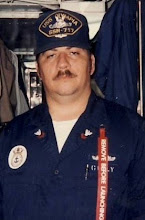


Note: Thorsness is one of seven Eagle Scouts who have been awarded the Medal of Honor.

04 May 2007

"The Ballad of East and West"

I said once that Rudyard Kipling was my favourite poet. And here's my favourite, by far, of his poems. It's a bit long, perhaps, but I'm going to give you the entire thing, not just bits and bobs.

"The Ballad of East and West"

Oh, East is East, and West is West, and never the twain shall meet,
Till Earth and Sky stand presently at God's great Judgment Seat;
But there is neither East nor West, Border, nor Breed, nor Birth,
When two strong men stand face to face, tho' they come from the ends of the earth!

Kamal is out with twenty men to raise the Border-side,
And he has lifted the Colonel's mare that is the Colonel's pride:
He has lifted her out of the stable-door between the dawn and the day,
And turned the calkins upon her feet, and ridden her far away.
Then up and spoke the Colonel's son that led a troop of the Guides:
"Is there never a man of all my men can say where Kamal hides?"
Then up and spoke Mahommed Khan, the son of the Ressaldar:
"If ye know the track of the morning-mist, ye know where his pickets are.
At dusk he harries the Abazai -- at dawn he is into Bonair,
But he must go by Fort Bukloh to his own place to fare,
So if ye gallop to Fort Bukloh as fast as a bird can fly,
By the favour of God ye may cut him off ere he win to the Tongue of Jagai.
But if he be past the Tongue of Jagai, right swiftly turn ye then,
For the length and the breadth of that grisly plain is sown with Kamal's men.
There is rock to the left, and rock to the right, and low lean thorn between,
And ye may hear a breech-bolt snick where never a man is seen."
The Colonel's son has taken a horse, and a raw rough dun was he,
With the mouth of a bell and the heart of Hell and the head of the gallows-tree.
The Colonel's son to the Fort has won, they bid him stay to eat --
Who rides at the tail of a Border thief, he sits not long at his meat.
He's up and away from Fort Bukloh as fast as he can fly,
Till he was aware of his father's mare in the gut of the Tongue of Jagai,
Till he was aware of his father's mare with Kamal upon her back,
And when he could spy the white of her eye, he made the pistol crack.
He has fired once, he has fired twice, but the whistling ball went wide.
"Ye shoot like a soldier," Kamal said. "Show now if ye can ride."
It's up and over the Tongue of Jagai, as blown dustdevils go,
The dun he fled like a stag of ten, but the mare like a barren doe.
The dun he leaned against the bit and slugged his head above,
But the red mare played with the snaffle-bars, as a maiden plays with a glove.
There was rock to the left and rock to the right, and low lean thorn between,
And thrice he heard a breech-bolt snick tho' never a man was seen.
They have ridden the low moon out of the sky, their hoofs drum up the dawn,
The dun he went like a wounded bull, but the mare like a new-roused fawn.
The dun he fell at a water-course -- in a woeful heap fell he,
And Kamal has turned the red mare back, and pulled the rider free.
He has knocked the pistol out of his hand -- small room was there to strive,
"'Twas only by favour of mine," quoth he, "ye rode so long alive:
There was not a rock for twenty mile, there was not a clump of tree,
But covered a man of my own men with his rifle cocked on his knee.
If I had raised my bridle-hand, as I have held it low,
The little jackals that flee so fast were feasting all in a row:
If I had bowed my head on my breast, as I have held it high,
The kite that whistles above us now were gorged till she could not fly."
Lightly answered the Colonel's son: "Do good to bird and beast,
But count who come for the broken meats before thou makest a feast.
If there should follow a thousand swords to carry my bones away,
Belike the price of a jackal's meal were more than a thief could pay.
They will feed their horse on the standing crop, their men on the garnered grain,
The thatch of the byres will serve their fires when all the cattle are slain.
But if thou thinkest the price be fair, -- thy brethren wait to sup,
The hound is kin to the jackal-spawn, -- howl, dog, and call them up!
And if thou thinkest the price be high, in steer and gear and stack,
Give me my father's mare again, and I'll fight my own way back!"
Kamal has gripped him by the hand and set him upon his feet.
"No talk shall be of dogs," said he, "when wolf and gray wolf meet.
May I eat dirt if thou hast hurt of me in deed or breath;
What dam of lances brought thee forth to jest at the dawn with Death?"
Lightly answered the Colonel's son: "I hold by the blood of my clan:
Take up the mare for my father's gift -- by God, she has carried a man!"
The red mare ran to the Colonel's son, and nuzzled against his breast;
"We be two strong men," said Kamal then, "but she loveth the younger best.
So she shall go with a lifter's dower, my turquoise-studded rein,
My broidered saddle and saddle-cloth, and silver stirrups twain."
The Colonel's son a pistol drew and held it muzzle-end,
"Ye have taken the one from a foe," said he; "will ye take the mate from a friend?"
"A gift for a gift," said Kamal straight; "a limb for the risk of a limb.
Thy father has sent his son to me, I'll send my son to him!"
With that he whistled his only son, that dropped from a mountain-crest --
He trod the ling like a buck in spring, and he looked like a lance in rest.
"Now here is thy master," Kamal said, "who leads a troop of the Guides,
And thou must ride at his left side as shield on shoulder rides.
Till Death or I cut loose the tie, at camp and board and bed,
Thy life is his -- thy fate it is to guard him with thy head.
So, thou must eat the White Queen's meat, and all her foes are thine,
And thou must harry thy father's hold for the peace of the Border-line,
And thou must make a trooper tough and hack thy way to power --
Belike they will raise thee to Ressaldar when I am hanged in Peshawur."

They have looked each other between the eyes, and there they found no fault,
They have taken the Oath of the Brother-in-Blood on leavened bread and salt:
They have taken the Oath of the Brother-in-Blood on fire and fresh-cut sod,
On the hilt and the haft of the Khyber knife, and the Wondrous Names of God.
The Colonel's son he rides the mare and Kamal's boy the dun,
And two have come back to Fort Bukloh where there went forth but one.
And when they drew to the Quarter-Guard, full twenty swords flew clear --
There was not a man but carried his feud with the blood of the mountaineer.
"Ha' done! ha' done!" said the Colonel's son. "Put up the steel at your sides!
Last night ye had struck at a Border thief -- to-night 'tis a man of the Guides!"

Oh, East is East, and West is West, and never the twain shall meet,
Till Earth and Sky stand presently at God's great Judgment Seat;
But there is neither East nor West, Border, nor Breed, nor Birth,
When two strong men stand face to face, tho' they come from the ends of the earth!


Originally published December, 1889, in MacMillan's Magazine.