Sweet thoughts from a child.
H/T to Tam.


getting old?
6 years ago

The Pentagon has recommended that the White House consider awarding the Medal of Honor to a living soldier for the first time since the Vietnam War, according to U.S. officials.
The soldier, whose nomination must be reviewed by the White House, ran through a wall of enemy fire in Afghanistan's Korengal Valley in fall 2007 in an attempt to push back Taliban fighters who were close to overrunning his squad. U.S. military officials said his actions saved the lives of about half a dozen men.
It is possible that the White House could honor the soldier's heroism with a decoration other than the Medal of Honor, the nation's highest award for valor.
*******
The nomination comes after several years of complaints from lawmakers, military officers and Defense Secretary Robert M. Gates that the Pentagon had become so cautious that only troops whose bravery resulted in death were being considered for the Medal of Honor. Gates "finds it impossible to believe that there is no one who has performed a valorous act deserving of the Medal of Honor who has lived to tell about it," said Pentagon spokesman Geoff Morrell, who declined to comment on specific nominations.
George W. Bush similarly lamented during the latter days of his second term as president that he had never had an opportunity to present the award to a living recipient.
*******
There are at least three Medal of Honor nominations, including the one at the White House, working through the system. The three nominees served in sparsely populated valleys in eastern Afghanistan that U.S. troops have abandoned in recent years.
The valleys, which are within 30 miles of each other, are dominated by treacherous, mountainous terrain that frequently allowed enemy fighters to move within close range of U.S. forces before launching their attack. The remote nature of the valleys meant that troops often had to fight for an hour before attack helicopters arrived on the scene to drive back the enemy.
 Having finished reading the Newbery Medal winners, I'm continuing with the books which have been awarded the Andrew Carnegie Medal - the British equivalent of the Newbery Medal, now awarded by the Chartered Institute of Library and Information Professionals (CILIP).
 Changes - modern fantasy, by Jim Butcher
 Only 11 books last month, with no rereads. To reach my goal of 210 books this year, I have to average 17.5 per month, so I've currently fallen a bit behind - mainly because of reading a 700-page book (Major Ingredients).
 Citation: For matchless gallantry and inspiring leadership whilst commanding his battalion during the Dieppe raid on the 19th August, 1942.
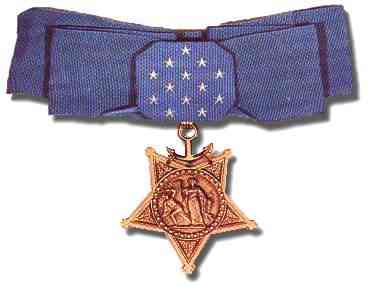 Citation: For extraordinary heroism and conspicuous gallantry in action above and beyond the call of duty while serving with a company of marines in combat against enemy Japanese forces in the Solomon Islands on 26 October 1942. When the enemy broke through the line directly in front of his position, P/Sgt. Paige, commanding a machinegun section with fearless determination, continued to direct the fire of his gunners until all his men were either killed or wounded. Alone, against the deadly hail of Japanese shells, he fought with his gun and when it was destroyed, took over another, moving from gun to gun, never ceasing his withering fire against the advancing hordes until reinforcements finally arrived. Then, forming a new line, he dauntlessly and aggressively led a bayonet charge, driving the enemy back and preventing a breakthrough in our lines. His great personal valor and unyielding devotion to duty were in keeping with the highest traditions of the U.S. Naval Service.
The Carnegie Medal, for an outstanding book for children: The Graveyard Book, by Neil Gaiman.
(Review here.)
The Kate Greenaway Medal, for distinguished illustration in a book for children: Harry & Hopper, illustrated by Freya Blackwood and written by Margaret Wild.
(Brief review here.)

 Citation: For most conspicuous bravery near Maktau (East Africa) on 3rd September, 1915.
 Citation: On 16 June 1943, Maj. Zeamer (then Capt.) volunteered as pilot of a [Boeing B-17E] bomber on an important photographic mapping mission covering the formidably defended area in the vicinity of Buka, Solomon Islands. While photographing the Buka airdrome. his crew observed about 20 enemy fighters on the field, many of them taking off. Despite the certainty of a dangerous attack by this strong force, Maj. Zeamer proceeded with his mapping run, even after the enemy attack began. In the ensuing engagement, Maj. Zeamer sustained gunshot wounds in both arms and legs, 1 leg being broken. Despite his injuries, he maneuvered the damaged plane so skillfully that his gunners were able to fight off the enemy during a running fight which lasted 40 minutes. The crew destroyed at least 5 hostile planes, of which Maj. Zeamer himself shot down 1. Although weak from loss of blood, he refused medical aid until the enemy had broken combat. He then turned over the controls, but continued to exercise command despite lapses into unconsciousness, and directed the flight to a base 580 miles away. In this voluntary action, Maj. Zeamer, with superb skill, resolution, and courage, accomplished a mission of great value.Citation: For conspicuous gallantry and intrepidity in action above and beyond the call of duty. On 16 June 1943, 2d Lt. Sarnoski volunteered as bombardier of a [Boeing B-17E] crew on an important photographic mapping mission covering the heavily defended Buka area, Solomon Islands. When the mission was nearly completed, about 20 enemy fighters intercepted. At the nose guns, 2d Lt. Sarnoski fought off the first attackers, making it possible for the pilot to finish the plotted course. When a coordinated frontal attack by the enemy extensively damaged his bomber, and seriously injured 5 of the crew, 2d Lt. Sarnoski, though wounded, continued firing and shot down 2 enemy planes. A 20-millimeter shell which burst in the nose of the bomber knocked him into the catwalk under the cockpit. With indomitable fighting spirit, he crawled back to his post and kept on firing until he collapsed on his guns. 2d Lt. Sarnoski by resolute defense of his aircraft at the price of his life, made possible the completion of a vitally important mission.
 Citation: On 13th July, 1900, during the attack on Tientsin City, a very heavy cross-fire was brought to bear on the Naval Brigade, and there were several casualties. among those who fell was one A.B., I. McCarthy, shot about 50 yards short of cover.Citation: Private Barney F. Hajiro distinguished himself by extraordinary heroism in action on 19, 22, and 29 October 1944, in the vicinity of Bruyeres and Biffontaine, eastern France. Private Hajiro, while acting as a sentry on top of an embankment on 19 October 1944, in the vicinity of Bruyeres, France, rendered assistance to allied troops attacking a house 200 yards away by exposing himself to enemy fire and directing fire at an enemy strong point. He assisted the unit on his right by firing his automatic rifle and killing or wounding two enemy snipers. On 22 October 1944, he and one comrade took up an outpost security position about 50 yards to the right front of their platoon, concealed themselves, and ambushed an 18-man, heavily armed, enemy patrol, killing two, wounding one, and taking the remainder as prisoners. On 29 October 1944, in a wooded area in the vicinity of Biffontaine, France, Private Hajiro initiated an attack up the slope of a hill referred to as "Suicide Hill" by running forward approximately 100 yards under fire. He then advanced ahead of his comrades about 10 yards, drawing fire and spotting camouflaged machine gun nests. He fearlessly met fire with fire and single-handedly destroyed two machine gun nests and killed two enemy snipers. As a result of Private Hajiro's heroic actions, the attack was successful. Private Hajiro's extraordinary heroism and devotion to duty are in keeping with the highest traditions of military service and reflect great credit upon him, his unit, and the United States Army.Citation: In Normandy on 6th June, 1944, during the assault on the beaches and the Mont Fleury Battery, C.S.M. Hollis's Company Commander noticed that two of the pillboxes had been by-passed, and went with C.S.M. Hollis to see that they were clear. When they were 20 yards from the pillbox, a machine-gun opened fire from the slit and C.S.M. Hollis instantly rushed straight at the pillbox, firing his Sten gun. He jumped on top of the pillbox, re-charged his magazine, threw a grenade in through the door and fired his Sten gun into it, killing two Germans and making the remainder prisoner. He then cleared several Germans from a neighbouring trench. By his action, he undoubtedly saved his Company from being fired on heavily from the rear and enabled them to open the main beach exit.Citation: For conspicuous gallantry and intrepidity above and beyond the call of duty on 6 June 1944, near Colleville-sur-Mer, France. On D-day, Technician 5th Grade Pinder landed on the coast 100 yards off shore under devastating enemy machinegun and artillery fire which caused severe casualties among the boatload. Carrying a vitally important radio, he struggled towards shore in waist-deep water. Only a few yards from his craft he was hit by enemy fire and was gravely wounded. Technician 5th Grade Pinder never stopped. He made shore and delivered the radio. Refusing to take cover afforded, or to accept medical attention for his wounds, Technician 5th Grade Pinder, though terribly weakened by loss of blood and in fierce pain, on 3 occasions went into the fire-swept surf to salvage communication equipment. He recovered many vital parts and equipment, including another workable radio. On the 3rd trip he was again hit, suffering machinegun bullet wounds in the legs. Still this valiant soldier would not stop for rest or medical attention. Remaining exposed to heavy enemy fire, growing steadily weaker, he aided in establishing the vital radio communication on the beach. While so engaged this dauntless soldier was hit for the third time and killed. The indomitable courage and personal bravery of Technician 5th Grade Pinder was a magnificent inspiration to the men with whom he served.


John Finn, the oldest living Medal of Honor recipient, whose modest demeanor and lifestyle belied his legendary status as an American hero, died Thursday at age 100 at a Chula Vista veterans home.
He was assigned to Naval Air Station Kaneohe Bay on Dec. 7, 1941, when he found himself firing at Japanese planes from an exposed position for more than two hours despite being hit 21 times by bomb and bullet fragments.
*******
Finn was the oldest of 91 living recipients of the nation’s highest award for bravery in combat. The number of living Medal of Honor recipients from World War II is now 19; the oldest of those is Barney Hajiro, 93, of Hawaii.
*******
John William Finn was born July 27, 1909, in Los Angeles and enlisted in the Navy in 1926. Finn and his wife, who died in 1998, raised a son and several nephews and took in several children from the Campo Indian Reservation during their years in East County.
“He helped our people survive when our world was in turmoil and going through a changing process,” said Monique LaChappa, Campo tribal chairwoman. One of her uncles was among those helped by the Finns. “Some of the older elders would tell about how (the Finns) would feed our people. He was part of our survival. He understood us — not that he felt sorry for us, but he understood us.”
Finn is survived by a son, Joseph, of Lakeside; and several nieces and nephews.
 Citation: For extraordinary heroism distinguished service, and devotion above and beyond the call of duty. During the first attack by Japanese airplanes on the Naval Air Station, Kaneohe Bay, on 7 December 1941, Lt. Finn promptly secured and manned a .50-caliber machinegun mounted on an instruction stand in a completely exposed section of the parking ramp, which was under heavy enemy machinegun strafing fire. Although painfully wounded many times, he continued to man this gun and to return the enemy's fire vigorously and with telling effect throughout the enemy strafing and bombing attacks and with complete disregard for his own personal safety. It was only by specific orders that he was persuaded to leave his post to seek medical attention. Following first aid treatment, although obviously suffering much pain and moving with great difficulty, he returned to the squadron area and actively supervised the rearming of returning planes. His extraordinary heroism and conduct in this action were in keeping with the highest traditions of the U.S. Naval Service.
 The Off-Islanders - fiction, by Nathaniel Benchley *