03 July 2011

Victoria Cross: E. P. Leach

EDWARD PEMBERTON LEACH

Captain, Royal Engineers

Born: 2 April 1847, Londonderry, County Londonderry, Ireland
Died: 27 April 1913, Caddenabbia, Lake Como, Italy

Citation: For having, in action with the Shinwarris near Maidanah, Afghanistan, on the 17th March, 1879, when covering the retirement of the Survey Escort who were carrying Lieutenant Barclay, 45th Sikhs, mortally wounded, behaved with the utmost gallantry in charging, with some men of the 45th Sikhs, a very much larger number of the enemy.
In this encounter Captain Leach killed two or three of the enemy himself, and he received a severe wound from an Afghan knife in the left arm. Captain Leach's determination and gallantry in this affair, in attacking and driving back the enemy from the last position, saved the whole party from annihilation.

[London Gazette issue 24790 dated 9 Dec 1879, published 9 Dec 1879.]


Note: The Shinwari are a Pashtun tribe of western Pakistan and eastern Afghanistan.

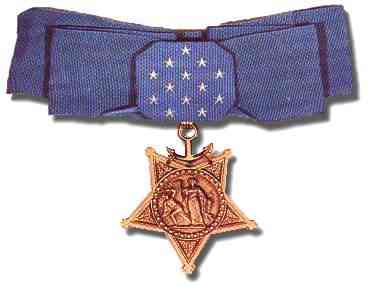
Medal of Honor: J. K. Koelsch

JOHN KELVIN KOELSCH

Lieutenant (Junior Grade), US Navy; Utility Helicopter Squadron 2

Born: 22 December 1923, London, England
Died: 16 October 1951, North Korea

Citation: For conspicuous gallantry and intrepidity at the risk of his life above and beyond the call of duty while serving with a Navy helicopter rescue unit [in North Korea, on 3 July 1951]. Although darkness was rapidly approaching when information was received that a marine aviator had been shot down and was trapped by the enemy in mountainous terrain deep in hostile territory, Lt. (J.G.) Koelsch voluntarily flew a [Sikorsky HO3S-1] helicopter to the reported position of the downed airman in an attempt to effect a rescue. With an almost solid overcast concealing everything below the mountain peaks, he descended in his unarmed and vulnerable aircraft without the accompanying fighter escort to an extremely low altitude beneath the cloud level and began a systematic search. Despite the increasingly intense enemy fire, which struck his helicopter on 1 occasion, he persisted in his mission until he succeeded in locating the downed pilot, who was suffering from serious burns on the arms and legs. While the victim was being hoisted into the aircraft, it was struck again by an accurate burst of hostile fire and crashed on the side of the mountain. Quickly extricating his crewmen and the aviator from the wreckage, Lt. (J.G.) Koelsch led them from the vicinity in an effort to escape from hostile troops, evading the enemy forces for 9 days and rendering such medical attention as possible to his severely burned companion until all were captured. Up to the time of his death while still a captive of the enemy, Lt. (J.G.) Koelsch steadfastly refused to aid his captors in any manner and served to inspire his fellow prisoners by his fortitude and consideration for others. His great personal valor and heroic spirit of self-sacrifice throughout sustain and enhance the finest traditions of the U.S. Naval Service.


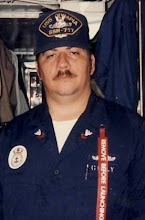
Note: USS Koelsch (DE 1049/FF 1049) was named in his honour.

02 July 2011

Hue test

According to this test, one out of 255 women and one out of 12 men have some form of color vision deficiency. Try the test - arranging differently coloured blocks according to their hue - and see how well you do. A perfect score is 0; I got 13.


H/T to Jenny.

01 July 2011

Honours

The Queen's Birthday Honours List was released on 11 June. Reading through it, I see:
Order of the British Empire
Commanders of the Order of the British Empire (CBE)


Colin FIRTH
Actor. For services to Drama.
(London, W1D)

Members of the Order of the British Empire (MBE)

Julia Catherine, Mrs DONALDSON
Author and Playwright. For services to Literature.
(London, W8)

Firth received this year's Best Actor Oscar for his role as King George VI in The King's Speech; I know him from The Importance of Being Earnest. Donaldson is the author of numerous children's books, including The Gruffalo.

House colour


You Should Live in a Blue House


You are an intense thinker, but you also have a calm about you.

You spend a lot of time ruminating, trying to figure out this world you live in.


Friends think you're wise, and they come to you first for advice.

You are a realist, and you tell it like it is - even if how it is isn't pretty.


Anybody have some blue paint?

Carnegie Medal books

Having finished reading the Newbery Medal winners in August of '09, I'm continuing with the books which have been awarded the Andrew Carnegie Medal - the British equivalent of the Newbery Medal, now awarded by the Chartered Institute of Library and Information Professionals (CILIP).

The medal was first awarded in 1937, for the best children's book of 1936, but there have been three years when no book was considered suitable, so there are only 72 winners thus far. In addition to the gold medal, the winner receives £500 worth of books to donate to a library of his/her/their choice.

Here's the list. (Dates marked in red indicate the six books I had already read before last year; dates in purple indicate the ones I've read since.)

1936: Pigeon Post, by Arthur Ransome
1937: The Family from One End Street, by Eve Garnett
1938: The Circus is Coming (aka Circus Shoes), by Noel Streatfield
1939: Radium Woman, by Eleanor Doorly
1940: Visitors from London, by Kitty Barne
1941: We Couldn't Leave Dinah, by Mary Treadgold
1942: The Little Grey Men, by 'BB' (D J Watkins-Pitchford)
1943: Prize withheld as no book was considered suitable
1944: The Wind on the Moon, by Eric Linklater
1945: Prize withheld as no book was considered suitable
1946: The Little White Horse, by Elizabeth Goudge
1947: Collected Stories for Children, Walter De La Mare
1948: Sea Change, by Richard Armstrong
1949: The Story of Your Home, by Agnes Allen
1950: The Lark on the Wing, by Elfrida Vipont
1951: The Wool-pack, by Cynthia Harnett
1952: The Borrowers, by Mary Norton
1953: A Valley Grows Up, by Edward Osmond
1954: Knight Crusader, by Ronald Welch (Felton Ronald Oliver)
1955: The Little Bookroom, by Eleanor Farjeon
1956: The Last Battle, by C S Lewis
1957: A Grass Rope, by William Mayne
1958: Tom's Midnight Garden, by Philipa Pearce
1959: The Lantern Bearers, by Rosemary Sutcliff
1960: The Making of Man, by Dr I W Cornwall
1961: A Stranger at Green Knowe, by Lucy M Boston
1962: The Twelve and the Genii, by Pauline Clarke
1963: Time of Trial, by Hester Burton
1964: Nordy Bank, by Sheena Porter
1965: The Grange at High Force, by Philip Turner
1966: Prize withheld as no book was considered suitable
1967: The Owl Service, by Alan Garner
1968: The Moon in the Cloud, by Rosemary Harris
1969: The Edge of the Cloud, by Kathleen Peyton
1970: The God Beneath the Sea, by Leon Garfield and Edward Blishen
1971: Josh, by Ivan Southall
1972: Watership Down, by Richard Adams
1973: The Ghost of Thomas Kempe, by Penelope Lively
1974: The Stronghold, by Mollie Hunter
1975: The Machine Gunners, by Robert Westall
1976: Thunder and Lightnings, by Jan Mark
1977: The Turbulent Term of Tyke Tiler, by Gene Kemp
1978: The Exeter Blitz, by David Rees
1979: Tulku, by Peter Dickinson
1980: City of Gold and Other Stories from the Old Testament, by Peter Dickinson
1981: The Scarecrows, by Robert Westall
1982: The Haunting, by Margaret Mahy
1983: Handles, by Jan Mark
1984: The Changeover, by Margaret Mahy
1985: Storm, by Kevin Crossley-Holland
1986: Granny was a Buffer Girl, by Berlie Doherty
1987: The Ghost Drum, by Susan Price
1988: A Pack of Lies, by Geraldine McCaughrean
1989: Goggle-eyes, by Anne Fine
1990: Wolf, by Gillian Cross
1991: Dear Nobody, by Berlie Doherty
1992: Flour Babies, by Anne Fine
1993: Stone Cold, by Robert Swindells
1994: Whispers in the Graveyard, by Theresa Breslin
1995: Northern Lights, by Philip Pullman*
1996: Junk, by Melvin Burgess
1997: River Boy, by Tim Bowler
1998: Skellig, by David Almond
1999: Postcards From No Man's Land, by Aidan Chambers
2000: The Other Side of Truth, by Beverley Naidoo
2001: The Amazing Maurice and his Educated Rodents, by Terry Pratchett
2002: Ruby Holler, by Sharon Creech
2003: A Gathering Light, by Jennifer Donnelly**
2004: Millions, by Frank Cottrell Boyce
2005: Tamar, by Mal Peet
2006: ***
2007: Just in Case, by Meg Rosoff
2008: Here Lies Arthur, by Philip Reeve
2009: Bog Child, by Siobhan Dowd
2010: The Graveyard Book, by Neil Gaiman
2011: Monsters of Men, by Patrick Ness

So the count now is 52 down, 20 to go. The ILLs are still coming in - my thanks to the Connecticut State Library Library Service Centre, Middletown CT, and the Babcock Library, Ashford CT.

* His Dark Materials, Book 1. Published in the US as The Golden Compass.

** Published in the US as A Northern Light.

*** Up through the award for 2005, the winners were referred to by the year of publication. Beginning in 2007, the winners were referred to by the year the award was given, as with the American Newbery Medal. Thus there is no "2006 winner" of the Carnegie Medal. Tamar, the 2005 winner, was published in '05, and received the medal in '06. Just in Case, the 2007 winner, was published in '06 and received the award in '07.

Book list - Jun 11

King David's Spaceship - SF, by Jerry Pournelle *
African Exodus: The Origins of Modern Humanity - palaeoanthropology, by Chris Stringer and Robin McKie
Cockatiels at Seven - mystery, by Donna Andrews
Agatha H and the Airship City - steampunk, by Phil & Kaja Foglio
Mirkheim - SF, by Poul Anderson *
Swan for the Money - mystery, by Donna Andrews
The People of the Wind - SF, by Poul Anderson
The Man Who Counts - SF, by Poul Anderson *
Thunder and Lightnings - children's, by Jan Mark (Carnegie Medal 1976)
Roar of the Tiger - WWII memoirs, by James H Howard
High Justice - SF (short stories), by Jerry Pournelle
Ghost Drum - children's fantasy, by Susan Price (Carnegie Medal 1987)


Twelve books last month, with three rereads (marked by asterisks). I'm not setting an official goal this year, though I do expect to read around 150 books.

The two Carnegie Medal winners bring me up to 52 of 72. My thanks to the Connecticut State Library Library Service Centre, Middletown CT, and the Babcock Library, Ashford CT, for the ILLs.

27 June 2011

Carnegie and Greenaway Medal winners announced

The winners are:
The Carnegie Medal, for an outstanding book for children: Monsters of Men, by Patrick Ness.

(Reviews here and here. Series review here.)

The Kate Greenaway Medal, for distinguished illustration in a book for children: FArTHER, by Grahame Baker-Smith.

(Review here and author/illustrator interview here.)

ZUI this article from The Guardian.

26 June 2011

Victoria Cross: Guise, Hill and Graham

JOHN CHRISTOPHER GUISE

Major, 90th Regiment

Born: 27 July 1826, Highnam, Gloucestershire
Died: 5 February 1895, Gorey, County Wexford, Ireland

Citation: For conspicuous gallantry in action on the 16th and 17th of November, 1857, at Lucknow.
Elected by the Officers of the Regiment.

[London Gazette issue 22212 dated 24 Dec 1858, published 24 Dec 1858.]


SAMUEL HILL

Serjeant, 90th Regiment

Born: 1826, Glenavy, County Antrim, Ireland
Died: 21 February 1863, Meerut, India

Citation: For gallant conduct on the 16th and 17th of November, 1857, at the storming of the Secundra Bagh at Lucknow, in saving the life of Captain Irby, warding off with his firelock a tulwar cut made at his head by a sepoy, and in going out under a heavy fire to help two wounded men. Also for general gallant conduct throughout the operations for the relief of the Lucknow garrison.
Elected by the non-commissioned officers of the Regiment.

[London Gazette issue 22212 dated 24 Dec 1858, published 24 Dec 1858.]


PATRICK GRAHAM

Private, 90th Regiment

Born: 1837, Dublin, Ireland
Died: 3 June 1875, Dublin, Ireland

Citation: For bringing in a wounded comrade under a very heavy fire, on the 17th of November, 1857, at Lucknow.
Elected by the private soldiers of the Regiment.

[London Gazette issue 22212 dated 24 Dec 1858, published 24 Dec 1858.]

Medal of Honor: J. P. Fleming

JAMES PHILIP FLEMING

Captain (then First Lieutenant), US Air Force; 20th Special Operations Squadron

Born: 12 March 1943, Sedalia, Missouri
Died: TBD

Citation: For conspicuous gallantry and intrepidity in action at the risk of his life above and beyond the call of duty. Capt. Fleming (then 1st Lt.) distinguished himself as the Aircraft Commander of a UH-1F transport Helicopter. Capt. Fleming went to the aid of a 6-man special forces long range reconnaissance patrol that was in danger of being overrun by a large, heavily armed hostile force [near Duc Co, Republic of Vietnam, on 26 November 1968]. Despite the knowledge that 1 helicopter had been downed by intense hostile fire, Capt. Fleming descended, and balanced his helicopter on a river bank with the tail boom hanging over open water. The patrol could not penetrate to the landing site and he was forced to withdraw. Dangerously low on fuel, Capt. Fleming repeated his original landing maneuver. Disregarding his own safety, he remained in this exposed position. Hostile fire crashed through his windscreen as the patrol boarded his helicopter. Capt. Fleming made a successful takeoff through a barrage of hostile fire and recovered safely at a forward base. Capt. Fleming's profound concern for his fellowmen, and at the risk of his life above and beyond the call of duty are in keeping with the highest traditions of the U.S. Air Force and reflect great credit upon himself and the Armed Forces of his country.

19 June 2011

Victoria Cross: T. Wilkinson

THOMAS WILKINSON

Bombardier, Royal Marine Artillery

Born: 1831, York, Yorkshire
Died: 22 September 1887, York, Yorkshire

Citation: Specially recommended for gallant conduct in the advanced Batteries, 7th June, 1855, in placing sand-bags to repair the work under a galling fire; his name having been sent up on the occasion, as worthy of special notice, by the Commanding Officer of the Artillery of the Right Attack.
(Letter from Colonel Wesley, Deputy Adjutant-General, Royal Marines.)

[London Gazette issue 21971 dated 24 Feb 1857, published 24 Feb 1857.]

Medal of Honor: A. J. Tomlin

ANDREW JACKSON TOMLIN

Corporal, US Marine Corps; USS Wabash

Born: 15 March 1845, Goshen, New Jersey
Died: 1 November 1906, Goshen, New Jersey

Citation: As corporal of the guard on board the U.S.S. Wabash during the assault on Fort Fisher, on 15 January 1865. As 1 of 200 marines assembled to hold a line of entrenchments in the rear of the fort which the enemy threatened to attack in force following a retreat in panic by more than two-thirds of the assaulting ground forces, Cpl. Tomlin took position in line and remained until morning when relief troops arrived from the fort. When one of his comrades was struck down by enemy fire, he unhesitatingly advanced under a withering fire of musketry into an open plain close to the fort and assisted the wounded man to a place of safety.

13 June 2011

Give a girlfriend a book


15 June, in case you weren't aware (you probably weren't) is
National Give A Girlfriend A Book Day.


Make it happen.


12 June 2011

Victoria Cross: J. W. Foote

JOHN WEIR FOOTE

Honorary Captain, Canadian Chaplain Services

Born: 5 May 1904, Madoc, Ontario, Canada
Died: 2 May 1988, Norwood, Ontario, Canada

Citation: At Dieppe, on 19th August, 1942, Honorary Captain Foote, Canadian Chaplain Services, was Regimental Chaplain with the Royal Hamilton Light Infantry.
Upon landing on the beach under heavy fire he attached himself to the Regimental Aid Post which had been set up in a slight depression on the beach, but which was only sufficient to give cover to men lying down. During the subsequent period of approximately eight hours, while the action continued, this officer not only assisted the Regimental Medical Officer in ministering to the wounded in the Regimental Aid Post, but time and again left this shelter to inject morphine, give first-aid and carry wounded personnel from the open beach to the Regimental Aid Post. On these occasions, with utter disregard for his personal safety, Honorary Captain Foote exposed himself to an inferno of fire and saved many lives by his gallant efforts. During the action, as the tide went out, the Regimental Aid Post was moved to the shelter of a stranded landing craft. Honorary Captain Foote continued tirelessly and courageously to carry wounded men from the exposed beach to the cover of the landing craft. He also removed wounded from inside the landing craft when ammunition had been set on fire by enemy shells. When landing craft appeared he carried wounded from the Regimental Aid Post to the landing craft through very heavy fire.
On several occasions this officer had the opportunity to embark but returned to the beach as his chief concern was the care and evacuation of the wounded. He refused a final opportunity to leave the shore, choosing to suffer the fate of the men he had ministered to for over three years.
Honorary Captain Foote personally saved many lives by his efforts and his example inspired all around him. Those who observed him state that the calmness of this heroic officer, as he walked about, collecting the wounded on the fire-swept beach will never be forgotten.

[London Gazette issue 34766 dated 14 Feb 1946, published 12 Feb 1946.]

Medal of Honor: W. D. Halyburton, Jr.

WILLIAM DAVID HALYBURTON JR

Pharmacist's Mate Second Class, US Naval Reserve; 2d Battalion, 5th Marines, 1st Marine Division

Born: 2 August 1924, Canton, North Carolina
Died: 10 May 1945, Okinawa

Citation: For conspicuous gallantry and intrepidity at the risk of his life above and beyond the call of duty while serving with a Marine Rifle Company in the 2d Battalion, 5th Marines, 1st Marine Division, during action against enemy Japanese forces on Okinawa Shima in the Ryukyu Chain, 10 May 1945. Undaunted by the deadly accuracy of Japanese counterfire as his unit pushed the attack through a strategically important draw, Halyburton unhesitatingly dashed across the draw and up the hill into an open fire-swept field where the company advance squad was suddenly pinned down under a terrific concentration of mortar, machinegun and sniper fire with resultant severe casualties. Moving steadily forward despite the enemy's merciless barrage, he reached the wounded marine who lay farthest away and was rendering first aid when his patient was struck for the second time by a Japanese bullet. Instantly placing himself in the direct line of fire, he shielded the fallen fighter with his own body and staunchly continued his ministrations although constantly menaced by the slashing fury of shrapnel and bullets falling on all sides. Alert, determined and completely unselfish in his concern for the helpless marine, he persevered in his efforts until he himself sustained mortal wounds and collapsed, heroically sacrificing himself that his comrade might live. By his outstanding valor and unwavering devotion to duty in the face of tremendous odds, Halyburton sustained and enhanced the highest traditions of the U.S. Naval Service. He gallantly gave his life in the service of his country.


Note: USS Halyburton (FFG 40) was named in his honour.

07 June 2011

RIP: John Alison

John R Alison
21 Nov 1912 - 6 Jun 2011


ZUI this article from the Wall Street Journal:
John Alison was a U.S. combat ace in World War II and an innovator in developing Air Force commando tactics.

Maj. Gen. Alison, who died Monday at age 98, served in the China-Burma-India and Pacific theaters, was shot down at least twice and had seven confirmed kills as well as a number of probable kills.

An intimate of Air Force commander Henry "Hap" Arnold, he also advised Gen. Dwight Eisenhower on using gliders to ferry troops on D-Day.

*******

...Mr. Alison initiated a daring night interception of Japanese bombers, downing two. His P-40 fighter—ill-equipped for night fighting—was badly shot up and Mr. Alison ended up ditching in a river. He was awarded a Distinguished Service Cross for the action, in part because of the novelty of the night kills.

In 1944, as co-commanders of the first Air Commando Force, Mr. Alison and Lt. Col. Philip Cochran organized an unprecedented operation inside Burma—now Myanmar—then occupied by experienced Japanese jungle fighters.

Using a combined force of fighter planes, bombers, transports, gliders, ambulance planes and newfangled helicopters, the commanders established fortified bases behind Japanese lines in Burma, greatly facilitating a larger assault from British forces. Mr. Alison personally led the force into action, piloting a glider and 15 men to an improvised landing area in a teak forest.

In June 1942, he reported to China to serve as deputy squadron commander in Maj David Lee "Tex" Hill's 75th Fighter Squadron, the USAAF successor to the American Volunteer Group (the Flying Tigers). I remember reading about Alison in a book about the AVG when I was a kid - a long time ago, but I recognised his name immediately when I saw it in the obituaries list.


Left to right: Maj John Alison, Major "Tex" Hill, Capt "Ajax" Baumler
and Lt Mack Mitchell

05 June 2011

George Cross: K. Smith

KENNETH SMITH

Signalman, Royal Corps of Signals; attached Long Range Desert Group

Born: 7 December 1920, Market Rasen, Lincolnshire
Died: 10 January 1945, Ist, Yugoslavia

Citation: The KING has been graciously pleased to approve the posthumous award of the George Cross, in recognition of most conspicuous gallantry in carrying out hazardous work in a very brave manner, to: —
No. 2328696 Signalman Kenneth SMITH, Royal Corps of Signals (Humby, near Grantham, Lincs.).

[London Gazette issue 37311 dated 19 Oct 1945, published 16 Oct 1945.]

Note: Smith was attached to an LRDG patrol based on the Adriatic island of Ist. Sabotage was a daily occurance. He found a time-bomb on a table at his detachment's billet, which was shared with civilians and their children. Realising that the bomb was ticking and could explode at any moment, he carried it out of the building. It exploded while he was still carrying it, and he was blown to pieces. He was the only casualty of the blast, and undoubtably saved many lives.

The island of Ist is now part of Croatia.

Victoria Cross: P. J. Badcoe

PETER JOHN BADCOE

Major, Royal Australian Infantry Corps; Australian Army Training Team Vietnam

Born: 11 January 1934, Malvern, South Australia, Australia
Died: 7 April 1967, Phú Thọ, Thừa Thiên-Huế Province, South Vietnam

Citation: 41400 Major PETER JOHN BADCOE was commissioned as a Second Lieutenant in the Australian Staff Corps in December 1952. He was allotted to the Royal Regiment of Australian Artillery in which he served in a number of Regimental and Staff postings until August 1965. He then transferred to the Royal Australian Infantry Corps and joined the Australian Army Training Team Vietnam in August 1966. He was posted as Sector Operations Officer in Thua Thien Province, South Vietnam.
On 23rd February 1967 he was acting as an Advisor to a Regional Force Company in support of a Sector operation in Phu Thu District. He monitored a radio transmission which stated that the Subsector Adviser, a United States Army Officer, had been killed and that his body was within 50 metres of an enemy machine gun position; further, the United States Medical Adviser had been wounded and was in immediate danger from the enemy. Major BADCOE with complete disregard for his own safety moved alone across 600 metres of fire-swept ground and reached the wounded Adviser, attended to him and ensured his future safety. He then organised a force of one platoon and led them towards the enemy post. His personal leadership, words of encouragement, and actions in the face of hostile enemy fire forced the platoon to successfully assault the enemy position and capture it, where he personally killed the machine gunners directly in front of him. He then picked up the body of the dead officer and ran back to the Command post over open ground still covered by enemy fire.
On 7th March 1967, at approximately 0645 hours, the Sector Reaction Company was deployed to Quang Dien Subsector to counter an attack by the Viet Cong on the Headquarters. Major BADCOE left the Command group after their vehicle broke down and a United States Officer was killed; he joined the Company Headquarters and personally led the company in an attack over open terrain to assault and capture a heavily defended enemy position. In the face of certain death and heavy losses his personal courage and leadership turned certain defeat into victory and prevented the enemy from capturing the District Headquarters.
On 7th April 1967, on an operation in Huong Tra District, Major BADCOE was with the 1st A.R.V.N. Division Reaction Company and some armoured personnel carriers. During the move forward to an objective the company came under heavy small arms fire and withdrew to a cemetery for cover, this left Major BADCOE and his radio operator about 50 metres in front of the leading elements, under heavy mortar fire. Seeing this withdrawal, Major BADCOE ran back to them, moved amongst them and by encouragement and example got them moving forward again. He then set out in front of the company to lead them on; the company stopped again under heavy fire but Major BADCOE continued on to cover and prepared to throw grenades, when he rose to throw, his radio operator pulled him down as heavy small arms fire was being brought to bear on them; he later got up again to throw a grenade and was hit and killed by a burst of machine gun fire. Soon after, friendly artillery fire was called in and the position was assaulted and captured.
Major BADCOE'S conspicuous gallantry and leadership on all these occasions was an inspiration to all, each action, ultimately, was successful, due entirely to his efforts, the final one ending in his death. His valour and leadership were in the highest traditions of the military profession and the Australian Regular Army.

[London Gazette issue 44431 dated 17 Oct 1967, published 13 Oct 1967.]

Medal of Honor: B. F. Hilliker

BENJAMIN FRANKLIN HILLIKER

Musician, Company A, 8th Wisconsin Infantry

Born: 23 May 1843, Golden, New York
Died: 18 October 1916, Los Angeles, California

Citation: When men were needed to oppose a superior Confederate force [at Mechanicsburg, Mississippi, on 4 June 1863,] he laid down his drum for a rifle and proceeded to the front of the skirmish line which was about 120 feet from the enemy. While on this volunteer mission and firing at the enemy he was hit in the head with a minie ball which passed through him. An order was given to "lay him in the shade; he won't last long." He recovered from this wound being left with an ugly scar.

04 June 2011

R-12 wreck located

According to this article from the International Business Times, an exploration team has located and documented the wreck of USS R-12 (SS 89) in 600 feet of water off the Florida Keys. R-12, in use as a training submarine, was lost for unknown reasons on 12 June 1943. Her CO, another officer and three enlisted men who were on watch on the bridge survived; the other 27 crewmen on board were lost, as were 13 trainees and two Brazilian Navy officers who were there to observe a torpedo exercise.