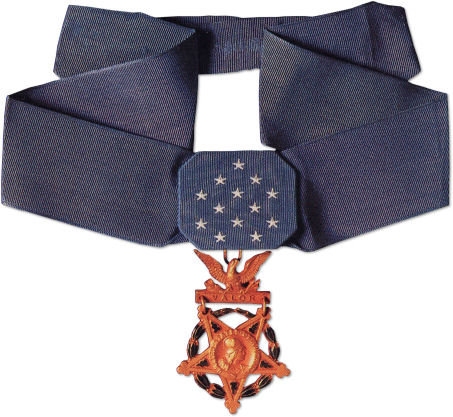
A Joint Base Lewis-McChord Ranger who lost his right hand while protecting fellow soldiers from a live grenade will become the second living service member to earn a Medal of Honor for actions in Afghanistan, the White House announced Tuesday.
Sgt. 1st Class Leroy Arthur Petry, 31, will receive his medal from President Barack Obama at a White House ceremony July 12. He continues to serve at Lewis-McChord with a 75th Ranger Regiment headquarters unit.
*******
Petry is not available for other interviews, and his regiment is not discussing his honor for now, a Ranger spokeswoman said.
Petry lost his hand and suffered shrapnel injuries during an operation in Paktya, Afghanistan, on May 26, 2008.
He was already wounded when an enemy fighter tossed a grenade into a chicken coop where he was taking cover with two other soldiers. He picked up the weapon, which exploded as he threw it and severed his hand.
*******
Petry, a New Mexico native, will be the ninth service member to earn a Medal of Honor during the wars in Iraq and Afghanistan. Seven of those were awarded posthumously.
Last year, Staff Sgt. Salvator Giunta became the first living, active-duty soldier to earn the military’s highest honor when Obama awarded him a Medal of Honor for his heroism in Afghanistan’s Korengal Valley with the 173rd Airborne Brigade Combat Team.
*******
Petry has deployed eight times in his Army career. He has received two Bronze Stars, a Purple Heart and three Army Commendation Medals.
He and his wife, Ashley, have four children, Brittany, Austin, Reagan and Landon.
 Dragonquest - SF, by Anne McCaffrey *
 Citation: For great gallantry on the night of the 23rd-24th November [1914], near Festubert, France, when the regiment was engaged in retaking and clearing the enemy out of our trenches, and, although wounded in two places in the head, and also in the arm, being one of the first to push round each successive traverse, in the face of severe fire from bombs and rifles at the closest range.
 Citation: For conspicuous gallantry and intrepidity in action at the risk of life above and beyond the call of duty, 23 June 1944 near Ploesti, Rumania, while flying as bombardier of a B17 type aircraft. On the bomb run 2d Lt. Kingsley's aircraft was severely damaged by intense flak and forced to drop out of formation but the pilot proceeded over the target and 2d Lt. Kingsley successfully dropped his bombs, causing severe damage to vital installations. The damaged aircraft, forced to lose altitude and to lag behind the formation, was aggressively attacked by 3 ME-109 aircraft, causing more damage to the aircraft and severely wounding the tail gunner in the upper arm. The radio operator and engineer notified 2d Lt. Kingsley that the tail gunner had been wounded and that assistance was needed to check the bleeding. 2d Lt. Kingsley made his way back to the radio room, skillfully applied first aid to the wound, and succeeded in checking the bleeding. The tail gunner's parachute harness and heavy clothes were removed and he was covered with blankets, making him as comfortable as possible. Eight ME-109 aircraft again aggressively attacked 2d Lt. Kingsley's aircraft and the ball turret gunner was wounded by 20mm. shell fragments. He went forward to the radio room to have 2d Lt. Kingsley administer first aid. A few minutes later when the pilot gave the order to prepare to bail out, 2d Lt. Kingsley immediately began to assist the wounded gunners in putting on their parachute harness. In the confusion the tail gunner's harness, believed to have been damaged, could not be located in the bundle of blankets and flying clothes which had been removed from the wounded men. With utter disregard for his own means of escape, 2d Lt. Kingsley unhesitatingly removed his parachute harness and adjusted it to the wounded tail gunner. Due to the extensive damage caused by the accurate and concentrated 20mm. fire by the enemy aircraft the pilot gave the order to bail out, as it appeared that the aircraft would disintegrate at any moment. 2d Lt. Kingsley aided the wounded men in bailing out and when last seen by the crewmembers he was standing on the bomb bay catwalk. The aircraft continued to fly on automatic pilot for a short distance, then crashed and burned. His body was later found in the wreckage. 2d Lt. Kingsley by his gallant heroic action was directly responsible for saving the life of the wounded gunner.
Paul J. Wiedorfer, 89, who as an Army private on Christmas Day 1944 charged two German machine-gun nests and single-handedly saved his platoon mates caught in an ambush, an act for which he received the Medal of Honor, died May 25 at the Baltimore VA Medical Center. His family said he had congestive heart failure.
Mr. Wiedorfer, who was born and grew up in Baltimore, was reportedly Maryland’s last surviving recipient of the Medal of Honor, the military’s highest award for valor.
He was 23 when his unit, part of Gen. George S. Patton’s Third Army, was sent to rescue American troops trapped in Bastogne, Belgium, during the first days of the Battle of the Bulge.
*******
“I was probably a little nuts when I did it,” he told the Baltimore Sun in 1995. “But someone was going to die if something didn’t get done.”
*******
Two months later, crossing the Saar River in Germany, Mr. Wiedorfer’s unit came under mortar fire. The soldier next to him was killed instantly. Mr. Wiedorfer was struck by shrapnel, and the blast shattered his leg and injured his hand. He recuperated at a hospital in England, where he was placed in traction.
One day, a fellow patient was reading the Stars and Stripes newspaper and informed Mr. Wiedorfer that he’d just received the Medal of Honor for his Christmas Day bravery.
*******
Mr. Wiedorfer’s wife, the former Alice Stauffer, died in 2008. A daughter, Nancy Mazer, died in 2010.
Survivors include three children, Randee Wiedorfer of Parkville, Md., Paul J. Wiedorfer Jr. of Baltimore and Gary Wiedorfer of Cocoa, Fla.; six grandchildren; and three great-grandchildren.
Citation: He alone made it possible for his company to advance until its objective was seized. Company G had cleared a wooded area [near Chaumont, Belgium,] of snipers, and [on 25 December 1944] 1 platoon was advancing across an open clearing toward another wood when it was met by heavy machinegun fire from 2 German positions dug in at the edge of the second wood. These positions were flanked by enemy riflemen. The platoon took cover behind a small ridge approximately 40 yards from the enemy position. There was no other available protection and the entire platoon was pinned down by the German fire. It was about noon and the day was clear, but the terrain extremely difficult due to a 3-inch snowfall the night before over ice-covered ground. Pvt. Wiedorfer, realizing that the platoon advance could not continue until the 2 enemy machinegun nests were destroyed, voluntarily charged alone across the slippery open ground with no protecting cover of any kind. Running in a crouched position, under a hail of enemy fire, he slipped and fell in the snow, but quickly rose and continued forward with the enemy concentrating automatic and small-arms fire on him as he advanced. Miraculously escaping injury, Pvt. Wiedorfer reached a point some 10 yards from the first machinegun emplacement and hurled a handgrenade into it. With his rifle he killed the remaining Germans, and, without hesitation, wheeled to the right and attacked the second emplacement. One of the enemy was wounded by his fire and the other 6 immediately surrendered. This heroic action by 1 man enabled the platoon to advance from behind its protecting ridge and continue successfully to reach its objective. A few minutes later, when both the platoon leader and the platoon sergeant were wounded, Pvt. Wiedorfer assumed command of the platoon, leading it forward with inspired energy until the mission was accomplished.
Citation: On the 9th of December, 1856, Captain Wood led the Grenadier Company, which formed the head of the assaulting column sent against Bushire. He was the first man on the parapet of the fort, where he was instantly attacked by a large number of the garrison, who suddenly sprang on him from a trench cut in the parapet itself. Citation: For conspicuous gallantry and intrepidity at the risk of his life above and beyond the call of duty as a diver engaged in rescue operations at West Loch, Pearl Harbor, 17 February 1945. Aware of the danger when 2 fellow divers were hopelessly trapped in a cave-in of steel wreckage while tunneling with jet nozzles under an LST sunk in 40 feet of water and 20 feet of mud. Hammerberg unhesitatingly went overboard in a valiant attempt to effect their rescue despite the certain hazard of additional cave-ins and the risk of fouling his lifeline on jagged pieces of steel imbedded in the shifting mud. Washing a passage through the original excavation, he reached the first of the trapped men, freed him from the wreckage and, working desperately in pitch-black darkness, finally effected his release from fouled lines, thereby enabling him to reach the surface. Wearied but undaunted after several hours of arduous labor, Hammerberg resolved to continue his struggle to wash through the oozing submarine, subterranean mud in a determined effort to save the second diver. Venturing still farther under the buried hulk, he held tenaciously to his purpose, reaching a place immediately above the other man just as another cave-in occurred and a heavy piece of steel pinned him crosswise over his shipmate in a position which protected the man beneath from further injury while placing the full brunt of terrific pressure on himself. Although he succumbed in agony 18 hours after he had gone to the aid of his fellow divers, Hammerberg, by his cool judgment, unfaltering professional skill and consistent disregard of all personal danger in the face of tremendous odds, had contributed effectively to the saving of his 2 comrades. His heroic spirit of self-sacrifice throughout enhanced and sustained the highest traditions of the U.S. Naval Service. He gallantly gave his life in the service of his country.Citation: At Geelhoutboom, on the 23rd November, 1901, Lieutenant Maygar galloped out and ordered the men of a detached post, which was being outflanked, to retire. The horse of one of them being shot under him, when the enemy were within 200 yards, Lieutenant Maygar dismounted and lifted him on to his own horse, which bolted into boggy ground, causing both of them to dismount. On extricating the horse and finding that it could not carry both, Lieutenant Maygar again put the man on its back, and told him to gallop for cover at once, he himself proceeding on foot. All this took place under a very heavy fire.Citation: For conspicuous gallantry and intrepidity at the risk of his life above and beyond the call of duty [on 16 February 1967]. During a reconnaissance patrol his platoon was suddenly engaged by intense machinegun fire hemming in the platoon on 3 sides. A defensive perimeter was hastily established, but the enemy added mortar and rocket fire to the deadly fusillade and assaulted the position from several directions. With complete disregard for his safety, P/Sgt. Smith moved through the deadly fire along the defensive line, positioning soldiers, distributing ammunition and encouraging his men to repeal the enemy attack. Struck to the ground by enemy fire which caused a severe shoulder wound, he regained his feet, killed the enemy soldier and continued to move about the perimeter. He was again wounded in the shoulder and stomach but continued moving on his knees to assist in the defense. Noting the enemy massing at a weakened point on the perimeter, he crawled into the open and poured deadly fire into the enemy ranks. As he crawled on, he was struck by a rocket. Moments later, he regained consciousness, and drawing on his fast dwindling strength, continued to crawl from man to man. When he could move no farther, he chose to remain in the open where he could alert the perimeter to the approaching enemy. P/Sgt. Smith perished, never relenting in his determined effort against the enemy. The valorous acts and heroic leadership of this outstanding soldier inspired those remaining members of his platoon to beat back the enemy assaults. P/Sgt. Smith's gallant actions were in keeping with the highest traditions of the U.S. Army and they reflect great credit upon him and the Armed Forces of his country.
Representatives from the families of two Soldiers -- Pfc. Anthony Kaho'ohanohano and Pfc. Henry Svehla, who gave their lives for their comrades in Korea -- proudly received the Medal of Honor from President Barack Obama in the East Room of the White House, May 2, 2011.
Members of the families flew to Washington, D.C., from their homes in Hawaii, Texas, and New Jersey. They were joined by with Sen. Daniel Akaka of Hawaii and Congressman Bill Pascrell of New Jersey, who both sponsored the provision in the National Defense Authorization Act authorizing the Army to award posthumously the highest honor for conspicuous gallantry and intrepidity at the risk of life above and beyond the call of duty.
Citation: Private First Class Anthony T. Kaho'ohanohano, Company H, 17th Infantry Regiment, 7th Infantry Division, distinguished himself by extraordinary heroism in action against the enemy in the vicinity of Chupa-ri, Korea, on 1 September 1951. On that date, Private First Class Kaho'ohanohano was in charge of a machine-gun squad supporting the defensive positioning of Company F when a numerically superior enemy force launched a fierce attack. Because of the enemy's overwhelming numbers, friendly troops were forced to execute a limited withdrawal. As the men fell back, Private First Class Kaho'ohanohano ordered his squad to take up more defensible positions and provide covering fire for the withdrawing friendly force. Although having been wounded in the shoulder during the initial enemy assault, Private First Class Kaho'ohanohano gathered a supply of grenades and ammunition and returned to his original position to face the enemy alone. As the hostile troops concentrated their strength against his emplacement in an effort to overrun it, Private First Class Kaho'ohanohano fought fiercely and courageously, delivering deadly accurate fire into the ranks of the onrushing enemy. When his ammunition was depleted, he engaged the enemy in hand-to-hand combat until he was killed. Private First Class Kaho'ohanohano's heroic stand so inspired his comrades that they launched a counterattack that completely repulsed the enemy. Upon reaching Private First Class Kaho'ohanohano's emplacement, friendly troops discovered 11 enemy soldiers lying dead in front of the emplacement and two inside it, killed in hand-to-hand combat. Private First Class Kaho'ohanohano's extraordinary heroism and selfless devotion to duty are in keeping with the finest traditions of military service and reflect great credit upon himself, the 7th Infantry Division, and the United States Army.Citation: Private First Class Henry Svehla distinguished himself by acts of gallantry and intrepidity above and beyond the call of duty while serving as a Rifleman with F Company, 32d Infantry Regiment, 7th Infantry Division, in connection with combat operations against an armed enemy in Pyongony, Korea, on 12 June 1952. That afternoon while Private First Class Svehla and his platoon were patrolling a strategic hill to determine enemy strength and positions, they were subjected to intense enemy automatic weapons and small arms fire at the top of the hill. Coming under the heavy fire, the platoon's attack began to falter. Realizing the success of the mission and the safety of the remaining troops were in peril, Private First Class Svehla leapt to his feet and charged the enemy positions, firing his weapon and throwing grenades as he advanced. In the face of this courage and determination, the platoon rallied to the attack with renewed vigor. Private First Class Svehla, utterly disregarding his own safety, destroyed enemy positions and inflicted heavy casualties, when suddenly fragments from a mortar round exploding nearby seriously wounded him in the face. Despite his wounds, Private First Class Svehla refused medical treatment and continued to lead the attack. When an enemy grenade landed among a group of his comrades, Private First Class Svehla, without hesitation and undoubtedly aware of the extreme danger, threw himself upon the grenade. During this action, Private First Class Svehla was mortally wounded. Private First Class Svehla's extraordinary heroism and selflessness at the cost of his own life, above and beyond the call of duty, are in keeping with the highest traditions of the military service and reflect great credit upon himself, his unit, and the United States Army.

Vet in the Vestry - memoirs, by Alexander Cameron *
Quartered Safe out Here - WWII memoirs, by George MacDonald Fraser
Other Worlds Than Ours - SF (short stories), by Nelson Bond
African Exodus: The Origins of Modern Humanity - palaeoanthropology, by Chris Stringer
Terra: Our 100-Million-Year-Old Ecosystem - and the Threats That Now Put It at Risk - palaeontology, by Michael J Novacek
Northrop Hall - historical fiction, by Margaret Bacon
Thumbs, Toes, and Tears: And Other Traits That Make Us Human - palaeoanthropology, by Chip Walter
Owls Well That Ends Well - mystery, by Donna Andrews
Everybody Sees the Ants - YA, by A S King
Poultry in the Pulpit - memoirs, by Alexander Cameron
The White Dragon - SF, by Anne McCaffrey *
 Citation: With great enterprise and gallantry, landed, and successfully carried out a reconnoissance, within the enemy's lines at Genitchi [on 17 September 1855].
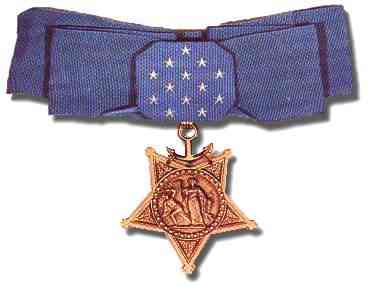 Citation: For conspicuous gallantry and intrepidity at the risk of his life above and beyond the call of duty while serving with the 3d Battalion, 7th Marines, 1st Marine Division, in action against enemy Japanese forces on the Island of Peleliu in the Palau group, 18 September 1944. Boldly taking the initiative when his platoon's left flank advance was held up by the fire of Japanese troops concealed in strongly fortified positions, Pfc. Jackson unhesitatingly proceeded forward of our lines and, courageously defying the heavy barrages, charged a large pillbox housing approximately 35 enemy soldiers. Pouring his automatic fire into the opening of the fixed installation to trap the occupying troops, he hurled white phosphorus grenades and explosive charges brought up by a fellow marine, demolishing the pillbox and killing all of the enemy. Advancing alone under the continuous fire from other hostile emplacements, he employed similar means to smash 2 smaller positions in the immediate vicinity. Determined to crush the entire pocket of resistance although harassed on all sides by the shattering blasts of Japanese weapons and covered only by small rifle parties, he stormed 1 gun position after another, dealing death and destruction to the savagely fighting enemy in his inexorable drive against the remaining defenses, and succeeded in wiping out a total of 12 pillboxes and 50 Japanese soldiers. Stouthearted and indomitable despite the terrific odds. Pfc. Jackson resolutely maintained control of the platoon's left flank movement throughout his valiant 1-man assault and, by his cool decision and relentless fighting spirit during a critical situation, contributed essentially to the complete annihilation of the enemy in the southern sector of the island. His gallant initiative and heroic conduct in the face of extreme peril reflect the highest credit upon Pfc. Jackson and the U.S. Naval Service.
Forget the familiar A, B and C on your child's report card -- the new letters to look out for could be B, M and I.
Sending students home with a "weight grade" has been a growing trend over the past few years, with several U.S. states adopting policies to list a BMI calculation on children's school report cards, often with exercise or nutrition tips to help parents keep kids on track. And now Malaysia has just passed a countrywide policy to include a BMI score at school alongside the typical academic marks.
Claude ''Chuckles'' Choules was the last-known combat veteran of World War I living in Australia and the last surviving Anglo-Australian to have served in both world wars.
He was also the last surviving sailor of World War I and served in both the Royal Navy and the Royal Australian Navy. In fact, he was only two days younger than the RAN, which was established on March 1, 1901.
*******
Claude Stanley Choules, who held dual British and Australian nationality, was born on March 3, 1901, at Wyre Piddle, Pershore, in Worcestershire, one of five children of Madelin and Henry, a haberdasher and gambler.
*******
Choules dropped out of school at 14 and fibbed about his age to join the navy in 1915. The previous year he had tried to join the army as a bugle boy when he learnt that his brothers, Douglas and Leslie, were serving in the British Army. Both had fought at Gallipoli before going on to fight on the Western Front in France, where Douglas was gassed and died a year later and Leslie won the Military Medal for bravery.
After initial training on HMS Impregnable, at one time a 140-gun square-rigged wooden battleship, Choules served in the North Sea on HMS Revenge, flagship of the Royal Navy's first battle squadron.
*******
Between 1920 and 1923, Choules served in the Mediterranean before being seconded with 11 other Royal Navy personnel to come to Australia in 1926 on loan to the RAN as an instructor at Flinders Naval Depot on the Mornington Peninsula.
On the way to Australia, on the passenger ship SS Diogenes, Choules met Ethel Wildgoose, a Scot on her way to Melbourne, and they married not long after.
Choules asked for a permanent transfer to the RAN. He returned to Britain for courses to qualify as a chief torpedo and anti-submarine instructor and he was also on duty for the construction of the RAN's heavy cruisers, Australia and Canberra. He was part of the commissioning crew of HMAS Canberra, in which he served until 1931.
Choules took his discharge from the RAN that year but remained in the reserve; he rejoined the RAN the following year as a torpedo and anti-submarine instructor, with the rank of chief petty officer. During World War II, he served as the RAN's senior demolition expert in Western Australia.
*******
Ethel Choules died in 2006, aged 98, and Claude spent his last years at the Gracewood Hostel at Salter Point in Perth.
His death follows that of American Frank Buckles, who died in February, also aged 110, and who, until then, had been the oldest surviving veteran of World War I. He'd been an ambulance driver near the Western Front. The last Briton to serve in the trenches on the Western Front, Harry Patch, died on July 25, 2009, aged 111. The last Australian World War I Digger, Jack Ross, died in 2009, aged 109.
Claude Choules is survived by his children, Daphne, Anne and Adrian, 13 grandchildren, 26 great-grandchildren and two great-great-grandchildren.
 Citation: The KING has been graciously pleased to approve the posthumous award of the GEORGE CROSS, in recognition of most conspicuous gallantry in carrying out hazardous work in a very brave manner, to the undermentioned --