01 October 2006

Book list - Sep 06

Last Stand of the Tin Can Sailors - WW II (naval), by James D Hornfischer
Missee Lee - children's, by Arthur Ransome
A Meeting at Corvallis - AH, by S M Stirling
The Wonderful Flight to the Mushroom Planet - children's SF, by Eleanor Cameron
The Picts and the Martyrs - children's, by Arthur Ransome
The Medieval Castle - history, by Philip Warner
The Man from Waukegan - memoirs, by J P Zabolski
Great Northern? - children's, by Arthur Ransome
Looking for Alaska - young adult, by John Green
Fur Magic - children's fantasy, by Andre Norton

I'd read the Cameron, the second and third Ransomes (PM and GN), and the Norton before, but the others were all new to me. (I bought ML quite a while ago, but didn't get around to reading it before packing it up for a move.)

Looking for Alaska was my book for Banned Books Week. It's about a boy who goes off to boarding school for the first time in 11th grade, and about the friends he meets there, one of whom apparently commits suicide in the middle of the school year. It's fairly obvious why certain narrow-minded individuals might not want this book to be available in libraries - the description of the narrator's first experience with oral sex takes up two whole pages. (It's also quite funny, as it's also the girl's first experience; halfway through the proceedings they stop, get dressed, and run over to a friend's room to ask for advice.)

30 September 2006

Fair time

I love fairs. They bring back memories of my childhood in a small (ca 4500 pop) town in southern Michigan - cows, goats, 4-H Club exhibits, canning and baking, &c, &c. And there's all that great food they sell, too - sausage, fried chicken, hamburgers, cotton candy.... We missed the local fair, in Ledyard, a few weeks ago. However, the Topsfield Fair, up in Topsfield, Mass - "America's Oldest Agricultural Fair" - started last night.

My older daughter's eleventh birthday is next week. Her best friend (whose father is an old shipmate of mine) moved up to northeastern Mass a few years ago, so last year we came up with the idea of visiting them as a birthday surprise. Drove on up Saturday morning, spent the afternoon at the fair, stayed at their place overnight, and came back Sunday. Worked out well, so this year we're going to repeat it. (The major difference will be that this time my daughter knows what's going on - last year all we said was that we were going "somewhere," with no mention of where or of who else would be there.)

Another difference, I hope, will be the weather. Last year it rained constantly, starting about the time we arrived at the fairgrounds, and we were doing a pretty good impression of semi-drowned rats as we ate our lunch inside the tent some thoughtful vendor had provided. So far, the forecasts say good weather for the weekend....

28 September 2006

Y2K, Mars-style

Remember Y2K? Computer programmers were using two-digit years (93 vice 1993, for instance), and civilisation was going to collapse because computers wouldn't be able to tell if a date was supposed to be read as being 1923 or 2023. Didn't happen, of course.

Skip to now, and Mars. NASA has these little robots named Spirit and Opportunity wandering around, exploring the planetary surface. Their programming records time in Martian days, called "sols" (short for "solar periods," I suppose), and since the robots weren't expected to last very long, the programmes were written with three-digit dates.
But for [Bruce] Banerdt [at JPL] and about 50 other scientists working on the project, what is just as amazing as what may come out of Victoria Crater is the fact that Opportunity, and its sister rover Spirit, are still going strong nearly 1,000 days into their field work on Mars.

The longevity of the little robots is beyond the wildest dreams of some working on the project.

"We would have been happy with 30, maybe 90 days," said Ray Arvidson, deputy principal investigator for Spirit and Opportunity. Arvidson is based at Washington University in St. Louis, Missouri.

So the latest software updates sent to the rovers had to include a revised date format, with four-digit dates.

Read more about it in this CNN news article, which was the source of the above quote.

Swallows & Amazons III

This is the third in a three-part series about the Swallows & Amazons series, by Arthur Ransome. (The first two parts are here and here.) This time I’m going to talk about the last three-and-a-bit books in the series:

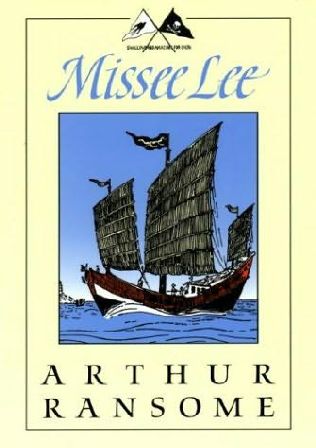
Missee Lee (ML) is another piece of metafiction. Captain Flint, the Swallows, and the Amazons are taking Wildcat on a world cruise (with Swallow and Amazon as ship's boats). Whilst en route from their 100th port (an unspecified location somewhere in the Far East) to Singapore, they meet with an accident involving Roger’s pet monkey, Captain Flint’s cigar, and the ship’s petrol tanks, which results in Wildcat’s sinking and everyone’s being at sea in Swallow and Amazon. The two boats get separated during the night; the Amazons (with Captain Flint) are picked up by a pirate junk, while the Swallows find themselves on an island just off the coast of China. The junk turns out to belong to the Taicoon Chang, who is a lesser pirate chief under the infamous Miss Lee – and the island belongs to Miss Lee herself. Hopes for rescue are dashed when Miss Lee, who has fond memories of time spent at Cambridge years ago, refuses to release her prisoners. Instead, she announces that they will stay on Dragon Island and study Latin with her....

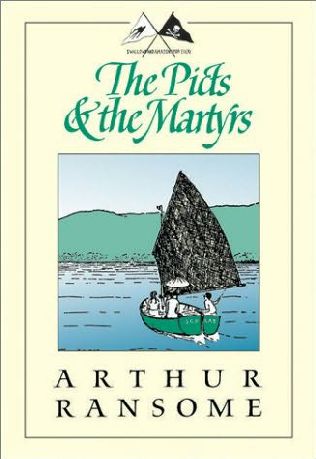
The Picts and the Martyrs (PM) takes place in the early summer of 1933. The Amazons and the Ds are alone at Beckfoot. Well, not entirely alone; the Blacketts’ cook is there with them. But Molly Blackett has been ill, so her brother (Captain Flint) has taken her on a sea voyage; the Swallows won’t be arriving for another two weeks; and the Callums’ parents can’t come to the lake yet because the Professor is grading papers. The good news, though, is that a brand new boat, Scarab, is being built for the Ds, and will be ready in just a couple of days. And the bad news is that someone has told Great Aunt Maria that Nancy and Peggy are home alone. The GA, of course, considers it her duty to cancel all her plans and come to take care of the girls – which means best frocks, piano, poetry, &c, &c. The children agree that things would be even worse, especially for Molly, if the GA discovers that Nancy and Peggy have house guests while their mother is away. And so Nancy comes up with an idea: The Ds will move into a deserted hut near Beckfoot for two weeks (the GA will be leaving the day before Molly and Captain Flint return home) and remain hidden – as the Picts are said to have done – while the other two girls stay home as martyrs, keeping the GA happy. But the doctor, the postman and others have to be roped in as unwilling conspirators, and every day the chance of the Picts’ discovery becomes greater. And then the GA disappears....

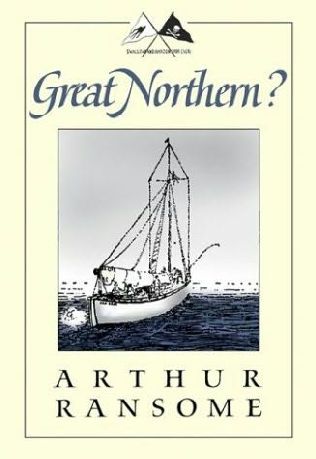
There is debate as to whether Great Northern? (GN) is a part of the series proper, or is yet another bit of metafiction, due to a heightened level of danger and violence that is not found in most of the books. There’s also a problem with timing, as the birds which are nesting in this book would normally be nesting during the school term. But Swallows, Amazons, Ds and Captain Flint are touring the Hebrides in a borrowed boat, Sea Bear, and Dick is eagerly hoping to see birds he has never sighted before, especially divers. He gets his wish on what is supposed to be the next-to-last day of the trip, spotting a black-throated diver. But he also sees what looks like a pair of great northern divers, nesting – and great northern divers never nest in Great Britain. There’s another birder in the area, Mr Jemmerling, looking for birds in his motor yacht Pterodactyl, but when he hears about the great northerns his first reaction is to want to shoot them and take their eggs for his collection. And the Ds have spent too much time with the Coots to permit that....

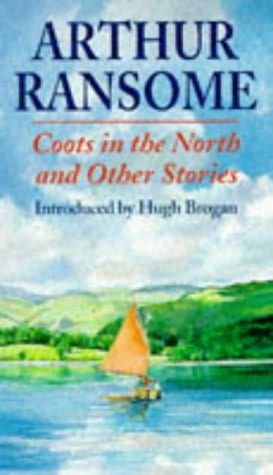
Coots in the North would have brought the Death and Glories up to join the Swallows and the Amazons in the Lake District, but Ransome only wrote a few chapters before stopping work on it. His notes indicate that he was having problems finding a satisfactory solution to getting the boys home after they hitched a ride north with a boat that was being delivered to the lake. Part of the story is available in Coots in the North and Other Stories, edited by Hugh Brogan and published in 1998. (No, I have no idea what the "other stories" are.)

Why do I like these books so much? Well, they’re about kids doing really cool things, like camping and sailing. And they’re a link to a simpler time in the past – imagine the reaction if it were discovered that parents were allowing their children to swim, sail (without life preservers), and camp out on an island, cooking their own meals over an open fire, all without adult supervision. (It’s plainly pointed out in SA, and I think also in SD, that Roger is too young to use matches, though he does have his own pocketknife.)

The politically correct crowd may have problems with a couple of the books. The famous N-word is used in PD, though in reference to black pearls, not to people. And not only do Miss Lee’s pirates speak pidgin, but Miss Lee has the most amazing stereotypical accent, with references to “Loger” (Roger) and “Camblidge.”

If you like these books, you’ll – well, I’m not sure what to suggest here. Katharine Hull and Pamela Whitlock wrote a trio of books, beginning with The Far-Distant Oxus*, about children and ponies on the moors of southwestern England, but the books are long out of print and the last time I tried to ILL them only the first one was to be had. Some of Enid Blyton’s stories have the same sort of feel, especially the eight mysteries of the Adventure series. The only book about American children and a sailboat that comes readily to mind is The Lion’s Paw, by Robb White.

Want to learn more about the books, or about their author? (During World War I he was a reporter, covering the Eastern Front and the Russian Revolution; he eventually married Trotsky’s secretary.) The Arthur Ransome Society (TARS) can be found here.

(Incidentally, the S&A book covers I used to illustrate these posts were nicked from the Arthur Ransome page at Fantastic Fiction, an excellent source for readers looking to see what other books an author may have written, or the correct order for books in a series.)


* I love Ransome’s story of the writing of this book.

USS Macon photos

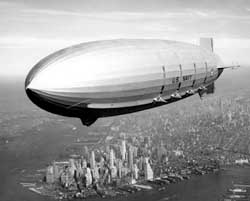
The folks who were looking for the wreckage of USS Macon (ZRS 5) have met with success - you can read about it (and look at a couple of photos) here. I think the thing that surprises me the most is how good a condition the Sparrowhawks are in.

Macon, built in Ohio by the Goodyear-Zeppelin Corporation, was commissioned on 11 Mar 1933. 785 feet long and 132 feet in diameter, the airship carried five Curtiss F9C Sparrowhawk biplanes and had a crew of 76. She was lost during a storm off the California coast on 12 Feb 1935. All but two of the crew were saved. (Her sister ship, USS Akron ZRS 4, had been destroyed in a storm off New Jersey on 4 Apr 1933.)

For more about Macon, see here.

For more about Akron, see here.

For more about the Sparrowhawk, see here.


Edit: Another good article acout the wreck's current state can be found here.

This day in history: 28 Sep

1066: William the Bastard, Duke of Normandy, landed his army at Pevensey, in Sussex.

1106: King Henry I Beauclerc of England defeated his brother Robert Curthose, Duke of Normandy, at the Battle of Tinchebrai. Robert, as William the Conqueror's eldest son, had received Normandy, which was considered the most important of William's holdings; England, as a lesser fief, had gone to Robert's brother William, and after his death to Henry. Robert's defeat here ensure that Normandy remained part of the English kingdom until it was lost by King John early in the 13th century.

1542: Spanish (or perhaps Portuguese) explorer Juan Rodríguez Cabrillo landed in what is now San Diego, California.

1987: The first episode of Star Trek: The Next Generation was broadcast.

It's Saint Wenceslaus Day in the Czech Republic. Wenceslaus - Vaclav in Czech, Wenzel in German - was a 10th-century Duke of Bohemia who was murdered by his pagan brother in either 929 or 935 CE. Yes, he's the guy the song (I used to sing it as "Good King Whatshisface") is about.

Herman Melville (1819-1891), Richard Sears (1863-1914), Edwin Hubble (1889-1953), Adolph Marx (1888-1964) and Elia Kazan (1909-2003) died on this date.

And happy birthday to Ed Sullivan (1901-1974), Al Capp (1909-1979), Edith Pargeter (1913-1995), Brigitte Bardot (1934-TBD) and Rod Roddy (1937-2993).

27 September 2006

Tokyo Rose

Says here that:
Iva Toguri D'Aquino, who was convicted and later pardoned of being World War II propagandist "Tokyo Rose," died [yesterday] of natural causes, said her nephew, William Toguri. She was 90.

Tokyo Rose was the name given by soldiers to a female radio broadcaster responsible for anti-American transmissions intended to demoralize soldiers fighting in the Pacific theater. D'Aquino was the only U.S. citizen identified among the potential suspects.

In 1949, she became the seventh person to be convicted of treason in American history and served six years in prison. But doubts about her possible role as Tokyo Rose later surfaced and she was pardoned by President Gerald Ford in 1977.

Seasickness

I was taking notes, getting ready to write something on seasickness.

Then bothenook posted this.

My story pales into utter insignificance compared with his.

So I think I'll wait a year or two, until folks have had time to forget his story, before I write mine....

Swallows & Amazons II

This is the second part of a three-part review of the Swallows & Amazons series, by Arthur Ransome. (Part one is here.) Taking up where we left off last time:

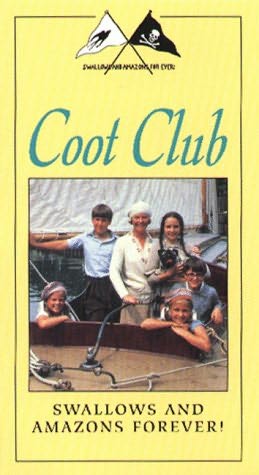
Coot Club (CC) takes place during the spring holidays of 1932, just a few months after WH. The Swallows and Amazons are mentioned a few times, but that is all; this book is about the Ds, who are spending the holidays in the Norfolk Broads with Mrs Barrable. (This time their parents are off at a conference near Carlisle, on Hadrian’s Wall.) Mrs Barrable was Mrs Callum’s teacher; she’s an artist, and has rented a sailboat, Teasel, to live on whilst painting pictures of the local scenery. The Ds are looking forward to learning to sail before going back to the lake in the summer, but are disappointed when Mrs Barrable tells them that she can’t handle the boat by herself. But the Ds met Tom Dudgeon on the train to Horning, and he introduces them to Port and Starboard and the three younger boys (who have been playing at being pirates). The six of them are the main members of the Coot Club, the purpose of which is to observe and protect the local birds. Their favourite is a coot which is nesting on the river below Horning, but a motor cruiser which is being rented by a group of remarkably loud, obnoxious visitors moors right next to the nest. The mother coot is frantic, unable to get to the nest, and when Tom asks the visitors (called Hullabaloos because of the noise they make) to move their boat, they rudely refuse. The only thing Tom can think of is to cast the boat adrift, and he does so – but is spotted as he attempts to escape. The Hullabaloos give chase, but Tom manages to evade them. To get out of the Hullabaloos’ way, he offers to join Mrs Barrable and the Ds on Teasel, serving as captain (Mrs Barrable becomes the admiral, with a fleet consisting of Teasel and the Coot Club boats) and giving the Ds the lessons they had hoped for. And off they go, but the Hullabaloos won’t give up the search for Tom....

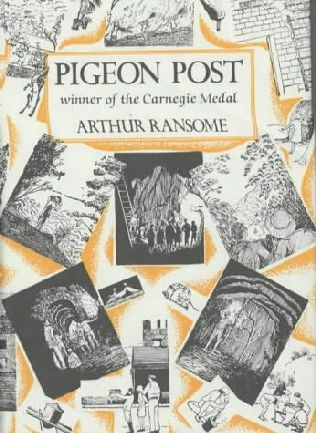
Pigeon Post (PP) is the first of four books set during the summer of ’32. The Walkers are back up at the lake, this time camping in the garden at Beckfoot, and so are the Ds. Captain Flint has been away in South America on an unsuccessful mining expedition, but he’s on the way home now. He hasn’t sent word to say when he’ll be home, but his last letter said to expect Timothy and give him the run of his study; after much deliberation, the children have decided that Timothy must be an armadillo and are making a hutch for him in the study. In the meantime there’s no sailing, as someone else is staying at Holly Howe and the Walkers won’t have access to Swallow for a couple of weeks. However, the Amazons have heard stories of a lost gold mine in the hills near Kanchenjunga, and their idea is to try to find the gold before Captain Flint’s arrival, to make up for his recent lack of success. The lot of them shift camp from Beckfoot to a farm nearer the alleged gold field (using the Amazons’ new homing pigeons to communicate with home), but there’s been a serious drought and all the adults are worried about the possibility of fires, so they aren’t permitted to camp up in the hills. Time is running out, and they have a rival – a mysterious stranger dubbed “Squashy Hat,” who also seems to be prospecting for gold....

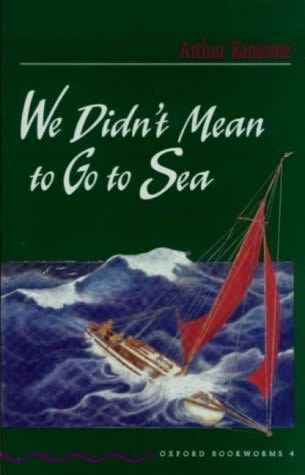
We Didn’t Mean to Go to Sea (WD) takes place a week or two after the end of PP. Commander Walker is on his way home from China, with orders to Shotley, so the rest of the family have traveled to Pin Mill*, near Harwich, to wait for him. Once there, they meet Jim Brading, who has just sailed his cutter Goblin up from Dover. His uncle will be joining him soon, and they plan to sail Goblin up to Scotland before Jim goes off to university at Oxford. In the meantime, Jim invites the four Walkers to spend a few days on the boat with him. (He’d invite Mother and Bridget, too, but there isn’t room for everybody.) Daddy is due in just a few days, so they won’t have much time, but there will be enough for them to explore the rivers a bit; Mother insists they not go out to sea, and they all promise. But they are becalmed on the morning after they set out, and Jim discovers that he has run out of petrol for the engine. He goes ashore for a quick trip to get some, expecting to return soon, but doesn’t come back. The four children are alone on the boat, a heavy fog comes in, and they find themselves drifting out to sea....

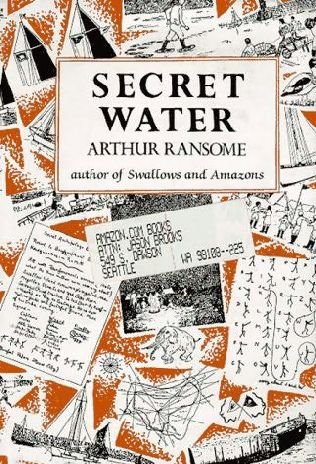
I couldn’t find my copy of Secret Water (SW), so I had to skip it when I read the rest of the series this summer and will have to work from memory and from on-line notes. The book starts very shortly after the end of WD; Commander Walker and his children are planning on sailing Goblin down to Hamford Water, near Walton-on-the-Naze, to spend some time camping, but Daddy is called away on official business. He maroons the kids on an island, along with the Amazons (whom he has invited down as a surprise for the Swallows), provides them with a rough map of the surrounding islands, and suggests they do some exploring and survey the area whilst waiting for his return. What appear to be mastodon tracks lead to meeting a local boy, Don, and another family called the Eels (Daisy and her brothers, Dum and Dee). The Eels also enjoy camping where the Swallows and Amazons are, and are inclined to be hostile at first, but soon they reach an agreement and start a friendly “war.”

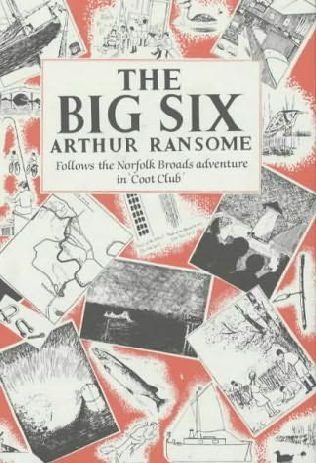
The Big Six (BS) takes place more or less at the same time as the last two books, and involves the Ds. They’re back at Horning, staying with Mrs Barrable (who this time has taken a house) again. Port and Starboard are away at school – in Paris, of all places – but Tom and the three Death and Glories are all present. And the latter are in trouble, because someone has been casting boats adrift, choosing times and places to make it look as if they were responsible. After all, everyone knows that Tom cast a boat adrift last spring; who’s to say that the younger boys aren’t emulating their hero? That’s not all - when the boys spent the night aboard Death and Glory at Potter Heigham, not only were boats there cast off, but also a boatyard was burgled. And now the boys seem to have a lot of money, much more than their parents would have given them. Dick and Dorothea join in the attempt at identifying the enemy before the local constable decides to arrest Bill, Joe and Pete.

There have been a few films based on the books. Swallows and Amazons (1974) is a fairly faithful rendition of SA, starring Virginia McKenna as Mrs Walker and Ronald Fraser as Captain Flint. (The Beeb did a TV series based in SA, in 1963, but most people seem to think it was rather dreadful.) Swallows and Amazons Forever! was the title used for a pair of TV movies made in 1984; the title is misleading because the two films are based on CC and BS, and there are neither Swallows nor Amazons to be seen anywhere.

Still more to come....


*The link is to a pair of pictures showing Alma Cottage (still a working B&B) and the Butt & Oyster pub at Pin Mill. One picture is Ransome's drawing, done in the '30s as an illustration for the book; the other is a recent photograph. Picture from here.

Thanks, Eric


Had a big surprise last night when I looked at SiteMeter and saw that I'd had fifty visitors - a very busy day for this blog. Then I got an even bigger surprise when I looked at "Referrals" and saw that almost all of the visitors had come to me from The Sub Report, which I hadn't checked yet. Turned out that Eric had included a link to my latest post on watchstanding, along with yesterday's submarine news.

Thank you!

26 September 2006

Swallows & Amazons I

I’ve just finished reading the Swallows & Amazons series, by Arthur Ransome. Most of them, that is – my copy of one book seems to have gone into hiding, so I had to skip it. This has been one of my favourite series since I first discovered it (eighth grade, as I recall), and since this is my blog and I can write about anything I want, I’m going to write about this.

The series consists of twelve books, written in the 1930s and ’40s, about English children and sailboats. (A thirteenth book was started but never finished.) Most of the books are set in either the Lake District (on and around a nameless, fictional lake which combines elements of Windermere and Coniston Water) or the Norfolk Broads (using real geography).

The Swallows are the four Walker children: John, Susan, Titty* and Roger. Their father is an officer in the Royal Navy and is seldom seen in the books, but their mother and their younger sister Bridget appear often. The Amazons are the Blackett sisters, Nancy and Peggy, a pair of tomboys who are growing up on the shores of the lake. (Nancy’s name is actually Ruth, but the girls play at being Amazon pirates, and their Uncle Jim has told them that real pirates are ruthless, so....) The only time a definite age is given for any of them is in the first book, when Roger is seven, but going by Ransome’s notes for another book the starting ages of the others are nine (Titty), eleven (Susan and Peggy) and twelve (John and Nancy, the latter being slightly older).

Two other sets of children, the Ds and the Coots, are also important in the series. The Ds – Dick and Dorothea Callum – are the children of an archaeologist; Dot is a budding novelist, while Dick is interested in all aspects of science. They’re somewhere around Titty’s age, with Dorothea being the older of the two. The Coots, who all live in the village of Horning, in the Broads, are Tom Dudgeon, a doctor’s son; twins Bess and Nell Farland (commonly known as “Port” and “Starboard”); and the three Death and Glories, Bill, Joe and Pete. (Like the Swallows and the Amazons, the latter get their group name from the name of their boat.) No ages are given for the Coots, either, but Tom is a little older than the Ds, the twins are about their age, and the other three are a little younger.

Swallows and Amazons (SA) takes place during the summer holidays of 1930. The Walkers (with the exception of Daddy, whose ship is in Malta) are spending the summer holidays at Holly Howe farm, by the lake. The children have been using the farm’s sailing dinghy, Swallow, to explore, and have requested permission to camp on a nearby island. Mother has passed the buck to Daddy, and the book starts with the children waiting for a reply to the letters they have written. The reply comes in the form of a telegram: BETTER DROWNED THAN DUFFERS IF NOT DUFFERS WON’T DROWN. Hurray! Plans are completed, stores and equipment are assembled, and the four of them are off to the island. The Blacketts, who also have a sailboat (Amazon), have been using the island as a campground for some time, however; the two groups agree to fight a war, with the winners being the ones who first capture the other boat. The Amazons’ Uncle Jim has been holed up in his houseboat (complete with parrot and cannon) all summer, writing a book, refusing to join in the girls’ games, and being no fun whatsoever, and so plans are made to declare war against him, too. But now he seems to have gotten the idea that the Swallows have been mucking with his boat - and then the boat is burglarised and his book is stolen....
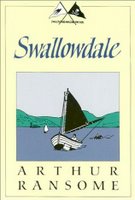
Swallowdale (SD) takes place the following summer. The Swallows have returned to the lake, and Uncle Jim (dubbed “Captain Flint” by Titty because of his parrot and cannon) is no longer tied up with writing, but the expected fun isn’t happening; the Blacketts’ Great Aunt Maria is visiting. The GA is a very strict, old-fashioned lady who expects Nancy and Peggy – excuse me, I mean Ruth and Margaret – to wear white frocks instead of shorts and shirts, learn poetry and recite it to her, practice the piano, and never be late for meals. Since Mrs Blackett and Uncle Jim were raised by the GA, they’re too much in awe of her to stand up to her. Until she leaves, the Swallows will be by themselves except when Nancy and Peggy can slip away. And then disaster strikes: Swallow runs into a submerged rock and sinks. Her crew manages to salvage her, but until repairs are completed they won’t be able to sail, or to camp on the island. Fortunately, there’s a valley up on the fells above the lake that makes a good campsite, so the Swallows settle in for a different kind of adventuring - including mountain climbing, with the mountain near Beckfoot (the Blackett home) standing in for Kanchenjunga.

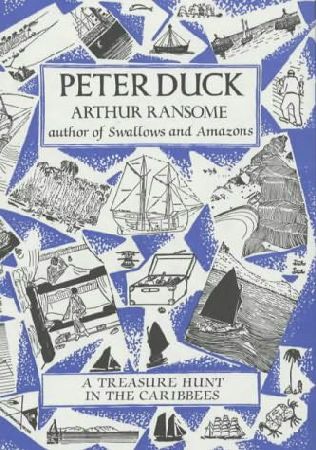
Peter Duck (PD) is metafiction, a fictional story “written” by people who are themselves fictional characters. In this case, the writers are the Swallows and the Amazons, who spent the winter holidays between SA and SD on a wherry on the Broads, with Captain Flint. One of the ways they spent their time was in making up this tale of adventure, in which they sail in search of buried treasure. The story begins in Lowestoft harbour, where Captain Flint and the Amazons are readying their new schooner, Wildcat (named after their island back at the lake), for sea. The Swallows arrive soon, but so does bad news – the man who was going to help Captain Flint work the ship isn’t going to be able to come. This severely limits what they can do, because while the children have plenty of experience with their sailboats, a ship this large is something totally new to them. Fortunately, an old seaman named Peter Duck has been admiring Wildcat, and he offers to take the missing man’s place. But with Mr Duck comes trouble, for many years ago, when he was a young boy, he was shipwrecked in the Caribbean, and before he was rescued he saw two men burying something beneath a tree. He has no idea what it was they buried, of course, but the tale has grown in the telling and now many people believe it was treasure. And Black Jake, skipper of the Viper, thinks that Peter Duck is taking the crew of the Wildcat to retrieve that treasure....
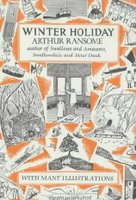
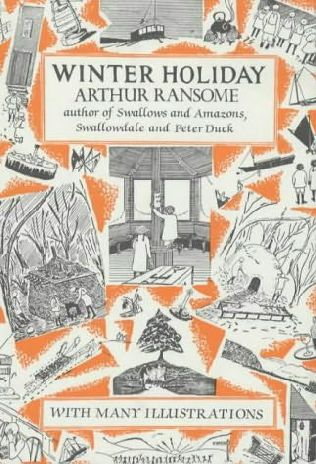
Winter Holiday (WH) takes place a few months after SD, during the winter of ’31-’32. Professor and Mrs Callum are in Egypt “digging up remains,” so Dick and Dorothea are spending the holidays at the Dixons’ farm (Mrs Dixon was Mrs Callum’s nurse when she was a girl), just down the road from Holly Howe. Late-evening astronomy leads to signaling to “Mars,” which in turn brings the Ds together with the Swallows and the Amazons. The plans this time are for an expedition to the North Pole, a place near the north end of the lake known only to Nancy and Peggy. Sledges are in daily use, an igloo is being built, and Captain Flint’s houseboat, which is frozen in, is doing duty as Nansen’s Fram. (Captain Flint is abroad for the winter.) All that’s really needed is a good, solid freeze before the end of the holidays, and they’ll be set. And then Nancy comes down with mumps, forcing her – and the others – into quarantine....

To be continued.


* Try giving a girl a name like that in a modern book! The four Walkers were based on children Ransome knew; the real Titty was given her nickname as a small child because her favourite book was something called Titty Mouse and Tatty Mouse.

RIP: Jeff Cooper

LTC John Dean "Jeff" Cooper, USMC, born 10 May 1920, died yesterday at Gunsite.

25 September 2006

This day in history: 25 Sep

1066: King Harold II Godwinson of England defeated King Harald III Hardråde's invading Norwegians at the Battle of Stamford Bridge. It was a decisive victory for the English; Harald was killed, along with most of his army (including Harold's brother, Earl Tostig Godwinson). Unfortunately for Harold, however, he himself was killed nineteen days later at the Battle of Hastings.

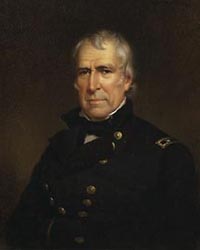
1846: US forces under Zachary Taylor captured the Mexican city of Monterrey.

1970: The first episode of The Partridge Family was broadcast on ABC.

Johann Strauss Sr (1804-1849), Emily Post (1873-1960), Erich Maria Remarque (1898-1970), Marion Zimmer Bradley (1930-1999) and Don Adams (1923-2005) all died on this date.

And happy birthday to Nicolas Cugnot (1725-1804), Fletcher Christian (1764-1793), Shel Silverstein (1930-1999), Christopher Reeve (1952-2004), and Will Smith (1968-TBD).

Watchstanding IV

[Previous posts on watchstanding were here, here and here.]

Standing JOOD on Simon Lake could get boring, especially on the midwatch (what midwatch isn't boring?), but I found a few ways to keep myself amused.

The basic idea was that someone desirous of leaving the ship would come up, present his/her ID, salute, and say, "Request permission to leave ship." Similarly, someone who wanted to come aboard would salute (having already paused at the top of the brow to salute the ensign), present ID, and say, "Request permission to come aboard." I would inspect the ID, front and back, to verify that it was valid, return the salute, and say something to indicate that permission was granted. (When I first started standing the watch I would say "Hai!" - a habit picked up during two WestPacs on my first boat - but there was a master chief who was very insistent that all official conversation on watch had to be in English, so....)
Each watchstander had his own quirks. Ship's policy was that any male who left the ship in civvies had to be wearing a belt, and there were actually some people who enforced that; I didn't care that much about belts (though I always wore one myself), and the lectern I was standing behind blocked my view of people's waists anyway. My two sticking points were liberty cards and hats. Policy was that every E3-or-below was supposed to be carrying a liberty card, as proof that (s)he was permitted to go on liberty, when leaving the ship in civvies, and I always insisted on seeing it. We had a JarDet (Jarhead Detachment) on board, and the jarheads always objected to having to show liberty cards, but I knew they were issued such and always made them go back to their berthing space to get the cards; the only exceptions I allowed to the liberty-card rule were the sailors off the boats we had alongside.

As for hats, there were of course a lot of people who walked around in uniform with their covers pushed back; this being rather obvious when I looked at them to compare their faces with their ID photos, I always told them to square them away. Boat sailors were constant offenders, of course, with the result that one day I had a master chief standing up on the quarterdeck watching me. He was there about twenty minutes or so before departing, and I found out later that he was the COB off the boomer we were tending at the time. His people had complained about me, and he had come up to see what was going on, but after seeing that I was making everyone fix their covers, and not just picking on his people, he was satisfied and left.

But that was just basic watchstanding, as practised by me, not the fun stuff. One bit of on-watch amusement was purely unintended. It was an afternoon watch, and I had a good-sized queue waiting to hit the beach, when an officer approached from my left and requested permission to depart. I looked at him and saluted, and sonofagun, it was the old Weps from Ustafish. Taken totally by surprise, I said, "What the hell are you doing here?" Out of the corner of my eye I could see some very shocked expressions in the queue (An E6 isn't supposed to talk to an O5 like that!) as he explained that he was now the XO of the boat alongside.

After a year or so of doing this, as I said, it started getting boring. So on slow watches, I started saying "No" when people asked to come aboard/go ashore. When they looked surprised I explained that I was tired of saying "Yes." One kid believed me, and turned around and started back into the ship, but I called her back and said, "Oh, all right - go ahead."

And then one day I found a Magic Eight Ball at Woollies. You know Magic Eight Balls - a black ball with a flat spot so it will stay still on a table, full of liquid, with a polyhedron inside with different "answers" written on it - "Yes," "No," "Ask Later," &c. I bought it, of course, and took it with me the next time I had the midwatch. As expected, I got some good laughs out of people's faces when they requested permission to go ashore and I whipped out the ball, shook it up, plopped it on the lectern and read them the answer, pointing at the ball for authority. The OODs generally thought this was pretty amusing, too.

The ultimate bit of on-watch amusement, though, came from an A-ganger named Bernie, who worked somewhere in Repair - R-9, I think. The ship had a full-time Safety Officer, and at Captain's call (held weekly on CCTV, with all hands required to watch) the Safety Officer always had something to say. When I first got to the ship, the Safety Officer was of Middle-Eastern extraction, and had a heavy accent. His successor talked funny, too; he had a speech impediment, and talked just like Elmer Fudd. ("I'll get you, you wascally wabbit!") And so it came to pass that early one morning, at the appointed hour for reveille, Bernie picked up the 1MC and made the announcement: "Weveiwwe, weveiwwe! All hands heave out and twice up. The smoking wamp is wighted in all authowised spaces. Bweakfast for the cwew."

Ten seconds later, of course, as soon as the OOD got over his shock, Bernie was disqualified the watch. Unfortunately, it hadn't been my duty day, so I wasn't on board to hear it, but apparently his announcement was met with great joy all through the ship. Don't know if he had to apologise to the Safety Officer or not....

23 September 2006

Australopithecus afarensis

New reports are out about a 3.3-million-year-old partial skeleton found in 2000 in the Dikika region of Ethiopia. The skeleton belonged to a presumed female, about three years of age. A. afarensis, of course, is the species to which the specimen known as "Lucy" belonged. Details (and photos) here.

Hat tip to Afarensis.

Edit: Afarensis now has more here.

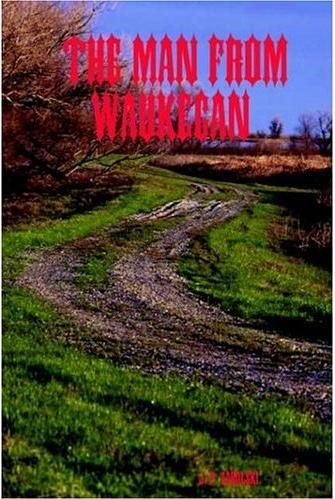
The Man from Waukegan (J P Zabolski)

Waukegan, Illinois, is a small industrial city (population around 65-70k in the ‘60s) on the shores of Lake Michigan, about halfway between Chicago and Milwaukee. Amongst other industries, Johns-Manville and Johnson Outboard had factories there. There’s a harbour, used by small boats and by ships bringing in mountains of gypsum. It’s probably best known, though, as the home of comedian Jack Benny and author Ray Bradbury.

J P Zabolski graduated from Waukegan High School in ‘73, and left home to join the Army.

Ten years later, in ’83, he left Waukegan again (by this time he was out of the Army, had gone around the world twice, and had held various interesting jobs in various interesting countries), this time to join the Marines.

Ten years later, in ’93 (by which time he had left the Marines and emigrated to Australia), he returned to Waukegan for his father’s funeral and to sell the family home.

Ten years later, in ’03, he came back to Waukegan, for the first time in ten years, to spend two weeks walking around town, mulling over the changes in the old neighbourhood, the city, and himself.

Zabolski stops to talk with old neighbours, teachers and friends, hunts down childhood treats he hasn’t tasted in years (such as angel food cake), and visits old hangouts. Each stop reminds him of the past, and his stories of this trip are mixed with reminiscences of things past – movies, television, ROTC and other classes in high school, his parents, hobbies, church.
One year [Sunday school] started issuing out report cards that had to be signed by your parents, like the ones in Glen Flora. They had two grades, one for your studies and one for your conduct. I got an ‘F’ for Failure on both. I hid the report card under our wooden porch through the winter, with the nuns constantly asking where it was. Two weeks before the final day, I brought the shriveled thing to Mom to sign. Mom was not pleased. I had never ever received an F on any real school report card.
There have been a lot of changes in the city, but the more things change....

A few doors up Grand Avenue, the house where the female principal of McAllister School for twenty-seven years had lived until she died in 1981 aged 101 was now an antique store. The owner was originally from Savannah, Georgia, and we had a pleasant chat about a variety of subjects. I asked if he’d mind if I sat on the swing on his porch and he was delighted to let me. I love sitting on a porch and watching the world go by.


I had another pleasant romp in the ravines of Yeoman Park before having lunch at the Chuck Wagon. It was still there after all those years, but locals had said ‘the place is run by Mexicans now.’ The sign was the same except that it now said ‘Juan’s’ over the name. Everything else was still exactly the same. Though they had huevos rancheros on the menu, the other food was unchanged. There was a group of four white truck drivers at a table, a friendly black fellow having coffee at the bar, and some amusing waitresses. The hamburger and fries were the same except that there was a wedge of pickle rather than the pickle chips on the plate.


For everything gone or changed in Waukegan, some person from Georgia or Mexico would carry on its traditions.


I’m not saying you should run out and buy this book just because it was written by my best friend (though it was; we've known each other since 1967), or because I’m mentioned in it (though I am). But anyone of about our age, or a little older, or maybe even a little younger, has probably had similar thoughts, especially if (s)he hasn’t been home in a long time.

Heck, I didn’t even like Waukegan that much – I’d come from a much smaller town that didn’t have many more people in it than Waukegan Township High School alone had – but this book brings a feeling of nostalgia that makes me want to go back for a visit.
Cinema-going was always a major part of my life. You’d always go by the cinemas to look at the collection of stills and the exciting posters that would also feature in the Waukegan News-Sun. The price was 50 cents for a child under twelve or $1.50 for an adult, but a double bill of B movies was 35 cents and $1.25 respectively. That meant more money for a 25-cent box of popcorn, or 15-cent drink, candy bar, snow cone, or giant dill pickle. There were also larger drinks, larger candies, and hot dogs.
And I’ve never in my life found a place that serves hot dogs as good as those at the Genessee Theatre were.

"There's no place like home." And yes, sometimes you can go back home again....

21 September 2006

Yo, ho, ho

Found this little tidbit about a new bar in London:
"The Rum Bar does just what it says on the tin. It serves rum… by the gallon. And it serves every rum known to man. Rums from all around the world. Well, at least from all around the Caribbean. Yum yum."

Looks like I'll have to add that to my list of places to visit if I ever get to go to London. Right after the Imperial War Museum, say. Maybe before the museum, too.

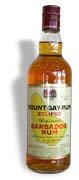
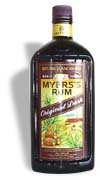
Various brands of Puerto Rican rum are the most common here in the States, but I don't care much for them - my taste runs more to Jamaican rum, such as Myers's. Mount Gay, from Barbados, is really good, too. But the best rum I ever had in my life was Lemon Hart Demerara rum, from Guyana. Unfortunately, while I never had trouble finding it in Scotland, I haven't seen it in any stores in this country. But I keep hoping....

They're baaaack

The space shuttle Atlantis landed at Kennedy Space Centre this morning, ending a successful mission to add solar-power gear to the space station.

Read about it here, here, or here, amongst other places.

19 September 2006

This day in history: 19 Sep

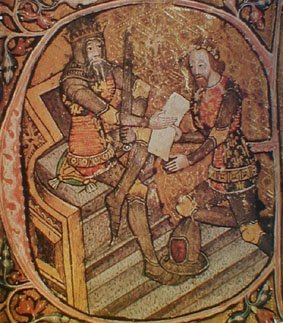
1356: The English (under Edward of Woodstock, the Black Prince) defeated the French (under King John II) at the Battle of Poitiers, capturing the king.

1692: Giles Corey was pressed to death after refusing to enter a plea during the Salem witch trials. (It is a misconception that people were burned at the stake after said trials; Corey was pressed, and the nineteen who were found guilty were hanged.)

1863: The second day of the Battle of Chickamauga, between Braxton Bragg's (Confederate) Army of Tennessee and William Rosecrans' (Union) Army of the Cumberland. The battle concluded the next day in a Confederate victory.

1881: President James Garfield died, eighty days after being shot by Charles Guiteau. (Guiteau was hanged on 30 Jun 1882.)

1893: The Governor of New Zealand, consented to the Electoral Act of 1893, giving all women the right to vote.

1934: Bruno Richard Hauptmann was arrested for the murder of Charles Lindbergh Jr.

1991: The body of Ötzi, the Iceman, was discovered by German tourists.

And happy birthday to Mika Waltari (1908-1979), Sir William Golding (1911-1993), David McCallum (1933-TBD), Leslie Hornby (1949-TBD), and Trisha Yearwood (1964-TBD).

Shiver me timbers!

Ahoy, mateys! Today be International Talk Like a Pirate Day! So whilst ye be at work, or whatever ye be doin' today, watch what ye be sayin', an' how ye be sayin' it, an' make sure ye have an extra noggin o' rum wi' yer supper!

An' if'n ye want to be learnin' more about how ye should be talkin', try here an' here.

Arrrrr!