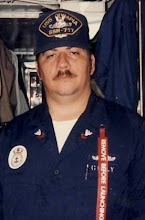
01 April 2007

Victoria Cross: G. S. White

GEOFFREY SAXTON WHITE

Lieutenant Commander, Royal Navy; commanding HM Submarine E14

Born: 2 July 1886, Bromley, Kent

Citation: For most conspicuous gallantry and devotion to duty as Commanding Officer of H.M. Submarine "E14" on the 28th of January, 1918.
"E14" left Mudros on the 27th of January under instructions to force the Narrows and attack the "Goeben," which was reported aground off Nagara Point after being damaged during her sortie from the Dardanelles. The latter vessel was not found and "E14" turned back. At about 8.45 a.m. on the 28th of January a torpedo was fired from "E14" at an enemy ship; 11 seconds after the torpedo left the tube a heavy explosion took place, caused all lights to go out, and sprang the fore hatch. Leaking badly the boat was blown to 15 feet, and at once a heavy fire came from the forts, but the hull was not hit. "E14" then dived and proceeded on her way out.
Soon afterwards the boat became out of control, and as the air supply was nearly exhausted, Lieutenant-Commander White decided to run the risk of proceeding on the surface. Heavy fire was immediately opened from both sides, and, after running the gauntlet for half-an-hour, being steered from below, "E14" was so badly damaged that Lieutenant-Commander White turned towards the shore in order to give the crew a chance of being saved. He remained on deck the whole time himself until he was killed by a shell.

(London Gazette Issue 31354 dated 24 May 1919, published 23 May 1919.)

Medal of Honor: A. Weisbogel

ALBERT WEISBOGEL

Captain of the Mizzen Top, US Navy; USS Benicia and USS Plymouth

Born: 1844, New Orleans, Louisiana
Died: unknown

Citation: For gallant conduct in jumping overboard from the U.S.S. Benicia, at sea, and rescuing from drowning one of the crew of that vessel on 11 January 1874.


Citation: For gallant conduct in jumping overboard from the U.S.S. Plymouth, at sea, and rescuing from drowning one of the crew of that vessel on 27 April 1876.

Book list - Mar 07

Nervous Water - mystery, by William G Tapply
Grave Peril - modern fantasy, by Jim Butcher
Var the Stick - SF, by Piers Anthony
Summer Knight - modern fantasy, by Jim Butcher
Neq the Sword - SF, by Piers Anthony
Dead Winter - mystery, by William G Tapply
First Light - mystery, by Philip R Craig and William G Tapply
The Intimidators - spy fiction, by Donald Hamilton
The Women Who Lived for Danger: The Agents of the Special Operations Executive - WW II, by Marcus Binney
Across the Wall - fantasy (short stories), by Garth Nix
A Fine Line - mystery, by William G Tapply
A Beautiful Place to Die - mystery, by Philip R Craig

The Hamilton was the only reread; all the others were new to me. And yep - the computer's fixed, so I'm spending way too much time on it instead of reading....

I looked at a list of the Newbery Medal winners ("for the most distinguished contribution to American literature for children") yesterday. The first medal was awarded in 1922, for The Story of Mankind, by Hendrik Willem van Loon. That means there are 86 of them now - and I've only read eight. So this month I'm going to start reading the rest of them.

31 March 2007

Forever and ever

I was having a chat with somebody at work the other day, and something she said reminded me of a couple things from my Navy days, and how the Navy can affect the rest of your life.

For instance, there was an STS2 on Jax who was looking forward quite eagerly to his EAOS. Couldn't wait to get out, and get as far away from the Navy as he could. But, he said, he did have to give the Navy credit for making him grow up.

What my conversation at work actually reminded me of, though, was the more deleterious effects the Navy had had on a couple other people, such as a girl* I knew on the tender. We were sitting in her shop one day, talking, and she said, "You know, I used to be a lady before I joined the Navy. Now? I fart, I scratch, I burp, I cuss."

Didn't seem to be much I could say to that.

Then there was Roger. Roger was another RM2 on Oly (he'd been one class - two weeks - ahead of me going through SETTs and "C" school), and he was one of those religious types. Didn't cuss, drink, smoke, or engage in any of the other activities which are often, for some reason, associated with sailors. At first, that is. After a year on the boat, he still wasn't doing any of the other things (that I knew of, anyway), but he was swearing just as much as anyone else was. He actually said "f***" more than I did, I think.

And then one day, around two years after he'd reported in, he put in for three or four weeks of leave in the summer so he could go home and be a counselor at church camp.

A few weeks later he was doing maintenance on something or other, and it was being uncooperative. So much so, in fact, that he finally threw down his screwdriver and said, "[Expletive Deleted]!"

"Damn, Roger," I said, looking up from the teletype. "I sure wish I could be at that church camp with you this summer. I'd just love to see their faces the first time you open your mouth and start talking like a sailor."

Lasting effects, indeed....


* Oh, all right - "woman," if you insist. But she's a good fifteen years younger than I, so at the time she really wasn't much more than half my age.

30 March 2007

Congressional Gold Medal awarded to Tuskegee Airmen

The Congressional Gold Medal was presented yesterday to the Tuskegee Airmen by President Bush.


From the Desert Sun:
President Bush and congressional leaders gave the nation's top civilian award Thursday to about 300 black pilots and their crews who risked their lives in World War II for a country that treated them as second-class citizens.
Dr. Robert Higginbotham of Rancho Mirage and Rusty Burns of Palm Desert were among the Tuskegee Airmen who received the Congressional Gold Medal in the Capitol Rotunda.

"We made a sacrifice above and beyond the call of duty for a country that did not even recognize us as whole men," Higginbotham said after the ceremony.

For Higginbotham, who enlisted for military service in 1944 at age 18, the gold medal does not begin to atone for how he was treated by the country he served with valor. But he savored the recognition.

"The whole ceremony was very moving," said Higginbotham, a semi-retired medical doctor who turns 81 on Monday.

And from a column in the Albuquerque Tribune:
This isn't the State Fair parade. A Congressional Gold Medal goes to the few, the proud and, in the case of these amazing black men, the truly deserving.

A quick look at the medal system is in order. First, the Congressional Gold Medal is not to be confused with the Medal of Honor, which is given to military members only. Or the Presidential Medal of Freedom, which is given out by the commander-in-chief.

The Congressional Gold Medal, which doesn't get awarded that often, is described as "awarded to any individual who performs an outstanding deed or act of service to the security, prosperity, and national interest of the United States."

The Tuskegee Airmen participated in more than 15,000 sorties on 1,500 missions. A thousand black pilots were trained and 150 were lost in battle or training. Sounds like an outstanding deed in the interest of national interest to me.

As for the medal itself, according to the office of the Clerk of the House of Representatives:
In addition to the requirement that all Congressional Gold Medal legislation must be cosponsored by at least two-thirds (290) of the Members of the House, specific standards are set forth by Rule VII (c)(vii) of the House Committee on Banking and Financial Services's Subcommittee on Domestic and International Monetary Policy when considering such legislation. Additionally, the Senate Banking, Housing and Urban Affairs Committee requires that at least 67 Senators must cosponsor any Congressional Gold Medal legislation before the committee will consider it.

Each medal is individually designed to reflect the recipient. Bronze replicas (full-size and miniature) of the medal are available from the US Mint.

Supercentenarian news

Back in January I wrote about Emma Faust Tillman (shown at left with her great-granddaughter Carol Stewart), who had just become the oldest verified woman in the world.

Unfortunately, that was when I was having computer problems, so I wasn't reading the on-line news, and I don't always get a chance to look at the paper. So it wasn't until this morning that I found out the rest of the story....

As noted in my previous post, Tillman - who was born 22 Nov 1892 - became the world's oldest woman on the death of Julie Winnifred Bertrand (16 Sep 1891-18 Jan 2007). Six days later, on 24 January, she became the world's oldest living person. From the Stamford (CT) Advocate:
Emma Faust Tillman, who marked her 114th birthday last fall by crediting God for her longevity, has become the world's oldest known person.

Tillman, born in 1892 to former slaves in North Carolina, earned the distinction Wednesday after the death of 115-year-old Emiliano Mercado del Toro at his home on the northern coast of Puerto Rico.

-------

Mercado del Toro, whom Tillman replaces as the world's oldest person, died at his home in the town of Isabela, about 70 miles west of San Juan, of natural causes, his grandniece, Dolores Martinez told The Associated Press.

"He died like a little angel," Martinez said.

Mercado del Toro had been having difficulty breathing recently but was conscious and alert shortly before his death, Martinez said outside the family home.

At his death, he was with a great-grandnephew and a caretaker, she said.

Mercado del Toro became the oldest known person in the world last month when 116-year-old Elizabeth "Lizzie" Bolden died in December in a nursing home in Tennessee.

Four days later, Tillman set another record: Shortest time as the world's oldest person. From the CBC:
Emma Faust Tillman, who became the world's oldest-known living person last week, died at an East Hartford nursing home. She was 114.

Tillman, the daughter of former slaves, died Sunday night, said Karen Chadderton, administrator of Riverside Health and Rehabilitation Center.

"She went peacefully," Chadderton said Monday. "She was a wonderful woman."

The world's oldest person is now Yone Minagawa (born 4 Jan 1893) of Japan. As of 22 March, the oldest living man - and 34th-oldest person - is Tomoji Tanabe (born 18 Sep 1895), also of Japan. Here in the US, the oldest living woman is currently Edna Parker (born 20 Apr 1893 in Indiana), and the oldest living man is Walter Breuning* (born 21 Sep 1896 in Montana), respectively the 2nd- and 72nd-oldest people in the world.

For a list of living supercentenarians (persons who have survived their 110th birthdays), see here.

* Pierro, mentioned in the Breuning article, died 7 January 2007 in Swampscott MA.

28 March 2007

Pictures

I finally got around to adding a picture to my blogger profile. (Actually, I had picked one out several months ago, but it promptly disappeared before I could give it to my wife so she could scan it into her computer at work.)

That's not really the complete picture, though. It was clipped from this picture of my wife and me, taken at the Navy and Marine Corps Birthday Ball, at NAB Little Creek VA, back in '97.


The US Navy's official birthday is 13 October, and most Navy bases hold a ball or some other celebration around that time. (Except for submarine bases, that is; we tend to celebrate 11 April, the birthday of the submarine force, instead.) The official birthday of the US Marine Corps is 10 November, and again, most Jarhead bases hold some sort of event near that date. Little Creek being an amphib base, it has not only lots of sailors, but also lots of jarheads, so rather than hold two balls a month apart, they hold one combined ball somewhere in between the two birthdays.

Usually active-duty personnel are required to wear uniform (dress blue or better) to these events, but in '97 they forgot to specify that in the event announcement. So I broke out the kilt, and my mother-in-law made a new dress for my wife, and off we went. We attracted a bit of intention, of course - I even had a Jarhead bird colonel come up and introduce himself, saying he wished he could have gotten away with wearing his kilt instead of his evening dress "B" uniform.

Adriosaurus microbrachis

From MSNBC:
Remains from a 95-million-year-old marine creature with nubs for legs is clarifying how some lizards shed their limbs as they crept through evolutionary time and morphed into slinky snakes.

Described in the current issue of the Journal of Vertebrate Paleontology, the snake-like lizard had a small head and willowy body. Extending 10 to 12 inches from snout to tail, the aquatic creature also sported a lengthy neck and relatively large rear limbs. Missing were all the bones of its forearms, including the hands and digits found in modern lizards.

The oddball creature, Adriosaurus microbrachis, is a member of a lineage of lizards thought to be snakes' closest relatives.

More, including an artist's conception, here.

Extended space-station visit for Williams

It seems astronaut Sunita Williams (CDR, USN) is going to be staying up on the International Space Station a bit longer than planned.


From Gainesville.com:
Astronaut Sunita Williams is stuck in space - at least temporarily.

She flew up to the International Space Station last December planning to come home in early July after a seven-month stay.

When she comes back now will be a bit later than she planned.

The problem is that a hail storm that damaged the fuel tank of the space shuttle Atlantis has knocked NASA's flight schedule for the year out of whack.

CBC News (which has a nice picture of Williams doing a spacewalk*) adds this:
"This constitutes the worst damage from hail that we have seen on external tank foam," Wayne Hale, the manager of the space shuttle program, said in a written statement after the storm damage was assessed.

He said the damage was concentrated on the upper third of the enormous external tank, a section that holds liquid oxygen propellant. The shuttle had to be removed from the launch pad so that technicians could make the necessary repairs.

It will be a record-breaking stay - at least for American astronauts. USA Today says:
During her longer stay in space, Williams is expected to break the U.S. record for continuous time in space. Her current crew mate, Michael Lopez-Alegria, will set that record when he returns to Earth on April 20 in a Russian Soyuz vehicle with 214 days in space.

The longest stay in space was 437 days by Russian Valeri Polyakov.

In other space-related news, the Russian news agency Interfax has reported that the Progress M-58 cargo carrier, which docked with the International Space Station (ISS) last autumn, has been dumped into the Pacific Ocean approximately 3,000 km east of Wellington, New Zealand.


* Do they still call it an EVA when it's at the station?

27 March 2007

This day in history: 27 Mar

1625: Charles I became King of England, Scotland and Ireland on the death of his father, James VI and I.

1814: US forces under General Andrew Jackson defeated the Creeks at the Battle of Horseshoe Bend.

1836: Antonio López de Santa Anna ordered the Mexican army to kill about 400 Texans at Goliad, Texas.

1917: The Canadian Cavalry Brigade made a mounted attack at Guyencourt, France. Lt F M W Harvey, of Lord Strathcona's Horse, was awarded the Victoria Cross for his heroism.

1964: A magnitude 9.2 earthquake struck south central Alaska, killing 125 people and inflicting massive damage to the city of Anchorage.

1969: Mariner 7 was launched from Cape Kennedy.


2004: HMS Scylla (F71), a decommissioned Leander-class frigate, was sunk as an artificial reef off Cornwall - the first of its kind in Europe.


In addition to James I (1566-1625), Yuri Gagarin (1934–1968), M C Escher (1898–1972), Milton Berle (1908-2002) and Dudley Moore CBE (1935-2002) died on this date.


And happy birthday to Nathaniel Currier (1813-1888), Wilhelm Conrad Röntgen (1845-1923), Sir Henry Royce Bt (1863-1933), Carl Barks (1901–2000), Mstislav Rostropovich (1927-TBD), David Janssen (1931–1980) and Annemarie Moser-Pröll (1953-TBD).

25 March 2007

Victoria Cross: P. S. W. Roberts and T. W. Gould

PETER SCAWEN WATKINSON ROBERTS

Lieutenant, Royal Navy; HMS Thrasher

Born: 28 July 1917, Chesham Bois, Buckinghamshire


THOMAS WILLIAM GOULD

Petty Officer, Royal Navy; HMS Thrasher

Born: 28 December 1914, Dover, Kent

Joint Citation: On February 16th [1942], in daylight, H.M. Submarine Thrasher attacked and sank a heavily escorted supply ship. She was at once attacked by depth charges and was bombed by aircraft.
The presence of two unexploded bombs in the gun‑casing was discovered when after dark the submarine surfaced and began to roll.
Lieutenant Roberts and Petty Officer Gould volunteered to remove the bombs, which were of a type unknown to them. The danger in dealing with the second bomb was very great. To reach it they had to go through the casing which was so low that they had to lie at full length to move in it. Through this narrow space, in complete darkness, they pushed and dragged the bomb for a distance of some 20 feet until it could be lowered over the side. Every time the bomb was moved there was a loud twanging noise as of a broken spring which added nothing to their peace of mind.
This deed was the more gallant as H.M.S. Thrasher's presence was known to the enemy; she was close to the enemy coast, and in waters where his patrols were known to be active day and night. There was a very great chance, and they knew it, that the submarine might have to crash‑dive while they were in the casing. Had this happened they must have been drowned.

(London Gazette Issue 35591 dated 9 Jun 1942, published 5 Jun 1942.)

Medal of Honor: F. Franklin

FREDERICK FRANKLIN

Quartermaster, US Navy; USS Colorado

Born: 1840, Portsmouth, New Hampshire
Died: 1873

Citation: On board the U.S.S. Colorado during the attack and capture of the Korean forts on 11 June 1871. Assuming command of Company D, after Lt. McKee was wounded, Franklin handled the company with great credit until relieved.

24 March 2007

Ship to be named after Jason Dunham

Corporal Jason Dunham, USMC, was awarded the Medal of Honor recently for his actions in Iraq on 14 Apr 04. (See citation below.)

From an article at Navy Newsstand:
The Department of Navy announced March 23 that the Navy's newest Arleigh Burke-class guided-missile destroyer will be USS Jason Dunham (DDG 109), honoring the late Cpl. Jason L. Dunham, the first Marine awarded the Medal of Honor for Operation Iraqi Freedom.

The Secretary of the Navy, the Honorable Donald C. Winter, made the announcement in Dunham’s hometown of Scio, N.Y.

And from the USMC announcement:
Hundreds of students, teachers and veterans packed the gym of Scio Central High School as Secretary of the Navy Donald C. Winter announced that the name of the Navy’s newest Arleigh Burke class guided missile destroyer would honor the memory of the Corps’ newest Medal of Honor recipient.

“Today, I am pleased to announce that the United States Navy's next guided missile destroyer, DDG 109, will be named USS Jason Dunham,” said Secretary Winter.

Secretary Winter made the announcement in Dunham’s hometown with Dunham’s parents, Dan and Deb, and siblings in attendance.

The expected commissioning date for USS Jason Dunham is sometime in 2010. For more on the Arleigh Burke class, see here.

*******

JASON L DUNHAM

Corporal, United States Marine Corps; Company K, Third Battalion, Seventh Marines (Reinforced), First Marine Division (Reinforced)

Born: 10 November 1981, Scio, N.Y.

Citation: For conspicuous gallantry and intrepidity at the risk of his life above and beyond the call of duty while serving as Rifle Squad Leader, 4th Platoon, Company K, Third Battalion, Seventh Marines (Reinforced), Regimental Combat Team 7, First Marine Division (Reinforced), on 14 April 2004. Corporal Dunham's squad was conducting a reconnaissance mission in the town of Karabilah, Iraq, when they heard rocket-propelled grenade and small arms fire erupt approximately two kilometers to the west. Corporal Dunham led his Combined Anti-Armor Team towards the engagement to provide fire support to their Battalion Commander's convoy, which had been ambushed as it was traveling to Camp Husaybah. As Corporal Dunham and his Marines advanced, they quickly began to receive enemy fire. Corporal Dunham ordered his squad to dismount their vehicles and led one of his fire teams on foot several blocks south of the ambushed convoy. Discovering seven Iraqi vehicles in a column attempting to depart, Corporal Dunham and his team stopped the vehicles to search them for weapons. As they approached the vehicles, an insurgent leaped out and attacked Corporal Dunham. Corporal Dunham wrestled the insurgent to the ground and in the ensuing struggle saw the insurgent release a grenade. Corporal Dunham immediately alerted his fellow Marines to the threat. Aware of the imminent danger and without hesitation, Corporal Dunham covered the grenade with his helmet and body, bearing the brunt of the explosion and shielding his Marines from the blast. In an ultimate and selfless act of bravery in which he was mortally wounded, he saved the lives of at least two fellow Marines. By his undaunted courage, intrepid fighting spirit, and unwavering devotion to duty, Corporal Dunham gallantly gave his life for his country, thereby reflecting great credit upon himself and upholding the highest traditions of the Marine Corps and the United States Naval Service.

Those pesky homophones

I have to admit that I've never been able to understand people who can't spell. Inability to distinguish between homophones (words which are spelt differently but pronounced the same, such as pair/pare/pear or here/hear) is included in that.

I just found an oldish (31 Jan 07) post on homophones at Brooklyn Arden. She covers nine sets of homophones, including the pair that annoy me most when I find an example of their misuse:
faze: (v) to cause to be disturbed or disconcerted; daunt.
The squid was unfazed by my display of underwater kung fu.
phase: (n) a stage in a process of change or development; (v) to plan or carry out systematically by phases.
Common Phrases: phase in; phase out
Many young squids go through a Goth phase; only rarely is it cause for concern.

In a later, largely unrelated, post she has included one other pair of homonyms:
discreet: (adj) judicious in one's conduct or speech, esp. with regard to respecting privacy or maintaining silence about something of a delicate nature; prudent; circumspect; showing prudence and circumspection; decorous; modestly unobtrusive; unostentatious
If you'd like to tell a secret / I would recommend a squid; / They will listen to your story / And close tighter than a lid. / They're discreet, restrained, remarkable, / All ego and no id; / For confidence in confidantes, / Always trust the squid.
discrete: (adj) apart or detached from others; separate, distinct
Then I spied five discrete sucker marks on the knife, and I knew: Jack the Squidder had struck again.

I love the sentences she has included to illustrate the correct use of the various words. They remind me of two truly outstanding books on grammar and punctuation (which I just discovered have been released in new editions, which I simply must have), The Deluxe Transitive Vampire: A Handbook of Grammar for the Innocent, the Eager and the Doomed (here) and The New Well-Tempered Sentence: A Punctuation Handbook for the Innocent, the Eager, and the Doomed (here). Both books were written by Karen Elizabeth Gordon, who has also written a dictionary I need to buy.

And I'd thank whoever it was that sent me to Brooklyn Arden in the first place, but I've forgotten who it was....

1st Military History Carnival coming up

Investigations of a Dog will be hosting the first Military History Carnival on 12 April. From the announcement:
I can now announce that the first Military History Carnival will be held here on Thursday 12th April. Once I’ve written the information page and added the carnival to Blog Carnival (probably by the end of tomorrow) submissions can begin.

I decided to go with Military History Carnival to show that military history can be broad and inclusive, and that the word “military” is nothing to be scared or ashamed of.

The cut-off date will be 1st January 2001, ie history will be defined as the 20th century and earlier.

H/T to Victoria's Cross.

23 March 2007

Burrowing dinosaurs in Montana

From the Beeb:
The fossil remains of small dinosaurs that burrowed into the ground have been found by scientists in Montana, US.

The 95-million-year-old bones are from an adult and two juveniles and were unearthed in a chamber at the end of a 2.1m-long sediment-filled tunnel.

The researchers say the discovery is the first definitive evidence that some dinosaurs dug dens and cared for their young in such structures.

-------

The Montana dinosaurs have not been seen by palaeontologists before and have been given the scientific name Oryctodromeus cubicularis, meaning "digging runner of the lair".

And from Montana State:
The 95-million-year-old bones of an adult Oryctodromeus cubicularis and two juveniles were found jumbled together in a burrow about 15 miles from Lima, Montana State University paleontologist David Varricchio said in an online paper published March 21 by the British scientific journal, Proceedings of the Royal Society B. Co-authors were Yoshihiro Katsura, a former MSU graduate student, and Anthony Martin from Emory University in Atlanta.

"The presence of an adult and two juveniles within a denning chamber represents some of the best evidence for dinosaur parental care," Varricchio said. "The burrow likely protected the adult and young Oryctodromeus from predators and harsh environmental conditions. Burrowing behavior may have allowed other dinosaurs to survive in extreme environments such as polar regions and deserts and questions some end-Cretaceous extinction hypotheses."

Fascinating.

H/T to Afarensis.

Silly words

Nancy, at Journey Woman, has declared 31 March to be Silly Words Day. And she's offering a $10 Starbucks gift card to the lucky winner of her Silly Words contest:
Your mission, should you choose to accept it, is to find and post your 3 personal favorite silly words in the English language. You have 10 days to come up with your words.

When you find your words, post them on your blog and send me the link. You don't have to wait until March 31, but on March 31 I'll publish all the links, and ...
So I'm going with
persnickety
codswallop
wombat

Your turn....

Submarine haiku

I was inspired (I think that's the right word, anyway) to write some submarine haiku a few days ago.

SSN at sea:
Fast and black, never come back.
Flooding drill today.

An SSBN
Moves silently through the deep -
Five knots to nowhere.

DBF!! But now
Only fast boats and boomers
Are in our Navy.

Just two kinds of ships -
Submarines and their targets.
Going deep is good.

On the snowy pier
A shivering topside watch
Waits for his coffee.

Topside wants coffee?
He'll have to wait until I
Finish my next round.


(For the non-bubbleheads who read this, an SSN is a fast-attack submarine, an SSBN is a ballistic-missile submarine, and "DBF" means "Diesel Boats Forever." "Fast and black and never come back," "Five knots to nowhere," and "There are two kinds of ships: Submarines and targets" are common sayings in the submarine force.)

22 March 2007

Two killed in accident aboard HMS Tireless

From the BBC:
Two British sailors have died in an accident on a nuclear submarine.
The Ministry of Defence (MoD) confirmed there had been an explosion on HMS Tireless during an exercise under the Arctic icecap at 0420 GMT on Wednesday.
One other member of the crew of the Devonport-based submarine was injured and is receiving medical treatment.
Failed air-purification equipment is thought to have caused the explosion. The MoD expressed its "deep regret" and said an inquiry would be carried out.

From the Scotsman:
The accident occurred when a chlorate candle, used to produce oxygen, exploded during a training exercise.

-------

The accident took place at 4:20am yesterday, while the submarine was under the Arctic icecap during a joint British-US exercise, about 170 miles north of Alaska.

The MoD said one sailor was killed instantly by the force of the blast, while the other died after inhaling poisonous fumes.

Chlorate candles have been used to create oxygen on submarines since the Second World War, usually as an emergency measure if the vessel's rises to dangerous levels. According to the navy source, one such candle was ignited yesterday on board HMS Tireless, as a part of training.

He added: "Something went wrong. It's not clear yet what happened, and whether the ratings [non-commissioned sailors] died from the force of the explosion or from burns. The boat had to breach the ice cap, which its crew are trained for, and it was able to do so without any problem."


(Photo from 2004.)

Update 0823 23 Mar: The Royal Navy has released the names of the two sailors killed in the accident. The BBC has them here.

21 March 2007

In a hole in the ground there lived....

ZUI this.
Asked to design a fitting repository for a client’s valuable collection of J.R.R. Tolkien manuscripts and artifacts, architect Peter Archer went to the source—the fantasy novels that describe the abodes of the diminutive Hobbits.

The result is beautiful. I want one!